租赁市场规范

Search documents
房子空置不出租并非浪费,房主的精明藏在理性选择里
Sou Hu Cai Jing· 2026-02-27 21:01
Group 1 - The core viewpoint of the article is that homeowners choosing to leave their properties vacant is a rational decision based on a careful assessment of risks and costs, rather than a sign of wealth or carelessness [1][3] - Recent data from the National Bureau of Statistics indicates that the average housing vacancy rate in 28 major cities is 12%, with first-tier cities at 7%, second-tier cities at 12%, and third-tier cities at 16.7%, highlighting the prevalence of vacant properties in the market [3] - The Ministry of Housing and Urban-Rural Development reported an 11.7% year-on-year increase in personal housing rental disputes, with over 60% of issues related to maintenance disputes, deposit disputes, and malicious damage, indicating rising risks for landlords [3][6] Group 2 - New policies in 2026 allow for reduced property management fees for vacant homes, enabling eligible homeowners to pay only 70% of the usual fees, which can save hundreds of yuan annually for a 100 square meter home [4] - The current secondary housing market is characterized by high listings, low transactions, and long cycles, leading homeowners to prioritize asset protection [5] - The rental yield in most cities is around 2%, significantly lower than stable investment returns, making renting less economically attractive [6] Group 3 - The hidden costs of renting include significant expenses for renovations and maintenance, with annual maintenance costs averaging 15%-25% of total rental income, particularly burdensome in lower-rent areas [7][8] - Renting also incurs time and energy costs, as landlords must manage tenant relationships, handle repairs, and deal with potential legal issues, which can lead to significant stress and financial loss [7][8] - Legal and credit risks associated with renting, such as liability for accidents or illegal activities, further complicate the decision to rent out properties [7][9] Group 4 - Keeping properties vacant helps maintain their quality and value, allowing for potential higher sale prices compared to rented properties, which can be 3%-8% higher in the secondary market [9] - Vacant properties offer greater liquidity, enabling quicker sales without waiting for lease expirations, which is crucial in a fluctuating market [9] - Homeowners may choose to keep properties vacant to avoid future policy risks and to align with personal plans, such as family use or redevelopment [9] Group 5 - The article emphasizes the importance of understanding homeowners' decisions to keep properties vacant as rational and responsible asset management, rather than a moral failing [9] - The government is promoting market-based solutions to address the mismatch between vacant properties and rental demand, including subsidies for homeowners who engage professional management services [9] - The article concludes that various housing usage options, including self-occupation, renting, and vacancy, are all legitimate choices that should be respected [9]

购房门槛降低 租赁市场规范化 双重政策红利激活上海房地产市场
Sou Hu Cai Jing· 2025-09-22 02:35
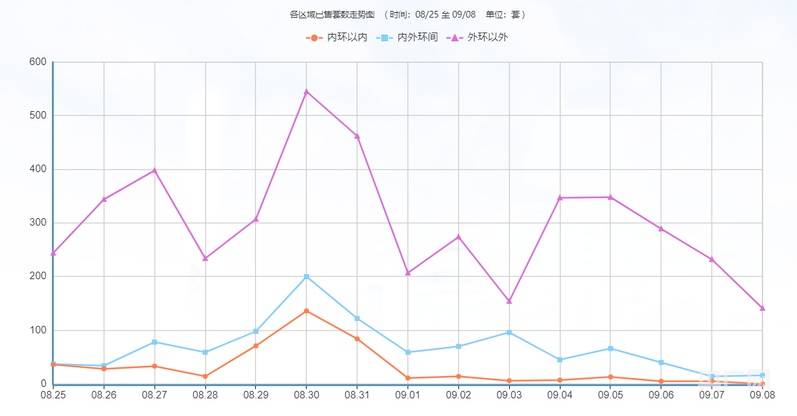
Core Insights - The introduction of the "Six Policies" in Shanghai aims to stimulate the real estate market by relaxing housing purchase restrictions and optimizing housing fund policies, leading to increased activity in the housing market [1][4] - The implementation of the first Housing Rental Regulation addresses common issues in the rental market, such as false listings and deposit disputes, providing a legal framework for rental agreements [6][8] Group 1: "Six Policies" Impact - The "Six Policies" allow eligible residents to purchase an unlimited number of homes outside Shanghai's outer ring, which is expected to accelerate the absorption of properties in the peripheral market [1][3] - There has been a noticeable increase in inquiries and transactions for properties outside the outer ring, with browsing volume up by 22% and consultation volume up by 26% following the policy announcement [4][3] - The new housing fund policies include a 15% increase in the maximum loan amount for purchasing green buildings, with the first home loan limit raised from 1.6 million to 1.84 million yuan, and up to 2.16 million yuan for families with multiple children [4][6] Group 2: Housing Rental Regulation - The new Housing Rental Regulation sets clear requirements for rental properties, ensuring they meet safety and health standards, and prohibits the separate rental of non-residential spaces [6][7] - The regulation mandates that rental contracts be signed using real names and registered with local property management departments, which cannot charge fees for this service [6][8] - It addresses common issues such as unjustified deposit deductions and requires landlords to provide reasonable notice before terminating rental agreements, aiming to protect tenants' rights [7][8]