稀土技术竞争

Search documents
马来西亚产出重稀土!西方突围,中国会失守全球98%的垄断地位吗
Sou Hu Cai Jing· 2025-11-18 18:02
Core Insights - Rare earth elements are essential in modern industry, particularly in defense and high-tech sectors, with heavy rare earths like dysprosium and terbium being crucial for manufacturing high-strength magnets and high-temperature alloys [2] - China dominates the global rare earth refining capacity, controlling over 90% of the market, especially in heavy rare earth separation, which is nearly 100% [2][6] - Western countries are attempting to diversify their rare earth supply chains due to reliance on China, but face significant technological and cost challenges [2][4] Group 1: China's Dominance - China's annual production of heavy rare earths exceeds 150,000 tons, far surpassing Lynas's output, which is only 1% of China's level [6] - China holds 439 patents related to refining processes, with purity levels consistently above 99% [6] - The Chinese government is expanding export controls on rare earths, adding five more elements to the list, indicating a strategic move to maintain its market position [15] Group 2: Western Efforts - Lynas Rare Earths has achieved a breakthrough in heavy rare earth separation at its plant in Malaysia, with plans to produce dysprosium oxide by May 2025 and expand to terbium [4] - The plant is designed to meet military demands, with an initial capacity of 1,500 tons of separated oxides, which will be increased to 5,000 tons by 2026 [4] - Western countries, including the US, EU, and Japan, are investing in overseas projects to reduce dependence on a single source, but face challenges in local regulations and training [7][11] Group 3: Technological Competition - China is advancing in technology, with research institutions reducing the development cycle for neodymium-iron-boron magnets to 17 months using quantum computing models [6] - The Chinese recycling system has achieved a 35% recovery rate, which helps alleviate pressure on mining resources [13] - Western companies are struggling with high costs and dependency on government subsidies, making it difficult to compete with China's established supply chain [11][15] Group 4: Future Outlook - The global rare earth competition is fundamentally a technological race, with China controlling the entire lifecycle from mining to recycling [18] - Western efforts to break free from dependence on China are expected to take a decade, with limited short-term impact [18] - The establishment of alliances, such as the BRICS rare earth alliance, aims to enhance resource security and increase production capacity [11][15]

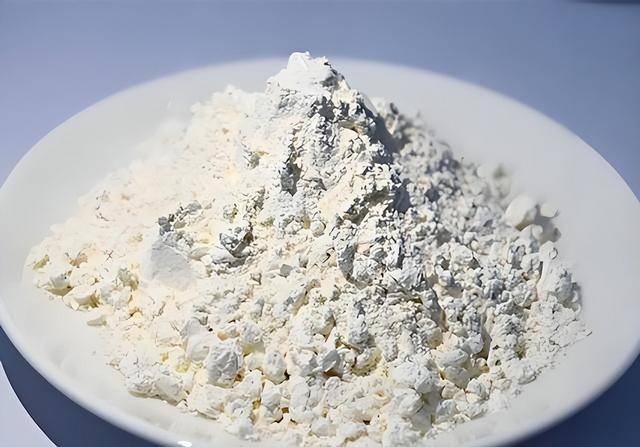
中美俄稀土储量差距:俄1000万吨,美190万吨,中国资源让我意外
Sou Hu Cai Jing· 2025-05-17 06:18
Core Viewpoint - The article highlights the significant disparity in rare earth reserves among China, the United States, and Russia, emphasizing China's dominant position in the global rare earth supply chain and its implications for technology and military capabilities [3][5][12]. Summary by Sections Reserve Distribution - China holds an astonishing 44 million tons of rare earth reserves, far surpassing the United States' 1.9 million tons and Russia's reported figures of either 1 million tons or 380,000 tons [5][12]. - The Baiyun Obo mine in Inner Mongolia accounts for 70% of China's total rare earth reserves, showcasing the concentration of resources in the country [8][12]. Production and Costs - In 2023, the U.S. produced only 43,000 tons of rare earths, meeting less than half of its domestic demand, leading to a reliance on imports from China [10][12]. - Russia's rare earth production in 2023 was only 2,600 tons, indicating a significant gap compared to China's output [12][22]. Strategic Importance - Rare earth elements are crucial for modern military technology, with significant quantities required for advanced weaponry and aerospace applications, such as the F-35 fighter jet and Virginia-class submarines [16][20]. - The article argues that control over rare earth resources equates to control over military technology, positioning China advantageously in global military supply chains [20][26]. Technological Edge - China leads in rare earth separation and purification technology, achieving a purity level of 99.99%, and holds 90% of the global rare earth separation technology patents [22][24]. - The recycling rate of rare earths in China exceeds 95%, making it more cost-effective and environmentally friendly compared to new mining operations [24][26]. Future Demand - The demand for rare earths is expected to grow significantly, with projections indicating a 50% increase in global consumption by 2030, particularly for heavy rare earths like dysprosium and terbium [24][26]. - China's comprehensive advantages in reserves, technology, and the entire supply chain position it as a key player in the future of the rare earth market [26][28].