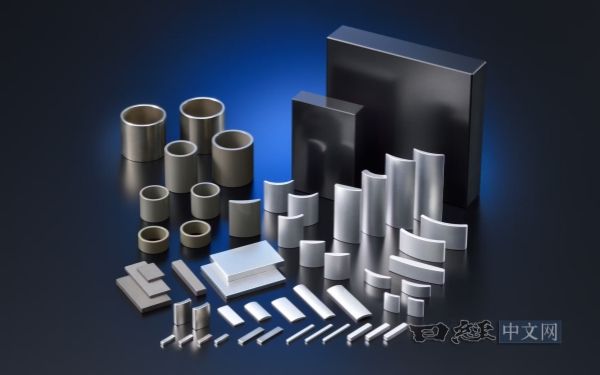
稀土替代材料

Search documents
美国可以靠AI打破中国稀土主导权?“极不现实”
Guan Cha Zhe Wang· 2026-02-15 12:48
Core Viewpoint - The United States is eager to break China's dominance in critical mineral sectors, particularly in rare earths, and is exploring the use of AI and quantum computing to develop alternative materials, aiming to reduce geopolitical risks in supply chains [1][2]. Group 1: AI and Quantum Computing Potential - AI and quantum computing are proposed as "dual engines" that could help design alloys using abundant materials, potentially shortening the time required to obtain critical materials from 10-20 years to just a few years [2]. - Current AI technology is not yet capable of delivering substantial results in mining and materials, and many ideas surrounding these technologies are seen as hype rather than practical solutions [2][4]. Group 2: China's Competitive Advantage - China has invested heavily in AI, advanced computing, and materials science, maintaining a significant lead in innovation speed and capabilities in creating new materials [2][5]. - The complete industrial ecosystem that China has built over decades makes it unrealistic for the U.S. to challenge China's position in the short term [5]. Group 3: Challenges in Material Development - Transitioning from alloy design to commercial-scale production is a lengthy process, and historical trends suggest that attempts to reduce reliance on one material often lead to increased dependence on another [4]. - Even if the U.S. successfully designs new materials in laboratories, challenges such as material stability, scalability, and cost control must be addressed before industrial application can occur [5].


为降低中国依赖,日本研发无重稀土电机磁铁
Guan Cha Zhe Wang· 2025-07-25 03:41
Core Viewpoint - Proterial, formerly known as Hitachi Metals, has developed a new type of electric vehicle motor magnet that does not use heavy rare earth elements, specifically avoiding the use of neodymium [1][3]. Group 1: Product Development - Proterial has successfully trialed a magnet made primarily from iron oxide, which can meet the output power requirements for electric vehicles [3]. - The company does not plan to mass-produce the motors but intends to sell ferrite magnets to motor manufacturers [3]. Group 2: Market Context - The development comes in response to China's export restrictions on rare earth materials, which have pressured Japanese companies heavily reliant on these resources [4]. - In May, Suzuki had to halt production of its Swift model due to rare earth shortages, highlighting the supply risks faced by the automotive industry [4]. Group 3: Rare Earth Market Dynamics - As of the end of 2024, global rare earth reserves are estimated at approximately 90 million tons, a decrease of 20 million tons (18.18%) from 110 million tons at the end of 2023 [4]. - China holds 44 million tons of these reserves, accounting for 48.89% of the global total, and produces nearly 70% of the world's rare earth supply [4][6]. Group 4: International Cooperation - Japan is actively seeking to reduce its dependence on Chinese rare earths by exploring alternative materials and collaborating with the EU on rare earth mining agreements [6]. - Recent discussions between Japan and the EU have focused on enhancing supply chain resilience and reducing strategic dependencies on critical minerals [6].