空间站应用与发展

Search documents
港澳航天员有望最早于今年上天宫
Xin Lang Cai Jing· 2026-02-27 22:32
Group 1 - The core objective of China's manned space program is to deepen the application and development of the space station and manned lunar exploration by 2026, contributing to the establishment of a strong space nation [1] - China plans to conduct 2 manned flight missions and 1 cargo resupply mission in 2026, with astronauts from Hong Kong and Macau expected to participate in space station missions as early as this year [1] - The Shenzhou 23 mission will include a year-long stay experiment for one astronaut [1] Group 2 - The lunar exploration program aims for China's first manned moon landing by 2030, with significant progress in the development of key flight products such as the Long March 10 rocket and the Dream Chaser manned spacecraft [2] - Major tests have been successfully completed, including zero-height escape for the Dream Chaser spacecraft and landing and takeoff for the lunar lander [2] - In 2026, efforts will focus on the construction of supporting facilities for the lunar mission at the Wenchang Space Launch Site, as well as ground support systems for measurement, control, and communication [2]
2026年中国载人航天工程将深化推进空间站应用与发展、载人月球探测两大任务
Ren Min Wang· 2026-02-27 22:17
Core Insights - In 2026, China's manned space program will focus on advancing the space station application and development, as well as manned lunar exploration tasks [1] - The Chinese space station is currently operating stably and effectively, with plans for two manned flight missions and one cargo supply mission in 2026 [1] - The lunar exploration program is progressing well, with significant breakthroughs achieved in various development phases, and efforts will be made to enhance the Wenchang Space Launch Site and ground support systems for the lunar mission in 2026 [1] Summary by Categories - **Manned Space Program** - The program will implement two manned flight missions and one cargo supply mission in 2026 [1] - The space station is functioning effectively and is stable in orbit [1] - **Lunar Exploration** - The lunar exploration program has made several significant breakthroughs in its development phases [1] - There will be a focus on constructing supporting facilities and systems for the lunar mission at the Wenchang Space Launch Site in 2026 [1]

2026年中国载人航天工程将深化推进空间站应用与发展和载人月球探测两大任务
Xin Lang Cai Jing· 2026-02-27 00:49
Core Insights - In 2026, China's manned space program will focus on advancing space station applications and lunar exploration, contributing to the goal of becoming a space power [1][2] - The Chinese space station has successfully completed multiple missions, including 6 manned flights and 4 cargo resupply missions, with significant scientific projects underway [1][2] Group 1: Space Station Development - The Chinese space station is currently operational and has completed 6 manned flights, 4 cargo resupply missions, and 7 spacecraft return missions, with 18 astronauts having long-term stays in orbit [1] - A total of 267 scientific and application projects have been deployed in the space station, covering areas such as space life sciences, microgravity physics, and new space technologies [1] Group 2: Lunar Exploration - The lunar exploration program aims for China's first manned moon landing by 2030, with significant progress in the development of key launch vehicles and spacecraft [2] - Major tests for the Long March 10 rocket and other lunar mission components have been successfully completed, including zero-height escape tests and low-altitude demonstration validations [2] Group 3: International Cooperation - The program promotes international cooperation in manned spaceflight, with a recent agreement signed between China and Pakistan for astronaut training and collaboration on scientific experiments [3] - China continues to welcome global participation in its manned space program, aiming to share advancements and contribute to peaceful space utilization [3]
中国载人航天深化推进空间站应用与发展和载人月球探测两大任务
Xin Hua She· 2026-02-27 00:06
Core Viewpoint - The Chinese manned space program aims to deepen the implementation of the "14th Five-Year Plan" by advancing space station applications and lunar exploration, contributing to the establishment of a strong space nation by 2026 [1][2] Group 1: Space Station Development - The Chinese space station is currently operating stably and effectively, having completed six manned flights, four cargo resupply missions, and seven spacecraft return missions [1] - A total of 18 astronauts have conducted long-term stays in orbit, achieving 13 extravehicular activities and multiple external maintenance tasks, setting a world record for the duration of a single extravehicular activity [1] - In 2026, China plans to conduct two manned flight missions and one cargo resupply mission, with astronauts from Hong Kong and Macau expected to participate [1] Group 2: Lunar Exploration - The lunar exploration program is on track to achieve the goal of landing Chinese astronauts on the moon by 2030, with significant progress in the development of key flight products such as the Long March 10 rocket and the Dream Chaser manned spacecraft [2] - Major tests have been successfully completed, including zero-height escape tests for the Dream Chaser and low-altitude demonstration validations for the Long March 10 rocket [2] - In 2026, efforts will focus on the construction of supporting facilities for the lunar mission at the Wenchang Space Launch Site, as well as ground support systems [2] Group 3: International Cooperation - The program promotes international cooperation in manned spaceflight, having signed a cooperation agreement with Pakistan for astronaut selection and training [2] - A Pakistani astronaut is expected to participate in a short-term flight mission to conduct scientific experiments aboard the Chinese space station [2] - The Chinese manned space program continues to welcome global collaboration to share advancements and promote the peaceful use of space [2]
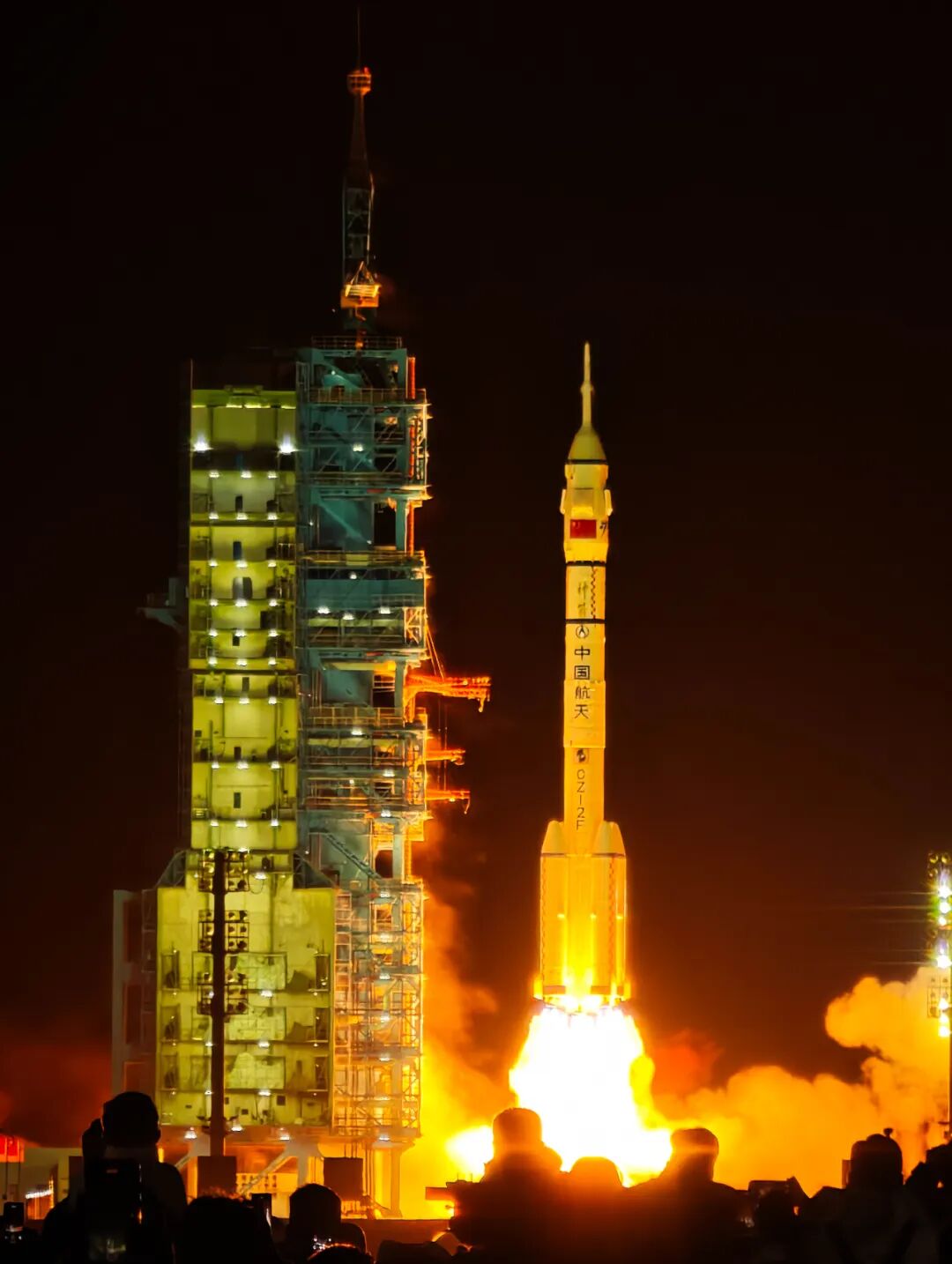
神舟二十一号成功发射,首次在轨实施小鼠空间科学实验
2 1 Shi Ji Jing Ji Bao Dao· 2025-11-01 03:12
Core Points - The Shenzhou 21 manned spacecraft successfully launched on October 31, marking the 6th manned flight in China's space station application and development phase and the 37th launch since the program's inception [4] - The mission involved a successful docking with the Tianhe core module of the Chinese space station, achieving the fastest docking record for Shenzhou spacecraft [4] - The Shenzhou 21 crew includes three astronauts, with Zhang Lu as the commander, and will conduct various scientific experiments during their stay in the space station [4][5] Group 1 - The Shenzhou 21 mission is part of China's ongoing efforts in manned spaceflight, with a total of 28 astronauts and 44 missions to date [4] - The spacecraft's launch was executed by the Long March 2F rocket, marking the 604th flight of the Long March series [4] - The crew will engage in experiments related to space life sciences, microgravity physics, and new space technologies, including multiple extravehicular activities [4] Group 2 - This mission will also see the first implementation of a space science experiment involving four mice, marking a new phase in China's space station life science experiments [5] - The experiment aims to study the effects of microgravity and confined conditions on the behavior of the mice, contributing to understanding biological responses in space [5]