
长征二号F遥二十一运载火箭

Search documents
【新华社】神舟弦鸣不辍 天地共谱长歌
Xin Hua She· 2025-11-03 02:33
Core Points - China's Shenzhou-21 manned spacecraft successfully launched on October 31, 2025, marking the completion of the country's manned spaceflight missions for the year [1] - A total of 28 astronauts and 44 missions have been conducted in space, with the goal of building a "strong space nation" clearly outlined in the 14th Five-Year Plan [2][3] - The rapid development of China's Long March rocket family reflects the country's growing technological capabilities and comprehensive national strength [6][7] Group 1: Manned Spaceflight Achievements - The Shenzhou-21 mission is the sixth manned flight to the Tiangong space station and the 37th mission since the inception of China's manned space program [1] - The Long March 2F rocket, which has a near-Earth orbit carrying capacity of approximately 8.6 tons, symbolizes China's advancements in space technology [5] - The Long March rocket family has seen a significant increase in launch frequency, with the time taken to reach various milestones decreasing dramatically over the years [6] Group 2: Future Plans and Developments - The 14th Five-Year Plan has set the stage for the 15th Five-Year Plan, emphasizing the importance of space exploration and technology development [3][12] - The National Space Science Medium and Long-Term Development Plan (2024-2050) was released, indicating a structured approach to future space missions [12] - China's commercial space sector is developing a complete industrial chain, including satellite manufacturing and launch services, which has been highlighted in recent government reports [13][14] Group 3: Scientific Research and Applications - The space station is expected to facilitate research in various fields, including life sciences, microgravity physics, and space astronomy, contributing to a deeper understanding of fundamental scientific questions [25][30] - The ongoing experiments with animals in the space station aim to reveal the effects of microgravity on biological processes, which could have significant implications for human health and longevity [21][25] - The integration of advanced technologies, such as AI and mixed-reality training systems, is enhancing the capabilities of astronauts during their missions [20] Group 4: International Collaboration - China has signed nearly 200 intergovernmental agreements on space cooperation with over 50 countries and international organizations, promoting global collaboration in space exploration [30] - A Pakistani astronaut is expected to participate in a future mission, highlighting China's commitment to international partnerships in space [30] Group 5: Educational Impact - The space program has inspired a new generation, with initiatives like live-streamed space lectures reaching students across China and beyond [28][29] - The influence of astronauts sharing their experiences has motivated many young individuals to pursue careers in aerospace and related fields [28][29]
深度关注丨让五星红旗在浩瀚太空绽放光彩
Zhong Yang Ji Wei Guo Jia Jian Wei Wang Zhan· 2025-11-02 00:49
Core Points - The successful launch of the Shenzhou 21 manned spacecraft marks a significant milestone in China's space exploration, being the 37th flight mission since the initiation of the manned space program [3][4] - The Shenzhou 21 crew will stay in the Chinese space station for approximately six months, conducting various scientific and application tasks, including space experiments and public outreach activities [3][12] - The mission features a new crew composition strategy of "new and old pairing," enhancing the experience and expertise of the astronauts involved [4][11] Launch and Mission Details - The Long March 2F rocket successfully launched the Shenzhou 21 spacecraft from the Jiuquan Satellite Launch Center on October 31, 2023, with the spacecraft entering its designated orbit approximately 10 minutes post-launch [3][7] - The Shenzhou 21 mission is part of the application and development phase of the Chinese space station, representing the sixth manned flight in this phase [3][12] - The mission achieved a record 3.5-hour autonomous rapid rendezvous and docking with the space station, significantly reducing the waiting time for astronauts and energy consumption [7][8] Astronaut Crew Composition - The Shenzhou 21 crew consists of three astronauts: Zhang Lu (Commander), Wu Fei, and Zhang Hongzhang, representing the three types of active astronauts in China [4][11] - Wu Fei, the youngest astronaut at 30 years old, expressed gratitude for the opportunity to participate in this mission, highlighting the rapid development of China's space program [4][5] - Zhang Hongzhang, a researcher from the Dalian Institute of Chemical Physics, emphasized the significance of conducting innovative research in the space station environment [5][11] International Cooperation - Following a cooperation agreement signed in February, Pakistan has initiated the selection process for its astronauts, with plans for two Pakistani astronauts to train alongside Chinese astronauts [6][12] - The collaboration aims to enhance international cooperation in space exploration and share scientific advancements for mutual benefit [5][6] Scientific Research and Experiments - The Shenzhou 21 mission will conduct 27 new scientific and application projects, focusing on key scientific issues in fields such as space life sciences, aerospace medicine, and microgravity fluid physics [12][15] - The mission will also involve the first in-orbit experiment with domestic rodents, studying the effects of microgravity on behavior and physiology [11][12] Future Goals - The Chinese space program is targeting a manned lunar landing by 2030, with ongoing development of key technologies and systems necessary for this ambitious goal [10][14] - The program continues to emphasize the importance of collaboration and innovation to achieve significant milestones in space exploration [14][15]

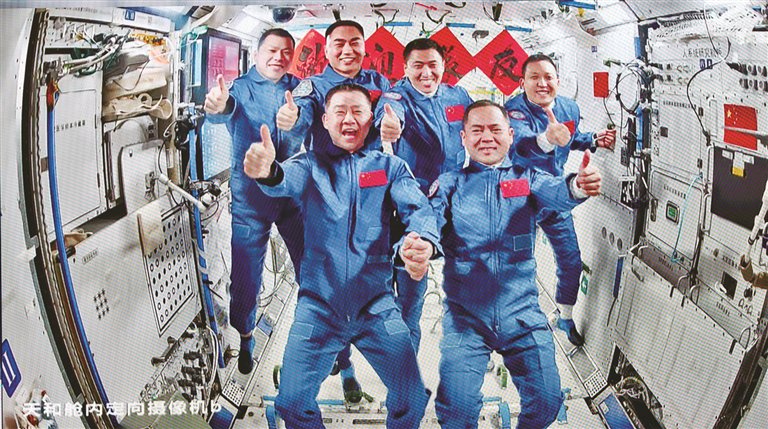
神舟二十一号载人飞船发射取得圆满成功 两个航天员乘组会师太空
Yang Shi Wang· 2025-11-01 12:05
Core Points - The Shenzhou-21 manned spacecraft successfully launched on October 31, 2023, at 23:44, carrying astronauts Zhang Lu, Wu Fei, and Zhang Hongzhang to the Chinese space station, marking the 7th "space rendezvous" in China's space history [1][2] Group 1 - The launch took place at the Jiuquan Satellite Launch Center, with the astronauts entering the spacecraft around 21:30 to prepare for the mission [1] - Approximately 10 minutes after launch, the spacecraft successfully separated from the rocket and entered its designated orbit [3] - At 3:22 on November 1, the spacecraft docked with the Tianhe core module of the space station, completing the fastest docking process in Shenzhou history, taking about 3.5 hours [3] Group 2 - The Shenzhou-21 crew will spend a planned 6-month stay at the space station, engaging in space science and applications, extravehicular activities, cargo operations, and educational outreach [3]
视频丨砺箭苍穹!神舟二十一号载人飞船发射纪实
Yang Shi Xin Wen Ke Hu Duan· 2025-11-01 09:56
Core Points - The Shenzhou-21 manned spacecraft was successfully launched by the Long March 2F Yao-21 rocket from the Jiuquan Satellite Launch Center on October 31 at 23:44 [1] - The spacecraft docked with the Tianhe core module of the space station at 3:22 AM, completing the docking process in approximately 3.5 hours, setting a record for the fastest docking of a Shenzhou spacecraft with the space station [1] - This event marks the seventh "space meeting" in the history of Chinese space exploration, as the Shenzhou-20 crew welcomed the Shenzhou-21 crew at 4:58 AM [1]
6名航天员太空会师拍下全家福
Bei Jing Wan Bao· 2025-11-01 07:06
Core Points - The Shenzhou 21 manned spacecraft successfully docked with the space station in a record time of 3.5 hours, marking a significant improvement in China's autonomous docking capabilities [1][2] - This mission included the first in-orbit breeding and experimental research of mice, which will help fill gaps in China's research on small mammals in space [4] - The upcoming 2026 manned spaceflight missions will include four significant tasks, showcasing China's continued commitment to advancing its space exploration efforts [6][7] Group 1 - The Shenzhou 21 spacecraft launched from the Jiuquan Satellite Launch Center and achieved docking with the space station, creating a new record for the fastest docking time [1][2] - The autonomous docking capability has been enhanced through more precise launch and orbit control, allowing for fewer orbital adjustments [2] - The mission involved a reunion of two crew commanders, Chen Dong and Zhang Lu, who previously participated in China's first "space meeting" nearly three years ago [2][3] Group 2 - The mission also included the introduction of four experimental mice, which will be monitored for their behavior and physiological changes in space [4] - The mice were selected through rigorous testing to ensure their adaptability to the space environment, and their experiments will contribute to understanding biological processes in microgravity [4] - The research on amino acids using microfluidic chips will explore the chiral characteristics of amino acids, marking a world-first study in this area [5][6] Group 3 - The 2026 manned spaceflight plan includes the Tianzhou 10 cargo spacecraft, Shenzhou 22 and 23 missions, and the first flight of the Mengzhou 1 crewed spacecraft [6][7] - The Shenzhou 22 mission will feature a crew member conducting a long-term stay experiment of over one year, emphasizing the focus on extended human presence in space [7] - The design of mission insignias for these upcoming flights is open for public submission, reflecting a community engagement approach in China's space endeavors [8]

神舟二十一号航天员乘组顺利进驻“天宫”空间站
Yang Guang Wang· 2025-11-01 04:48
Core Points - China successfully launched the Shenzhou-21 manned spacecraft on October 31, achieving a record-fast docking with the Tianhe core module of the space station in approximately 3.5 hours [1] - The Shenzhou-21 mission marks the seventh "space rendezvous" in China's space history, with astronauts from both Shenzhou-20 and Shenzhou-21 successfully meeting in space [1] - The launch was conducted using the Long March 2F rocket from the Jiuquan Satellite Launch Center, with the spacecraft entering its designated orbit about 10 minutes post-launch [1] Group 1 - The rapid docking capability of 3.5 hours allows for year-round launch opportunities, reducing the need for mid-course orbital corrections and enhancing the ability to respond to major in-orbit failures [2] - During their stay at the space station, the Shenzhou-21 crew will conduct various experiments in fields such as space life and human research, microgravity physics, and new space technologies, along with multiple extravehicular activities [2] - Preparations for the Shenzhou-22 mission and its Long March 2F rocket have been completed, with the spacecraft in a state of readiness for emergency standby tasks [2] Group 2 - The successful completion of the Shenzhou-21 mission signifies the conclusion of China's manned space launch tasks for 2025 [3]

神舟二十一号成功发射,首次在轨实施小鼠空间科学实验
2 1 Shi Ji Jing Ji Bao Dao· 2025-11-01 03:12
Core Points - The Shenzhou 21 manned spacecraft successfully launched on October 31, marking the 6th manned flight in China's space station application and development phase and the 37th launch since the program's inception [4] - The mission involved a successful docking with the Tianhe core module of the Chinese space station, achieving the fastest docking record for Shenzhou spacecraft [4] - The Shenzhou 21 crew includes three astronauts, with Zhang Lu as the commander, and will conduct various scientific experiments during their stay in the space station [4][5] Group 1 - The Shenzhou 21 mission is part of China's ongoing efforts in manned spaceflight, with a total of 28 astronauts and 44 missions to date [4] - The spacecraft's launch was executed by the Long March 2F rocket, marking the 604th flight of the Long March series [4] - The crew will engage in experiments related to space life sciences, microgravity physics, and new space technologies, including multiple extravehicular activities [4] Group 2 - This mission will also see the first implementation of a space science experiment involving four mice, marking a new phase in China's space station life science experiments [5] - The experiment aims to study the effects of microgravity and confined conditions on the behavior of the mice, contributing to understanding biological responses in space [5]

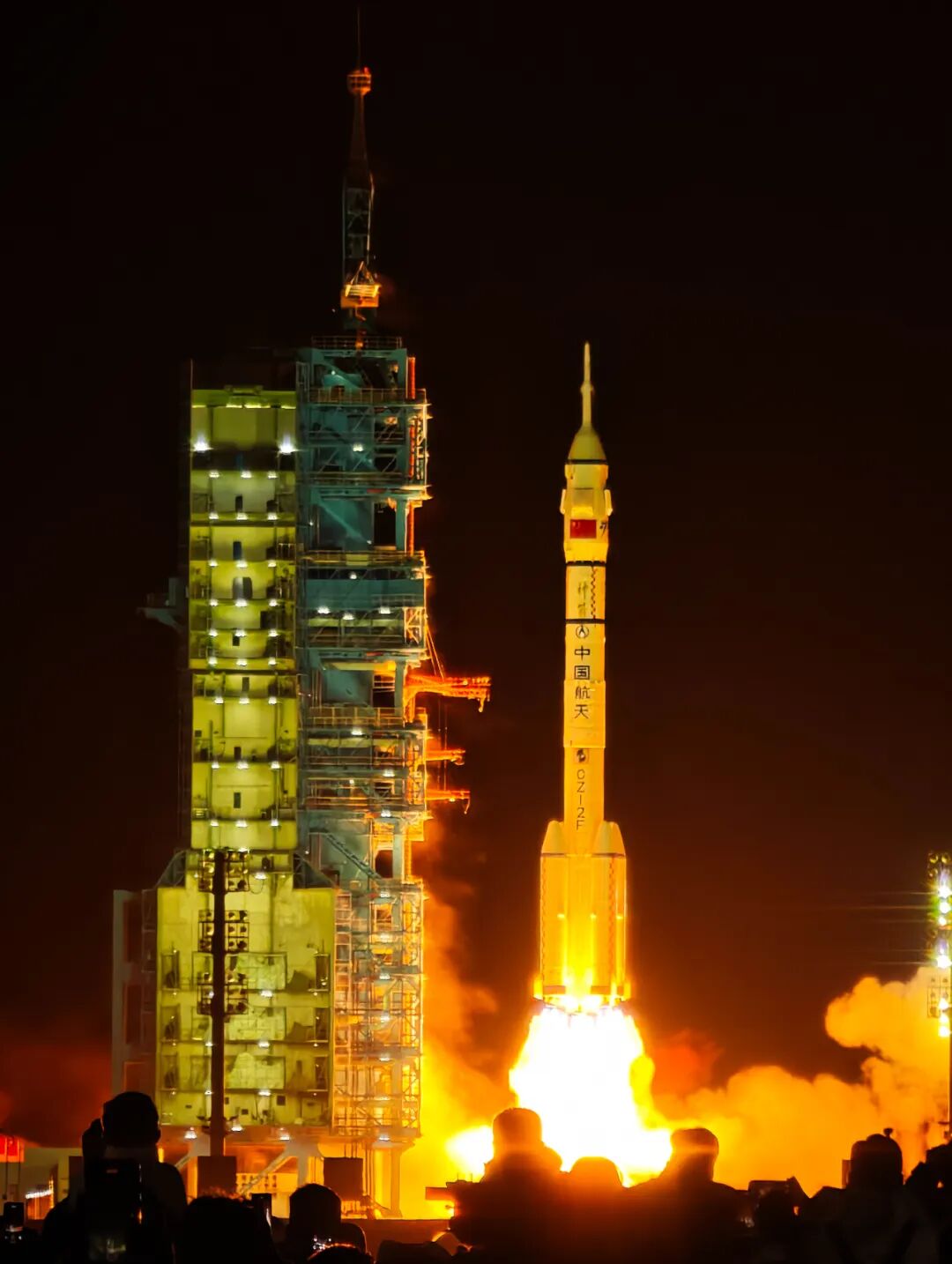
独家视频丨一箭穿月 多视角回顾神二十一发射精彩瞬间
Yang Shi Xin Wen Ke Hu Duan· 2025-11-01 01:53
Core Points - The Shenzhou 21 manned spacecraft was successfully launched by the Long March 2F Yao 21 rocket from the Jiuquan Satellite Launch Center, marking a significant achievement in China's space exploration efforts [1] - The rocket's trajectory was visually impressive as it created an arc in the night sky while carrying three astronauts towards the "Tiangong" space station [3] - Approximately 10 minutes post-launch, the spacecraft successfully separated from the rocket and entered its designated orbit, with the crew in good condition, indicating a successful mission [5]
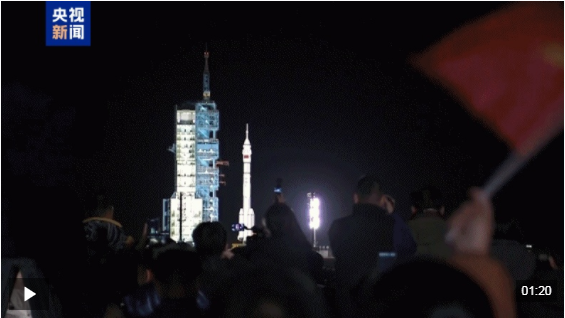
神舟二十一号载人飞船发射成功 这些“四川智造”立功了
Si Chuan Ri Bao· 2025-11-01 01:24
Core Points - The Shenzhou-21 manned spacecraft was successfully launched by the Long March 2F Yao-21 rocket from the Jiuquan Satellite Launch Center on October 31, 2023, with the crew in good condition after separation from the rocket [2] - The mission will involve autonomous docking with the space station and various scientific experiments in fields such as life sciences, microgravity physics, and new space technologies [2] - The mission marks the completion of China's manned space launch tasks for 2025 [2] Group 1 - The Sichuan-based China Electronics Technology Group Corporation's 10th Research Institute developed a ground-space measurement and control communication system, ensuring tight communication between the spacecraft and ground [3] - A pulse phase response device, also developed by the Sichuan team, was installed on the rocket to monitor its flight and ensure normal operation until the separation of the spacecraft [4] - Sichuan Aerospace Chuan Nan Fire Technology Co., Ltd. was responsible for the development of over 30 types of pyrotechnic products for the rocket and spacecraft, while Sichuan Aerospace Liaoyuan Technology Co., Ltd. produced cable networks for the rocket's engines [4]
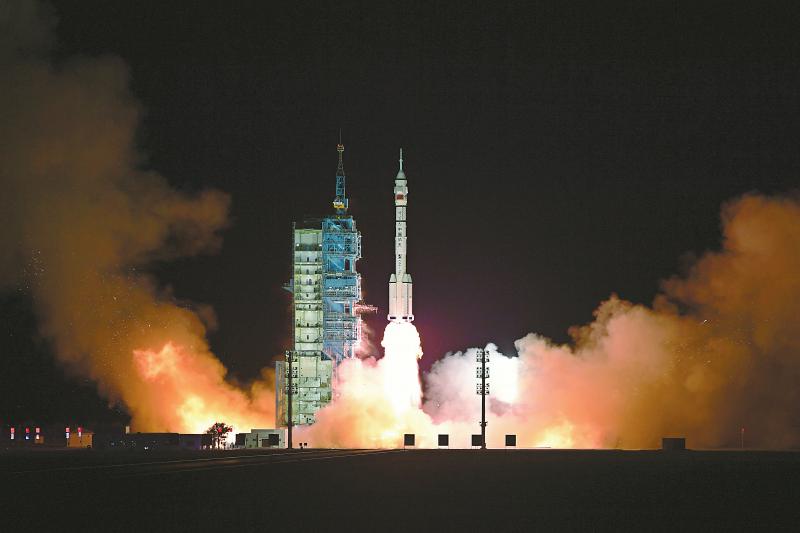
神舟逐梦启新程——神舟二十一号发射目击记
Xin Hua Wang· 2025-11-01 00:26
Core Points - The successful launch of Shenzhou-21 took place on October 31, with a large crowd gathering to witness the event [1][2] - The launch was marked by excitement from attendees, including children expressing their interest in space exploration [1] - Security personnel played a crucial role in ensuring safety during the launch, highlighting the importance of their duties [2] Group 1 - The Shenzhou-21 spacecraft was launched from the Jiuquan Satellite Launch Center, with a significant public turnout for the event [1] - Attendees included families and children, showcasing a strong public interest in space missions and future exploration [1] - The launch was celebrated as a moment of national pride, with local residents expressing their feelings of honor and excitement [1][2] Group 2 - Security measures were implemented during the launch, including personnel checks and crowd management to ensure safety [2] - Young police officers, such as Wang Ling, expressed pride in their role as part of the "space guardians" during the launch [2] - The serene environment of the Gobi Desert post-launch reflects the significance of the Shenzhou missions in pursuing space exploration [2]