算力重心转移

Search documents
英伟达放弃GPU上LPU:新推理芯片被曝Groq即买即用,OpenAI第一个吃螃蟹
3 6 Ke· 2026-03-02 07:26
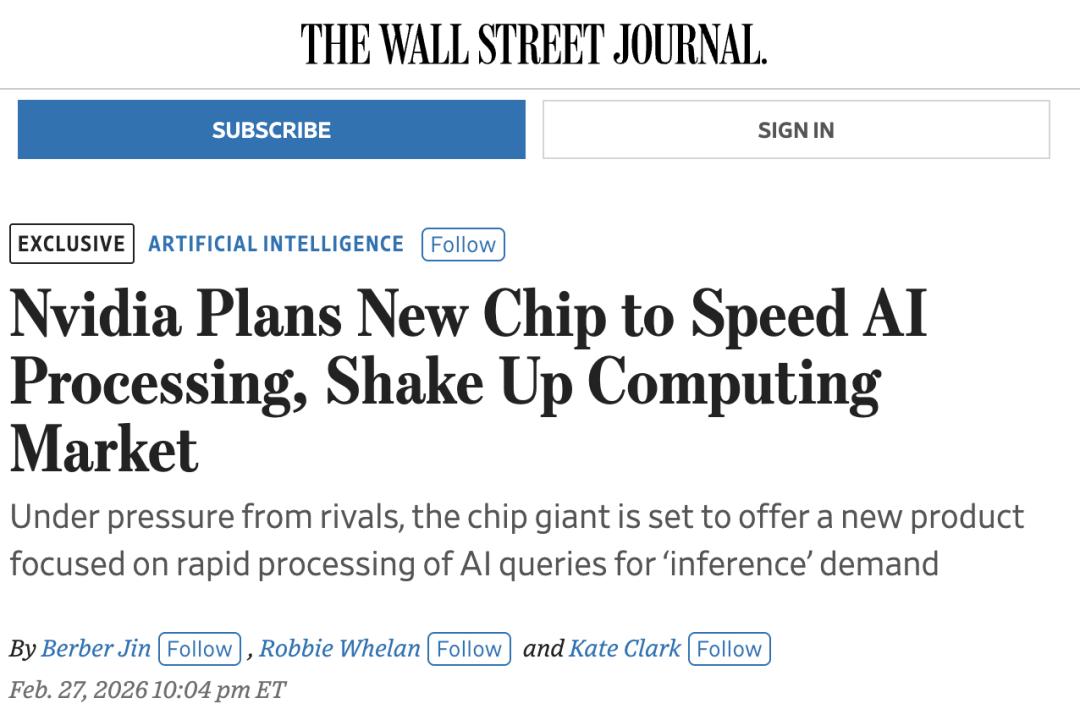
Core Insights - Nvidia is set to unveil a new AI inference system at the upcoming GTC conference, featuring a chip optimized specifically for inference tasks, with OpenAI as its first major client [1][3][6] Group 1: New Chip Development - The new chip's architecture is based on the LPU (Language Processing Unit) designed by the former Groq team, marking Nvidia's first significant integration of external architecture into its core AI computing products [3][4] - This strategic move follows Nvidia's acquisition of Groq's core technology and team for approximately $20 billion, demonstrating a focus on rapid deployment of mature solutions [3][10] Group 2: Market Dynamics and Competition - The demand for inference capabilities is rapidly increasing, prompting Nvidia to provide targeted solutions more quickly, especially as competitors like Cerebras and Amazon are developing specialized chips for inference tasks [6][13][15] - The shift in focus from training to inference is reshaping the AI computing landscape, with companies like OpenAI and Meta exploring alternatives to Nvidia's GPUs for inference workloads [13][14][16] Group 3: Technical Advantages of LPU - The LPU architecture utilizes high-density on-chip SRAM, significantly reducing data movement latency and energy consumption, making it more suitable for low-latency inference scenarios compared to traditional GPUs [8][20] - The LPU is theoretically capable of achieving speeds up to 100 times faster than GPUs, addressing the bottlenecks associated with data access and movement during the inference process [8][21] Group 4: Future Outlook - Nvidia's introduction of the LPU chip is seen as a critical response to the evolving demands of the AI market, where inference is becoming a primary focus rather than a supplementary phase [10][21] - The upcoming GTC conference is anticipated to showcase not only the new LPU chip but also potentially other groundbreaking products, including the Rubin series GPUs and possibly new consumer-grade graphics cards [22][23]


英伟达放弃GPU上LPU:新推理芯片被曝Groq即买即用,OpenAI第一个吃螃蟹
量子位· 2026-03-02 04:53
Core Viewpoint - Nvidia is set to unveil a new AI inference system at the upcoming GTC conference, featuring a chip optimized specifically for inference tasks, marking a significant architectural shift for the company [1][11]. Group 1: New Chip Development - The new chip's primary customer is OpenAI, which recently secured $110 billion in funding [2]. - This chip is based on the LPU (Language Processing Unit) architecture developed by the former Groq team, indicating Nvidia's first major integration of external architecture into its core AI computing products [5][6]. - The introduction of this chip is a direct result of Nvidia's $20 billion acquisition of Groq's core technology and team, showcasing a strategy of rapid deployment of mature solutions [7][8][9]. Group 2: Market Dynamics and Competition - The demand for inference solutions is rapidly increasing, prompting Nvidia to provide targeted solutions more quickly [17]. - Major clients like OpenAI are exploring more efficient inference alternatives, leading to partnerships with other chip companies [16][28]. - Competitors such as Cerebras and Amazon are enhancing their own inference architectures, with Cerebras claiming its chips can outperform Nvidia's GPUs in specific scenarios [31][40]. Group 3: Architectural Shift - The LPU architecture is designed to reduce latency and energy consumption by keeping data close to the processing unit, which is crucial for low-latency inference tasks [22][26]. - As AI applications evolve, the focus is shifting from training to inference, with inference becoming a more significant and frequent workload [24][29]. - Nvidia's move to incorporate LPU into its product line is a response to this shift, indicating a potential change in the company's computing focus [26][47]. Group 4: Future Prospects - Nvidia is expected to announce additional groundbreaking products at the GTC conference, including the new Rubin series GPUs and possibly the Feynman architecture chips [49][50].