算法设计

Search documents
快排算法之父Tony Hoare去世,从古典学文科生出身到图灵奖得主,他的人生比算法更传奇
量子位· 2026-03-11 01:18
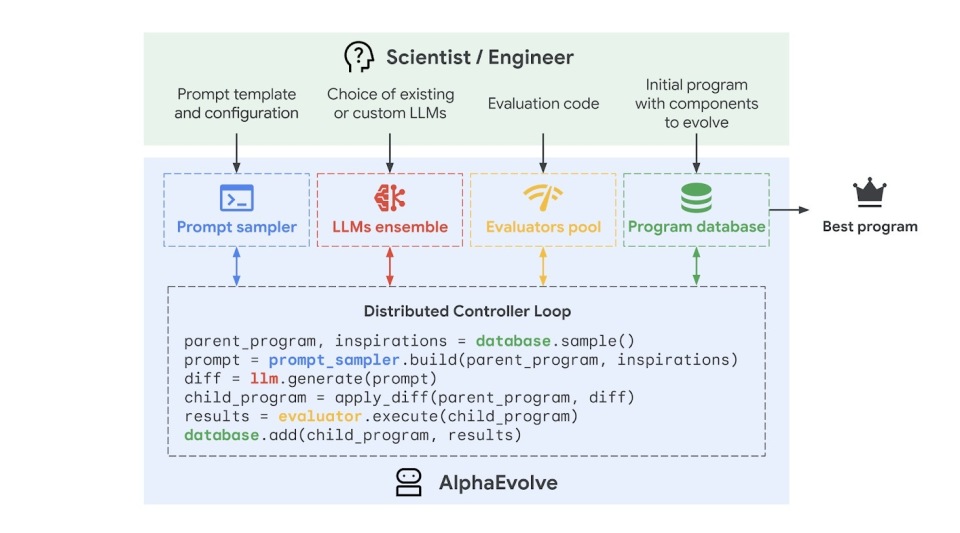
Core Viewpoint - The article discusses the life and contributions of Tony Hoare, the father of the quicksort algorithm, who passed away at the age of 92. It highlights his significant impact on computer science, particularly through the development of quicksort, Hoare logic, and the CSP model, as well as his acknowledgment of the "billion-dollar mistake" of introducing the null reference concept [1][4][27][41]. Group 1: Quicksort Algorithm - Quicksort is one of the most widely used sorting algorithms, included in the standard libraries of major programming languages such as C, Java, and Python [2][3]. - The algorithm was conceived in 1959 when Hoare was a visiting student in Moscow, where he initially considered using bubble sort but found it inefficient with a time complexity of O(n²) [5][12]. - Hoare developed a new approach by selecting a "pivot" element and partitioning the array into elements less than and greater than the pivot, which is a divide-and-conquer strategy [13]. - Quicksort has an average time complexity of O(n log n) and requires O(log n) auxiliary space, making it more efficient than merge sort, which requires O(n) additional memory [19][20]. - The algorithm is particularly well-suited for modern computer cache mechanisms, leading to faster execution times compared to other algorithms with similar complexities [21][24]. Group 2: Contributions to Computer Science - In 1969, Hoare introduced Hoare logic, a formal system for verifying program correctness, which laid the theoretical foundation for software reliability and security research [28]. - He proposed the CSP model in 1978, which describes interactions between concurrent processes and influenced the design of concurrency in the Go programming language [30][31]. - Hoare received the Turing Award in 1980 for his fundamental contributions to programming language design, emphasizing the importance of language quality in software development [35][36]. Group 3: The Billion-Dollar Mistake - Hoare introduced the concept of the null reference in 1965 while designing the ALGOL W language, intending to represent a variable with "no value" [41][42]. - This design choice led to widespread adoption in languages like Java and C++, resulting in numerous NullPointerExceptions and system failures over the decades [43][44]. - Hoare later reflected on this decision as a significant error, estimating it caused billions in damages and frustrations in the software industry [45]. Group 4: Personal Background and Career - Born in 1934 in British Ceylon (now Sri Lanka), Hoare initially studied classical studies and philosophy at Oxford University before transitioning to computer science [49][50]. - His career spanned both industry and academia, where he contributed to the development of the ALGOL 60 compiler and later became a professor at Queen's University Belfast and Oxford University [60][68]. - Hoare's work has earned him numerous accolades, including being knighted by Queen Elizabeth II and receiving the Kyoto Prize in 2000 [74].


向“愤怒诱饵”说不:构建清朗数智空间的治理之道
Zhong Guo Xin Wen Wang· 2026-02-10 09:23
Core Insights - The phenomenon of "rage bait" is a significant social issue that has emerged in the digital age, characterized by the manipulation of user emotions to gain attention and engagement [1][2] Group 1: Nature and Impact of "Rage Bait" - "Rage bait" is a deliberate strategy to provoke user emotions for attention, supported by a clear profit logic and an increasingly mature supply ecosystem [2] - Digital-native media are more adept at using provocative language in titles and content compared to traditional media, aiming to monetize traffic through advertising [2] - Specific groups or political actors utilize "rage bait" to influence public opinion, often creating divisive content to serve particular agendas [2] Group 2: Role of Algorithms - Algorithms are not inherently designed to promote "rage bait"; their social effects depend on their design goals and value orientations [3] - Research indicates that approximately 8% to 10% of recommendations on major platforms are "bad" information, highlighting the risk of algorithms leading users into emotional "information spirals" [3] - Conversely, about one-quarter of algorithmic recommendations can protect users and promote positive interactions, suggesting that algorithms can be designed to mitigate "rage bait" [3] Group 3: Strategies for Mitigation - Platforms must shift their governance logic from prioritizing "traffic efficiency" to embracing "ecological responsibility" to effectively combat "rage bait" [4] - Platforms can utilize advanced models to manage "rage bait" content by assessing the potential risks of content that may exacerbate social tensions [4] - Enhancing algorithms to identify and manage harmful content is crucial, including preemptive warnings and risk alerts for users encountering or sharing such content [4][6] Group 4: Collaborative Responsibility - The responsibility of combating "rage bait" involves collaboration between platforms, users, and regulatory bodies [6] - Improving public media literacy and critical thinking is essential for resisting emotional manipulation [6] - A coordinated approach involving technological design, public awareness, and regulatory frameworks is necessary to foster a healthier social environment while enjoying the benefits of digital technology [6]
仅用提示词工程摘下IMO金牌!清华校友强强联手新发现,学术界不靠砸钱也能比肩大厂
量子位· 2025-08-02 05:23
Core Viewpoint - The collaboration between two Tsinghua University alumni has successfully enhanced the Gemini 2.5 Pro model to achieve a gold medal level in the International Mathematical Olympiad (IMO) through a self-iterative verification process and prompt optimization [1][4][10]. Group 1: Model Performance and Methodology - Gemini 2.5 Pro achieved a 31.55% accuracy rate in solving IMO problems, significantly outperforming other models like O3 and Grok 4 [9]. - The research team utilized a structured six-step self-verification process to improve the model's performance, which includes generating initial solutions, self-improvement, and validating solutions [16][18]. - The model was able to generate complete and mathematically rigorous solutions for 5 out of 6 IMO problems, demonstrating the effectiveness of the structured iterative process [24][23]. Group 2: Importance of Prompt Design - The use of specific prompt designs significantly improved the model's ability to solve complex mathematical problems, highlighting the importance of prompt engineering in AI model performance [12][14]. - The research indicated that detailed prompts could reduce the computational search space and enhance efficiency without granting the model new capabilities [23]. Group 3: Research Team Background - The authors, Huang Yichen and Yang Lin, are both Tsinghua University alumni with extensive academic backgrounds in physics and computer science, contributing to the credibility of the research [26][28][33]. - Yang Lin is currently an associate professor at UCLA, focusing on reinforcement learning and generative AI, while Huang Yichen has a strong background in quantum physics and machine learning [30][35]. Group 4: Future Directions and Insights - The research team plans to enhance the model's capabilities through additional training data and fine-tuning, indicating a commitment to ongoing improvement [42]. - Yang Lin expressed the potential for AI to play a more significant role in mathematical research, especially in addressing long-standing unresolved problems [44].


DeepMind推出“编程大师”:自动设计优化算法,成功破解数学难题
3 6 Ke· 2025-05-15 09:30
Core Insights - Google DeepMind has launched AlphaEvolve, an AI agent capable of independently creating new computer algorithms and applying them directly to Google's extensive computing infrastructure [1] Group 1: Algorithm Design and Optimization - AlphaEvolve integrates Google's Gemini large language model with evolutionary algorithm strategies, enabling automatic testing, optimization, and iterative upgrades of algorithms [3] - The system has been deployed in various fields, including Google's data centers, chip design, and AI training systems, significantly enhancing operational efficiency and solving long-standing mathematical problems [4] Group 2: Performance Improvements - AlphaEvolve has been operational internally for over a year, achieving notable results, including a 0.7% increase in global computing resource utilization through an algorithm integrated into Google's Borg cluster management system [7] - The system improved the speed of matrix multiplication kernels used for training the Gemini model by 23%, reducing overall training time by 1% [7] Group 3: Hardware Optimization - AlphaEvolve has optimized Google's hardware design by eliminating redundant bits in the arithmetic circuits of tensor processing units (TPUs), with the improvements verified by the TPU design team for future chip designs [7] Group 4: Mathematical Breakthroughs - AlphaEvolve has solved long-standing mathematical challenges and advanced existing technologies, including discovering new matrix multiplication algorithms that surpass records set since 1969 [10] - The system has optimized 14 matrix multiplication algorithms and achieved breakthroughs in various mathematical fields, including the "kissing number problem," where it found a configuration of 593 spheres, surpassing the previous record of 592 [11][14]