
粤港澳大湾区互联互通

Search documents
【建言者说】全国两会将启 香港工联会代表委员多项建言促大湾区互联互通
Xin Lang Cai Jing· 2026-02-27 10:36
Core Viewpoint - The Hong Kong Federation of Trade Unions plans to propose over 20 recommendations at the 2026 National Two Sessions to enhance connectivity in the Guangdong-Hong Kong-Macao Greater Bay Area [1][4]. Group 1: Transportation and Infrastructure - The president of the Hong Kong Federation of Trade Unions, Wu Qiubei, emphasizes the need for better integration of Hong Kong's high-speed rail with the national railway network, suggesting the addition of direct services from West Kowloon Station to more cities in mainland China and prioritizing short-distance routes [3][6]. - Wu also advocates for a gradual increase in the proportion of green energy imported from the mainland to Hong Kong and suggests exploring the establishment of offshore wind farms utilizing nearby wind resources [3][6]. Group 2: Social Services - Huang Guo, a member of the National Committee of the Chinese People's Political Consultative Conference, highlights the challenges faced by elderly Hong Kong residents living in Guangdong who lack guardians, urging the Hong Kong government to collaborate with mainland authorities to establish service centers in Greater Bay Area cities to address these issues [3][6]. Group 3: Cultural Heritage - Ma Guangru, vice president and secretary-general of the Hong Kong Federation of Trade Unions, proposes the establishment of a platform for promoting intangible cultural heritage in the Greater Bay Area, including the construction of cultural centers and hosting large thematic events to foster collaboration between representatives of intangible cultural heritage from Hong Kong and the mainland [3][6].

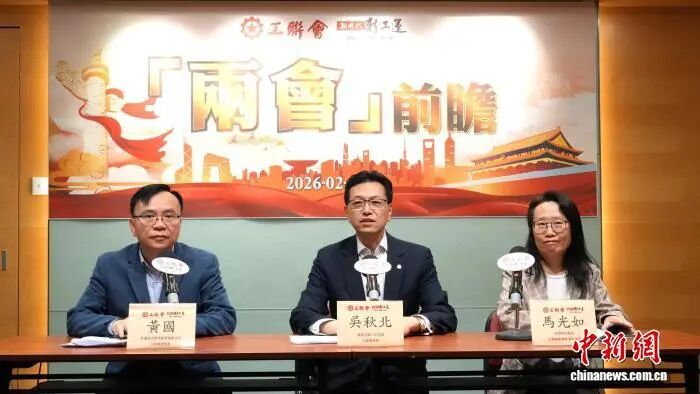
全国两会将启 香港工联会代表委员多项建议提案促大湾区互联互通
Xin Lang Cai Jing· 2026-02-14 12:23
Group 1 - The Hong Kong Federation of Trade Unions plans to propose over 20 suggestions and proposals at the 2026 National People's Congress to enhance connectivity in the Guangdong-Hong Kong-Macao Greater Bay Area [1][3] - The president of the Federation, Wu Qiubei, emphasizes the need for more direct high-speed rail services from West Kowloon Station to various cities in mainland China, advocating for a flexible response to market changes based on ticket sales and passenger flow data [3] - Wu also suggests increasing the proportion of green energy imported from the mainland and exploring the establishment of offshore wind farms utilizing nearby wind resources [3] Group 2 - Huang Guo, a member of the National Committee of the Chinese People's Political Consultative Conference, highlights the challenges faced by elderly Hong Kong residents living in Guangdong without guardians, urging collaboration between the Hong Kong government and mainland departments to establish service centers [3] - Ma Guangru, vice president and secretary-general of the Federation, proposes the creation of a platform for promoting intangible cultural heritage in the Greater Bay Area, including the establishment of cultural centers and large-scale themed events to foster collaboration between Hong Kong and mainland heritage representatives [3]
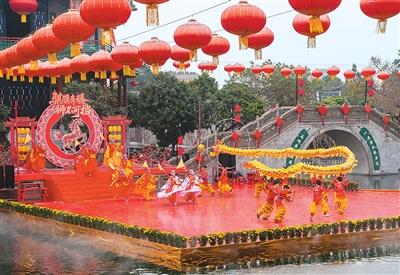
大湾区好戏连台迎新春
Ren Min Ri Bao Hai Wai Ban· 2026-02-12 22:50
Group 1 - The core theme of the news is the vibrant cultural activities and events planned in the Guangdong-Hong Kong-Macao Greater Bay Area to celebrate the upcoming Lunar New Year, showcasing a blend of traditional and modern elements to attract tourists [2][3][5]. - The "Non-Heritage New Year: Taste of China" event in Guangzhou features over 130 non-heritage representative projects from 15 provinces and regions, promoting cultural heritage through live demonstrations and sales [3]. - The 2026 Greater Bay Area Lantern Festival, themed "Bay Area Together, Colorful Centuries," will feature hundreds of large thematic light displays and nearly a thousand performances, enhancing the festive atmosphere [3][7]. Group 2 - Various cities in the Greater Bay Area, including Shenzhen and Zhongshan, are hosting a range of New Year activities such as music concerts, traditional performances, and immersive markets to celebrate the festive season [5]. - The integration of Macau elements is evident in activities like the "Return to Doumen for New Year" event, which aims to deepen the understanding of local culture among Macau residents and attract more tourists [6]. - Enhanced transportation connectivity within the Greater Bay Area allows for easy travel between cities, with many residents planning to visit different locations for New Year celebrations, supported by measures to ensure smooth cross-border flow of people and goods [8].
广东保险业服务硬“实”力:2.6万亿元!险资入粤创新高
Nan Fang Du Shi Bao· 2026-02-11 10:37
Core Insights - The Guangdong insurance industry achieved a premium income of 570 billion yuan in 2025, marking a year-on-year growth of 6.68%, while total claims paid reached 218.4 billion yuan, up 8.82% [2] Group 1: Industry Growth and Structure - The insurance sector in Guangdong is playing a crucial role as an economic stabilizer and is contributing significantly to the province's financial momentum [2] - The industry is experiencing steady growth alongside an ongoing optimization of its structure, enhancing its function as a "shock absorber" for the economy [2] Group 2: Support for Technological Innovation - In 2025, the insurance sector provided risk coverage of 7.44 trillion yuan for technology enterprises in fields such as new energy, chips, and biomedicine, supporting over 22,800 companies [3] - Insurance funds have invested over 200 billion yuan in more than 800 technology companies in Guangdong, addressing the financing challenges faced by high-risk, high-investment tech firms [3] Group 3: Elderly Care and Social Security - By the end of 2025, the cumulative pension funds in Guangdong reached 120 billion yuan, with a year-on-year growth rate of 8.37%, benefiting over 21 million people [4] - The commercial pension annuity insurance exceeded 20 billion yuan, accumulating risk reserves of over 79 billion yuan, serving as a vital supplement to the first and second pillars of pension systems [4] Group 4: Disaster Response and Risk Management - Guangdong's insurance industry has developed a unique "Guangdong model" for disaster response, issuing 120 million warning messages during typhoon events and successfully relocating 16,624 vehicles, reducing economic losses by over 269 million yuan [5] - In 2025, the industry paid out over 4.301 billion yuan in disaster insurance claims, including 311 million yuan for catastrophe insurance, supporting post-disaster recovery efforts [5] Group 5: Investment in Economic Development - Insurance funds invested in Guangdong reached approximately 2.6 trillion yuan in 2025, doubling since the end of the 13th Five-Year Plan, contributing to major infrastructure and emerging industries [6] - The insurance sector provided risk coverage of 296.246 billion yuan in agriculture, helping mitigate operational risks in agricultural production [6] Group 6: Regulatory Improvements - The Guangdong Financial Regulatory Bureau has implemented a comprehensive framework to address "involution" in the industry, resulting in a 1.07 percentage point decrease in comprehensive auto insurance costs [7] - The establishment of self-regulatory agreements and the development of a smart consumer protection platform have enhanced regulatory efficiency and industry accountability [7]

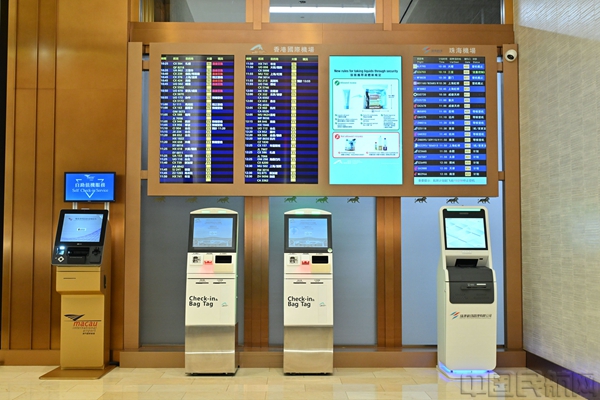
香港国际机场澳门首个高端双城市候机楼启用
Zhong Guo Min Hang Wang· 2026-02-05 10:48
Core Viewpoint - The opening of the "Hong Kong International Airport MGM City Lounge" marks a significant step in enhancing cross-border aviation services and multi-modal transport integration in the Guangdong-Hong Kong-Macao Greater Bay Area [1][4] Group 1: Infrastructure Development - The "Hong Kong International Airport MGM City Lounge" is the first high-end dual-city lounge in Macau, indicating deepening collaboration among Guangdong, Hong Kong, and Macao [1] - The lounge aims to improve connectivity and service for travelers from Macau and surrounding areas, with travel times of approximately 90 minutes to Hong Kong International Airport and 60 minutes to Zhuhai Airport via the Hong Kong-Zhuhai-Macao Bridge [4] Group 2: Strategic Goals - The Hong Kong Airport Authority plans to expand its multi-modal transport service network to cover key cities on the western side of the Greater Bay Area and further extend into the Macao market [4] - By 2027, the goal is to increase the number of city lounges to 50, attracting more travelers from the Greater Bay Area to use Hong Kong International Airport [4] Group 3: Service Features - The lounge features a stylish design, self-check-in, and flight information services, operating from 9 AM to 6:30 PM [4] - Eligible travelers using the multi-modal transport service can apply for a refund of the passenger departure tax when transferring through Hong Kong International Airport [4]
开行最密!广深港高铁成粤港澳大湾区互联互通“黄金通道”
Xin Hua She· 2026-01-28 03:37
Core Viewpoint - The Guangzhou-Shenzhen-Hong Kong High-Speed Rail has become the most densely operated high-speed rail line in China, enhancing connectivity in the Guangdong-Hong Kong-Macau Greater Bay Area through a "bus-like" operation model [1][2] Group 1: Operational Enhancements - The new train schedule, effective from January 26, allows for 387 trains to operate daily, with an average interval of approximately 2.8 minutes between trains, marking it as the highest density high-speed rail segment in the country [1] - The increase in train frequency is a response to the growing demand for cross-border commuting, business travel, and cultural tourism within the Greater Bay Area, supporting the concept of a "one-hour living circle" [1] Group 2: Spring Festival Adjustments - The capacity adjustment coincides with the Spring Festival, with extended routes and additional direct trains to reduce transfer times for travelers and alleviate pressure on stations during peak travel periods [2] - During peak periods, cross-border train services will reach 254 trains, with Hong Kong now connected to 110 railway stations in mainland China, covering 19 provinces and regions [2] Group 3: Passenger Experience Improvements - As of January 25, the rail line has transported 2.108 million cross-border passengers since the beginning of the year, indicating a strong demand for cross-border travel [2] - Enhanced services at Shenzhen North and Shenzhen Futian stations include the "Four Connections" service to facilitate communication for cross-border travelers, ensuring a seamless travel experience [2] - All cross-border trains have been upgraded to Fuxing bullet trains, improving speed, comfort, and smart services, thereby increasing the attractiveness of long-distance high-speed rail travel [2]
“粤车南下”驶入香港市区 湾区互联互通再进一步
Zhong Guo Xin Wen Wang· 2025-12-23 05:27
Core Viewpoint - The implementation of the "Yue Car Southbound" policy marks a significant advancement in the connectivity between Guangdong and Hong Kong, allowing private vehicles from Guangdong to enter Hong Kong's urban areas directly, enhancing cross-border travel for business, employment, tourism, and family visits [1][3]. Group 1: Policy Implementation - The first batch of Guangdong private cars successfully crossed into Hong Kong's urban area via the Hong Kong-Zhuhai-Macao Bridge on December 23, indicating a new phase of "two-way direct access" between Guangdong and Hong Kong [1][3]. - The "Yue Car Southbound" policy is a key initiative in the national strategy to promote the development of the Guangdong-Hong Kong-Macao Greater Bay Area, following the previous "Macau Car Northbound" and "Hong Kong Car Northbound" policies [1][3]. Group 2: Traffic and Statistics - As of December 22, over 380 vehicles had been approved and successfully scheduled for the "Yue Car Southbound" entry into Hong Kong's urban area [3]. - The number of "Northbound" vehicles from Hong Kong and Macau crossing the bridge has increased by 25.4% year-on-year, indicating a growing trend in cross-border vehicle traffic [4]. - The total number of vehicles passing through the bridge has exceeded 6 million for the first time this year, with expectations for further increases as the "Yue Car Southbound" policy continues to be implemented [5].
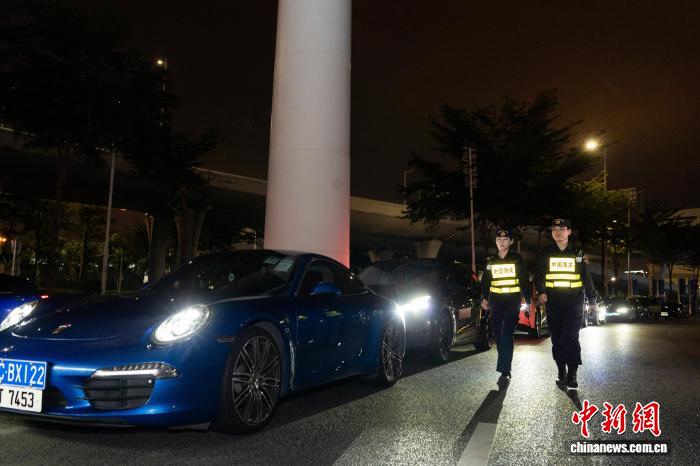
“粤车南下”正式实施——大湾区自驾实现“双向奔赴”
Ren Min Ri Bao· 2025-11-18 09:49
Core Viewpoint - The implementation of the "Yue Car Southbound" policy marks a significant step in enhancing connectivity within the Guangdong-Hong Kong-Macao Greater Bay Area, allowing private car owners from Guangdong to drive into Hong Kong through the Hong Kong-Zhuhai-Macao Bridge [1][9]. Policy Implementation - The policy officially took effect on November 15, allowing approved private car owners from Guangdong to access Hong Kong's automated parking facilities via the Zhuhai port [1]. - The initial phase includes four cities: Guangzhou, Zhuhai, Jiangmen, and Zhongshan, with plans to expand to other cities in Guangdong within six months [1]. Traffic and Inspection Process - The inspection process at the Zhuhai port has been streamlined, enabling drivers to complete vehicle checks and identity verification in under one minute, described as a "smooth passage" [3]. - The Zhuhai border inspection station has upgraded its systems to facilitate online completion of vehicle and driver registration, enhancing the efficiency of the crossing process [3]. Parking and Facilities - Hong Kong has established a "transit parking lot" at the bridge's Hong Kong port, offering approximately 1,800 parking spaces and 24-hour automated services [3]. Entry Regulations - Initially, the entry into Hong Kong's city area will be limited to 100 permits per day, with drivers required to enter a lottery for access [5]. - Drivers must hold a valid Hong Kong driver's license and complete necessary vehicle registration and insurance requirements before entering [5]. Economic and Social Impact - The "Yue Car Southbound" policy is expected to enhance economic and social integration between Guangdong and Hong Kong, contributing to the development of a vibrant and competitive Greater Bay Area [9]. - The Hong Kong-Zhuhai-Macao Bridge has facilitated over 93.4 million passenger trips and 19.5 million vehicle crossings since its opening, with annual growth rates exceeding 16% for passenger flow and 45% for vehicle flow [9].
“粤车南下”正式实施 粤港澳大湾区互联互通再进一步
Ren Min Ri Bao· 2025-11-15 22:02
Core Points - The "Yue Car Southbound" policy officially implemented on November 15, enhancing connectivity in the Guangdong-Hong Kong-Macao Greater Bay Area [1] - The first batch of approved vehicles completed customs procedures in under one minute through a "one-stop" inspection channel [1] - The policy aims to facilitate cross-border travel for private car owners from Guangdong to Hong Kong, with further optimizations planned for the customs process [1][2] Group 1 - The "Yue Car Southbound" policy allows eligible Guangdong private car owners to drive into Hong Kong via the Hong Kong-Zhuhai-Macao Bridge [1] - The bridge has seen over 93.4 million passenger trips and 19.5 million vehicle trips in the past seven years, with annual growth rates of over 16% for passenger flow and 45% for vehicle flow [1] - The highest daily vehicle flow recorded at the bridge reached 28,000 vehicles [1] Group 2 - The policy for "Yue Car Southbound" entering Hong Kong's urban area is set to officially launch on December 23 [2]
“粤车南下”正式实施
Ren Min Ri Bao· 2025-11-15 21:51
Core Points - The "Yue Car Southbound" policy officially implemented on November 15, enhancing connectivity in the Guangdong-Hong Kong-Macao Greater Bay Area [1] - The first batch of approved vehicles completed customs procedures in under one minute through a "one-stop" inspection channel [1] - The policy aims to facilitate cross-border travel for private car owners from Guangdong to Hong Kong, with further optimizations planned for the customs process [1] Summary by Sections Policy Implementation - The "Yue Car Southbound" policy allows eligible Guangdong private car owners to drive into Hong Kong via the Hong Kong-Zhuhai-Macao Bridge [1] - The policy will officially extend to the Hong Kong city area on December 23 [2] Traffic and Usage Statistics - Over 93.4 million passengers and 19.5 million vehicles have crossed through the Zhuhai port of the Hong Kong-Zhuhai-Macao Bridge in the past seven years [1] - The annual growth rates for passenger and vehicle traffic have exceeded 16% and 45%, respectively [1] - The maximum daily vehicle flow reached 28,000 vehicles [1]