
精准帮扶

Search documents
北京市房山区市场监管局精准帮扶服务发展
Xin Lang Cai Jing· 2026-02-25 04:35
Group 1 - The core idea of the news is the establishment of a supportive system by the market supervision bureau to enhance the quality and safety of the fresh-cut fruit industry through precise assistance and regulatory measures [1][4] Group 2 - Full-process supervision is implemented to create a risk prevention network, embedding risk control checklists into all production processes, including raw material acceptance, cleaning, disinfection, cutting, packaging, and cold chain storage [2] - Equipment management is standardized with safety operation, maintenance, and risk warning labels affixed to production and disinfection equipment, ensuring clear operational norms and responsibilities [2] - A traceability system is established for raw materials, creating health records for each batch, linking all stages from harvesting to sales, ensuring full traceability and risk management [2] Group 3 - A tailored "one enterprise, one policy" rectification checklist is created, auditing production records and health logs, with issues documented and tracked for timely resolution [3] - An "online and offline" demand checklist is set up, allowing enterprises to submit operational challenges, which are categorized and addressed within a specified timeframe [3] - Collaborative discussions are organized to address common issues such as high cold chain transportation costs and the utilization of by-products in fruit processing [3] Group 4 - The collaboration between the food production department and market supervision bureau forms a three-in-one support system that aligns services with enterprise needs, facilitating industry upgrades [4] - Regulatory and service functions operate concurrently, providing customized technical guidance while addressing practical challenges faced by fresh-cut fruit enterprises [4] - The proactive approach to improving production management levels is emphasized, moving from reactive to strategic enhancements in food safety and enterprise development [4]
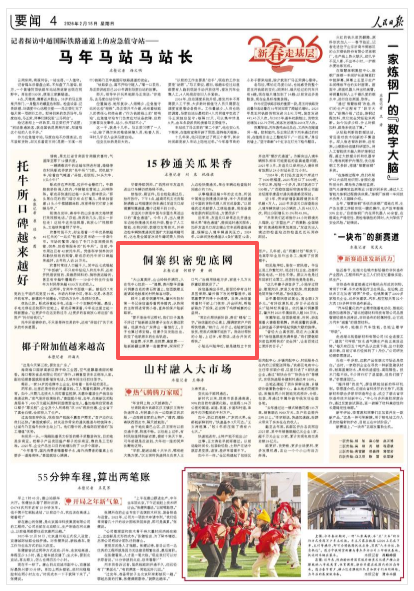
央媒看贵州丨人民日报:侗寨织密兜底网
Xin Lang Cai Jing· 2026-02-15 04:14
Group 1 - The article highlights the transformation of rural life in Guizhou's Zhaoxing Dong Village, showcasing the impact of targeted poverty alleviation efforts led by local officials like Xu Xinji [2][3] - Xu Xinji's approach emphasizes "precision" in assistance, tailoring support to individual needs, as seen in the case of Lu Xinlu, who faced financial difficulties due to medical expenses [2] - The success story of Lu Kunsong, who transitioned from a poverty-stricken household to a business owner of a guesthouse, illustrates the positive outcomes of government support and local entrepreneurship [3] Group 2 - The village's collective income is projected to exceed 3 million yuan by 2025, driven by increased tourism and local business initiatives [3] - The article reflects a broader narrative of hope and improvement in rural areas, contrasting past poverty with current prosperity, as expressed by Xu Xinji [3] - The community's engagement in cultural activities, such as singing and dancing, signifies a revitalization of social life and community spirit in the village [3]

精准帮扶持续巩固脱贫攻坚成果
Jing Ji Ri Bao· 2026-02-11 22:51
Core Viewpoint - The article emphasizes the importance of "precise poverty alleviation" as a significant innovation in China's poverty reduction theory and practice, focusing on targeted support measures to ensure sustainable outcomes in poverty alleviation efforts [1]. Group 1: Key Strategies in Poverty Alleviation - The strategy involves precise identification of at-risk populations to prevent them from falling back into poverty, with over 700 million monitoring subjects identified by 2025 to stabilize vulnerable groups [2]. - Coordination of resources is highlighted, showcasing the collaboration of various sectors, including government, enterprises, and social organizations, to effectively support underdeveloped areas [3]. - The article discusses the optimization of support methods tailored to local conditions and individual needs, implementing specific strategies for different households to ensure effective assistance [4]. Group 2: Financial and Economic Impact - Since the beginning of the "14th Five-Year Plan," the central government has invested 850.5 billion yuan in rural revitalization, with significant growth in the output value of key industries in poverty-stricken areas, exceeding 1.7 trillion yuan [5]. - The employment scale of the poverty alleviation population has remained stable at over 30 million for five consecutive years, contributing to the income stability of more than two-thirds of the poverty-stricken families [5]. Group 3: Future Directions and Monitoring - The establishment of a multi-departmental monitoring platform is crucial for ongoing precise monitoring and dynamic support, ensuring no individuals are overlooked in the assistance process [6]. - The article stresses the need for continuous investment in human capital and the equalization of basic public services to enhance the development capabilities of underdeveloped regions [6].
常态化帮扶关键在精准
Jing Ji Ri Bao· 2026-02-07 22:09
Core Viewpoint - The central government emphasizes the establishment of a normalized assistance policy system to ensure the continuity and stability of support measures, which is crucial for consolidating and expanding the achievements of poverty alleviation efforts [1]. Group 1: Implementation of Normalized Assistance - The normalized assistance will be integrated into the rural revitalization strategy, providing a solid institutional guarantee for long-term mechanisms [1]. - The transition period for poverty alleviation has been completed, but assistance work must continue to address ongoing risks of poverty due to various challenges faced by farmers [1]. Group 2: Precision in Assistance - The year 2026 marks the beginning of normalized assistance, with a focus on improving the precision and timeliness of monitoring and support [2]. - It is essential to identify those in need of assistance promptly and implement differentiated support measures based on their specific circumstances [2]. - For those with labor capacity, the emphasis will be on development-oriented assistance, while those without will receive comprehensive social security measures to ensure basic living standards [2]. Group 3: Focus on Underdeveloped Areas - Assistance efforts will prioritize underdeveloped regions, helping them improve development conditions and leverage local resources for growth [2]. - The government will continue to provide concentrated support in terms of finance, land, and talent to key counties in rural revitalization [2]. Group 4: Coordination and Effectiveness - The implementation of normalized assistance requires high levels of coordination and should not be relaxed [3]. - Effective mechanisms from the poverty alleviation period will be maintained, including multi-level leadership and collaboration between regions [3]. - The focus will remain on addressing the practical difficulties faced by the population to prevent large-scale returns to poverty [3].
从“残有所助”到“精准扶助”
Xin Lang Cai Jing· 2026-02-03 20:49
Core Viewpoint - The article highlights the comprehensive efforts made by various organizations in supporting individuals with disabilities, focusing on employment, rehabilitation, and community integration initiatives to enhance their quality of life and ensure they share in societal development [4][10]. Employment Support and Skill Development - The integration of "care + employment" models in Aral City has enabled individuals with disabilities to work in supportive environments while receiving care and rehabilitation services, with 15 individuals currently employed under this model [5][6]. - The Aral City Disabled Persons' Federation has implemented a three-year action plan to promote employment, conducting job fairs and training sessions to address employment barriers for individuals with disabilities, resulting in 55 individuals securing stable jobs [6][8]. - The organization has also provided practical skills training to 180 individuals, investing 72,000 yuan to enhance their employability [6]. Rehabilitation and Community Support - The "Winter Star Child Growth Camp" for children with autism in New Star City offers tailored rehabilitation programs, emphasizing the importance of individualized care and parental support [7][8]. - The New Star City Disabled Persons' Federation has launched various public welfare activities, including skills training and material support, benefiting over 100 individuals and their families [8][9]. - The establishment of shared assistive device points in Double River City has improved access to mobility aids for individuals with disabilities, addressing the challenges of affordability and availability [10][11]. Holistic Welfare and Social Inclusion - The Double River City Disabled Persons' Federation has made significant strides in providing comprehensive rehabilitation services, assisting over 1,000 individuals and ensuring a robust support network for their health and well-being [11][12]. - Initiatives to enhance the cultural and social participation of individuals with disabilities have been implemented, including community events and volunteer opportunities, fostering a sense of belonging and self-worth [12].

以链群协同替代单点帮扶
Xin Lang Cai Jing· 2026-01-25 23:27
Group 1 - The core viewpoint of the articles emphasizes the transformative impact of a six-month enhancement initiative on small and micro enterprises, shifting their management from reliance on individual experience to standardized operational systems [1][2] - Companies reported significant improvements in their operational metrics, such as achieving a 100% pass rate for inspections and delivery timelines, indicating a newfound confidence in their processes [1] - The common benefit highlighted by business leaders is a change in mindset, which is essential for small and micro enterprises to overcome growth bottlenecks and transition towards specialization and innovation [1] Group 2 - The government plays a crucial role in stimulating the vitality of small and micro enterprises through targeted support rather than broad guidance, addressing specific needs with tailored strategies [2] - Collaborative efforts among businesses, such as chain collaboration and regional enhancements, have replaced isolated support, leading to improvements across entire supply chains rather than just individual companies [2] - Continuous action is necessary, as many small and micro enterprises still face challenges like insufficient internal motivation for improvement, requiring collective participation from various stakeholders to sustain support and enhance industry resilience [3]
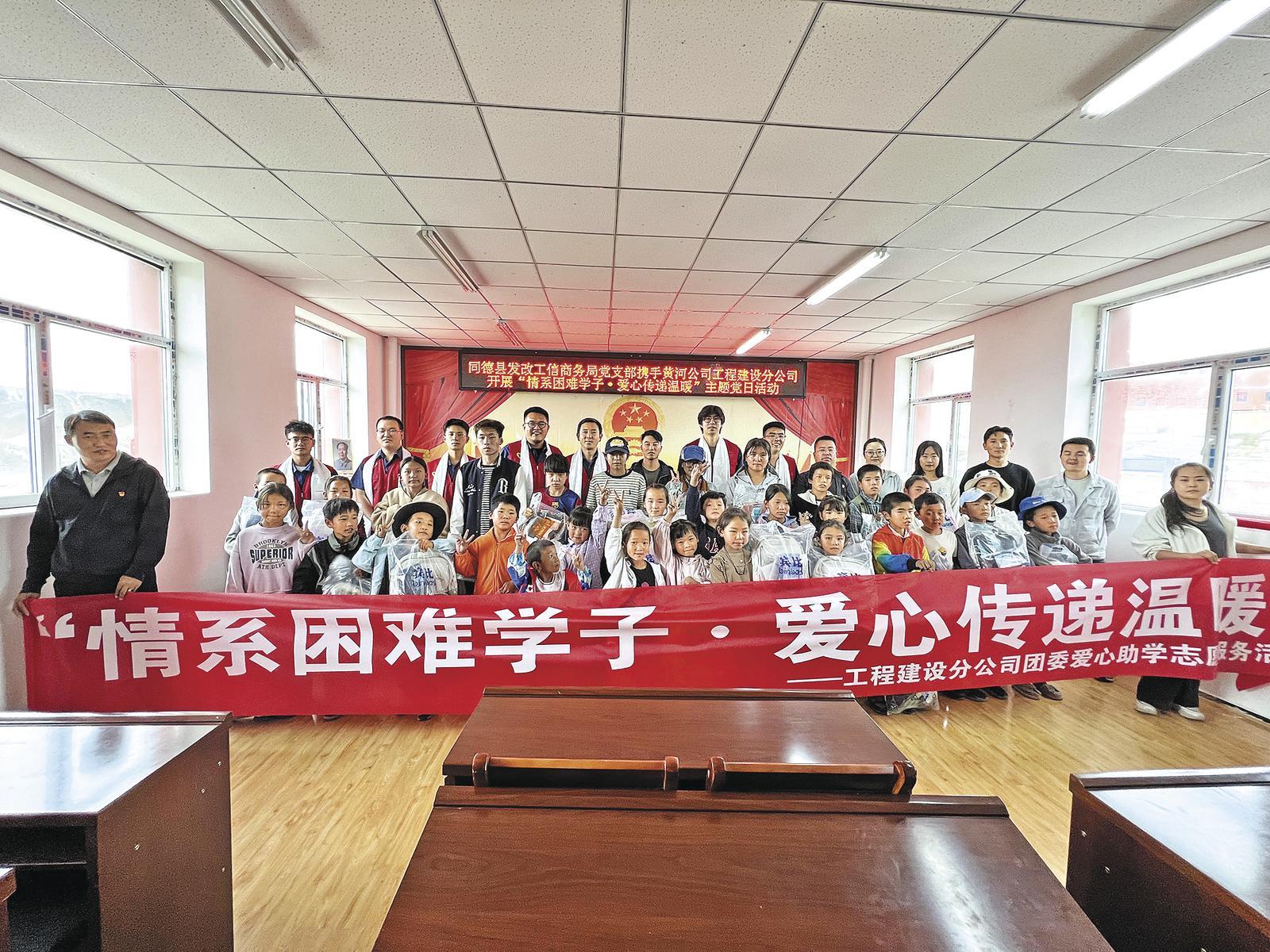
盛夏到隆冬 暖流润高原
Xin Lang Cai Jing· 2026-01-21 18:32
Group 1 - The company is committed to social responsibility through educational support and assistance to workers, demonstrating a continuous effort to improve the lives of local communities [2][3][5] - The company has implemented a "demand list" model to tailor assistance to the specific needs of children and workers, ensuring that help is relevant and effective [4][5] - The company has successfully assisted over 100 individuals through various initiatives, focusing on both educational support for children and practical aid for workers facing hardships [5] Group 2 - The company emphasizes the importance of education as a means to break the cycle of poverty, actively engaging in community outreach and support programs [3][4] - The company integrates a systematic approach to its assistance programs, combining dynamic assessments of needs with targeted support measures [5] - The company aims to create a lasting impact on the community by aligning its projects with the principle of benefiting local residents, reinforcing its commitment to social welfare [5]
思想帮扶要精准(人民论坛)
Xin Lang Cai Jing· 2026-01-12 04:32
Group 1 - The article emphasizes the effectiveness of ideological and political work in transforming mindsets, particularly through targeted communication and support [1][2] - The case of Chuyuan Group illustrates how personal connections and shared experiences can facilitate meaningful dialogue and understanding, leading to a shift from resistance to acceptance of necessary changes [2][3] - The importance of practical and relatable communication is highlighted, showing that theoretical discussions must be grounded in real-life contexts to resonate with individuals [2][3] Group 2 - The article discusses the necessity of addressing specific issues with tailored solutions, as emphasized in the guidelines of the Communist Party of China [3][4] - It points out that effective ideological work should ultimately translate into tangible actions that promote development and improve people's livelihoods [4] - The recent national propaganda ministerial meeting underscores the commitment to using Xi Jinping's thoughts to inspire and mobilize the masses towards national rejuvenation [4]
【好评中国】常态化帮扶要拿出责任担当
Xin Lang Cai Jing· 2026-01-11 01:44
Core Viewpoint - The central rural work conference emphasizes the establishment of a normalized mechanism to prevent poverty and ensure sustainable support for underdeveloped regions, aiming to solidify the achievements of poverty alleviation by 2026 [1] Group 1: Mechanisms and Policies - A long-term process is required to consolidate poverty alleviation achievements, necessitating a "normalized inspection, precise monitoring, and differentiated support" mechanism to identify at-risk populations [1] - The implementation of a comprehensive monitoring system is essential, including village cadre inspections and cross-departmental data sharing to ensure early detection and intervention for those in need [1] - The focus on enhancing social security systems is crucial to safeguard the bottom line of people's livelihoods and prevent large-scale poverty [1] Group 2: Employment and Industry Development - Emphasis on the dual focus of industry and employment as key drivers for increasing self-sufficiency among rural populations [1] - The strategy includes promoting the transformation of agricultural products from raw materials to processed goods and brands, enhancing value-added processes [2] - The introduction of more deep processing projects is aimed at ensuring farmers benefit at every stage of the industrial chain [2] Group 3: Community Engagement and Skill Development - The need to stimulate the internal motivation of the impoverished population is highlighted, leveraging local leaders and experts to assist in development [3] - Regular monitoring and risk assessment are necessary to address the specific challenges faced by vulnerable groups, including the elderly and those with health issues [3] - Initiatives such as skill training for returning laborers and the organization of employment opportunities are critical for improving the livelihoods of the impoverished [3]
让脱贫群众致富路越走越宽
Jing Ji Ri Bao· 2026-01-09 22:13
Core Viewpoint - The article highlights the successful transition from poverty alleviation to rural revitalization in China, emphasizing the importance of precise assistance and sustainable development in rural areas [1][4]. Group 1: Achievements in Poverty Alleviation - Gansu's Dingxi has transformed from a region known for its harsh conditions to one filled with happiness and prosperity [1] - Xinjiang's southern region has shifted from barren land to diverse income sources through specialty fruits, handicrafts, and facility agriculture [1] - The Daliangshan region in Sichuan has improved infrastructure, moving from traditional to modern staircases, enhancing tourism and local economy [1] Group 2: Strategies for Sustainable Development - The focus has shifted from merely improving agricultural output to enhancing market access, product value, and profitability [2] - There is an emphasis on extending the industrial chain and developing unique leading industries to avoid homogenization and competition [2] - Establishing stable production and sales platforms through long-term agreements with major retailers and e-commerce platforms is crucial [2] Group 3: Risk Prevention and Support Mechanisms - A comprehensive risk warning system covering income, health, and education is necessary to prevent poverty recurrence [3] - Different risk types require targeted interventions, such as health insurance for those impoverished by illness and job training for unstable employment [3] - A robust safety net should be established for families still facing difficulties despite assistance, ensuring a strong defense against large-scale poverty [3] Group 4: Policy Framework and Future Directions - The 2025 Central Rural Work Conference emphasizes the need for a regular support policy system to continue aiding underdeveloped regions [4] - The "14th Five-Year Plan" suggests establishing a mechanism to prevent poverty recurrence, maintaining precise assistance as a key strategy [4] - Continuous precise assistance is vital for enhancing the development capacity of underdeveloped areas and improving the welfare of low-income populations [4]