
红利+低波策略

Search documents
A股低波红利指数及产品的投资价值与发展趋势
Shang Hai Zheng Quan Bao· 2025-12-15 19:19
Core Insights - The low-volatility dividend index demonstrates strong risk resistance, leading to increased market demand for related index products, particularly from long-term investors and financial institutions [2][8][9] Group 1: Characteristics of Low-Volatility Dividend Index - The low-volatility dividend index is based on high dividend and low volatility factors, with its first iteration launched in China in December 2013 [3] - The number of indices and related products has increased significantly, with 11 pure stock low-volatility dividend indices launched by the China Securities Index Company by Q1 2025 [4] - Investment scale in related products has surged, with passive index fund investments in major low-volatility dividend indices reaching 47.09 billion yuan in 2024, a 20-fold increase from 2022 [5] Group 2: Performance and Stability - The low-volatility dividend index has outperformed broad market indices and government bonds over the past three years, with a total return index nearly doubling in five years [5][6] - The index's volatility is lower than that of major market indices, with a significantly higher Sharpe ratio, indicating better risk-adjusted returns [6] - In extreme market conditions, the low-volatility dividend index has consistently outperformed the CSI 300 index, demonstrating its defensive characteristics [6] Group 3: Institutional Investor Engagement - Institutional investors hold a significant portion of low-volatility dividend products, with 85.53% of holdings attributed to them by the end of 2024 [7] - The introduction of new financial accounting standards has made it easier for insurance and brokerage firms to invest in low-volatility dividend equities [7] Group 4: Market Demand and Future Outlook - There is an anticipated increase in market demand for low-volatility dividend indices as long-term capital seeks stable investment options amid a low-interest-rate environment [9][10] - Financial institutions are increasingly viewing low-volatility dividend indices as a means to optimize asset allocation and enhance risk-adjusted returns [10] - Ordinary investors are also shifting towards more stable and long-term value investments, aligning with the characteristics of low-volatility dividend indices [10] Group 5: Limitations and Challenges - The sustainability of dividend yields and future performance is under scrutiny, particularly due to reliance on traditional cyclical industries [11] - There is a notable disparity in fund product performance, with smaller funds facing operational challenges and potential liquidation risks [12] - The index's reliance on short historical data may hinder its ability to adapt to market changes, affecting its long-term performance [12] Group 6: Recommendations for Development - It is recommended to encourage the creation and investment in low-volatility dividend indices and products, enhancing their market presence [13] - Increasing investor education and transparency regarding the benefits of low-volatility dividend indices is essential for broader adoption [14] - Optimizing the index compilation methodology to better reflect market trends and enhance its attractiveness is advised [15] - Improving the quality and governance of listed companies to ensure sustainable dividend practices is crucial for the long-term success of low-volatility dividend strategies [16]

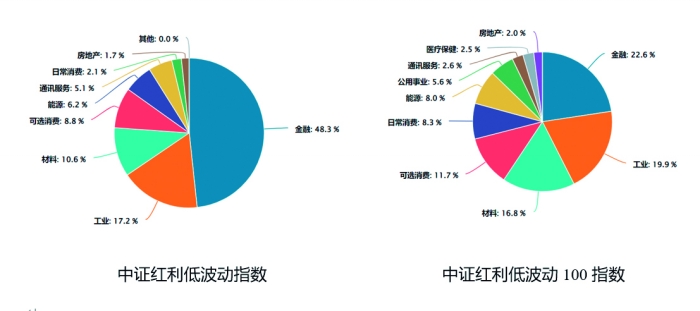
低利率环境下红利类资产吸引力回升,红利低波ETF(512890)最新规模突破165亿元
Sou Hu Cai Jing· 2025-05-29 06:38
Group 1 - The core viewpoint of the articles highlights the significant decline in deposit interest rates among major national banks, leading to a new era where one-year fixed deposit rates have dropped below 1%, prompting increased attractiveness of dividend assets [1] - The Wind data indicates that the dividend low volatility ETF (512890) has seen its dividend yield rise to 6.4% as of May 27, which is substantially higher than the current 10-year government bond yield of 1.73% and exceeds its own yield for 92.71% of the past decade [1] - There is a growing demand for dividend assets as long-term capital from insurance and pension funds enters the market, with the dividend low volatility ETF (512890) attracting significant investment, accumulating 2.448 billion yuan in 2023 and reaching a historical high of 16.705 billion yuan in total assets [1] Group 2 - Huatai-PineBridge Fund, as one of the first ETF managers in China, has over 18 years of experience in managing dividend index investments and has developed a comprehensive range of dividend-themed ETFs, including the first dividend ETF and the first QDII mode ETF for high-dividend Hong Kong stocks [2] - As of May 28, the total management scale of Huatai-PineBridge's dividend-themed ETFs exceeds 39.3 billion yuan, reflecting its strong position in the market [2]