
红色文化传承

Search documents
刘大姐有了专属免费摊位|新春走基层
Xin Lang Cai Jing· 2026-02-23 01:13
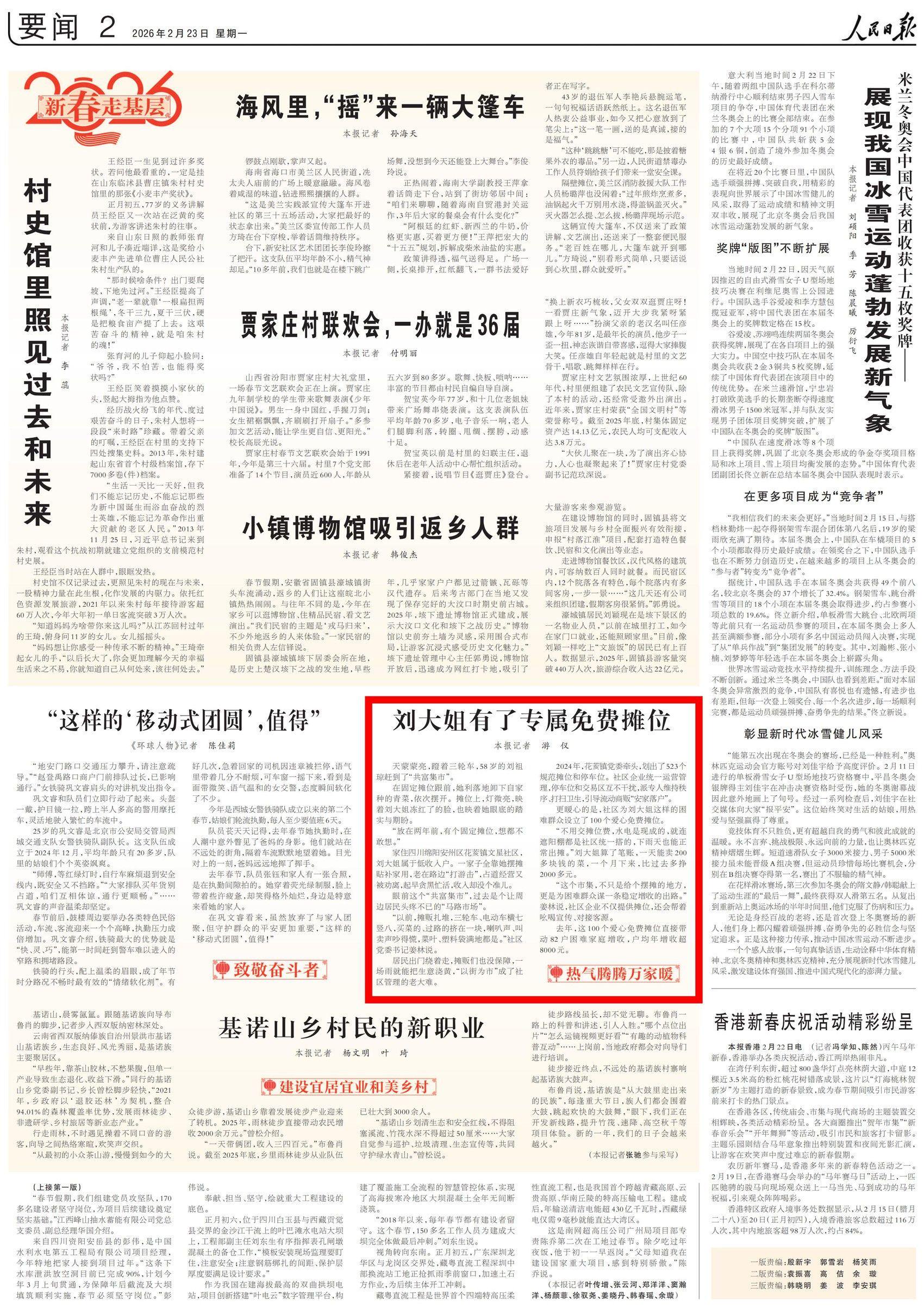
Group 1 - The article highlights the importance of preserving local history and culture through the establishment of village museums and archives, exemplified by the efforts in Zhu Village, Shandong Province, where over 7,000 historical documents have been collected since 2013 [2] - Zhu Village has successfully leveraged its historical significance and red resources to develop tourism, attracting over 600,000 visitors annually since 2021, with a single-day record of over 30,000 visitors during the Lunar New Year [3] - The narrative emphasizes the role of community engagement and cultural activities in fostering a sense of identity and continuity among residents, as seen in the interactions between parents and children during visits to the village museum [3] Group 2 - The article discusses the transformation of local markets into organized "common prosperity markets," which provide designated stalls for vendors, improving the shopping experience for residents and ensuring better income stability for low-income families [15] - The initiative has led to the establishment of 523 standardized stalls and parking spaces, with community support enabling 100 free stalls for low-income individuals, resulting in an average annual income increase of over 8,000 yuan per household [16] - The community's efforts in managing these markets not only enhance local commerce but also contribute to social welfare by providing a stable income source for struggling families [15][16]

“红”韵暖新春
Shan Xi Ri Bao· 2026-02-20 01:51
Core Viewpoint - The integration of red tourism and traditional New Year customs in Shaanxi is creating a unique cultural experience for visitors, highlighting the region's revolutionary history and festive atmosphere [1][2][7]. Group 1: Red Tourism Activities - Yan'an, as a revolutionary holy land, is the core destination for red tourism in Shaanxi, with 159 new cultural and tourism activities launched for the Spring Festival [2]. - The opening of the Xi'an-Yan'an high-speed railway has made red tourism more accessible, attracting a large number of visitors to experience the revolutionary sites and local customs [2][3]. - The "Red Memory" themed activities in Yan'an feature traditional performances and local delicacies, blending festive celebrations with revolutionary history [2][3]. Group 2: Cultural Integration - In the North Kuanping Town of Shangluo City, the integration of red heritage and local customs is showcased through vibrant New Year markets, where visitors can purchase traditional goods while learning about revolutionary culture [4][5]. - The market features various local products and folk art displays, creating a lively atmosphere that attracts families and tourists [5][6]. - Calligraphy activities at the market allow visitors to take home New Year blessings intertwined with red cultural themes, enhancing the cultural experience [5]. Group 3: Educational Aspects - The Anwu Youth Training Class Memorial Hall in Jingyang County has seen a steady increase in visitor numbers during the Spring Festival, serving as a place for tourists to learn about revolutionary history and youth contributions to the nation [7][8]. - The memorial hall offers immersive experiences that combine traditional New Year customs with revolutionary education, making the visit both enjoyable and informative [8][9]. - Special activities at the memorial hall aim to engage visitors, particularly children, in understanding the significance of revolutionary ideals and history [9].
孩子有陪伴 家长更心安 2026年上海市小学生爱心寒托班圆满收官
Jie Fang Ri Bao· 2026-02-14 01:20
Core Viewpoint - The article highlights the successful implementation and expansion of the "Love Winter Camp" initiative in Shanghai, which provides educational and care services for elementary school students during winter break, addressing the needs of working parents and enhancing children's learning experiences through various activities and safety measures [1][2][14]. Group 1: Program Expansion and Accessibility - The number of "Love Winter Camp" locations increased to 297 this year, up by 24 from the previous year, marking a new high in scale and quantity [2] - The online registration process has been optimized, allowing parents to complete the entire registration in as little as 5 minutes, significantly improving efficiency compared to previous years [2][3] Group 2: Tailored Services and Support - The program introduced flexible hours, including early drop-off and late pick-up services, to better accommodate parents' schedules [3] - The initiative has extended its reach to include new employment groups and children of migrant workers, aligning with the goals of youth development in urban areas [3][4] Group 3: Safety and Health Measures - A comprehensive safety management system has been established, involving multiple agencies to ensure the safety and health of children in the camps [5][6] - Training programs for staff on health and safety protocols have been implemented, including specific training on infectious disease prevention and emergency response [6] Group 4: Educational and Cultural Enrichment - The program integrates themes from national development plans into its activities, fostering a sense of national identity and community among students [9][10] - Various innovative educational activities, such as AI programming and robotics, have been introduced to stimulate children's interest in science and technology [9][10] Group 5: Community Involvement and Volunteerism - The initiative has seen significant community participation, with over 15,000 hours of volunteer-led activities provided across various locations [13] - A mentorship program has been established to connect past beneficiaries of the camp with current students, promoting a cycle of giving back to the community [12]
百年薪火映山厦!深圳平湖山厦社区“粤美村晚”红火开演
Nan Fang Nong Cun Bao· 2026-02-12 07:33
Core Viewpoint - The event "Yue Mei Village Evening" in the Shansha community of Shenzhen celebrates the New Year while emphasizing the importance of cultural heritage and community bonding through various performances and activities [5][8][50]. Group 1: Event Overview - The "Yue Mei Village Evening" took place on February 11, transforming the Shansha community into a vibrant celebration space [2][4]. - The event featured daytime activities such as a "New Year Escape Room" and a "Village Evening Market," which attracted many families and created a festive atmosphere [10][11][12]. - The evening culminated in a cultural gala that highlighted the community's red history and fostered emotional connections among residents [5][9][50]. Group 2: Cultural Significance - The event is part of the 2026 "Yue Mei Village Evening" initiative, which aims to integrate party-building, New Year celebrations, and cultural exchange [6][8]. - Performances included original dances and skits that reflected the community's historical narratives and contemporary life, such as the dance "Children's Brigade in the War" and the skit "Shansha Matchmaking" [20][30][41]. - The gala served as a platform for community members to express their cultural identity and foster a sense of belonging [41][50]. Group 3: Community Engagement - The event encouraged participation from all age groups, with performers ranging from 5 to 86 years old, showcasing the community's inclusive spirit [47]. - Residents expressed that such activities enhance neighborhood relationships and promote a strong cultural atmosphere [49]. - The initiative aims to inspire grassroots cultural development and encourage community members to take active roles in cultural celebrations [56][59].

吴石故居对外试运行:青砖黛瓦间诉传奇故事 红色地标引参观热潮
Zhong Guo Xin Wen Wang· 2026-02-07 14:13
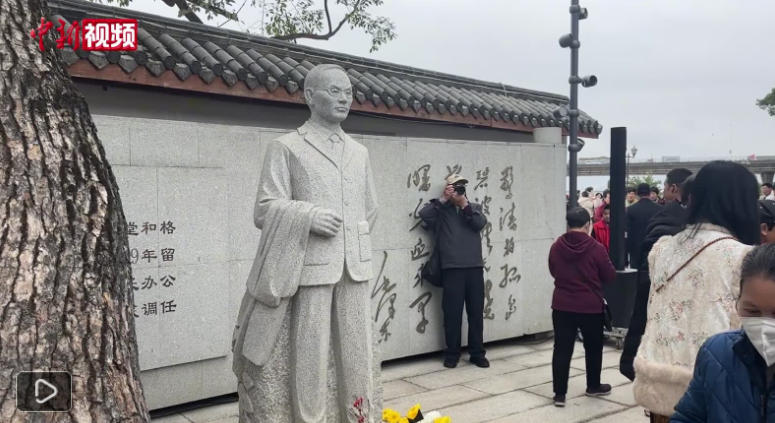
Core Viewpoint - The Wu Shi Former Residence in Fuzhou has opened for trial operation, attracting a surge of visitors and highlighting the importance of red culture and revolutionary history [2][5]. Group 1: Historical Significance - The Wu Shi Former Residence is a traditional two-entry wooden courtyard typical of Fuzhou, serving as the birthplace and early residence of General Wu Shi [3]. - The residence has been restored to preserve its historical integrity, following the principle of "minimal intervention, restoring to original state" [4]. Group 2: Visitor Engagement - The opening has drawn significant public interest, with many visitors, including children, paying respects to the statue of General Wu Shi [5][4]. - The residence features an exhibition showcasing Wu Shi's life and contributions, enhancing public understanding of his legacy [4]. Group 3: Cultural Impact - The site serves as a red education base and a bridge connecting sentiments between people across the Taiwan Strait [4]. - The recent popularity of the TV series "Silent Glory" has increased awareness of General Wu Shi's life, prompting more visitors to learn about his contributions [3].
教育家精神万里行|曾小慧:匠心育桃李 红色续华章
Ren Min Wang· 2026-02-03 14:00
Core Viewpoint - Zeng Xiaohui, a teacher from Enjiang Middle School in Yongfeng County, Jiangxi, has been recognized as a national model teacher for 2024, emphasizing the integration of red culture into education through innovative teaching methods [1] Group 1: Teaching Methodology - Zeng has developed a unique "Five Reading Method" for Chinese language teaching, creating a vibrant and culturally rich classroom environment [1] - She systematically explores the integration of red culture with various subjects, including Chinese, history, arts, and physical education [1] Group 2: Community Engagement - Zeng has initiated a "social classroom" concept, leading students to historical sites for thematic commemorative activities focused on party history, honoring heroes, and instilling the spirit of the party [1] - This immersive experience aims to deeply root the red gene in students' hearts [1] Group 3: Educational Philosophy - Zeng embodies the belief that teachers should act as advocates, promoters, and sowers of red culture, demonstrating dedication and commitment to the educational mission [1] - Her actions reflect the spirit of an educator, serving as a mentor and friend in students' growth journeys [1]
青海省政协:提案为“钥”系统精准“献良策”
Xin Lang Cai Jing· 2026-01-26 09:43
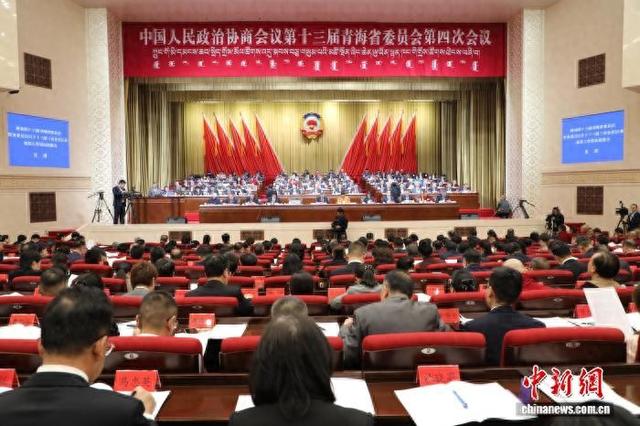
Core Viewpoint - The 4th session of the 13th Qinghai Provincial Committee of the Chinese People's Political Consultative Conference opened, focusing on proposals related to ecological civilization, economic development, cultural heritage, and healthcare [1][2]. Group 1: Proposals on Ecological Civilization - A total of 44 proposals were submitted focusing on ecological civilization, including green development, wetland protection, and ecological restoration [2]. - A specific proposal emphasized monitoring and protecting biodiversity changes in the Qinghai Lake wetland, leveraging the creation of the Qinghai Lake National Park to enhance ecological monitoring systems [2]. Group 2: Proposals on Economic Development - 103 proposals were made regarding economic construction, new productive forces, and rural tourism [5]. - A proposal aimed at promoting the green computing industry in Qinghai, ensuring preferential supply of green electricity and enhancing computing capacity [5]. - Another proposal focused on supporting the replacement of electrolytic cell capacity to facilitate the green transformation of the aluminum industry [5]. Group 3: Proposals on Cultural and Social Development - 70 proposals were related to ethnic unity, legal construction, and international exchanges, including initiatives to promote cultural integration between Qinghai and Hong Kong [5]. - 26 proposals were made concerning the inheritance of red culture and the promotion of intangible cultural heritage, such as enhancing the international influence of traditional arts [5]. Group 4: Proposals on Healthcare and Employment - 172 proposals were submitted regarding health, elderly care, and employment [7]. - A proposal to develop the high-quality plateau health and wellness industry was included in the 14th Five-Year Plan, with plans for a specialized development plan [7]. - A proposal for establishing child care leave was approved, allowing for 20 days of leave for only children and 10 days for non-only children, effective from December 1, 2025 [7].
历史的现场 生动的课堂
Ren Min Ri Bao· 2026-01-22 23:20
Core Viewpoint - Shanxi Province is innovatively integrating red resources and traditional Chinese culture into ideological and political education, breaking classroom boundaries and enhancing the appeal and effectiveness of these courses through new media [1][2][12] Group 1: Innovative Teaching Approaches - A special ideological and political class was conducted at the school history museum in Taiyuan, allowing students from different grades to engage in mutual questioning and collective thinking [2] - The "walking ideological and political class" is part of Shanxi's "New Era Talent Cultivation Project" and aims to promote integrated reforms in ideological education across all educational levels [2][11] - Shanxi Province has developed 67 "Great Ideological and Political Class" practical teaching bases, supporting collaboration between schools and museums to enhance course quality [5] Group 2: Curriculum Development - The curriculum incorporates three thematic colors: red for patriotism, green for ecological civilization, and blue for industrial technology, creating a diverse ideological education framework [8][9] - Teachers are encouraged to design courses that connect students with local resources, such as tea picking, to foster a deeper understanding of new development concepts [9] - The province is building a resource library for "What is Shanxi" ideological courses, integrating moral education elements from various subjects [9] Group 3: Community Engagement and Practical Experience - Students participate in community service and historical reenactments, enhancing their understanding of national history and fostering a sense of patriotism [11][12] - The "walking ideological class" includes activities like hiking to historical sites, singing revolutionary songs, and paying tribute to martyrs, which are designed to instill a sense of national pride [11] - Schools are forming partnerships with local communities to create a platform for students to engage in moral education through service and storytelling [11][12]
古老织布机的“别样新生”
Xin Lang Cai Jing· 2026-01-19 14:04
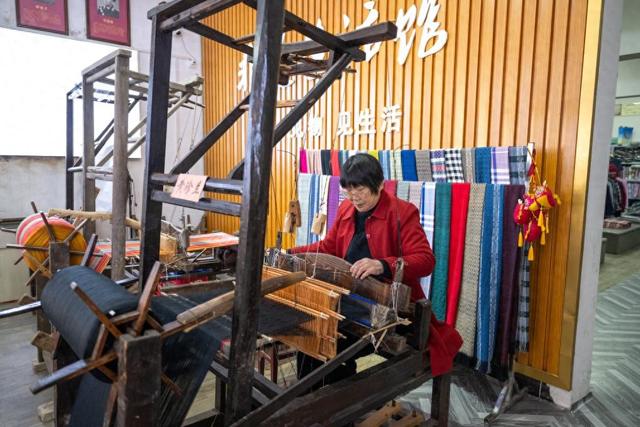
Core Viewpoint - The article highlights the successful revival and commercialization of traditional textile craftsmanship in Hong'an County, led by Tao Wencheng, who combines heritage with modern design to create a thriving business that also supports local employment [1][5]. Group 1: Business Development - Tao Wencheng has established a 1,600 square meter industrial demonstration and research base for Hong'an Da Bu, which includes over 40 weaving machines and has engaged more than 100 local women [3]. - The business has expanded to cover over 20 product categories, including clothing, bedding, and cultural products, with annual revenue nearing 6 million yuan [7]. - The handmade scarves are priced between 180 to 200 yuan and are in high demand, with the business capturing one-third of the local market share [7]. Group 2: Cultural Heritage and Innovation - Tao Wencheng emphasizes the importance of cultural transmission, stating that traditional skills should not remain confined to museums [5]. - He has integrated local revolutionary songs into the fabric, showcasing the region's rich history through innovative textile design [7]. - The combination of traditional craftsmanship with modern aesthetics has gained attention at events like the Beijing 798 International Fashion Week, enhancing the brand's visibility and market reach [5]. Group 3: Community Impact - The workshop has significantly contributed to local employment, with skilled female workers earning daily wages of around 200 yuan [7]. - The initiative not only preserves traditional skills but also fosters community development by providing job opportunities for local residents [5][7].
连环画《大青山抗日根据地的故事》发布
Xin Lang Cai Jing· 2026-01-18 19:30
Core Viewpoint - The new comic book series "The Stories of the Anti-Japanese Base in Daqingshan" was launched, highlighting the historical significance and cultural heritage of the Daqingshan Anti-Japanese base during wartime [1] Group 1: Content Overview - The comic series is divided into three parts: the Battle section, the Heroes section, and the Support section, providing a comprehensive portrayal of the anti-Japanese resistance [1] - The Battle section focuses on key events such as the Wugongba ambush and the snow night military horse retrieval, vividly depicting the wartime atmosphere [1] - The Heroes section features the heroic deeds of figures like Chang Jisheng, Ren Dezong, and Zhang Ernv, showcasing their contributions to the resistance [1] - The Support section highlights ordinary citizens like Zhang Runxi and others, illustrating their roles in providing supplies, protecting the wounded, and relaying information [1] Group 2: Significance and Impact - The comic book serves important functions in historical dissemination, cultural inheritance, and educational outreach [1] - During the launch event, discussions were held among the author, illustrator, and the director of the archaeological research center, focusing on the creative process and the transformation from "red memory" to "artistic work" [1] - The archaeological research center donated 20 sets of the comic book to the Hohhot Library, further promoting the educational value of the work [1]