
纪律教育

Search documents
学纪知纪明纪守纪丨风清气正过廉节
Zhong Yang Ji Wei Guo Jia Jian Wei Wang Zhan· 2026-02-11 00:06
Core Viewpoint - The article emphasizes the importance of maintaining discipline and integrity among party members, especially during the festive season, to prevent corruption and uphold a clean atmosphere [2][12]. Group 1: Key Issues During the Festive Season - Party members must be vigilant against "Four Winds" issues disguised as personal connections during the festive period [3][4]. - Common violations include accepting gifts under the guise of New Year greetings, hosting banquets without proper reporting, and engaging in inappropriate dining arrangements [4][5][8]. - The article highlights the need for strict adherence to regulations regarding gifts, dining, and travel arrangements to avoid disciplinary breaches [5][14]. Group 2: Supervision and Education Measures - The article outlines the necessity for early and effective education on discipline, including pre-festival talks and reminders to reinforce compliance among party members [6][10]. - It stresses the importance of targeted education for key individuals, particularly new and young leaders, to ensure they understand the implications of their actions [6][9]. - Continuous supervision and strict enforcement of regulations are essential to maintain a high-pressure environment against violations during the festive season [10][11]. Group 3: Promoting a Clean and Positive Atmosphere - Party members are encouraged to lead by example, demonstrating integrity and self-discipline during the holiday season [12][13]. - The article calls for a collective effort to foster a culture of honesty and simplicity, steering clear of extravagant behaviors and promoting a positive public image [12][13][17]. - It emphasizes the role of party members in addressing community concerns and ensuring public welfare during the festive period [13][16].

把对党绝对忠诚落实在行动上
Zhong Yang Ji Wei Guo Jia Jian Wei Wang Zhan· 2026-02-02 00:51
Group 1 - The core viewpoint emphasizes the importance of absolute loyalty to the Party, which is defined as unwavering, thorough, and unconditional commitment [1] - The article highlights the role of disciplinary inspection and supervision agencies in promoting Party discipline and political integrity among members [1][5] - It discusses the integration of Party character, style, and discipline as a holistic approach to strengthen the political consciousness of Party members [5][6] Group 2 - The article outlines various educational initiatives, such as case analysis and theoretical lectures, aimed at enhancing the understanding of Party regulations among members [4][5] - It mentions the importance of using real cases as educational tools to reinforce discipline and ethical behavior among Party members [22][28] - The focus on continuous education and supervision is emphasized, particularly in relation to the implementation of major Party decisions and policies [6][7][21] Group 3 - The article describes the efforts of local Party organizations in promoting political supervision and ensuring the implementation of the "14th Five-Year Plan" [7][21] - It highlights the significance of maintaining a strong ideological foundation and the role of historical education in fostering loyalty to the Party [12][27] - The need for tailored educational approaches for different groups within the Party, such as new members and key positions, is discussed [28][29]
巩固拓展深入贯彻中央八项规定精神学习教育成果
Zhong Yang Ji Wei Guo Jia Jian Wei Wang Zhan· 2026-01-13 00:33
Group 1 - The core message emphasizes the importance of institutionalizing power to ensure strict governance within the party, as highlighted by Xi Jinping's remarks at the Central Commission for Discipline Inspection meeting [1] - The implementation of the Central Eight Regulations has been a significant starting point for improving party conduct and governance since the 18th National Congress [1] - There is a call for continuous education and reinforcement of the Central Eight Regulations to ensure long-term effectiveness in improving party conduct [1] Group 2 - The "15th Five-Year Plan" period is identified as a crucial time for solidifying the foundation of socialist modernization, requiring heightened political responsibility among party members [2] - Strict measures against corruption and misconduct are necessary to maintain social and economic health, with a focus on immediate action against any signs of improper behavior [2] - There is a commitment to address issues such as hedonism and extravagance, with a focus on reducing burdens on grassroots officials to enhance their effectiveness [2] Group 3 - The persistent nature of the "Four Winds" issues indicates that improving party conduct is both a challenging and ongoing battle [3] - There is a strong emphasis on integrating party discipline with anti-corruption efforts, promoting a culture of integrity among party members [3] - The aim is to foster a robust motivation for entrepreneurship through a clean and positive atmosphere [3] Group 4 - The enforcement of the Central Eight Regulations and anti-corruption measures is framed as a long-term commitment, requiring meticulous and sustained efforts [4] - There is a focus on enhancing the depth of discipline education, particularly for young and newly promoted officials, to instill a culture of compliance [4] - The establishment of a mechanism for ongoing identification and resolution of conduct issues is essential for effective governance [4]
2025年度省直机关警示教育大会召开
Shan Xi Ri Bao· 2025-12-29 22:55
Group 1 - The conference emphasized the need for provincial agencies to uphold higher standards in promoting integrity and discipline, setting an example for others [2] - It highlighted the importance of political responsibility and learning from negative examples to strengthen party conduct and integrity [2] - The meeting called for enhanced political education and adherence to political discipline to ensure alignment with the central government's directives [2] Group 2 - There is a focus on reinforcing daily education and the role of disciplinary education, warning examples, and fostering a culture of integrity among party members [2] - The conference stressed the need to address the "Four Winds" and continue the implementation of the central eight regulations to reduce burdens on grassroots levels [2] - It also called for strengthened supervision and discipline enforcement to ensure effective power operation and promote a correct view of achievements among party members [2]
中央纪委国家监委驻农业农村部纪检监察组与气象部门新提任司局级干部以集体廉政谈话形式开展纪律教育
Xin Lang Cai Jing· 2025-12-24 14:46
Core Points - The central theme of the news is the collective integrity education conducted for newly appointed officials in the meteorological department, emphasizing higher standards and stricter requirements for their roles [1][2]. Group 1: Integrity Education - The integrity education aims to guide officials to adhere to higher standards and stricter requirements in their duties [1]. - The emphasis is on maintaining loyalty and implementing the "two safeguards" with a focus on political discipline and regulations [1]. - There is a call for a strong commitment to cleanliness, with stricter disciplinary requirements and a focus on risk prevention and power regulation [1]. Group 2: Practical Implementation - Officials are encouraged to demonstrate a pragmatic work style and achieve tangible results while fulfilling their dual responsibilities in party governance [1]. - The importance of understanding the values behind their roles, particularly the question of "for whom" they serve, is highlighted [1]. - Strengthening institutional frameworks to deter corruption and enforcing strict disciplinary measures are also emphasized [1].
时时绷紧纪律这根弦
Zhong Yang Ji Wei Guo Jia Jian Wei Wang Zhan· 2025-12-11 00:35
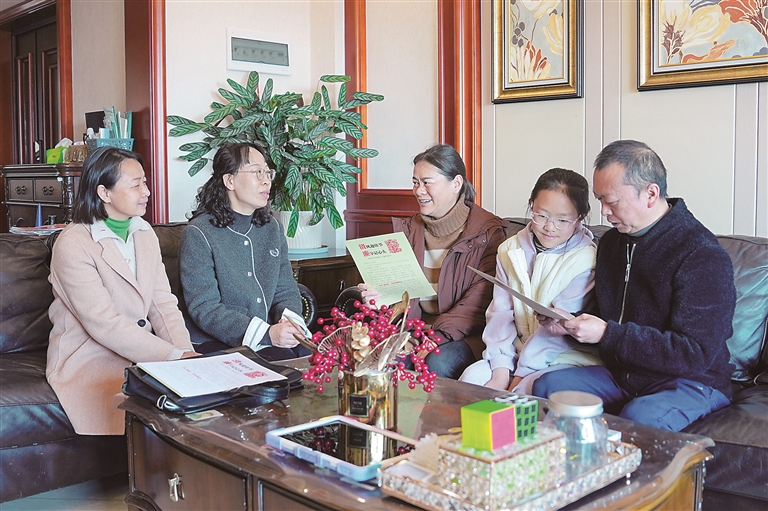
Group 1 - The core viewpoint emphasizes the establishment of a normalized and long-term disciplinary education mechanism that integrates into the entire process of organizational management and the growth cycle of cadres [1] - The municipal discipline inspection and supervision commission utilizes typical cases as educational content, focusing on various aspects such as moral education, disciplinary awareness, legal education, and accountability through a method called "Four Explanations Based on Cases" [2] - The discipline education is designed to cover the entire growth cycle of party members and cadres, with a focus on different groups such as new party members, new employees, newly promoted cadres, and retirees [3] Group 2 - The initiative includes family education as a crucial part of disciplinary education, recognizing that the family environment of party members affects both personal and party integrity [4] - Various educational formats are employed, including case analysis, simulated trials, and discussions, to enhance the understanding of party discipline and regulations among different ranks and sectors [3] - The creation of a "clean family" culture is promoted through educational programs aimed at both party members and their families, reinforcing the importance of family values in maintaining discipline [4]
深化纪律教育 筑牢思想堤坝
Zhong Yang Ji Wei Guo Jia Jian Wei Wang Zhan· 2025-11-27 00:24
Group 1 - The core viewpoint emphasizes the importance of strengthening the Party's discipline construction as an ongoing task, guiding Party members and cadres to transform external regulations into self-discipline, and integrating discipline education throughout the entire growth cycle of cadres [1][2] - Discipline is described as the "yardstick" for governing the Party, essential for regulating the behavior of Party members and cadres, and is a fundamental, long-term task that must be prioritized to build a strong ideological barrier against corruption [2][3] Group 2 - The first task in strengthening discipline education is to unify thoughts and actions through the Party's innovative theories, particularly Xi Jinping's thoughts on socialism with Chinese characteristics for a new era [3][4] - Innovative methods are required to enhance the effectiveness of discipline education, combining positive guidance with negative warnings, and utilizing typical cases for educational purposes [4][5] Group 3 - Responsibilities must be tightened and a long-term mechanism for discipline education established, ensuring that it is not a temporary requirement but a continuous effort integrated into the overall Party building work [6]
河南抓实经常性纪律教育 持续筑牢拒腐防变思想防线
Zhong Yang Ji Wei Guo Jia Jian Wei Wang Zhan· 2025-11-17 00:35
Core Viewpoint - The article emphasizes the importance of discipline education within the Communist Party in Henan Province, highlighting various initiatives aimed at strengthening the awareness and adherence to party regulations among members [2][3][4]. Group 1: Discipline Education Initiatives - The Nanyang Municipal Party School has integrated discipline education into its training programs, offering courses on party regulations and disciplinary measures to reinforce the integrity of party members [2]. - The Henan Provincial Discipline Inspection Commission is enhancing the depth of discipline education, focusing on instilling a sense of respect and caution among party members [3]. - A comprehensive mechanism for discipline education is being established, combining regular and concentrated educational efforts across various party activities [3]. Group 2: Targeted Education Strategies - The discipline education efforts are particularly focused on key individuals, such as leaders and decision-makers, to promote a culture of compliance and accountability [3]. - Education content is tailored to address specific risks associated with critical positions that handle concentrated power and resources [3]. - The discipline education framework is designed to be multi-layered and comprehensive, covering all stages of a party member's career [3]. Group 3: Innovative Educational Formats - The Henan Provincial Discipline Inspection Commission is utilizing various formats, including cartoons and videos, to make the interpretation of disciplinary laws more engaging and effective [4]. - New leaders undergo mandatory discussions to reinforce the importance of integrity in governance, ensuring a thorough understanding of disciplinary expectations [4]. - Local committees are employing real-life case studies from court proceedings to educate party members on the consequences of corruption and misconduct [4].
中管高校纪检监察机构抓实常态化纪律教育分类施教 精准滴灌
Zhong Yang Ji Wei Guo Jia Jian Wei Wang Zhan· 2025-11-14 00:30
Core Viewpoint - The emphasis on discipline education for newly appointed officials in universities is crucial for enhancing compliance and integrity within academic institutions [2][3][4]. Group 1: Discipline Education Initiatives - Beijing Normal University has implemented a series of discipline education activities for newly appointed officials, highlighting the importance of understanding party discipline and regulations [2]. - The university's training includes specific requirements for newly appointed officials to fulfill their dual responsibilities and adhere to regulations while pursuing their work [2][3]. - The integration of discipline education into various training programs for different categories of staff ensures that it is a continuous process throughout their career development [3]. Group 2: Practical Applications and Engagement - The Chinese University of Science and Technology has established a "discipline education delivery team" to conduct regular educational sessions within departments and research groups, addressing common issues related to discipline violations [4]. - The team focuses on clarifying the boundaries and rules for research funding usage, emphasizing the importance of compliance among research personnel [4]. - Tianjin University has organized activities that explore the historical and ethical foundations of the institution, promoting integrity and discipline through various educational initiatives [4][5]. Group 3: Warning and Reflection Mechanisms - Beijing Aerospace University has conducted a series of warning education activities based on typical cases of violations, aiming to enhance awareness and understanding of disciplinary issues among staff [5]. - The university has utilized case studies and educational films to provide impactful lessons, encouraging staff to reflect on their own practices in light of real-world examples [5].
清风中原行 | 让严守纪律融入日常 形成习惯
He Nan Ri Bao· 2025-11-13 23:44
Group 1 - The core viewpoint emphasizes the importance of strengthening discipline education as a fundamental strategy for comprehensive and strict governance of the Party [1] - The provincial disciplinary inspection and supervision agencies are integrating discipline education into various organizational activities, ensuring that it becomes a regular part of the daily routine for Party members and officials [2][3] - The focus is on enhancing political awareness, ideological consciousness, and action consciousness among Party members through continuous discipline education [2] Group 2 - Discipline education is tailored to specific groups and contexts, ensuring that it is not a one-size-fits-all approach but rather a targeted effort [3] - Key areas of focus include leadership accountability, critical sectors, and significant timeframes to ensure that discipline education is relevant and impactful [3][4] - The use of innovative methods and platforms is being promoted to enhance the effectiveness and engagement of discipline education [4][5] Group 3 - The provincial disciplinary inspection and supervision agencies are utilizing multimedia platforms to disseminate information and educate Party members about discipline and regulations [5] - Cultural initiatives are being employed to foster a sense of integrity and ethical behavior among officials, using traditional arts and community activities [5] - The ongoing commitment to discipline construction aims to create a clean political environment and encourage proactive and responsible behavior among Party members [5]