
结汇高峰期

Search documents
宋清辉:中国经济向好预期增强,为人民币走强提供了坚实底层支撑
Sou Hu Cai Jing· 2026-01-07 04:00
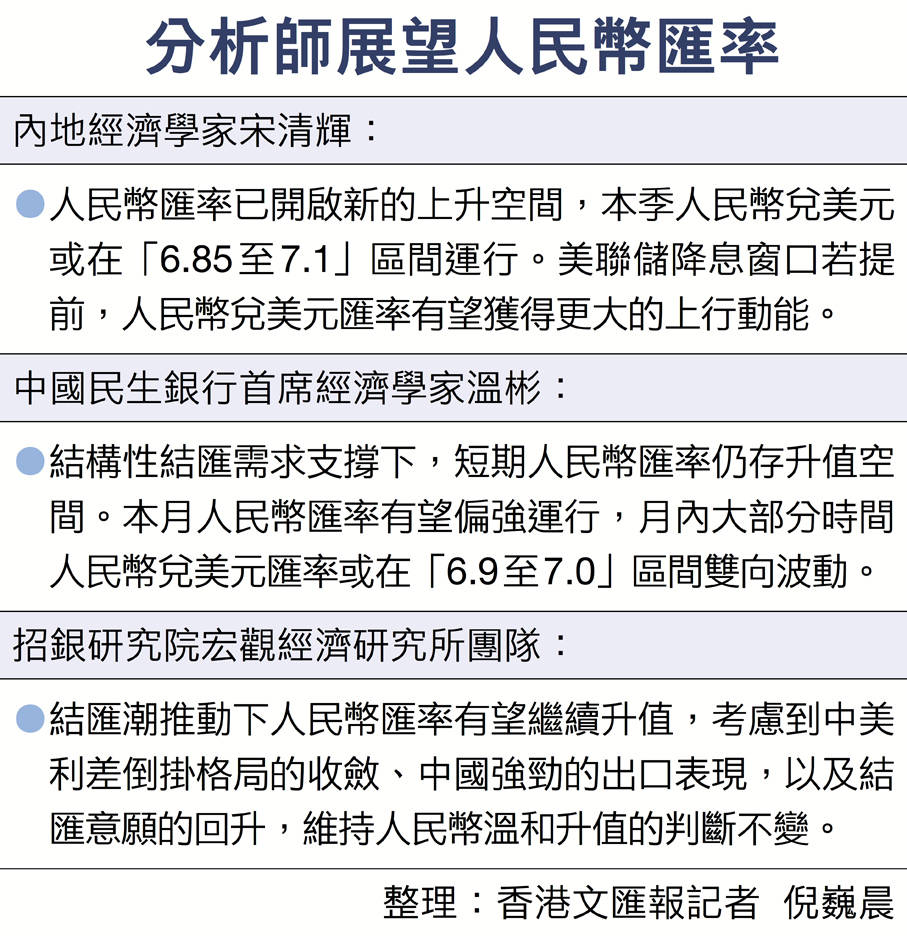
Group 1 - The core viewpoint is that multiple favorable factors are supporting the appreciation of the Renminbi, including improved macroeconomic data and increased foreign capital inflow into Chinese assets [1][3][4] - The Chinese economy is showing resilience due to the effectiveness of counter-cyclical adjustment policies, which enhances expectations for economic improvement and provides solid support for the Renminbi [1][4] - The year-end and early-year peak in corporate foreign exchange settlement activity is driving the Renminbi's appreciation against the US dollar [1][4][8] Group 2 - The recent softening of the US dollar index, which has dropped from high levels, is a significant factor contributing to the Renminbi's strength [5][6] - The A-share and Hong Kong stock markets have both started the year positively, attracting long-term foreign investment, which further benefits the Renminbi [1][3][4] - The expectation of further interest rate cuts by the Federal Reserve is influencing market sentiment and contributing to the Renminbi's appreciation [5][6] Group 3 - The Renminbi's central parity rate has reached a 15-month high, with the onshore and offshore rates also showing significant appreciation [3][6] - The recent geopolitical tensions, such as the US military action in Venezuela, have increased global risk aversion, leading to a rise in demand for safe-haven assets, including the Renminbi [7][8] - Analysts predict that the Renminbi will continue to appreciate in the short term, with potential fluctuations between 6.85 and 7.1 against the US dollar [8]

如何看待近期人民币汇率持续走强
Ren Min Ri Bao· 2025-12-30 22:10
Group 1 - The onshore RMB against the USD has strengthened, breaking the 7.0 mark for the first time since May 2023, with a rise from approximately 7.35 to around 7.01 since April 2025 [1] - The offshore RMB also broke the 7.0 mark on December 25, marking the first occurrence since September 2024 [1] - Factors driving the recent strength of the RMB include increased expectations for US Federal Reserve interest rate cuts, leading to a decline in the US dollar index by about 2.0% since late November, and a resilient Chinese economy that has prompted foreign institutions to raise their growth forecasts for China [1] Group 2 - The Central Economic Work Conference emphasized maintaining the RMB exchange rate at a reasonable and balanced level, with a focus on preventing excessive fluctuations [2] - The People's Bank of China highlighted the need for a dual-directional fluctuation and increased elasticity of the RMB exchange rate as a norm, aiming to enhance the resilience of the foreign exchange market and stabilize market expectations [2]