
外资增配中国资产

Search documents
全球资本版图重构:一场私募的“出海征途”
Shang Hai Zheng Quan Bao· 2026-02-09 18:21
Group 1 - The trend of private equity firms going overseas has become prominent, with over 130 mainland private equity fund managers holding Hong Kong's Type 9 license as of February 9, marking an increase of over 40 firms compared to the previous year [1][2] - The number of private equity firms with assets exceeding 5 billion yuan has reached 62, indicating that these firms are the main force in the overseas expansion [2] - Many private equity firms are establishing offices in Hong Kong and Singapore to serve as "bridgeheads" for overseas qualified investors, offering quantitative strategies focused on the Chinese and Asia-Pacific markets [2] Group 2 - Securities firms are increasingly supporting private equity firms in their overseas operations, with companies like China Merchants Securities launching one-stop overseas fund service brands [3] - The total scale of overseas fund administrative management business has surpassed 10 billion yuan, reflecting the growing demand for comprehensive services in the private equity sector [3] Group 3 - Foreign investors are showing renewed interest in Chinese assets, with indications of a marginal recovery in their willingness to allocate funds to China [4] - Recent domestic policy signals have been more positive, contributing to a shift in foreign investors' attitudes towards Chinese assets, especially as they have been over-allocating to U.S. stocks and dollar assets [4] Group 4 - As of February 9, the total amount of cornerstone investments by institutions in Hong Kong stocks has exceeded 30 billion Hong Kong dollars, with significant participation from foreign institutions [5] - Notable foreign investors, including Abu Dhabi Investment Authority and UBS Global Asset Management, have actively increased their stakes in various listed companies in Hong Kong [5] Group 5 - The journey of private equity firms going global is not merely about obtaining a Hong Kong Type 9 license; it involves enhancing institutional capabilities to compete with global hedge fund giants [6] - Chinese quantitative firms are reportedly on par with their overseas counterparts in terms of AI application and data processing speed, but they need to improve in areas like multi-asset cross-market linkage and ESG integration [6] - Foreign investors emphasize the quality of risk-adjusted returns and are keen on understanding the sustainability of profits and the replicability of strategies when evaluating private equity firms [6]
运河财富|看好中国经济 外资机构释放积极信号
Sou Hu Cai Jing· 2026-01-10 05:09
Group 1 - Global foreign institutions have released annual outlook reports, expressing positive expectations for China's economic development, driven by multiple factors including economic stability, accelerated industrial upgrades, and deepening capital market reforms [1] - International organizations and multinational investment banks have raised their economic growth forecasts for China, reflecting a consensus on the resilience and development prospects of the Chinese economy. For instance, Goldman Sachs predicts a 4.8% growth in China's real GDP by 2026, surpassing the market consensus of 4.5% [2] - The International Monetary Fund (IMF) has adjusted its growth forecasts for China, expecting 5.0% growth in 2025 and 4.5% in 2026, which is an increase of 0.2 and 0.3 percentage points from previous estimates [2] Group 2 - There is a growing willingness among foreign investors to increase their allocation to Chinese assets, with various actions being taken in the market. UBS Futures has facilitated the first commodity futures transaction using government bonds as margin for qualified foreign institutional investors (QFII) [3] - The market anticipates that more overseas medium- to long-term funds will enter, injecting vitality into the A-share market, particularly in sectors like technology and the "new economy" [3] - The continuous deepening of institutional openness in China's capital market is crucial for attracting foreign investment, with the China Securities Regulatory Commission proposing to steadily expand institutional openness and optimize the QFII system [4] Group 3 - Future expectations include more substantial measures to enhance cross-border investment and financing convenience, expand mutual access channels, and strengthen regulatory cooperation between domestic and foreign entities [5] - Suggestions include encouraging high-quality overseas companies to utilize China's capital market for financing and exploring mechanisms for foreign institutions to issue bonds or stocks domestically [5] - There are recommendations to expand the investment scope of QFII and mutual stock connect programs while ensuring safety, and to enhance regulatory collaboration to protect investors' rights [5]


宋清辉:中国经济向好预期增强,为人民币走强提供了坚实底层支撑
Sou Hu Cai Jing· 2026-01-07 04:00
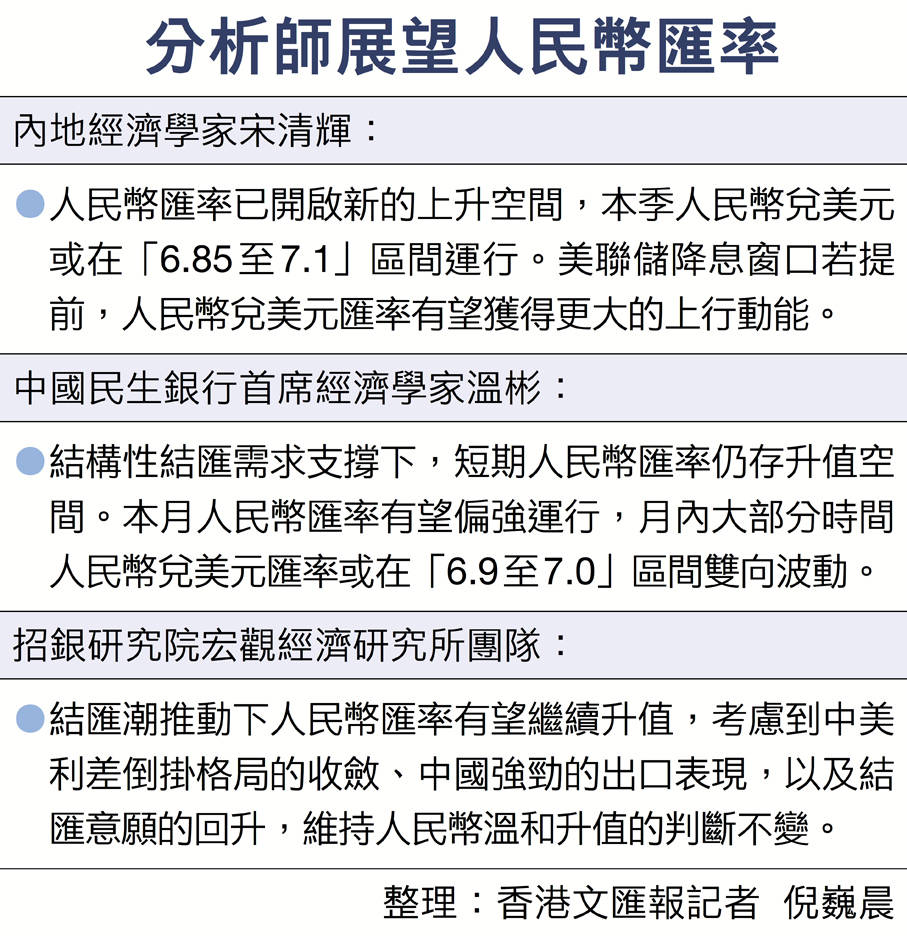
Group 1 - The core viewpoint is that multiple favorable factors are supporting the appreciation of the Renminbi, including improved macroeconomic data and increased foreign capital inflow into Chinese assets [1][3][4] - The Chinese economy is showing resilience due to the effectiveness of counter-cyclical adjustment policies, which enhances expectations for economic improvement and provides solid support for the Renminbi [1][4] - The year-end and early-year peak in corporate foreign exchange settlement activity is driving the Renminbi's appreciation against the US dollar [1][4][8] Group 2 - The recent softening of the US dollar index, which has dropped from high levels, is a significant factor contributing to the Renminbi's strength [5][6] - The A-share and Hong Kong stock markets have both started the year positively, attracting long-term foreign investment, which further benefits the Renminbi [1][3][4] - The expectation of further interest rate cuts by the Federal Reserve is influencing market sentiment and contributing to the Renminbi's appreciation [5][6] Group 3 - The Renminbi's central parity rate has reached a 15-month high, with the onshore and offshore rates also showing significant appreciation [3][6] - The recent geopolitical tensions, such as the US military action in Venezuela, have increased global risk aversion, leading to a rise in demand for safe-haven assets, including the Renminbi [7][8] - Analysts predict that the Renminbi will continue to appreciate in the short term, with potential fluctuations between 6.85 and 7.1 against the US dollar [8]
国海富兰克林基金徐荔蓉:资产管理机构需发挥专业能力
Zhong Guo Zheng Quan Bao· 2025-12-30 22:15
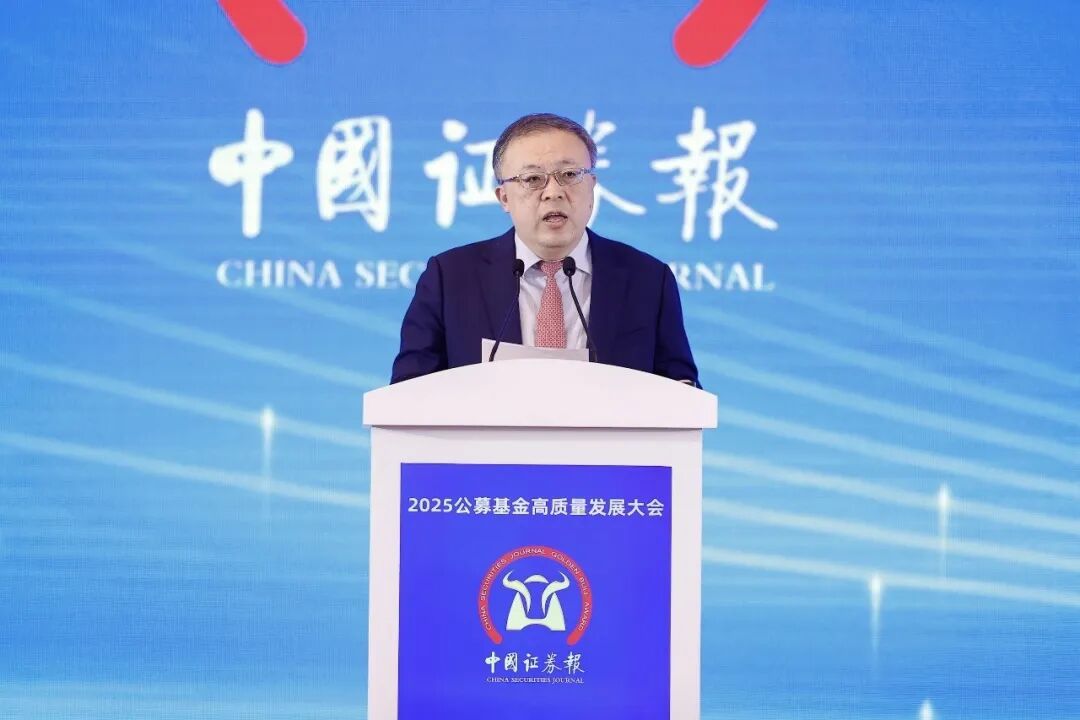
Core Insights - The conference "Reform and Restructuring - 2025 Public Fund High-Quality Development Conference and the 22nd Fund Industry Golden Bull Award Ceremony" was held in Shanghai, highlighting the importance of high-quality development in the public fund industry [1] - Xu Lirong, General Manager and Chief Investment Officer of Guohai Franklin Fund, emphasized the company's extensive experience in cross-border investment services, having served international sovereign funds and institutional investors for over thirteen years [1] - The current phase of systematic and deep value reassessment of Chinese assets, including A-shares and H-shares, is driven by China's irreplaceable position as a global growth engine and innovation source [1] Group 1 - Xu Lirong noted that the allocation weight of Chinese equity assets in global investment portfolios is significantly mismatched with China's share of the global economy [2] - Key trends in foreign capital "increasing allocation" include a systematic return to reasonable allocation levels, a new funding structure characterized by "solid foundations and continuous inflow," and the strategic value enhancement of Chinese assets due to RMB internationalization [2] - The valuation recovery path for Chinese assets is ongoing, supported by the continuous improvement of the domestic economy, coordinated macro policies, steady capital market reforms, and the increasing quality and investment value of listed companies [2]
资产管理机构需发挥专业能力
Zhong Guo Zheng Quan Bao· 2025-12-30 21:11
Group 1 - The core viewpoint presented by Xu Lirong is that Chinese assets, including A-shares and Hong Kong stocks, are undergoing a systematic and deep value reassessment, making them a "must-have" in global investment portfolios [1][2] - Guohai Franklin Templeton Fund has over 13 years of experience in cross-border investment services, with a client network covering markets in Hong Kong, the Middle East, Europe, and Southeast Asia [1] - The company leverages its foreign shareholder, Franklin Templeton Investment Group, to maintain frequent and in-depth communication with global research teams [1] Group 2 - Xu Lirong highlights a significant mismatch between the allocation weight of Chinese equity assets in global investment portfolios and China's share of the global economy [2] - Key trends for foreign capital "increasing allocation" to Chinese assets include a systematic return to reasonable allocation levels, a new funding structure characterized by stability and continuous inflow, and the strategic value enhancement of Chinese assets due to the internationalization of the Renminbi [2] - The ongoing recovery of the domestic economy, coordinated macro policies, steady capital market reforms, and the increasing quality and investment value of listed companies indicate that the valuation recovery path for Chinese assets is continuing and is expected to enter a more stable and sustainable new phase [2]
国海富兰克林基金徐荔蓉: 资产管理机构需发挥专业能力
Zhong Guo Zheng Quan Bao· 2025-12-30 21:11
Group 1 - The core viewpoint of the articles emphasizes the ongoing systematic and deep value reassessment of Chinese assets, including A-shares and Hong Kong stocks, driven by China's irreplaceable position as a global growth engine and innovation source [1][2] - Guohai Franklin Fund has over 13 years of experience in cross-border investment services, catering to long-term institutional investors such as sovereign funds, with a client network spanning Hong Kong, the Middle East, Europe, and Southeast Asia [1] - The company maintains frequent and in-depth communication with global investment teams, leveraging the global network of its foreign shareholder, Franklin Templeton Investments [1] Group 2 - There is a significant mismatch between the allocation weight of Chinese equity assets in global investment portfolios and China's share of the global economy, indicating a potential for increased foreign investment allocation [2] - Key trends for future foreign capital allocation include a systematic return to reasonable allocation levels, a new funding structure characterized by stability and continuous inflow, and the strategic value enhancement of Chinese assets due to the internationalization of the Renminbi [2] - The valuation recovery of Chinese assets is expected to continue, supported by the ongoing improvement of the domestic economy, coordinated macro policies, steady capital market reforms, and the increasing quality and investment value of listed companies [2]
当全球资本“共识”,遇见中国市场“底气”
Zhong Guo Zheng Quan Bao· 2025-12-30 16:36
Core Viewpoint - The Chinese assets, including A-shares and Hong Kong stocks, are undergoing a systematic and deep value reassessment process, driven by global capital consensus and China's market fundamentals [1][4][10] Group 1: Investment Trends - There has been a significant directional shift in overseas investors' perception and allocation behavior towards Chinese assets over the past year, moving from "whether to invest" to "how to invest well" [4][5] - The allocation weight of Chinese equity assets in global investment portfolios is severely mismatched with China's economic share globally, indicating substantial future allocation potential [5] - Future foreign capital allocation will exhibit three key trends: a systematic return to reasonable allocation levels, a new funding structure characterized by stability and continuous inflow, and an increase in the strategic allocation value of Chinese assets due to RMB internationalization [5] Group 2: Market Dynamics - The A-share market is experiencing a systematic reshaping, with significant internal driving forces enhancing the long-term positive outlook [8][10] - The strategic position of the capital market has been elevated, with top-level designs transforming into systemic long-term mechanisms that provide a solid institutional foundation and confidence support for market stability [8] - The profitability fundamentals of core Chinese assets have reached an inflection point, with signs of stabilization in traditional businesses and vast long-term growth potential driven by industrial transformation, particularly in sectors like AI [8][10] Group 3: Role of Asset Management Institutions - Asset management institutions are not only market participants but also value discoverers, idea transmitters, and ecosystem builders [10] - The company emphasizes the importance of professional communication and storytelling to help international investors understand the dynamics of the Chinese economy and corporate vitality [10] - There is a call for the asset management industry to unite in professional efforts to guide global capital in recognizing and investing in China, thereby fostering a new ecosystem for the long-term health of the capital market [10]
阿里突传利好 中概股深夜走强 黄金、白银、原油跳水 美联储降息无悬念
2 1 Shi Ji Jing Ji Bao Dao· 2025-12-10 16:22
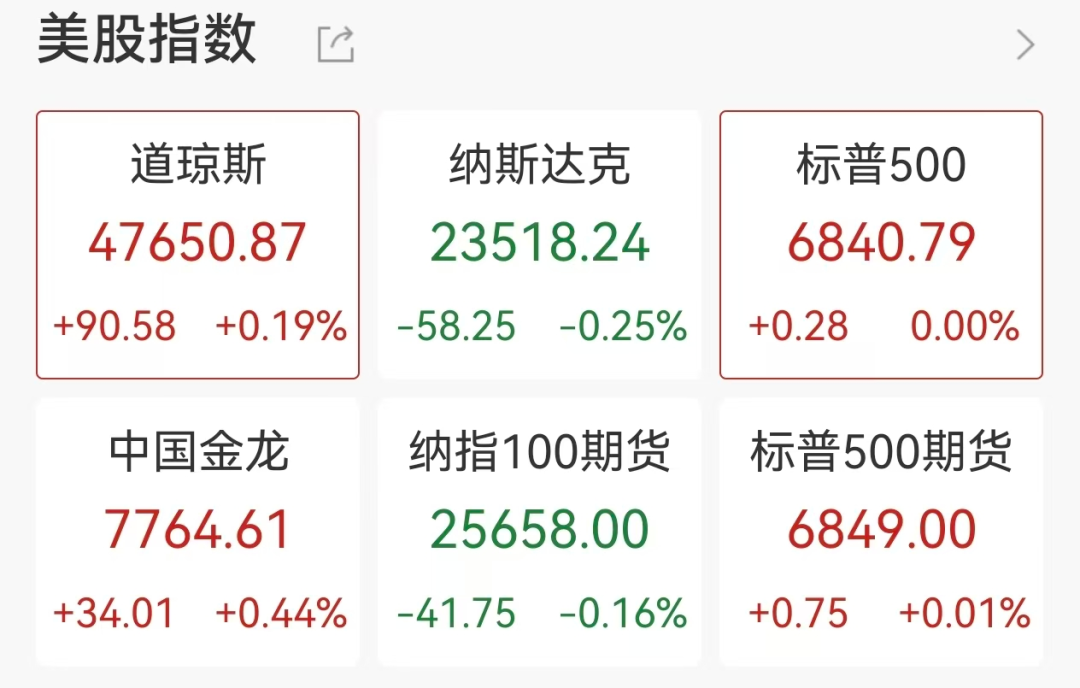
Market Overview - US stock indices opened slightly lower and showed mixed performance, with major tech stocks experiencing varied movements; Amazon, Google, and Apple saw gains, while Microsoft dropped nearly 2.3% and Intel fell close to 4% during the session [1] - Chinese concept stocks generally rose, with the Nasdaq China Golden Dragon Index showing an expanded increase; notable performers included Huya up nearly 6%, Dingdong Maicai and Canadian Solar up over 4%, and Alibaba and Pony.ai rising about 2.5% [1] Foreign Investment Interest - Foreign institutional interest in Chinese assets is reportedly increasing; JPMorgan forecasts an approximate 18% rise in the MSCI China Index by the end of 2026, supported by robust global economic growth and improved corporate earnings in China [3] - HSBC Private Bank predicts the Hang Seng Index will reach 31,000 points by the end of 2026, indicating a potential upside of about 21% from its latest closing level; Morgan Stanley reports that foreign long funds have purchased around $10 billion worth of stocks in A-shares and Hong Kong stocks as of November this year [4] Commodity Market Movements - International oil prices experienced a sharp decline, with WTI and ICE Brent crude both dropping approximately 0.6%, marking a cumulative decline of over 17% for the year; major banks predict further decreases in oil prices, with Brent expected to fall to around $59 per barrel by 2026 due to a projected oversupply of about 2.2 million barrels per day [5] - Gold and silver spot prices saw a short-term pullback after silver previously surged to an unprecedented $60 per ounce [6] Federal Reserve's Interest Rate Decision - The Federal Reserve is expected to announce a rate cut, with an 87.6% probability of a 25 basis point reduction; however, the market is more focused on the implications of Fed Chair Powell's statements regarding future monetary policy direction following the decision [7][8]
阿里突传利好,中概股深夜走强,黄金、白银、原油跳水,美联储降息无悬念
2 1 Shi Ji Jing Ji Bao Dao· 2025-12-10 16:01
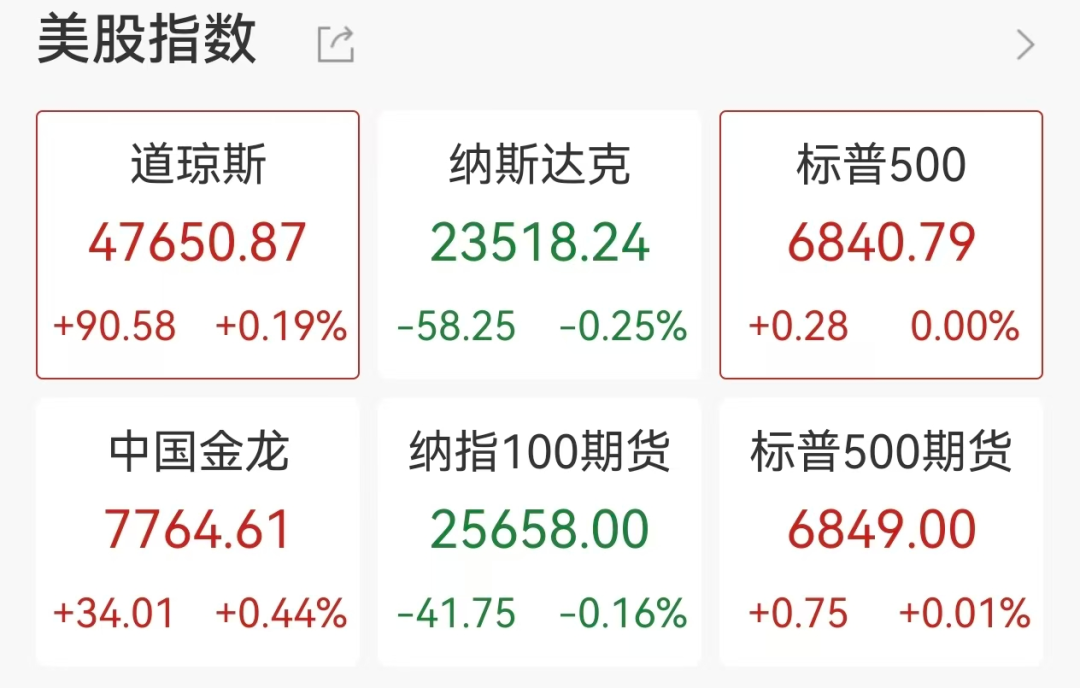
Market Overview - US stock indices opened slightly lower and showed mixed performance, with the Nasdaq China Golden Dragon Index gaining strength [1] - Major tech stocks had mixed results, with Amazon, Google, and Apple showing gains, while Microsoft fell nearly 2.3% [2] - Chinese stocks mostly rose, with notable gains in companies like Huya (up 5.95%) and Dingdong (up 4.68%) [3] Foreign Investment Interest - Foreign institutional interest in Chinese assets is increasing, supported by robust global economic growth and improved corporate earnings in China [4] - JPMorgan forecasts an 18% increase in the MSCI China Index by the end of 2026, while HSBC predicts the Hang Seng Index will rise to 31,000 points, representing a potential 21% increase [4] - As of November, foreign long funds have purchased approximately $10 billion worth of stocks in A-shares and Hong Kong stocks [4] Oil Market Dynamics - International oil prices experienced a sharp decline, with WTI and ICE Brent crude both dropping about 0.6%, marking a cumulative decline of over 17% for the year [5] - Major banks predict further declines in oil prices, with Brent crude expected to drop to around $59 per barrel by 2026, citing a projected oversupply of approximately 2.2 million barrels per day [5] Federal Reserve Interest Rate Decision - The Federal Reserve is expected to announce a rate cut, with an 87.6% probability of a 25 basis point reduction [8] - Market participants are more focused on the tone and content of Fed Chair Powell's statements following the decision, as it will influence the monetary policy outlook for the following year [8]

阿里突传利好,中概股深夜走强,黄金、白银、原油跳水,美联储降息无悬念
21世纪经济报道· 2025-12-10 15:58
Core Viewpoint - The article discusses the current state of the U.S. stock market, particularly focusing on the performance of major tech stocks, the rise of Chinese concept stocks, and the anticipated interest rate decision by the Federal Reserve, which is expected to result in a rate cut. Group 1: U.S. Stock Market Performance - The U.S. stock market opened slightly lower with mixed results among major indices, while Chinese concept stocks showed strength late at night [1] - The tech giants in the U.S. had mixed performances, with Amazon, Google, and Apple seeing gains, while Microsoft dropped nearly 2.3% and Intel fell close to 4% during the session [2][3] Group 2: Chinese Concept Stocks - The Nasdaq Golden Dragon China Index saw an increase, with notable gains from stocks such as Huya (up nearly 6%), Dingdong Maicai, and Canadian Solar (both up over 4%) [2][3] - Alibaba's stock experienced a significant pre-market surge, reportedly due to Meta utilizing Alibaba's Qianwen to optimize its latest AI model [2] Group 3: Foreign Investment in Chinese Assets - Foreign institutional interest in Chinese assets is reportedly increasing, with JPMorgan forecasting an 18% rise in the MSCI China Index by the end of 2026, supported by stable global economic growth and improved corporate earnings [4] - HSBC Private Banking predicts that the Hang Seng Index could rise to 31,000 points by the end of 2026, representing a potential increase of about 21% from its latest closing level [4] Group 4: Oil Market Outlook - International oil prices experienced a sharp decline, with WTI and ICE Brent crude both dropping approximately 0.6%, marking a year-to-date decline of over 17% [5] - Major investment banks predict that Brent crude could fall to around $59 per barrel by 2026, with a projected daily supply surplus of about 2.2 million barrels due to production growth outpacing demand [5] Group 5: Federal Reserve Interest Rate Decision - The Federal Reserve is expected to announce a 25 basis point rate cut, with a probability of 87.6%, while the likelihood of maintaining the current rate stands at 12.4% [9] - Market participants are more focused on the statements and tone of Fed Chair Jerome Powell following the rate decision, as it will indicate the future direction of monetary policy [10]
