绿色与科技浪潮

Search documents
有色板块高位震荡 资金持续加仓ETF
Zhong Guo Jing Ying Bao· 2026-01-27 08:37
Core Viewpoint - The recent strong performance of the non-ferrous metal sector in A-shares is attributed to the resonance of global macroeconomic and industrial trends, with a focus on long-term benefits rather than short-term price fluctuations [1][2]. Group 1: Market Performance - The non-ferrous metal sector has become one of the most prominent sectors in A-shares since 2026, with related ETFs recording significant gains, most exceeding 25% [2]. - On January 26, 2026, several ETFs, including the China Securities Non-ferrous Metal Mining Theme ETF, saw increases of over 6% [2]. - Despite some fluctuations on January 27, the sector did not experience significant declines that would erase previous gains [2]. Group 2: Driving Factors - Two main factors are driving the strength of the non-ferrous sector: a recovery in manufacturing and a long-term demand reshaping due to green and technological trends [2][3]. - The recovery in manufacturing, particularly in the U.S. and emerging economies, has led to increased demand for traditional industrial metals, while low inventory levels have amplified price elasticity [2]. - The demand for metals like copper and aluminum is being supported by stable needs from sectors such as electric vehicles, photovoltaics, and wind power, alongside new growth opportunities from AI infrastructure [3]. Group 3: Investment Strategy - Investors are advised to view industrial non-ferrous metals as strategic resource assets benefiting from global liquidity easing and future electrification and digitalization, rather than merely as cyclical commodities [4]. - Fund managers have identified key metals for 2026, including copper, aluminum, lithium carbonate, gold, and minor metals like tungsten, while also considering opportunities in sectors like chemicals and steel [4]. - Adjustments in portfolio allocations are being made based on industry conditions, with a focus on maintaining high positions in precious metals and copper while reducing exposure to overvalued sectors [4]. Group 4: Supply and Demand Dynamics - The current tight supply-demand balance in the non-ferrous sector necessitates close attention to the supply-demand balance sheet and macroeconomic influences on metal prices, including monetary policy and geopolitical factors [5].
见证A股历史!两大万亿巨头飙涨!
天天基金网· 2026-01-26 05:15
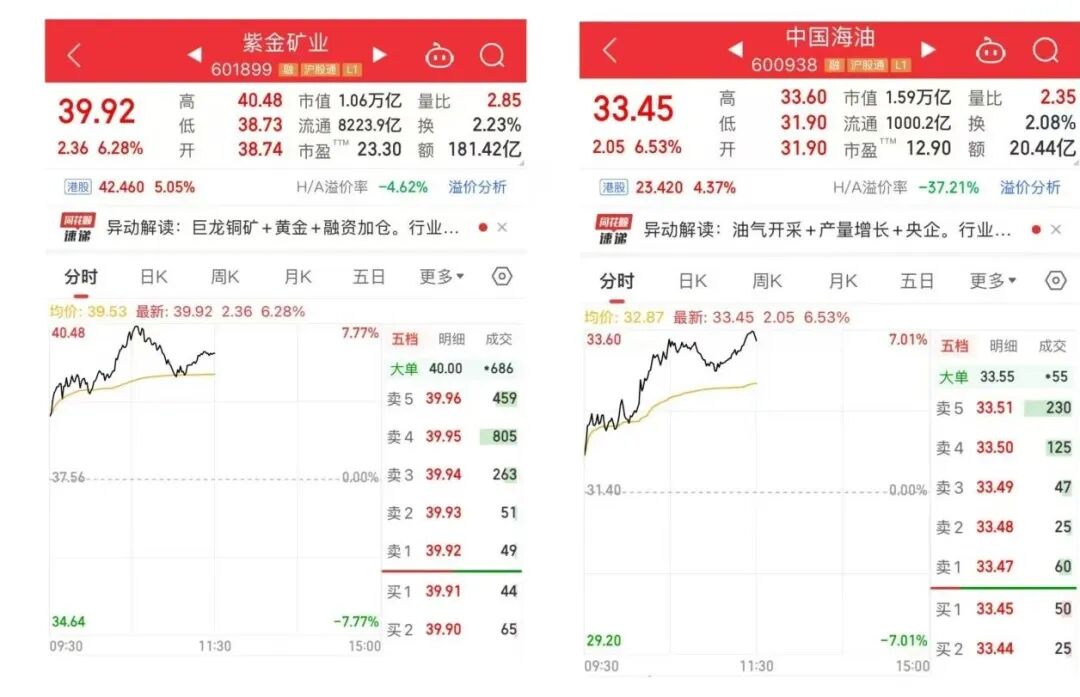
Core Viewpoint - The article discusses the recent performance of various stock indices in China, highlighting the shift in market dynamics between large-cap and micro-cap stocks, as well as the strong performance of the precious metals sector driven by rising gold and silver prices [2][4][9]. Market Performance - Last week, the micro-cap stock index reached a historical high, while large-cap indices like the CSI 300 and SSE 50 experienced adjustments. However, there was a reversal today with large-cap stocks gaining strength, as the SSE 50 index rose over 1.8% at its peak [2]. - As of the morning close, the SSE Composite Index increased by 0.12%, while the Shenzhen Component Index and the ChiNext Index fell by 0.74% and 0.86%, respectively. The total market turnover exceeded 2.26 trillion yuan [4]. Precious Metals Sector - The precious metals sector showed strong performance, with significant gains in gold and silver prices. Notable stocks such as Hunan Gold and Zhaojin Mining reached their daily limit up, while leading companies like Zijin Mining and China Uranium also saw substantial increases [6][9]. - Gold prices surged past $5,000 per ounce, marking a new historical high, which is attributed to geopolitical factors and fluctuations in confidence towards U.S. assets, leading to increased demand for gold as a safe-haven asset [8][10]. Earnings Forecasts - Several precious metals companies have announced optimistic earnings forecasts for 2025. Zijin Mining expects a net profit of 51 to 52 billion yuan, a year-on-year increase of 59% to 62%. Chifeng Jilong Gold anticipates a net profit of 3 to 3.2 billion yuan, reflecting a growth of 70% to 81% [9]. - The overall outlook for the non-ferrous metals sector is driven by three main catalysts: recovery in manufacturing and inventory replenishment, long-term demand reshaping due to green and technological trends, and favorable liquidity expectations enhancing the financial attributes of precious metals [10]. Financial Sector Activity - The financial sector was active, with the insurance sector leading gains. Major insurance companies collectively saw increases, with New China Life Insurance rising over 4% [12]. - The insurance industry is expected to face short-term challenges but may benefit from a rebound in the equity market in early 2026, driven by improved asset performance and a potential stabilization of long-term interest rates [14].





两大万亿巨头,飙涨!历史新高
Zhong Guo Zheng Quan Bao· 2026-01-26 04:27
Market Performance - The micro-cap stock index reached a historical high last week, while large-cap indices like the CSI 300 and SSE 50 experienced adjustments [1] - This morning, large-cap stocks strengthened, with the SSE 50 index rising over 1.8% at its peak, while the micro-cap index and the CSI 2000 index both declined, with the latter down 1.39% [1] - By the close of the morning session, the SSE index rose by 0.12%, while the Shenzhen Component Index and the ChiNext Index fell by 0.74% and 0.86%, respectively, with total market turnover exceeding 2.26 trillion yuan [3] Sector Performance - The non-ferrous metals sector showed strong performance, particularly in precious metals, with leading stocks like Zijin Mining and China Uranium Industry experiencing significant gains [4] - Several precious metal companies announced profit forecasts for 2025, with Zijin Mining expecting a net profit of 51 to 52 billion yuan, a year-on-year increase of 59% to 62% [7] - The insurance sector was active, with major companies like New China Life Insurance and China Pacific Insurance seeing collective gains, and New China Life Insurance rising over 4% [9][11] Catalysts for Growth - The rise in gold and silver prices is attributed to geopolitical factors and fluctuations in confidence towards U.S. assets, leading to increased demand for safe-haven assets like gold [7] - Three main catalysts for the non-ferrous metals sector include: 1. Recovery in manufacturing and inventory replenishment cycles, with PMI indicators returning to expansion [8] 2. Long-term demand reshaping due to green and technological trends, particularly in sectors like electric vehicles and renewable energy [8] 3. Liquidity expectations and financial attributes, with a favorable environment for precious metals due to anticipated interest rate cuts by the Federal Reserve [8]