制造业复苏

Search documents
把握红利策略内部轮动,全方位布局红利机遇,红利国企ETF国泰(510720)午后涨超1%
Mei Ri Jing Ji Xin Wen· 2026-02-11 07:13
Group 1 - The core strategy for dividend allocation in 2026 should shift from focusing on historical dividend ratios and static dividend yields to seeking companies with fundamental resilience or marginal improvement trends, and potential increases in future dividend ratios [1] - Resource and traditional manufacturing sectors are expected to benefit the most from dividend strategies, with resource dividends gaining from overseas AI investments, manufacturing recovery, resource protectionism in emerging markets, and a rate cut cycle [1] - The traditional manufacturing sector's dividend benefits are broad, impacting all areas except for service consumption [1] Group 2 - The Guotai ETF (510720) tracks the Shangguo Dividend Index (000151), which selects high-dividend-capable and stable dividend-record companies across industries such as banking, coal, and transportation, focusing on traditional high-dividend areas [1] - The index employs strict assessments of constituent stocks' dividend yields and sustainability, utilizing a cross-industry diversification strategy to effectively control investment risks and reflect the overall market performance of high-dividend companies [1] - The Guotai ETF has consistently distributed dividends monthly since its listing, achieving 22 consecutive months of dividends [1]
149只权益基金净值创新高!押注AI者与稳健派谁更胜一筹?
2 1 Shi Ji Jing Ji Bao Dao· 2026-02-10 14:36
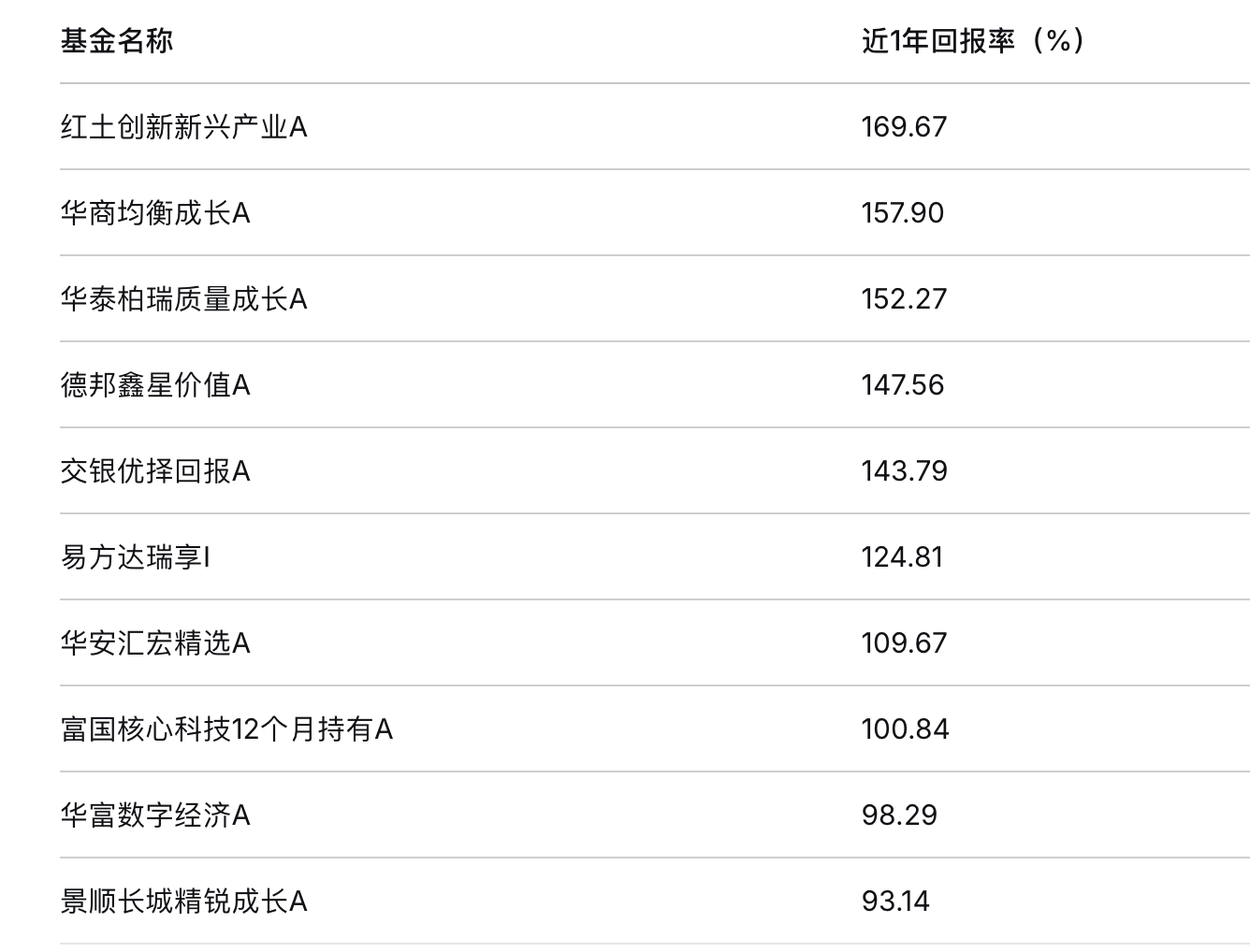
Core Viewpoint - The active equity funds in the A-share market have regained attention as 149 funds reached new net asset value highs, with some achieving over 100% returns in the past year, reflecting a structural market trend [1][3][8]. Fund Performance - As of February 9, 2026, 191 active equity funds recorded new highs in net asset value since inception, including 113 equity mixed funds, 56 flexible allocation funds, 20 active stock funds, and 2 balanced mixed funds [2]. - Excluding funds established for less than one year, 149 active equity funds achieved record highs in net asset value [3]. Investment Styles - The funds that reached new highs exhibit diverse investment styles, with some focusing on concentrated positions in AI-related sectors, leading to high returns but also significant volatility [4][5]. - Conversely, other funds prefer diversified holdings to mitigate risks, with examples showing low concentration in top holdings across various sectors [7]. Sector Preferences - Among the 149 funds, some have concentrated holdings in specific industries, resulting in notable performance when market conditions align. For instance, 7 funds had daily returns exceeding 7%, primarily those heavily invested in AI computing and applications [5][6]. - Funds like Jianxin Flexible Allocation and Huaxia Industry Prosperity have diversified their top holdings across multiple sectors, maintaining lower concentration ratios [7]. Long-term Performance - Several funds have consistently generated excess returns, particularly those heavily invested in the AI sector, with some achieving over 100% returns in the past year [8]. - Notable funds include Red Soil Innovation Emerging Industry A and Huashang Balanced Growth A, which have shown strong long-term performance [9]. Future Outlook - Fund managers express differing investment strategies moving forward. Some focus on the AI industry's expansion, while others emphasize balanced allocations across technology growth and manufacturing recovery [10][11]. - Specific strategies include targeting opportunities in AI applications, undervalued small-cap growth stocks, and the global manufacturing recovery linked to industrial metals [10][11].

金属市场不是牛市结束,而是中场休息
Sou Hu Cai Jing· 2026-02-09 01:09
Core Viewpoint - Morgan Stanley indicates that major metals like gold, silver, and copper will enter a consolidation phase in the coming weeks after significant price increases [2][3]. Group 1: Gold Market Analysis - The recent decline in gold prices is characterized as a technical reversal rather than a long-term bearish trend, suggesting that the bull market is still intact but requires a pause [3][4]. - Gold's previous price surge exhibited a parabolic pattern, which typically faces momentum exhaustion, with $5000 and the $5100–$5150 range acting as significant short-term resistance levels [5]. - The core logic supporting the gold bull market remains intact, primarily driven by the weakness of the US dollar, which is expected to stay below 100, indicating ongoing risks of currency devaluation [6]. Group 2: Copper and Economic Expectations - Copper prices have recently slowed above $14,000, raising questions about whether the price increase is detached from fundamental realities, as current manufacturing PMI is around 50.5, while copper prices imply a PMI of approximately 53 [10]. - The analysis suggests that the optimism surrounding copper is not isolated but reflects a broader bet on economic recovery across cyclical assets, including semiconductor stocks [11]. - In the upcoming consolidation phase, basic metals like copper are expected to receive more support than precious metals due to the dual influence of manufacturing recovery and cyclical rotation, while gold faces profit-taking pressures [12]. Group 3: Market Dynamics and Investment Strategy - The report emphasizes that during the consolidation phase, the focus should be on market rhythm rather than direction, with the metaphor of a paused dance indicating that while the metal frenzy may slow, it is not over [13][14]. - Investors are encouraged to reassess their positions rather than exit the market entirely, as true trends often require consolidation to solidify their foundations [15].

【环球财经】德国2025年12月制造业新订单环比增长7.8% 复苏迹象日益明显
Xin Hua Cai Jing· 2026-02-05 13:12
Core Insights - The German manufacturing sector is showing signs of recovery, with new orders increasing significantly in December 2025, indicating a potential turnaround after a period of stagnation [1] Group 1: Manufacturing Orders - In December 2025, Germany's manufacturing new orders increased by 7.8% month-on-month and 13.0% year-on-year [1] - The fourth quarter of 2025 saw a 9.5% increase in new orders compared to the third quarter [1] Group 2: Sector Performance - The metal products industry experienced a substantial month-on-month increase of 30.2% in new orders [1] - The heavy machinery engineering sector also saw a month-on-month growth of 11.5% in new orders [1] - Other sectors, including electrical equipment manufacturing, data processing equipment, and electronic and optical products, recorded increases of over 5% [1] - Conversely, the automotive sector faced a decline, with new orders decreasing by 6.3% month-on-month [1] Group 3: Economic Outlook - Industry experts suggest that the significant increase in new orders indicates that the German manufacturing sector is likely to accelerate operations in the coming months [1] - The expansionary fiscal policy of the German federal government is believed to be a key driver of this trend [1] - The market anticipates that Germany's economy will grow in 2026, with a projected growth rate of over 1% [1]
沪指逼近4000点,资金布局红利避险,红利国企ETF国泰(510720)上一交易日净流入超2.3亿元
Mei Ri Jing Ji Xin Wen· 2026-02-03 06:31
Group 1 - The Shanghai Composite Index is approaching 4000 points, with significant capital inflow into dividend-focused investments, particularly the Guotai Dividend ETF (510720), which saw a net inflow of over 230 million yuan in the previous trading day [1] - Guotai Securities forecasts that by 2026, the resource and traditional manufacturing sectors will benefit the most from dividends, driven by factors such as overseas AI investments, manufacturing recovery, resource protectionism in emerging markets, and a cycle of interest rate cuts [1] - The Guotai Dividend ETF tracks the Shangguo Dividend Index (000151), which selects high-dividend capable and stable dividend-paying companies across sectors like banking, coal, and transportation, focusing on traditional high-dividend areas [1] Group 2 - The index employs a rigorous assessment of constituent stocks' dividend yields and sustainability, utilizing a cross-industry diversification strategy to effectively manage investment risks and reflect the overall market performance of high-dividend companies [1] - The Guotai Dividend ETF has consistently paid dividends for 21 consecutive months since its listing, with monthly evaluations of dividend distributions [1]
高股息板块配置价值提升,港股通红利ETF广发(520900)上涨近1%
Xin Lang Cai Jing· 2026-02-03 04:00
Core Viewpoint - The A-share and Hong Kong stock indices have risen, with the Hong Kong Stock Connect Dividend ETF Guangfa (520900) increasing by 0.96% as of midday on February 3rd, indicating a positive market sentiment and investment opportunity in high-dividend sectors [1] Group 1: Market Performance - The net subscription for the Hong Kong Stock Connect Dividend ETF Guangfa (520900) reached 79.63 million yuan over the past five days, reflecting strong investor interest [1] - The market's risk appetite has continued to decline in January, with high-dividend sectors outperforming December, particularly in cyclical industries such as oil, petrochemicals, coal, and steel [1] Group 2: Investment Strategy - Huatai Securities suggests that as market volatility increases, the value of high-dividend sectors is marginally improving compared to the previous month, recommending a focus on stable high-dividend stocks with defensive attributes and some potential high-dividend varieties [1] - Guojin Securities emphasizes a structural shift in dividend strategies for 2026, moving from historical dividend ratios and static yields to seeking stocks with fundamental resilience or improving trends that may lead to increased future dividends [1] Group 3: Sector Insights - Resource and traditional manufacturing sectors are expected to benefit the most from dividends, with resource dividends gaining from overseas AI investments, manufacturing recovery, and emerging market resource protectionism [1] - Traditional manufacturing dividends are anticipated to have a broad beneficiary range, with the exception of service consumption, indicating a robust outlook for these sectors [1] Group 4: Investment Products - The Hong Kong Stock Connect Dividend ETF Guangfa (520900) and its off-market connections (022719/022720) provide investors with a convenient entry point to allocate into Hong Kong dividend assets, balancing stable returns with long-term value [1]
能源与制造领跑,防御与弹性并重,国企红利ETF(159515)盘中涨0.26%
Xin Lang Cai Jing· 2026-02-03 02:44
Group 1 - The core viewpoint of the articles emphasizes the performance of high-dividend sectors, particularly state-owned enterprises, in the current market environment, with a focus on the potential for structural shifts in investment strategies towards companies with stable dividends and growth potential [1][2]. - The China Securities State-Owned Enterprises Dividend Index has shown a positive trend, with notable increases in constituent stocks such as Cai Bai Co., Ltd. rising by 10.02% and Zhonglian Heavy Industry by 4.05% as of February 3, 2026 [1]. - The report from Huatai Securities indicates that the risk appetite in January continued to decline, but high-dividend sectors, especially in oil, coal, and steel, performed better than in December, suggesting a marginal recovery in the allocation value of high-dividend stocks [1]. Group 2 - Guojin Securities suggests that the dividend strategy for 2026 should focus on structural shifts, moving from historical dividend ratios to identifying companies with fundamental resilience and potential for increased future dividends [2]. - The resource and traditional manufacturing sectors are highlighted as having the broadest benefits from dividend strategies, driven by factors such as overseas AI investments, manufacturing recovery, and resource protectionism in emerging markets [2]. - The China Securities State-Owned Enterprises Dividend ETF closely tracks the China Securities State-Owned Enterprises Dividend Index, selecting 100 listed companies with high cash dividend yields and stable dividends, reflecting the overall performance of high-dividend securities among state-owned enterprises [2][3].
法国工业迎短期回暖 制造业复苏基础仍脆弱
Zhong Guo Xin Wen Wang· 2026-02-03 02:20
Core Insights - French industrial activity showed a notable recovery in January 2023, primarily driven by increased defense and military spending across Europe, although the foundation for this recovery remains fragile [1] Group 1: Economic Indicators - The Manufacturing Purchasing Managers' Index (PMI) for France rose to 51.2 in January, up from 50.7 in December, marking the highest level in nearly four years [1] - A PMI value above 50 indicates expansion in the manufacturing sector, while a value below 50 indicates contraction [1] Group 2: Demand and Orders - Despite the PMI increase, overall demand remains weak, with total new orders slightly declining in January and poor sales performance reported [1] - Many companies are lowering product prices to stimulate demand amid rising costs [1] Group 3: Broader European Context - The recovery in manufacturing across Europe is uneven, with the Eurozone manufacturing activity remaining in contraction for the third consecutive month and job losses continuing [1] - Greece's manufacturing sector performed relatively well, while countries like Spain, Germany, Italy, and Austria are still experiencing contraction [1]
新世纪期货:铁矿石面临三重压力
Qi Huo Ri Bao· 2026-01-29 00:43
Group 1: Market Trends - In early January, macro sentiment improved, leading to a rebound in black commodities, with iron ore futures breaking through a five-month range and reaching a new high [1] - By mid-January, the first shipment of iron ore from the Simandou project arrived in China, resulting in a significant price correction for iron ore futures [1] Group 2: Global Manufacturing and Employment - The global manufacturing PMI recorded 50.4% in December 2025, indicating strong resilience in the recovery, despite a slight month-on-month decline [2] - The US ISM manufacturing PMI fell to 47.9%, marking the lowest level since October 2024, with the labor market showing signs of weakness as non-farm payrolls added only 50,000 jobs in December [2] Group 3: Iron Ore Supply Dynamics - Global iron ore shipments are expected to enter a traditional off-season in Q1, but the second quarter will see increased shipments due to the gradual release of capacity from the Simandou project [3] - The Simandou project is projected to produce 120 million tons of high-grade iron ore annually, with expected shipments of 10 to 20 million tons by 2026 [3] Group 4: Domestic Investment and Exports - Domestic investment remains weak, with fixed asset investment in 2025 declining by 3.8% year-on-year, marking four consecutive months of negative growth [4] - Steel billet exports surged to 1.44 million tons in December 2025, a significant year-on-year increase of 86%, while overall steel exports reached a historical high of 11.3 million tons [4] Group 5: Port Inventory Levels - By the end of 2025, iron ore port inventories reached a record high of 158.59 million tons, continuing to rise into January 2026 [5] - Steel mills are beginning to recover profit margins, leading to an accelerated pace of iron ore restocking, although current inventories remain lower than the previous year [5] Group 6: Price Outlook - Short-term iron ore prices are expected to remain volatile, while medium to long-term factors such as increased supply from the Simandou project and high port inventories may suppress price increases [6]
三重压力下铁矿石长期仍偏空头配置
Qi Huo Ri Bao· 2026-01-29 00:41
Group 1: Market Trends - In early January, macro sentiment improved, leading to a rebound in black commodities, with iron ore futures breaking through a five-month trading range to reach a new high [1] - By mid-January, the arrival of the first shipment of iron ore from Simandou in China caused a significant price correction in iron ore futures [1] Group 2: Global Manufacturing and Employment - The global manufacturing PMI recorded 50.4% in December 2025, indicating strong resilience in the recovery, despite a slight month-on-month decline [2] - The US ISM manufacturing PMI fell to 47.9%, marking the lowest level since October 2024, and indicating a continued contraction in the manufacturing sector [2] - The US non-farm payrolls added 50,000 jobs in December, slightly below market expectations, while the unemployment rate decreased to 4.4% [2] Group 3: Iron Ore Supply Dynamics - Global iron ore shipments typically enter a seasonal lull in Q1, but are expected to increase in Q2 due to the ramp-up of the Simandou project, which will produce 120 million tons of high-grade iron ore annually [3] - The first shipment of Simandou iron ore safely docked at Rizhao Port, marking its entry into the Chinese market [3] - The projected shipment volume from Simandou is expected to reach between 10 million to 20 million tons by 2026, with significant production increases anticipated by the end of 2028 [3] Group 4: Domestic Investment and Export Trends - Domestic investment remains weak, with fixed asset investment in 2025 totaling 48.5186 trillion yuan, a year-on-year decline of 3.8% [4] - In December 2025, China's steel billet exports surged to 1.44 million tons, a year-on-year increase of 86%, while total steel exports reached 11.3 million tons, up 16% year-on-year [4] - New export regulations effective January 1, 2026, will restrict low-value steel billet exports, shifting focus towards high-value products [4] Group 5: Inventory Levels - Domestic iron ore port inventories reached a historical high of 158.59 million tons by the end of 2025, continuing to rise to 167.66 million tons by January 23, 2026 [6] - Steel mills have increased their inventory levels to 93.88 million tons, although this is still lower than the previous year's levels [9] Group 6: Price Outlook - Short-term iron ore prices are expected to remain volatile, while medium to long-term factors such as increased supply from Simandou, weak domestic demand, and high port inventories are likely to suppress price increases [7]