有色金属矿业

Search documents
有色金属日报-20260330
Guo Tou Qi Huo· 2026-03-30 13:37
1. Report Industry Investment Ratings - Copper: ☆☆☆ [1] - Aluminum: ☆☆☆ [1] - Alumina: ☆☆☆ [1] - Cast Aluminum Alloy: ☆☆☆ [1] - Zinc: ☆☆☆ [1] - Nickel and Stainless Steel: ☆☆☆ [1] - Tin: ☆☆☆ [1] - Lithium Carbonate: ☆☆☆ [1] - Industrial Silicon: ☆☆☆ [1] - Polysilicon: ☆☆☆ [1] 2. Core Viewpoints - The report provides investment ratings and market analysis for various non - ferrous metals, including price trends, supply - demand situations, and geopolitical impacts [1][2][3] - Different metals face different market conditions, such as geopolitical risks, supply - side adjustments, and demand - side changes [2][3][6] 3. Summary by Metals Copper - Shanghai copper warehouse receipts oscillate narrowly around 95,000 yuan, and LME enters daylight saving time [1] - Domestic spot copper is reported at 95,195 yuan, with the Shanghai copper discount narrowing to 55 yuan/ton, and the refined - scrap price difference is below 500 yuan [1] - SMM copper social inventory decreases by 24,300 tons to 403,100 tons [1] - The Middle East situation dominates market sentiment, and there is a risk of downward adjustment. The strong support is at 91,000 yuan in the short - term, and it is advisable to short on rebounds [1] Aluminum, Alumina, and Aluminum Alloy - Shanghai aluminum rises, with spot discounts in East, Central, and South China being - 90 yuan, - 170 yuan, and - 185 yuan respectively, and the South China aluminum rod processing fee is near zero [2] - Aluminum ingot social inventory increases by 36,000 tons in the past week, while aluminum rod social inventory decreases by 36,000 tons [2] - Iranian attacks on aluminum plants in UAE and Bahrain lead to an increase in overseas shortage expectations, but the US - Iran war situation is hard to ease in the short - term, and systemic risks remain. Shanghai aluminum oscillates at a high level, and it is not advisable to chase the rise [2] - Cast aluminum alloy fluctuates with aluminum prices, and the price difference with Shanghai aluminum remains around 1,000 yuan [2] - Domestic alumina operating capacity is temporarily stable, the over - supply situation has improved, and costs rise with sea freight. However, new alumina plants in Guangxi are about to be put into production, and the over - supply situation remains. In the short - term, alumina oscillates waiting for the clarity of Guinea's mining policy [2] Zinc - Imported ore TC turns negative again, and the LME zinc term structure changes, with the 0 - 3 month spot discount turning into a premium of $1.7/ton, indicating a strong fundamental situation under the tight overseas ore supply [3] - Domestic ore TC remains stable at a low level of 1,550 yuan/metal ton, and SMM zinc inventory drops to 248,200 tons. Affected by northern environmental protection, the short - term inventory reduction rhythm is a bit slow. Domestic downstream demand shows peak - season characteristics, export orders are okay, and production is the main drag [3] - Due to high macro - geopolitical uncertainties and the strong petrodollar rhythm, the zinc rebound space is limited. Shanghai zinc is expected to enter an interval oscillation between cost and consumption, with a price range of 22,500 - 23,700 yuan/ton [3] Nickel and Stainless Steel - Shanghai nickel oscillates, market trading volume declines, and positions slowly rise [6] - The strong US dollar exerts pressure on the market. The demand for stainless steel in the peak season is lower than expected, and downstream only replenishes inventory on a just - in - time basis, with light trading [6] - Due to macro uncertainties, the futures market oscillates weakly and is difficult to drive the spot market. Social inventory is still at a high level although it has decreased slightly, and the inventory reduction is slow. Steel mills maintain high production, resulting in high supply pressure [6] - The rebound of upstream prices drives up the mid - stream prices and provides cost support. In the short - term, it is still dominated by policy sentiment. With high inventories of nickel and stainless steel, attention should be paid to further changes in Indonesian policies, and the overall trend is a weak oscillation [6] Tin - Shanghai tin slightly increases positions and rises in the afternoon session. There is no specific news, but there are concerns that Myanmar's mineral production may be negatively affected by diesel shortages, and the inventory can still last for about 1 month, with most of the Myanmar ore flowing to China [7] - Under the falling tin price, the Mysteel social inventory decreased by 1,379 tons to 9,656 tons last week, and the SMM social inventory decreased by 1,875 tons to 9,102 tons [7] - The upper amplitude of the tin market may expand to 380,000 yuan, and it is advisable to short on rebounds in the short - term [7] Lithium Carbonate - On Monday, the lithium price continues to oscillate strongly, approaching the 170,000 - yuan mark, and market trading is active [8] - The inventory increased by 600 tons to 99,500 tons last week, but it has little impact on market sentiment, and the market mainly follows the rebound of non - ferrous metals [8] - Downstream inventory increased by 500 tons to 46,700 tons, smelter inventory increased by 700 tons to 17,300 tons, and trader inventory decreased by 660 tons to 35,500 tons. Traders significantly control inventory scale [8] - As the export subsidy adjustment point approaches, attention should be paid to the demand change in April. In the short - term, the lithium price is expected to oscillate [8] Industrial Silicon - The industrial silicon futures close slightly lower [9] - The overall demand for industrial silicon is weak. The organic silicon emission reduction continues, the polysilicon market is at the bottom, and the export and aluminum alloy demand only increase moderately, which is difficult to offset the core demand reduction [9] - The upward price drive still depends on the supply side. Although there is an expectation of production self - discipline in the industry, the specific details have not been implemented. There is support at the 8,000 - yuan/ton mark, and the price is expected to oscillate in the short - term [9] Polysilicon - The polysilicon price rebounds from a low level. The SMM spot N - type dense material is quoted at 38,000 yuan/ton, down 1,000 yuan/ton from the previous trading day [10] - The domestic installation and export expectations are weak. There is a supply - demand mismatch in the first quarter of the industrial chain. The production decline of battery cells and components is significantly greater than that of the upstream. The OEM model leads to the reduction of silicon material inventory and the accumulation of silicon wafer inventory, and the price is under continuous pressure [10] - The futures price is in the cash - cost range of the main production capacity of second - tier enterprises. In the medium - term, the market still faces downward pressure [10]
有色ETF景顺(560290)开盘涨0.82%,重仓股紫金矿业涨1.59%,洛阳钼业涨1.79%
Xin Lang Cai Jing· 2026-03-10 01:42
Group 1 - The core viewpoint of the article highlights the performance of the Invesco ETF (560290) in the non-ferrous metal sector, showing a slight increase of 0.82% at the opening [1] - Major holdings in the Invesco ETF include Zijin Mining, which rose by 1.59%, and Luoyang Molybdenum, which increased by 1.79%, while China Aluminum saw a decline of 3.21% [1] - The fund's performance benchmark is the CSI Nonferrous Metals Mining Theme Index, with a return of -2.32% since its inception on January 26, 2026, and a return of 3.07% over the past month [1] Group 2 - The fund is managed by Invesco Great Wall Fund Management Co., with the fund manager being Gong Lili [1] - The article provides a detailed overview of the performance of various stocks within the ETF, indicating a mixed performance among its holdings [1]



有色ETF景顺(560290)开盘跌1.01%,重仓股紫金矿业跌3.15%,洛阳钼业跌4.18%
Xin Lang Cai Jing· 2026-03-09 14:08
Core Viewpoint - The Invesco ETF for non-ferrous metals (560290) opened with a decline of 1.01%, priced at 0.978 yuan, indicating a negative market sentiment towards the sector [1] Group 1: ETF Performance - The Invesco non-ferrous metals ETF (560290) has a performance benchmark of the CSI Non-ferrous Metals Mining Theme Index return [1] - Since its establishment on January 26, 2026, the fund has recorded a return of -1.40% [1] - Over the past month, the fund has achieved a return of 6.15% [1] Group 2: Major Holdings Performance - Major holdings in the ETF include: - Zijin Mining: down 3.15% - Luoyang Molybdenum: down 4.18% - Northern Rare Earth: down 2.21% - China Aluminum: up 2.36% - Huayou Cobalt: down 3.33% - Zhongjin Gold: down 3.20% - Shandong Gold: down 2.22% - Xingye Silver Tin: down 4.15% - Ganfeng Lithium: down 2.87% - Tongling Nonferrous Metals: down 2.95% [1]
有色ETF泰康(159163)开盘跌2.03%,重仓股紫金矿业跌1.75%,洛阳钼业跌1.68%
Xin Lang Cai Jing· 2026-03-06 01:47
Core Viewpoint - The article discusses the performance of the Nonferrous ETF Taikang (159163), highlighting a decline in its opening price and the performance of its major holdings [1] Group 1: ETF Performance - The Nonferrous ETF Taikang (159163) opened down by 2.03%, priced at 0.915 yuan [1] - Since its establishment on January 27, 2026, the fund has recorded a return of -6.78%, while its return over the past month is 6.20% [1] Group 2: Major Holdings Performance - Major holdings in the Nonferrous ETF Taikang include: - Zijin Mining down by 1.75% - Luoyang Molybdenum down by 1.68% - Northern Rare Earth down by 1.41% - Huayou Cobalt down by 1.48% - China Aluminum down by 2.70% - Zhongjin Gold down by 2.66% - Shandong Gold down by 2.03% - Xingye Silver Tin down by 1.06% - Ganfeng Lithium down by 0.66% - Yun Aluminum down by 3.95% [1]
有色ETF华安(512940)开盘跌1.94%,重仓股紫金矿业跌1.75%,洛阳钼业跌1.68%
Xin Lang Cai Jing· 2026-03-06 01:47
Group 1 - The core point of the article highlights the performance of the Huashan Nonferrous ETF (512940), which opened down by 1.94% at 1.010 yuan on March 6 [1] - Major holdings in the Huashan Nonferrous ETF experienced declines, including Zijin Mining down 1.75%, Luoyang Molybdenum down 1.68%, Northern Rare Earth down 1.41%, and China Aluminum down 2.70% [1] - The performance benchmark for the Huashan Nonferrous ETF is the CSI Nonferrous Metals Mining Theme Index return, managed by Huashan Fund Management Co., with a return of 3.01% since its establishment on February 4, 2026 [1] Group 2 - The article provides a detailed overview of the performance of various stocks within the nonferrous sector, indicating a general downward trend among major companies [1] - Specific stock performances include Ganfeng Lithium down 0.66%, and Xiamen Tungsten up 0.81%, showcasing mixed results within the sector [1] - The article emphasizes the importance of cautious investment in the current market environment, reflecting the inherent risks associated with the nonferrous metals sector [1]
中金黄金股份有限公司第八届董事会第八次会议决议公告
Shang Hai Zheng Quan Bao· 2026-02-27 19:23
Group 1 - The board of directors of Zhongjin Gold Co., Ltd. held its eighth meeting on February 27, 2026, with all 9 directors present, complying with relevant regulations [2][3][10] - The board approved the proposal for the construction of the tailings dam project at the Wunuge Tushan copper-molybdenum mine, with a unanimous vote of 9 in favor and no opposition [3][10] - The total investment for the project is approximately 449,970.53 million yuan, with 251,857.44 million yuan allocated for the construction phase and 198,113.09 million yuan for the operational phase [9][8] Group 2 - The tailings dam will have a total capacity of 49,407.74 million cubic meters and a service life of 21.26 years, located approximately 4.30 kilometers southeast of the processing plant [11] - The project is expected to ensure stable production at the Inner Mongolia Mining Company and is deemed necessary and feasible based on a comprehensive feasibility study [12] - The construction period is estimated to last 44 months, with the first phase of construction taking 16 months, followed by a service period of 21.26 years [14]

银河期货铜3月报-20260227
Yin He Qi Huo· 2026-02-27 09:38
Report Title - Copper Monthly Report for March 2026, released on February 27, 2026 [3][8][19] Core Viewpoint - Due to the increase in strategic reserve demand, copper prices are expected to fluctuate strongly [2] Report Industry Investment Rating - Not provided in the given content Summary by Directory Part One: Copper Market Overview - Includes copper price trends, spread analysis, and inventory data [12][15][20] Part Two: Tense Geopolitical Situation and Increased Strategic Reserve Demand - Presents data on US CPI, PPI, non - farm employment, inventory cycles, global military expenditure, and copper - gold ratio [29][31][32] Part Three: Supply Side - Capital expenditure in the copper industry has a lagged effect on copper mine growth rates. For example, in 2007, the capital expenditure growth rate was 34.46%, and in 2013, the copper mine growth rate was 8.98% with a 6 - year lag [38] - Shows the production of major global mining companies from 2025 - 2026 [42][44] - Global copper mine supply growth rates from 2020 - 2026 are 0.36%, 2.31%, 3.24%, 2.09%, 2.77%, - 0.13%, and 1.74% respectively [46] - Analyzes China's copper mine production, imports, and other supply - related data [48][52][53] Part Four: Consumption Analysis - In the real estate sector, data on commercial housing sales, new construction, and completion are presented [73] - For the power grid and cable industry, data on wire and cable start - up rates, exports, and investment in power grids and power sources are shown [74][75][76] - In the air - conditioning industry, data on domestic sales, exports, production, and external sales of air - conditioners are provided [81][84][85] - In the automotive industry, data on overall vehicle sales, fuel - powered vehicle sales, and new energy vehicle sales and penetration rates are given [89][91][92] - In the photovoltaic and wind power industries, data on global and regional new - installed capacity, and copper consumption are presented [100][101][111] - For data centers and energy storage, data on global data center IT capacity, US data center power demand, and lithium - ion energy - storage battery demand are shown [121][122][127] Part Five: Supply - Demand Balance Sheet - China's refined copper supply - demand balance sheet from 2025 - 2026 shows details of production, imports, exports, inventory, apparent consumption, and growth rates [134] - The global copper supply - demand balance sheet from 2020 - 2026E shows copper concentrate and refined copper supply, demand, and balance conditions [135]
有色ETF华安(512940)开盘跌0.78%,重仓股紫金矿业跌0.43%,洛阳钼业跌0.35%
Xin Lang Cai Jing· 2026-02-27 01:42
Group 1 - The core point of the article highlights the performance of the Huazhong Nonferrous ETF (512940), which opened with a decline of 0.78% at 1.022 yuan [1] - Major holdings in the ETF include Zijin Mining, which fell by 0.43%, and Ganfeng Lithium, which dropped by 2.00% [1] - The ETF's performance benchmark is the CSI Nonferrous Metals Mining Theme Index, with a return of 3.32% since its establishment on February 4, 2026 [1] Group 2 - The fund is managed by Huazhong Fund Management Co., Ltd., with Xu Zhiyan as the fund manager [1] - Other notable stock performances include Luoyang Molybdenum down 0.35%, Northern Rare Earth up 0.05%, and China Aluminum down 0.82% [1] - The article provides a snapshot of the ETF's performance and its key holdings, reflecting the current market conditions in the nonferrous metals sector [1]
有色金属月度策略-20260226
Fang Zheng Zhong Qi Qi Huo· 2026-02-26 02:39
1. Report Industry Investment Rating No relevant content provided. 2. Core Views of the Report - The overall trend of non - ferrous metals is oscillating and strengthening. However, concerns about AI's impact on employment and the resurgence of tariff war risks have dampened the optimistic expectations brought by the recovery of European and American economic data during the holiday. The market sentiment may shift from a general rise to a phase of cooling and differentiation. Attention should be paid to the fundamental support factors of each variety, and varieties with geopolitical supply disturbances are relatively strong [11]. - The post - holiday non - ferrous sector mostly rebounded, but the trends were differentiated. Geopolitical uncertainties, fluctuations in interest rate cut expectations, and the reflection on the impact of AI on the economy and employment may still cause fluctuations in relevant chains. There is a supply - demand mismatch after the holiday, with inventory accumulation and incomplete demand recovery [13]. 3. Summary by Directory 3.1 First Part: Non - ferrous Metals Operation Logic and Investment Recommendations - **Macro Logic**: Non - ferrous metals are generally oscillating and strengthening. AI and tariff war risks have affected market sentiment, and the market may shift from a general rise to differentiation. Pay attention to the fundamentals of each variety, and those with geopolitical supply disturbances are relatively strong [11]. - **Key Events**: Zimbabwe has suspended the export of all raw ores and lithium concentrates. The US has tariff changes, including the suspension of illegal tariffs, potential new tariff increases, and responses from various parties. There are also fluctuations in the Fed's interest rate cut expectations and the impact of AI. Geopolitical uncertainties are strong, such as the potential US military strike on Iran. China's LPR has remained unchanged for nine consecutive months [12][13]. - **Investment Strategies for Each Variety** - **Copper**: Concerns about US tariff hikes and economic slowdown have led to a return of risk - aversion sentiment. The gold and silver markets have broken through and risen, and copper prices have followed. However, the domestic demand is in a seasonal off - season, and the fundamentals are weak, limiting the upside. It is recommended to gradually buy on dips, with a short - term upper pressure range of 108,000 - 110,000 yuan/ton and a lower support range of 98,000 - 99,000 yuan/ton. Consider buying deep - out - of - the - money long - term call options [3][15]. - **Zinc**: The market treats the US tariff situation as positive. The external market is stronger, and the domestic market is differentiated. The inventory in LME has decreased. It is recommended to consider the rotation of bull spreads and bear spreads, with an upper pressure range of 24,800 - 25,000 and a lower support range of 23,800 - 24,000 [4][16]. - **Aluminum Industry Chain** - **Aluminum**: Driven by leading non - ferrous metals, the price is strong. With the US steel and aluminum tariffs undecided, it is recommended to wait and see or take a bullish approach. The upper pressure range is 24,000 - 26,000, and the lower support range is 22,000 - 23,000. Buy out - of - the - money put options for protection [5]. - **Alumina**: The spot price has temporarily stabilized, and there are many restarts after capacity maintenance. It is recommended to wait and see or take a bearish approach. The upper pressure range is 2,900 - 3,000, and the lower support range is 2,300 - 2,600. Buy out - of - the - money call options for protection [5]. - **Recycled Aluminum Alloy**: Enterprises have a long holiday, and downstream demand recovery is restricted by aluminum prices and raw material supply. It is recommended to wait and see or take a bullish approach. The upper pressure range is 23,000 - 24,000, and the lower support range is 21,000 - 21,500. Buy out - of - the - money put options for protection [5]. - **Tin**: News about the US strengthening the pricing power of key small metal minerals has fermented, driving up the price of Shanghai tin. It is recommended to wait and see or take a bullish approach, paying attention to capital sentiment, mine conditions, and macro - impacts. The upper pressure range is 430,000 - 450,000, and the lower support range is 330,000 - 350,000. Buy out - of - the - money put options for protection [6]. - **Lead**: The overseas market is optimistic about the US tariff situation. The price is in consolidation. After the Spring Festival, inventory has accumulated, and there is still upward pressure. It is expected to oscillate, with an upper pressure range of 16,800 - 17,000 and a lower support range of 16,200 - 16,400. Operate according to the upper and lower limits, and it may be slightly bearish in the short - term [7]. - **Nickel and Stainless Steel** - **Nickel**: The overseas market is optimistic about the US tariff changes. The US - Indonesia trade agreement and quota cuts are expected to keep the cost of nickel products at a high level. LME nickel inventory is above 280,000 tons, and supply contraction expectations continue. It is recommended to take a bullish approach on dips, with an upper pressure range of 140,000 - 145,000 yuan and a lower support range of 130,000 - 134,000 yuan [8][17]. - **Stainless Steel**: The price has rebounded. The quota tightening in Indonesia may increase the cost. It is recommended to hold long positions, with a lower support range of 13,000 - 13,400 and an upper pressure range of 14,200 - 14,500 [8][17]. 3.2 Second Part: Non - ferrous Metals Market Review - The closing prices and price changes of various non - ferrous metals are provided. For example, copper closed at 102,460 with a 0.94% increase, zinc at 24,645 with a 0.08% increase, etc. [18] 3.3 Third Part: Non - ferrous Metals Position Analysis - The latest position analysis of the non - ferrous metals sector shows the net long - short strength comparison, net long - short position differences, changes in net long and net short positions, and influencing factors for each variety [22]. 3.4 Fourth Part: Non - ferrous Metals Spot Market - The spot prices and price changes of various non - ferrous metals are presented. For example, the Yangtze River non - ferrous copper spot price is 102,130 yuan/ton with a 0.63% increase, and the Yangtze River non - ferrous 0 zinc spot average price is 24,540 yuan/ton with a - 0.41% change [23]. 3.5 Fifth Part: Non - ferrous Metals Industry Chain - Various charts related to the industry chain of each non - ferrous metal are provided, including inventory changes, processing fees, price trends, etc. For example, for copper, there are charts of exchange copper inventory changes, LME copper inventory, copper concentrate smelting fees, etc. [25] 3.6 Sixth Part: Non - ferrous Metals Arbitrage - Charts related to non - ferrous metals arbitrage are provided, such as the copper Shanghai - London ratio change, the spread between Shanghai copper and London copper, etc. [50] 3.7 Seventh Part: Non - ferrous Metals Options - Charts related to non - ferrous metals options are provided, including historical volatility, weighted implied volatility, trading volume, and position changes of options for each variety [68]
聚焦“有矿”核心资产,把握有色配置窗口——有色ETF华安今日上市
Xin Lang Cai Jing· 2026-02-26 01:36
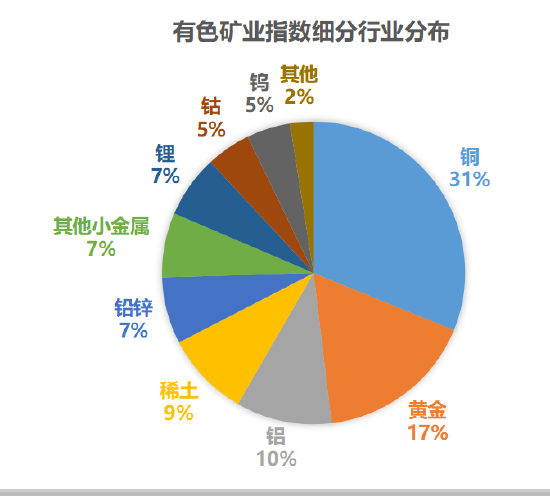
Core Viewpoint - The launch of the Huashan Nonferrous ETF (trading code: 512940) marks a significant opportunity for investors to engage with the nonferrous metals sector, which is seen as a long-term value proposition driven by industrial and technological demand [1][32]. Group 1: Nonferrous Metals as Industrial and Technological Foundations - Nonferrous metals play an irreplaceable role in the modern economy, serving as conductors in power networks, the heart of electric vehicles, and essential components in high-end equipment [1][17]. - The main categories of nonferrous metals include industrial metals (copper, aluminum, zinc), precious metals (gold, silver), energy metals (lithium, cobalt, nickel), and rare metals/rare earths (rare earths, tungsten, molybdenum) [2][3][4]. Group 2: Triple Cycle Resonance Reshaping Value Logic - The nonferrous metals industry is experiencing multiple driving factors that create a clearer and more diverse investment logic [5][22]. - Macroeconomic conditions are shifting favorably, with central banks transitioning from anti-inflation measures to economic support, leading to a more favorable liquidity environment for commodities [6][23][24]. - Supply constraints are intensifying due to insufficient exploration investments and changing policies in resource-exporting countries, while demand is being driven by green transitions and AI infrastructure, creating significant growth opportunities for metals like copper and lithium [7][25][26]. Group 3: Value High Ground in the Nonferrous Industry Chain - The value distribution in the nonferrous metals industry is uneven, with upstream mining companies experiencing the most significant profit elasticity as their revenues are directly linked to metal prices [9][27]. - Mining resources have inherent exclusivity and scarcity, providing a strong competitive advantage and long-term cash flow security for companies with resource reserves [10][27]. Group 4: Nonferrous Mining Index Focused on Resource Companies - The CSI Nonferrous Metals Mining Theme Index (code: 931892.CSI) is designed to reflect the performance of listed companies with actual nonferrous metal resource reserves, ensuring investment in the more valuable resource end of the industry chain [11][28]. - The index emphasizes balance across sub-sectors, including top companies in copper, gold, aluminum, lithium, and rare earths, allowing for diversified exposure and risk mitigation [11][28]. - Historical performance shows an annualized return of 14.95% over the past five years, with a Sharpe ratio of 0.70, indicating superior performance compared to other nonferrous metal indices [11][28]. Group 5: Current Market Timing and Value Proposition - The nonferrous sector has experienced a correction since late January, which is viewed as a healthy adjustment rather than a shift in long-term fundamentals [15][31]. - Valuation pressures have eased, and the trading structure has become healthier, indicating improved cost-effectiveness for potential investments in the sector [15][31]. Group 6: Huashan Nonferrous ETF as a Strategic Investment Tool - The Huashan Nonferrous ETF (trading code: 512940) closely tracks the CSI Nonferrous Metals Mining Theme Index, providing a streamlined way for investors to gain exposure to leading nonferrous metal companies [16][32]. - The product is backed by Huashan Fund's extensive experience in index and quantitative investment, ensuring professional support for stable operations [16][32].