AI算力基础设施建设

Search documents
协创数据:25年收入和利润保持高增,智算业务爆发-20260326
Shanxi Securities· 2026-03-26 12:24
Investment Rating - The report maintains a "Buy-A" rating for the company, indicating a strong potential for price appreciation in the next 6-12 months [1][8]. Core Insights - The company has demonstrated significant revenue and profit growth, with a 65.13% year-on-year increase in revenue to 12.236 billion yuan and a 68.32% increase in net profit to 1.164 billion yuan for the year 2025 [4][5]. - The intelligent computing products and services business has become the main driver of the company's performance, achieving a remarkable 1727.17% year-on-year revenue growth [5]. - The company is expected to continue benefiting from the AI computing infrastructure boom, with strong growth projected in its computing leasing business [7][8]. Financial Performance - In 2025, the company achieved a revenue of 12.236 billion yuan, with a net profit of 1.164 billion yuan, reflecting a year-on-year growth of 68.32% [4]. - The fourth quarter of 2025 saw a revenue of 3.905 billion yuan, marking a 93.77% increase year-on-year, and a net profit of 466 million yuan, which is a 246.15% increase [4][5]. - The gross margin improved to 19.24%, up 1.88 percentage points from the previous year, while the net profit margin was 9.41%, an increase of 0.14 percentage points [5]. Business Segments - The intelligent computing products and services segment generated 2.761 billion yuan in revenue, a staggering increase of 1727.17% year-on-year [5]. - The data storage equipment business achieved a revenue of 4.493 billion yuan, growing by 28.31% year-on-year, driven by increased customer investment and rising product prices [5]. - The remanufacturing business also saw significant growth, with revenue reaching 2.575 billion yuan, up 169.35% year-on-year [5]. - The IoT smart terminal business experienced a decline, with revenue of 1.572 billion yuan, down 30.42% due to strategic adjustments [5]. Future Projections - The company is projected to achieve revenues of 21.989 billion yuan, 30.531 billion yuan, and 39.226 billion yuan for the years 2026, 2027, and 2028, respectively, reflecting year-on-year growth rates of 79.7%, 38.8%, and 28.5% [10][12]. - Earnings per share (EPS) are expected to rise significantly, reaching 8.19 yuan in 2026, 12.22 yuan in 2027, and 16.80 yuan in 2028 [8][10].

协创数据(300857):25年收入和利润保持高增,智算业务爆发
Shanxi Securities· 2026-03-26 11:16
Investment Rating - The report maintains a "Buy-A" rating for the company, indicating a positive outlook for its stock performance [1][8]. Core Insights - The company has demonstrated strong revenue and profit growth, with a 65.13% year-on-year increase in revenue to 12.236 billion yuan and a 68.32% increase in net profit to 1.164 billion yuan for the year 2025 [4][5]. - The intelligent computing products and services business has become the main driver of the company's performance, achieving a remarkable 1727.17% year-on-year revenue growth [5]. - The company is expected to continue benefiting from the AI computing infrastructure boom, with significant growth in its GPU server operations [7][8]. Financial Performance Summary - In 2025, the company achieved a revenue of 122.36 billion yuan, with a net profit of 11.64 billion yuan, reflecting a strong growth trajectory [4]. - The fourth quarter of 2025 saw a revenue increase of 93.77% year-on-year, with net profit soaring by 246.15% [4]. - The gross margin improved to 19.24%, up 1.88 percentage points from the previous year, indicating enhanced profitability [5]. - The company’s net profit margin for 2025 was 9.41%, an increase of 0.14 percentage points year-on-year [5]. Business Segment Performance - The intelligent computing products and services segment generated 27.61 billion yuan in revenue, marking a staggering growth of 1727.17% [5]. - The data storage equipment business achieved a revenue of 44.93 billion yuan, up 28.31% year-on-year, driven by increased customer investment and rising product prices [5]. - The remanufacturing business also saw significant growth, with revenue reaching 25.75 billion yuan, a 169.35% increase [5]. - The IoT smart terminal business experienced a decline, with revenue of 15.72 billion yuan, down 30.42%, due to a strategic adjustment in business structure [5]. Future Projections - The company is projected to achieve revenues of 21.989 billion yuan in 2026, with a year-on-year growth rate of 79.7% [10]. - Net profit is expected to reach 2.835 billion yuan in 2026, reflecting a year-on-year growth of 143.5% [10]. - The EPS (Earnings Per Share) is forecasted to be 8.19 yuan in 2026, with a P/E ratio of 26.3 [10][8].
建筑业高频略有修复
HTSC· 2026-03-23 09:21
1. Report Industry Investment Rating No information provided in the given content. 2. Core Viewpoints of the Report - In the third week of March, the second - hand housing market was hotter than the new housing market, but the trends of listing prices and the Iceberg Index were fluctuating, with Shanghai showing relatively leading performance in terms of volume and price. In the production sector, freight volume was stronger than the seasonal average, and the daily coal consumption increased year - on - year. After the Spring Festival, the industry start - up rates were differentiated, with coking, refinery, and blast furnace operations showing marginal strength, while the chemical chain declined. In the construction industry, the supply - demand situation of cement and black metals improved marginally, and the asphalt start - up rate decreased. In terms of external demand, throughput remained resilient, freight rate indicators were strong recently, the year - on - year decline of container freight rates continued to narrow, and the exports of South Korea and Vietnam remained resilient. In the consumption sector, the travel enthusiasm remained at a high level, but the year - on - year growth of automobile consumption decreased compared with the previous value. In terms of prices, crude oil prices rose due to geopolitical factors, black metals fluctuated strongly, and copper prices declined [1]. 3. Summary According to Relevant Catalogs Consumption - Travel: The overall travel enthusiasm remained at a high level, but the year - on - year growth of flight execution volume decreased. The subway passenger volume of 9 key cities had a week - on - week increase of 0.1% (previous value: 3.4%) and a year - on - year increase of 1.5% (previous value: 2.3%) as of the week ending March 19. The congestion delay index as of March 15 showed a year - on - year decrease of - 3.8% (previous value: - 5.8%). The year - on - year growth of domestic (excluding Hong Kong, Macao, and Taiwan) and international flight execution volume was 3.2%/3.6% (previous value: 8.8%/6.0%), and the flight execution rates were 87.2%/82.0% (previous value: 83.5%/81.8%, and the same period last year: 88.8%/84.0%) as of the week ending March 13 [4][5]. - Commodity consumption: The year - on - year growth of automobile consumption decreased, while the year - on - year growth of express delivery collection increased. The movie box office had a week - on - week decrease of - 54.6% (previous value: - 69.4%) and a year - on - year decrease of - 33.8% (previous value: - 32.9%) as of the week ending March 19. The retail and wholesale of passenger cars from March 1 - 15 had a year - on - year decrease of - 21%/- 19% (previous value: 54%/46%). The sales volume of the Light Textile City had a year - on - year decrease of - 9.4% (previous value: - 32.2%) as of the week ending March 15, and the express delivery collection volume had a year - on - year increase of 4.5% (previous value: 1.0%) as of March 15 [4][6]. - Policy: Last week, China's consumption - promotion policies continued to be advanced in depth. At the national level, nine departments including the Ministry of Commerce issued policies to promote travel service exports and expand inbound consumption. At the local level, Jiangsu, Shanghai, and Xuancheng in Anhui introduced characteristic measures to protect consumer rights and optimize the consumption environment [6]. Real Estate - New housing: The transaction enthusiasm of new housing decreased slightly. Structurally, second - tier cities were relatively leading. As of March 19, the weekly transaction area of commercial housing in 30 cities decreased by - 3.1% year - on - year (previous value: 5.7%), and the transaction areas in first, second, and third - tier cities decreased by - 6.7%/6.0%/- 16.4% year - on - year (previous value: 8.3%/6.0%/0.4%). The combined transaction of new housing in the first three weeks of March decreased by - 7.80% year - on - year (previous value: - 9.62%) [7]. - Second - hand housing: The transaction of second - hand housing improved. Structurally, third - tier cities > first - tier cities > second - tier cities. As of March 20, the weekly transaction area of second - hand housing in 26 cities decreased by - 10.7% year - on - year (previous value: - 26.4%), and the transaction areas in first, second, and third - tier cities decreased by - 5.7%/- 15.0%/- 4.2% year - on - year (previous value: - 21.9%/- 25.0%/- 32.9%). The combined transaction of second - hand housing in the first three weeks of March decreased by - 20.95% year - on - year (previous value: - 27.10%). The transaction enthusiasm of new and second - hand housing in high - level cities such as Beijing, Shanghai, Shenzhen, and Chengdu increased year - on - year [7]. - Listing volume and price: The listing volume and price of second - hand housing both decreased. As of March 15, the weekly index of the listing price and volume of second - hand housing for sale decreased by - 0.1%/- 10.3% week - on - week, and the indexes of all tiers of cities decreased week - on - week [7]. - Land: The land market premium rate decreased compared with the previous value, and the land transaction volume remained at a low level. As of March 15, the weekly transaction area of land in 100 cities increased by 4.54% week - on - week and 35.55% year - on - year, the supply area decreased by - 10.86% year - on - year, the land premium rate decreased by - 10.17 pct year - on - year, the total land transaction price decreased by - 35.62% week - on - week and increased by 6.05% year - on - year [8]. - Policy: Last week, real estate policies continued to exert force on both the supply and demand sides. On the demand side, Shanghai adjusted the mortgage policy for commercial and residential - commercial properties, reducing the minimum down - payment ratio to no less than 30% from March 16, 2026. On the supply side, Jiangsu issued an action plan for high - quality urban development [8]. Production - Electricity: The daily coal consumption increased year - on - year, the hydropower generation decreased year - on - year, and the coal price increased. As of March 19, the daily coal consumption of 25 provincial power coal terminal users increased by 6.0% year - on - year (previous value: - 0.2%). As of March 20, the weekly year - on - year growth of the daily average outflow of the Three Gorges Reservoir was 3.3% (previous value: 13.6%). As of March 20, the coal price increased by 0.1% week - on - week (previous value: - 0.3%) [9]. - Construction industry: The funds available for construction increased week - on - week, and the supply - demand situation of cement and black metals improved. The funds available for construction increased week - on - week. As of March 18, the funds available for sample construction sites was 50.7%, with a week - on - week increase of 7.90 pct and a year - on - year decrease of - 6.83 pct (previous value: - 14.42 pct). The supply - demand situation of cement improved marginally, the inventory decreased year - on - year, and the price increased. The supply - demand situation of black metals improved, the inventory increased year - on - year, and the price decreased. The asphalt start - up rate decreased, and the price increased. The PVC start - up rate increased compared with the previous value, and the styrene start - up rate decreased [10][11][12]. - Freight: The railway and highway freight volume increased year - on - year, and the industry start - up rates were differentiated. As of March 15, the railway freight volume and highway truck traffic increased by 4.3%/0.6% year - on - year (previous value: - 0.3%/- 9.3%). The coking start - up rate increased, and the refinery start - up rate decreased slightly. The start - up rates of PTA, polyester, and Jiangsu and Zhejiang looms decreased, while the start - up rates of semi - and full - steel tire production increased [13]. External Demand - Volume: As of March 15, the cumulative cargo throughput and container throughput of ports increased by 9.5%/9.3% week - on - week (previous value: - 0.4%/1.4%) and 2.3%/11.1% year - on - year (previous value: - 2.1%/- 1.7%), maintaining a high year - on - year level [14]. - Freight rate: The RJ/CRB index increased by 18.8% year - on - year (previous value: 17.6%). The Baltic Dry Index (BDI) increased by 3.3% week - on - week on average as of March 20 (previous value: - 8.3%), and the year - on - year growth was 24.5% (previous value: 28.1%). The China Containerized Freight Index (CCFI) and Shanghai Containerized Freight Index (SCFI) increased by 4.5%/- 0.2% week - on - week (previous value: 1.7%/14.9%). Most routes of CCFI improved both week - on - week and year - on - year, while the week - on - week data of the US West and US East routes were weak. In Shanghai Port, the freight market showed a differentiated trend, and the freight rates of most ocean routes except the European and Persian Gulf routes declined [14]. - Exports of South Korea and Vietnam: South Korea's export volume in the first 10 days of March increased by 55.60% year - on - year (previous value: 29.00%), and Vietnam's export volume in February increased by 6.26% year - on - year (previous value: 43.91%) [14]. - Overseas economy: The US announced that the industrial output in February increased by 0.2% month - on - month, the PPI in February increased by 3.4% year - on - year, and the core PPI increased by 3.9% year - on - year, both exceeding expectations. The number of initial jobless claims decreased to 205,000, and the existing home sales in February increased by 1.7% month - on - month. The Eurozone announced that the ZEW economic sentiment index in March was - 8.5, the CPI in February increased by 1.9% year - on - year, and the core CPI increased by 2.4% year - on - year. The ECB kept interest rates unchanged, raised the inflation forecast for 2026 to 2.6%, and lowered the GDP growth forecast to 0.9% [15]. - Import freight rate: The domestic import freight rate (CDFI) increased by 8.4% week - on - week (previous value: 9.7%). As of March 17, the weekly average of the coal, grain, and iron ore freight rate indexes increased by 2.33%/0.71%/1.06% week - on - week (previous value: 1.79%/1.17%/2.03%) [15]. Prices - Comprehensive index: The external RJ/CRB index and the internal Nanhua Industrial Products Index both increased. - Sub - items: Crude oil prices increased, non - ferrous metal prices decreased, black metal prices increased, pork prices decreased, and vegetable prices decreased. As of March 21, the weekly average of the agricultural product wholesale price 200 index decreased by 0.9%. The average wholesale prices of pork, beef, mutton, and white - striped chicken decreased by - 2.4%/0.0%/- 0.0%/- 0.4% week - on - week, the prices of vegetables and fruits decreased by - 2.4%/- 1.1% week - on - week, and the price of eggs increased by 0.7% week - on - week [16][17].
聚焦“有矿”核心资产,把握有色配置窗口——有色ETF华安今日上市
Xin Lang Cai Jing· 2026-02-26 01:36
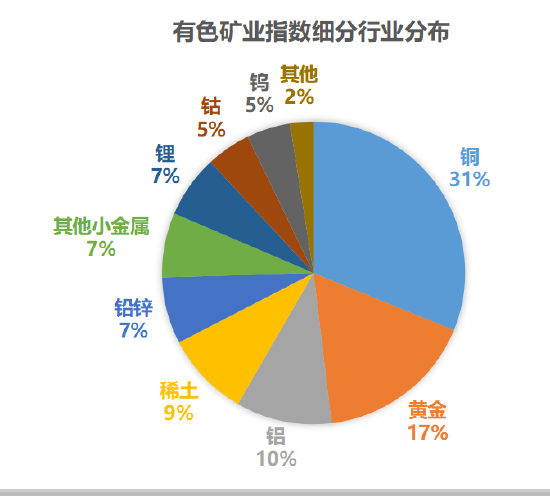
Core Viewpoint - The launch of the Huashan Nonferrous ETF (trading code: 512940) marks a significant opportunity for investors to engage with the nonferrous metals sector, which is seen as a long-term value proposition driven by industrial and technological demand [1][32]. Group 1: Nonferrous Metals as Industrial and Technological Foundations - Nonferrous metals play an irreplaceable role in the modern economy, serving as conductors in power networks, the heart of electric vehicles, and essential components in high-end equipment [1][17]. - The main categories of nonferrous metals include industrial metals (copper, aluminum, zinc), precious metals (gold, silver), energy metals (lithium, cobalt, nickel), and rare metals/rare earths (rare earths, tungsten, molybdenum) [2][3][4]. Group 2: Triple Cycle Resonance Reshaping Value Logic - The nonferrous metals industry is experiencing multiple driving factors that create a clearer and more diverse investment logic [5][22]. - Macroeconomic conditions are shifting favorably, with central banks transitioning from anti-inflation measures to economic support, leading to a more favorable liquidity environment for commodities [6][23][24]. - Supply constraints are intensifying due to insufficient exploration investments and changing policies in resource-exporting countries, while demand is being driven by green transitions and AI infrastructure, creating significant growth opportunities for metals like copper and lithium [7][25][26]. Group 3: Value High Ground in the Nonferrous Industry Chain - The value distribution in the nonferrous metals industry is uneven, with upstream mining companies experiencing the most significant profit elasticity as their revenues are directly linked to metal prices [9][27]. - Mining resources have inherent exclusivity and scarcity, providing a strong competitive advantage and long-term cash flow security for companies with resource reserves [10][27]. Group 4: Nonferrous Mining Index Focused on Resource Companies - The CSI Nonferrous Metals Mining Theme Index (code: 931892.CSI) is designed to reflect the performance of listed companies with actual nonferrous metal resource reserves, ensuring investment in the more valuable resource end of the industry chain [11][28]. - The index emphasizes balance across sub-sectors, including top companies in copper, gold, aluminum, lithium, and rare earths, allowing for diversified exposure and risk mitigation [11][28]. - Historical performance shows an annualized return of 14.95% over the past five years, with a Sharpe ratio of 0.70, indicating superior performance compared to other nonferrous metal indices [11][28]. Group 5: Current Market Timing and Value Proposition - The nonferrous sector has experienced a correction since late January, which is viewed as a healthy adjustment rather than a shift in long-term fundamentals [15][31]. - Valuation pressures have eased, and the trading structure has become healthier, indicating improved cost-effectiveness for potential investments in the sector [15][31]. Group 6: Huashan Nonferrous ETF as a Strategic Investment Tool - The Huashan Nonferrous ETF (trading code: 512940) closely tracks the CSI Nonferrous Metals Mining Theme Index, providing a streamlined way for investors to gain exposure to leading nonferrous metal companies [16][32]. - The product is backed by Huashan Fund's extensive experience in index and quantitative investment, ensuring professional support for stable operations [16][32].

A股午评:创业板指半日跌近1% 军工、半导体设备板块逆势走高
Jin Rong Jie· 2026-02-13 03:45
Market Overview - The three major A-share indices collectively declined in the morning session, with the Shanghai Composite Index down by 0.7%, the Shenzhen Component Index down by 0.67%, and the ChiNext Index down by 0.96% [1] - The North China 50 Index, however, increased by 0.87% [1] - The total trading volume in the Shanghai and Shenzhen markets reached 12,137 billion yuan, a decrease of 1,264 billion yuan compared to the previous day [1] - Over 2,600 stocks in the market experienced declines [1] Sector Performance - The military equipment, paper-making, autonomous driving, semiconductor equipment, aquaculture, battery, and tourism and hotel sectors showed the highest gains [1] - Conversely, the oil and gas extraction and services, minor metals, port and shipping, steel, photovoltaic equipment, and short video game sectors faced the largest declines [1] Notable Stocks and Trends - The military sector saw a collective rise due to international geopolitical tensions, with Andavil achieving a 20% limit-up [1] - The semiconductor equipment sector remained active amid a surge in AI computing infrastructure, with companies like Micro-Guide Nano and Fuchuang Precision seeing gains of over 10% [1] - The autonomous driving and smart cockpit sectors also rose, with Zhejiang Shibao, Xingmin Zhitong, and Qianli Technology hitting the limit-up [1] - The Ministry of Industry and Information Technology previously sought opinions on safety standards for autonomous driving [1] - Other sectors such as robotics, paper-making, and real estate experienced localized increases [1] Declines in Specific Stocks - The popular stock in the photovoltaic sector, Duliang Energy, hit the limit-down after the company stated it indirectly participated in a commercial aerospace project but did not directly collaborate with SpaceX [1] - Overnight, international gold and oil prices saw significant declines, leading to a drop in non-ferrous metals and oil and gas resource stocks, with China National Offshore Oil Corporation and Xiyang Co., Ltd. recording losses [1]

数字经济ETF(560800)上涨1.62%,机构:国产算力芯片及配套产业链有望深度受益
Sou Hu Cai Jing· 2026-02-10 02:23
Group 1 - The core viewpoint of the news highlights a strong performance in the digital economy sector, with the CSI Digital Economy Theme Index rising by 1.60% and several component stocks, such as Chipone Technology and Haiguang Information, showing significant gains [1] - The semiconductor industry is experiencing a surge in demand driven by AI applications, leading to supply shortages and increased prices for key components, with Infineon announcing price hikes of up to 25% for power switches and IC products starting April 1, 2026 [1] - Intel and AMD have notified Chinese customers about server CPU supply shortages and extended delivery times, with Intel's server products seeing price increases of over 10% in China [1] Group 2 - Guojin Securities notes that the supply of computing power remains tight, with Google Cloud's backlog reaching $244 billion, a 40% year-on-year increase, and Amazon's Trainium3 chip capacity being fully sold out [2] - The next-generation Trainium4 is expected to be nearly fully booked by mid-year, indicating a booming demand for ASIC chips, which is likely to benefit domestic computing power chip manufacturers and their supply chains [2] - The CSI Digital Economy ETF closely tracks the CSI Digital Economy Theme Index, selecting listed companies with high digital economy infrastructure and digitalization levels to reflect the overall performance of digital economy theme securities [2]
startrader:摩根大通 金银铜短期盘整 铜二季度或率先反弹
Sou Hu Cai Jing· 2026-02-09 02:44
Core Viewpoint - Morgan Stanley's recent technical strategy report indicates that after months of a one-sided rise, global metals such as gold, silver, and copper are expected to enter a consolidation phase in the coming weeks, which is seen as a necessary correction within a long-term upward trend rather than the end of a bull market [1][3]. Group 1: Market Performance - In early 2026, the global metals market experienced a rare synchronous boom, with gold surpassing $4700 per ounce, silver reaching $90 per ounce, and copper hitting a historical peak of $13,310 per ton [3]. - As of February 9, London gold was reported at $5000.67 per ounce, down 0.69%, while London silver was at $80.907 per ounce, up 1.36%. LME copper prices retreated after exceeding $14,000, indicating increasing market divergence [3]. Group 2: Market Drivers - The current consolidation is driven by differentiated factors: gold is primarily constrained by crowded trades related to currency depreciation and profit-taking, while copper's short-term correction is more technical, with its fundamental logic remaining solid [3]. - Morgan Stanley believes that the current pullback in copper prices is not due to a collapse in fundamental expectations but rather a market pre-pricing of a cyclical recovery, supported by trends in semiconductor stocks indicating a strengthening manufacturing cycle [3]. Group 3: Technical Support Levels - Morgan Stanley identifies technical support levels for copper prices between $12,074 and $12,105, suggesting that if prices remain above $11,100 to $11,200, the long-term bull market structure will remain intact [3]. - For gold, attention should be paid to the 50-day moving average support level at $4500 [3]. Group 4: Market Sentiment and Risks - Some analysts express skepticism about Morgan Stanley's optimistic outlook, noting multiple warning signals in the metals market, including high speculative fund congestion and a disconnect between copper price increases and actual global manufacturing PMI, which is around 50.5 [4]. - Factors such as the Federal Reserve's monetary policy direction, the pace of global manufacturing recovery, and mining supply restoration could impact the duration of the consolidation and subsequent trends [4]. Group 5: Future Indicators - Future indicators such as global manufacturing PMI data, Federal Reserve interest rate decisions, LME copper inventory changes, and geopolitical situations will be key variables influencing the trends of gold, silver, and copper [5].

科士达(002518) - 2026年2月4日-5日投资者关系活动记录表
2026-02-05 09:58
Group 1: Company Overview and Market Position - Shenzhen Keda Technology Co., Ltd. has achieved significant growth in its overseas data center business, with overseas revenue slightly exceeding domestic revenue as of 2025 [2] - The company has established stable ODM partnerships with top global power manufacturers, covering key markets in North America, Europe, and Southeast Asia [2] - The company is optimistic about growth in 2026 and beyond, focusing on expanding its presence in North America and Australia while strengthening its existing advantages in Europe and Asia-Pacific [2] Group 2: Energy Storage Business Strategy - The company's energy storage business has developed a three-pronged strategy: "technical support - product matrix - global channels," becoming a core growth driver [3] - In overseas markets, the company targets mature markets like Europe for efficient order delivery and market expansion, while also entering emerging markets in Southeast Asia, the Middle East, and Africa [3] - Domestically, the focus is on commercial energy storage, grid-side storage, and integrated solar-storage charging projects to enhance market position and competitive advantage [3] Group 3: Profitability and Competitive Advantage - The data center business maintains strong profitability due to advantages in technology, product competitiveness, customer structure, and global supply chain [3] - The company has a clear development path to sustain profitability amidst industry competition, including ongoing technology upgrades and expanding into new markets [4] - A strategic focus on deepening ODM customer collaborations and extending from single products to comprehensive solutions aims to enhance customer loyalty and business value [4]

有色板块高位震荡 资金持续加仓ETF
Zhong Guo Jing Ying Bao· 2026-01-27 08:37
Core Viewpoint - The recent strong performance of the non-ferrous metal sector in A-shares is attributed to the resonance of global macroeconomic and industrial trends, with a focus on long-term benefits rather than short-term price fluctuations [1][2]. Group 1: Market Performance - The non-ferrous metal sector has become one of the most prominent sectors in A-shares since 2026, with related ETFs recording significant gains, most exceeding 25% [2]. - On January 26, 2026, several ETFs, including the China Securities Non-ferrous Metal Mining Theme ETF, saw increases of over 6% [2]. - Despite some fluctuations on January 27, the sector did not experience significant declines that would erase previous gains [2]. Group 2: Driving Factors - Two main factors are driving the strength of the non-ferrous sector: a recovery in manufacturing and a long-term demand reshaping due to green and technological trends [2][3]. - The recovery in manufacturing, particularly in the U.S. and emerging economies, has led to increased demand for traditional industrial metals, while low inventory levels have amplified price elasticity [2]. - The demand for metals like copper and aluminum is being supported by stable needs from sectors such as electric vehicles, photovoltaics, and wind power, alongside new growth opportunities from AI infrastructure [3]. Group 3: Investment Strategy - Investors are advised to view industrial non-ferrous metals as strategic resource assets benefiting from global liquidity easing and future electrification and digitalization, rather than merely as cyclical commodities [4]. - Fund managers have identified key metals for 2026, including copper, aluminum, lithium carbonate, gold, and minor metals like tungsten, while also considering opportunities in sectors like chemicals and steel [4]. - Adjustments in portfolio allocations are being made based on industry conditions, with a focus on maintaining high positions in precious metals and copper while reducing exposure to overvalued sectors [4]. Group 4: Supply and Demand Dynamics - The current tight supply-demand balance in the non-ferrous sector necessitates close attention to the supply-demand balance sheet and macroeconomic influences on metal prices, including monetary policy and geopolitical factors [5].
见证A股历史!两大万亿巨头飙涨!
天天基金网· 2026-01-26 05:15
Core Viewpoint - The article discusses the recent performance of various stock indices in China, highlighting the shift in market dynamics between large-cap and micro-cap stocks, as well as the strong performance of the precious metals sector driven by rising gold and silver prices [2][4][9]. Market Performance - Last week, the micro-cap stock index reached a historical high, while large-cap indices like the CSI 300 and SSE 50 experienced adjustments. However, there was a reversal today with large-cap stocks gaining strength, as the SSE 50 index rose over 1.8% at its peak [2]. - As of the morning close, the SSE Composite Index increased by 0.12%, while the Shenzhen Component Index and the ChiNext Index fell by 0.74% and 0.86%, respectively. The total market turnover exceeded 2.26 trillion yuan [4]. Precious Metals Sector - The precious metals sector showed strong performance, with significant gains in gold and silver prices. Notable stocks such as Hunan Gold and Zhaojin Mining reached their daily limit up, while leading companies like Zijin Mining and China Uranium also saw substantial increases [6][9]. - Gold prices surged past $5,000 per ounce, marking a new historical high, which is attributed to geopolitical factors and fluctuations in confidence towards U.S. assets, leading to increased demand for gold as a safe-haven asset [8][10]. Earnings Forecasts - Several precious metals companies have announced optimistic earnings forecasts for 2025. Zijin Mining expects a net profit of 51 to 52 billion yuan, a year-on-year increase of 59% to 62%. Chifeng Jilong Gold anticipates a net profit of 3 to 3.2 billion yuan, reflecting a growth of 70% to 81% [9]. - The overall outlook for the non-ferrous metals sector is driven by three main catalysts: recovery in manufacturing and inventory replenishment, long-term demand reshaping due to green and technological trends, and favorable liquidity expectations enhancing the financial attributes of precious metals [10]. Financial Sector Activity - The financial sector was active, with the insurance sector leading gains. Major insurance companies collectively saw increases, with New China Life Insurance rising over 4% [12]. - The insurance industry is expected to face short-term challenges but may benefit from a rebound in the equity market in early 2026, driven by improved asset performance and a potential stabilization of long-term interest rates [14].