网约车安全

Search documents
网约车下半场:不是拼价格,而是拼安全、拼服务
Tai Mei Ti A P P· 2026-01-05 02:19
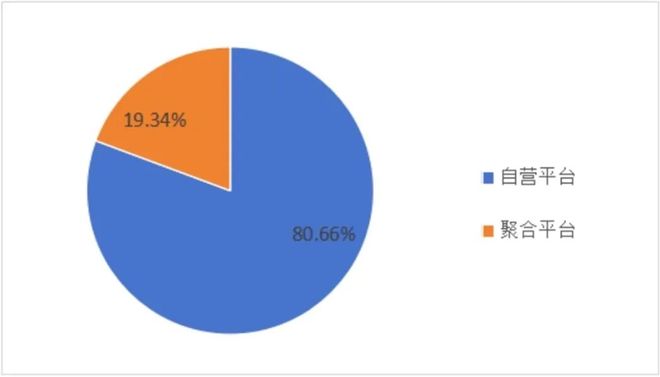
Core Insights - The article highlights a significant consumer preference for self-operated ride-hailing platforms like Didi over aggregator platforms, with over 80% of respondents favoring self-operated services due to safety concerns [1][4][11] - Safety has emerged as the primary concern for consumers when choosing ride-hailing services, surpassing convenience and price [3][4] - The market is shifting towards a focus on safety and efficiency, indicating a change in consumer priorities in the ride-hailing industry [4][11] Group 1: Consumer Preferences - A recent survey shows that 80.66% of respondents prefer self-operated platforms, while only 19.34% favor aggregator platforms [1] - Over 62.57% of respondents prioritize safety as their main concern when selecting a ride-hailing service [3] - The rise in safety incidents and regulatory improvements has heightened consumer sensitivity towards safety in ride-hailing services [4] Group 2: Platform Differences - Self-operated platforms have higher compliance rates compared to aggregator platforms, indicating a difference in operational standards [5] - Self-operated platforms impose stricter requirements on drivers, leading to a perception of higher quality and safety among consumers [5][6] - Aggregator platforms, while offering lower prices, often lack transparency in their fee structures and can complicate consumer claims in case of disputes [7][8] Group 3: Business Models - The article discusses the contrasting business models of self-operated and aggregator platforms, with self-operated platforms focusing on direct control of resources and safety [10][11] - Aggregator platforms serve as information matchmakers, which can lead to a dilution of responsibility for safety and service quality [11][13] - The ongoing evolution of the market suggests a potential blending of both models, as aggregator platforms explore self-operated options to enhance control over service quality [9][15] Group 4: Future Outlook - The future of the ride-hailing industry may not see one model completely replace the other, but rather a dynamic integration of both, with a focus on redefining responsibilities [15] - The key question remains who will be held accountable when service issues arise, emphasizing the need for clear responsibility in the industry [15]

网约车服务满意度报告:超八成消费者因安全和服务质量选择自营平台
Zhong Guo Jing Ji Wang· 2025-12-22 09:41
Core Insights - The report highlights that over 80% of respondents prefer self-operated ride-hailing platforms (e.g., Didi Chuxing, Shouqi) over aggregator platforms (e.g., Gaode, Meituan) due to their established service management and safety image [4] - Safety is the primary concern for over 62% of respondents when choosing ride-hailing services, surpassing convenience (49.30%) and price (37.51%), indicating a shift towards prioritizing safety alongside efficiency [4][6] - The perception of self-operated platforms is that they have clearer safety audits and responsibilities, while aggregator platforms are seen as potentially offering lower quality services [9][11] Consumer Preferences - More than 58% of respondents believe that self-operated platforms have clearer safety audits and responsibilities, with 45.06% citing more efficient customer service and after-sales support [9] - Nearly half (48.74%) of respondents think aggregator platforms may lead to low-price, low-quality services, with concerns about unclear after-sales responsibilities (41.03%) and relatively poor safety guarantees (31.64%) [9] - Consumers favor self-operated platforms for their strong safety capabilities and stable service quality, as they provide a unified safety management system throughout the service chain [11] Recommendations for Improvement - The report suggests enhancing regular governance to enforce platform responsibilities, optimizing algorithm accuracy for service traceability, improving driver professionalism, and increasing consumer awareness for rights protection [12]
从刑警到安全掌门人:T3出行何群重塑网约车行业安全
Xi Niu Cai Jing· 2025-12-05 02:04
Core Viewpoint - The article emphasizes the importance of safety in the ride-hailing industry, highlighting the need for robust safety measures to protect both drivers and passengers in a rapidly growing market [1][6]. Group 1: Industry Challenges - The ride-hailing industry faces inherent risks due to the nature of one-on-one interactions in enclosed spaces, especially during late-night hours or when passengers are intoxicated [3][4]. - High-profile incidents in 2018 raised significant safety concerns, prompting industry leaders to seek solutions to enhance safety protocols [3]. Group 2: Company Initiatives - T3 Mobility was established in April 2019 by major automotive manufacturers to address safety in ride-hailing, with a focus on creating a comprehensive safety system [3][4]. - The company has developed a full journey protection system that includes over 100 safety measures, covering all stages of the ride from booking to drop-off [4][6]. Group 3: Safety Management - T3 Mobility's safety team comprises professionals from various backgrounds, including law enforcement and safety engineering, to create a well-rounded safety framework [4][6]. - The company has implemented a rigorous safety management system, resulting in continuous certification and recognition from government bodies for its safety governance [6]. Group 4: Technological Integration - T3 Mobility utilizes algorithms to detect potential risks during rides, triggering alerts for both drivers and passengers when high-risk behaviors are identified [7][8]. - The company has partnered with China Telecom to develop a safety model that applies to various scenarios, enhancing real-time monitoring and response capabilities [8]. Group 5: Human Oversight - A dedicated team of safety personnel monitors rides 24/7, ensuring immediate intervention in case of any anomalies or alerts triggered by the system [11][12]. - The company emphasizes the importance of human oversight in conjunction with technology to address situations that algorithms may not fully manage [11][12]. Group 6: Safety Culture - T3 Mobility fosters a strong safety culture within the organization, where safety is prioritized over efficiency, and all employees are encouraged to take responsibility for safety [13][15]. - Regular safety training and awareness campaigns are conducted to reinforce the importance of safety among employees, drivers, and passengers [13][15]. Group 7: Performance Metrics - T3 Mobility has achieved a zero rate for sensitive incidents involving driver responsibility and a 40% lower fatality rate per billion kilometers compared to traditional taxis [15]. - The company’s safety initiatives have reportedly saved at least 30 lives over six years, demonstrating the effectiveness of its safety measures [15].