
美伊对峙

Search documents
最快周六!美对伊动武倒计时?全面战争恐一触即发
Jin Shi Shu Ju· 2026-02-18 23:03
Group 1 - U.S. military is prepared for potential strikes against Iran, with actions likely delayed until after the weekend [1] - Discussions regarding military action are ongoing, with the White House weighing risks of escalation against potential political and military consequences [1] - The Pentagon plans to temporarily relocate some personnel from the Middle East to Europe or the U.S. as a precaution [1] Group 2 - White House Press Secretary stated there are many reasons supporting military action against Iran, but diplomacy remains the preferred option [2] - The Abraham Lincoln Carrier Strike Group is deployed in the region, while the USS Gerald Ford Carrier Strike Group is en route [2] - Iranian leadership has issued warnings regarding U.S. military presence, indicating heightened tensions [2] Group 3 - Negotiations between U.S. and Iran have shown some progress, but significant differences remain [3] - U.S. officials indicate that if a deal is not reached, military action may be considered [3] - The potential for a large-scale military conflict is increasing, with implications for the region and U.S. foreign policy [5] Group 4 - U.S. military presence in the region has expanded significantly, with two aircraft carriers and numerous fighter jets deployed [6] - Over 150 military cargo flights have delivered weapons systems to the Middle East, indicating preparation for potential conflict [6] - The likelihood of military action is perceived to be high if diplomatic negotiations fail [7]
波斯湾危机?美伊动武风险与资产推演
格隆汇APP· 2026-02-06 10:08
Core Viewpoint - The article discusses the escalating tensions between the U.S. and Iran, highlighting the potential for military conflict and its implications for global markets, particularly oil prices and defense stocks [3][5][26]. Group 1: Current Situation and Military Dynamics - The current WTI crude oil price is $64 per barrel, up 18% from recent lows, indicating the emergence of geopolitical premiums, but the impact should be viewed rationally [3]. - The probability of a full-scale war between the U.S. and Iran is less than 10%, while the risk of limited military strikes has risen to 30%, with high-pressure confrontation remaining the main scenario at 60% [3][12]. - The U.S. military's recent actions, including the downing of an Iranian drone, have heightened tensions, and diplomatic negotiations are at a standstill, with core disagreements remaining unresolved [5][6]. Group 2: Political and Economic Constraints - Domestic political and financial pressures in the U.S. pose significant obstacles to military action, with 62% of Americans opposing war over Iran's nuclear issue, a notable decline in support compared to previous conflicts [12]. - The U.S. national debt has reached $38 trillion, and the financial burden of a full-scale war is unsustainable, with estimates suggesting a cost of $2.8 billion in the first 30 days of conflict [12]. - Military risks are high due to Iran's dispersed nuclear facilities, which are difficult to target effectively, and the potential for Iranian retaliation against U.S. forces in the region [13]. Group 3: Scenarios and Market Implications - Four potential scenarios for U.S. actions against Iran are outlined, with varying probabilities and market impacts: 1. Limited military strikes (30% probability) could lead to a short-term spike in oil prices to $78-85 per barrel and significant gains in defense stocks [18]. 2. Full-scale war (<10% probability) would likely cause severe market volatility, pushing oil prices to $110-120 per barrel, but is deemed highly unlikely due to various constraints [20]. 3. Cyber warfare and special operations (20% probability) would result in minor market disturbances, with oil prices rising modestly [21]. 4. High-pressure confrontation (60% probability) would stabilize oil prices around $70-78 per barrel, reflecting a return to fundamental market conditions [24]. Group 4: Risk Assessment and Timeframes - The article identifies three critical timeframes for assessing risks: - Short-term (2-3 months): A 25% risk of military action if diplomatic talks fail [25]. - Mid-term (4-6 months): A 35% risk as Iran's nuclear program approaches critical thresholds, coinciding with U.S. elections [25]. - Long-term (9-10 months): A 20% risk if Iran remains unyielding, but economic repercussions may deter aggressive actions [25].

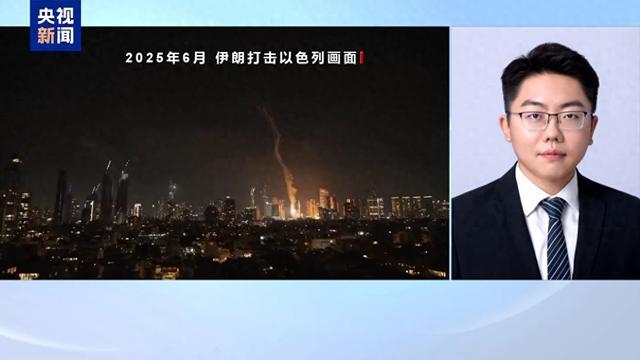
美以防长密商对伊军事行动 协调应对伊朗“报复”威胁
Xin Lang Cai Jing· 2026-02-02 10:52
Group 1 - The core focus of the discussions between Israeli Chief of Staff Herzi Halevi and U.S. military officials was to coordinate defense arrangements regarding Iran and to address potential scenarios arising from U.S.-Iran tensions [1] - Israel is seen as a critical player in the U.S.-Iran standoff, with the possibility of Israeli involvement in any U.S. military action against Iran, as well as being a target for Iranian retaliation [1] - The visit of Israeli military leadership to the U.S. underscores the close cooperation and cautious assessment of the current geopolitical situation between the two nations [1] Group 2 - Iran has explicitly stated that it would retaliate against Israeli targets even if the initial strike is conducted by the U.S., indicating that Israel will be a target regardless of its direct involvement [1] - Israel is aware of the military threats posed by Iran and is taking measures to prepare for potential attacks [1] - Despite having a multi-layered defense system, Israel struggled to intercept all Iranian military strikes during the previous conflict, highlighting vulnerabilities in its defense capabilities [4] Group 3 - Recent increases in U.S. military sales to Israel aim to enhance its air defense systems, reflecting a strategic partnership focused on countering Iranian threats [6] - The need for Israel to address various military threats from Iran remains a priority, even with the bolstered defense systems [6]
美伊对峙升级 也门胡塞武装提高军事戒备
Xin Lang Cai Jing· 2026-02-01 00:43
Core Viewpoint - The Houthis have heightened military readiness in response to escalating regional tensions due to potential U.S. military intervention in Iran, implementing measures to enhance combat capabilities [1] Group 1: Military Preparedness - A military official from the Houthis stated that they have increased alert status and are inspecting missile launch systems in strategically significant areas along the Red Sea as a precautionary measure [1] - The Houthis are taking proactive military measures in light of the potential for conflict in the region [1] Group 2: Political Statements - Hizam Al-Asad, a member of the Houthi political bureau, declared that Iran has the right to retaliate if the U.S. attacks, indicating that U.S. and Israeli military bases and interests in the Middle East would be targeted in such a scenario [1] - Al-Asad emphasized that the Houthis have previously downed numerous MQ-9 Reaper drones and have successfully deterred U.S. aircraft carriers from approaching Yemen, asserting that the U.S. only understands the language of power [1]
伊朗民众不会屈服于美国霸权
Xin Lang Cai Jing· 2026-01-31 23:41
Core Viewpoint - The Iranian public expresses strong resistance to U.S. military dominance, asserting that the U.S. prioritizes its own political and economic interests over the welfare of other nations [1] Group 1: Public Sentiment - Tehran residents believe that U.S. military presence in the Middle East has not brought peace but rather chaos and anxiety [1] - Many Iranians feel that if the U.S. were to withdraw, regional security would significantly improve [1] Group 2: Economic and Social Pressures - The ongoing U.S.-Iran standoff exacerbates the economic pressures on Iran, which is already suffering from sanctions, impacting the daily lives of its citizens [1] - The potential for war creates a pervasive sense of uncertainty about the future among the Iranian populace [1] Group 3: Diplomatic Analysis - Analysts indicate that the U.S. has intensified its "maximum pressure" strategy against Iran, affecting European policies towards Iran, including the designation of the Iranian Revolutionary Guard as a terrorist organization [1] - There is a prevailing belief among Iranian analysts that the likelihood of successful negotiations between the U.S. and Iran is low, given the historical failures and the current threatening context [1] - The potential consequences of a U.S.-Iran conflict could pose severe challenges to the political and economic security of the entire Middle East [1]
美伊对峙升级 伊朗宣布将在霍尔木兹海峡实弹军演
Xin Hua She· 2026-01-30 12:19
Group 1 - The U.S. military is prepared to execute any decisions made by President Trump regarding Iran, emphasizing the need to prevent Iran from pursuing nuclear capabilities [1][2] - Iran's First Vice President, Mohammad Reza Arif, stated that Iran must prepare for a "state of war" while still being open to negotiations with the U.S. [1][2] - The Iranian Revolutionary Guard Navy will conduct live-fire exercises in the Strait of Hormuz from February 1 to 2 [1][2] Group 2 - The U.S. military has been increasing its presence in the Middle East, with the USS Abraham Lincoln carrier strike group being deployed to the region [3] - Trump has accused Iran of secretly developing nuclear weapons, while Iran insists its nuclear program is for peaceful purposes [3] - Following U.S. military strikes on Iranian nuclear facilities, Trump claimed that these actions set back Iran's nuclear program by "decades," although U.S. intelligence assessments suggest the delay was only a few months [3] Group 3 - The U.S. is urging Iran to accept strict limitations on its nuclear and missile programs in exchange for de-escalation of tensions [4] - Regional countries like Turkey, Qatar, and Egypt are calling for a peaceful resolution to the situation, expressing concerns over the potential for external military intervention [4] - Saudi Arabia and the UAE have stated they will not allow their territory to be used for any attacks on Iran [4] Group 4 - The U.S. actions in Venezuela are seen as a signal rather than a template for potential actions against Iran, creating uncertainty in Iranian decision-making [5]