军事国防

Search documents
Treasury Sec. Bessent: U.S. will make 'series of announcements' to support oil trade in the Gulf
Youtube· 2026-03-04 14:00
Geopolitical Context - The U.S. Treasury Secretary and the Secretary of Energy are actively involved in the National Security Council, coordinating efforts related to the ongoing war in Iran [2][10] - The U.S. and Israeli air forces have gained complete control of Iranian airspace, initiating a significant bombing campaign targeting ballistic missiles and military bunkers [3][4] Oil Market Dynamics - The crude oil market has been well-prepared for the geopolitical events, with significant price movements already observed over the past two months [5] - Recent fluctuations in crude oil prices are not among the most significant changes historically, indicating a stable supply situation [6] - The crude markets are reported to be well-supplied, with hundreds of millions of barrels available away from the Gulf [7] Insurance and Security Measures - The U.S. government, through the Development Finance Corporation (DFC), will provide insurance for crude carriers and cargo ships operating in the Gulf, following the nullification of insurance by Lloyds of London [8][13] - The U.S. Navy is prepared to ensure safe passage for oil tankers through critical waterways if necessary [8][15] Energy Production and Export - The U.S. is currently experiencing record-high production levels of both oil and natural gas, positioning itself as a significant exporter in the global market [11][12] - The energy landscape has shifted since the Russian invasion of Ukraine, with the U.S. now in a stronger position regarding energy dominance [11][12]


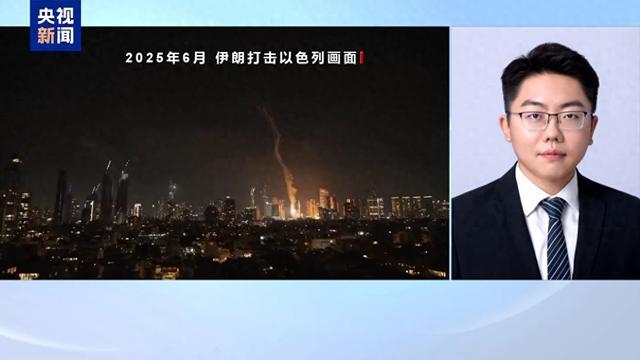
美以防长密商对伊军事行动 协调应对伊朗“报复”威胁
Xin Lang Cai Jing· 2026-02-02 10:52
Group 1 - The core focus of the discussions between Israeli Chief of Staff Herzi Halevi and U.S. military officials was to coordinate defense arrangements regarding Iran and to address potential scenarios arising from U.S.-Iran tensions [1] - Israel is seen as a critical player in the U.S.-Iran standoff, with the possibility of Israeli involvement in any U.S. military action against Iran, as well as being a target for Iranian retaliation [1] - The visit of Israeli military leadership to the U.S. underscores the close cooperation and cautious assessment of the current geopolitical situation between the two nations [1] Group 2 - Iran has explicitly stated that it would retaliate against Israeli targets even if the initial strike is conducted by the U.S., indicating that Israel will be a target regardless of its direct involvement [1] - Israel is aware of the military threats posed by Iran and is taking measures to prepare for potential attacks [1] - Despite having a multi-layered defense system, Israel struggled to intercept all Iranian military strikes during the previous conflict, highlighting vulnerabilities in its defense capabilities [4] Group 3 - Recent increases in U.S. military sales to Israel aim to enhance its air defense systems, reflecting a strategic partnership focused on countering Iranian threats [6] - The need for Israel to address various military threats from Iran remains a priority, even with the bolstered defense systems [6]
本土安全及其在西半球利益为最优先事项
Xin Lang Cai Jing· 2026-01-24 22:40
Group 1 - The core focus of the 2026 Defense Strategy Report is on prioritizing homeland security and U.S. interests in the Western Hemisphere, with an emphasis on strengthening partnerships and defense industrial base [1] - The Pentagon aims to restore U.S. military dominance in the Western Hemisphere, ensuring border security and combating "drug terrorists" in the region [1] - The report highlights the development of the "Iron Dome" missile defense system and capabilities to counter drone systems, alongside modernizing U.S. nuclear forces and enhancing cyber defenses for military and certain civilian targets [1] Group 2 - Russia is identified as a controllable threat to NATO's eastern members, possessing the largest nuclear arsenal and capabilities to attack the U.S. homeland [2] - NATO allies are deemed capable of taking primary responsibility for conventional defense in Europe, with the U.S. providing limited but critical support [2] - The report emphasizes preventing Iran from acquiring nuclear weapons and outlines strategies to bolster regional allies' defense capabilities against Iran [2] - North Korea is recognized as a direct military threat to South Korea and Japan, with its nuclear capabilities increasingly threatening the U.S. [2]
美发布国防战略报告,本土安全及其在西半球利益为最优先事项
Xin Lang Cai Jing· 2026-01-24 08:16
Core Viewpoint - The U.S. Department of Defense's 2026 defense strategy report prioritizes homeland security and interests in the Western Hemisphere, emphasizing the need to strengthen alliances and develop the defense industrial base [1] Group 1: Homeland Security and Western Hemisphere Focus - The Pentagon identifies the protection of the U.S. homeland as its primary mission and aims to restore military dominance in the Western Hemisphere [1] - The report outlines plans to ensure border security, combat "drug terrorists" in the Western Hemisphere, and maintain control over key regions from the Arctic to South America, particularly Greenland, the U.S. Gulf, and the Panama Canal [1] Group 2: Defense Capabilities and Modernization - The Department of Defense will prioritize the development of the Iron Dome missile defense system and capabilities to counter drone systems, as well as modernizing and adapting U.S. nuclear forces [1] - The report highlights the importance of enhancing cyber defenses for both military and certain civilian objectives [1] Group 3: Global Threats and Alliances - Russia is described as a controllable threat to NATO's eastern members, possessing the largest nuclear arsenal and capabilities to attack the U.S. homeland [2] - The report asserts that NATO allies are capable of taking primary responsibility for conventional defense in Europe, with the U.S. providing limited support [2] - The U.S. will continue to play a key role within NATO while adjusting troop deployments and actions in Europe [2] Group 4: Regional Security Concerns - The report emphasizes that Iran must not be allowed to acquire nuclear weapons and notes Iran's determination to rebuild its conventional military despite recent setbacks [2] - The U.S. will support Israel's defense capabilities and deepen cooperation with Gulf Arab states to enable regional allies to deter and defend against Iran [2] - North Korea poses a direct military threat to South Korea and Japan, with its nuclear capabilities increasingly threatening the U.S. [2]
欧洲头条丨欧洲多国出兵格陵兰 跨大西洋关系面临瓦解
Yang Shi Xin Wen· 2026-01-17 04:16
Group 1 - French President Macron emphasized the need for strength to maintain freedom in the context of heightened international tensions, stating that France has deployed military forces to Greenland and plans to enhance its presence through various means [1] - Multiple European countries, including France, Germany, and the Netherlands, have expressed intentions to send military personnel to Greenland, indicating a deepening divide in transatlantic relations regarding the island [1] - Danish Foreign Minister Rasmussen acknowledged fundamental disagreements between Denmark and the U.S. regarding Greenland, despite ongoing dialogue [2] Group 2 - The EU's High Representative for Foreign Affairs indicated that if violence erupts in Greenland, Germany and other EU member states may be obligated to assist Denmark under Article 42(7) of the EU Treaty, which is more explicit than NATO's Article 5 [5] - Germany's Defense Ministry announced that a reconnaissance mission led by Denmark aims to assess the feasibility of deploying European fighter jets and naval vessels for maritime surveillance in Greenland [8] - German Vice Chancellor Habeck stated that the traditional transatlantic relationship is undergoing profound changes, highlighting the increasing distance between the U.S. and Europe amid geopolitical tensions [9] Group 3 - Macron's remarks linked the Greenland issue to broader international crises, suggesting it is a key element in the ongoing global power restructuring [12] - The limited scale of military personnel being arranged by various countries is seen as having significant political implications, signaling Europe's clear stance on Arctic issues [12]

总台现场直击丨委空军基地遭美袭击后 导弹碎片四散
Yang Shi Xin Wen Ke Hu Duan· 2026-01-07 00:37
Group 1 - The article reports on a U.S. airstrike on January 3 targeting multiple sites in Venezuela, including the La Carlota Air Force Base located in the eastern suburbs of Caracas, which houses the Venezuelan National Aerospace Agency and military equipment such as anti-aircraft missiles and helicopters [2] - The airstrike resulted in the destruction of a "Buk" anti-aircraft missile system and caused damage to the base's office buildings, with reports of one injury [5][7] - The aftermath of the airstrike showed debris from missiles scattered on the ground and several burned buses, indicating significant destruction at the site [3][5] Group 2 - Security at the La Carlota Air Force Base has been heightened following the airstrike, with armed soldiers patrolling the area [7] - A ceremony is being held at the base to honor those who lost their lives during the airstrike, reflecting the impact of the event on military personnel [7]

美国防部连续第八年未通过财务审计
Yang Shi Xin Wen Ke Hu Duan· 2025-12-19 21:08
Core Insights - The U.S. Department of Defense has failed to pass its annual financial audit for the eighth consecutive year, highlighting ongoing financial management issues [1] - The audit revealed that the Department has approximately $4.65 trillion in assets and $4.73 trillion in liabilities, indicating a significant financial imbalance [1] - The audit identified 26 major internal control deficiencies and 2 significant deficiencies that could lead to material misstatements in financial reporting [1] - The Secretary of Defense, Lloyd Austin, stated that the Department cannot resolve long-standing issues through unchecked spending [1] - The Chief Financial Officer of the Department aims to achieve an unqualified audit opinion by 2028 [1] - Since its first audit in 2018, the Department of Defense remains the only cabinet-level agency that has not received a "clean audit report" [1]
美媒:白宫开会讨论针对委内瑞拉后续行动
Huan Qiu Shi Bao· 2025-12-01 22:44
Group 1 - The U.S. government is intensifying pressure on Venezuela, with a meeting scheduled at the White House to discuss further actions against the country [1] - Key members of the U.S. national security team, including Defense Secretary Esper and Secretary of State Rubio, are expected to attend the meeting [1] - Recent U.S. actions include increased military assets in the Caribbean and targeting drug trafficking vessels [1] Group 2 - Venezuelan President Maduro condemned U.S. attempts to seize the country's oil resources during an OPEC meeting, claiming that U.S. military deployments pose a threat to global energy market stability [3] - Maduro's letter to OPEC Secretary-General highlighted that since August, U.S. actions have escalated, including the deployment of 14 warships and approximately 15,000 troops in the Caribbean, resulting in over 80 deaths from airstrikes [3] - Venezuela is committed to defending its energy resources against U.S. threats and called for OPEC and OPEC+ members to unite against these aggressive actions [3] Group 3 - Controversy surrounds U.S. military actions against drug trafficking vessels in the Caribbean, with reports suggesting that a command to kill all crew members on a suspected drug smuggling vessel was given [4] - President Trump defended Defense Secretary Esper against allegations of issuing such orders, expressing confidence in Esper's denial [4] - Bipartisan concerns have emerged regarding the legality of continuing attacks on survivors of previous strikes, with potential implications of war crimes being discussed [4]

时隔14年 德国尝试重建全国性兵役制度
Yang Shi Xin Wen Ke Hu Duan· 2025-10-17 06:13
Core Viewpoint - Germany's Bundestag has initiated the formal review of a new draft of the Military Service Act, marking the first attempt to rebuild a national conscription system since the suspension of mandatory military service in 2011. The debate surrounding the draft highlights significant divisions within the ruling coalition regarding conscription models and societal acceptance [1]. Group 1: Legislative Developments - The draft does not include mandatory provisions, but the coalition parties are advocating for a "lottery conscription" system to ensure troop numbers if voluntary enlistment falls short. The Social Democratic Party (SPD) strongly opposes this, indicating a major rift in security policy within the ruling coalition [1]. - The parliamentary debate focuses on the fairness and societal acceptance of the lottery system. Proponents argue that Germany must ensure defense stability amid a complex European security environment, while opponents warn that this could exacerbate social discontent and undermine government credibility [1]. Group 2: Public Opinion and Political Reactions - Multiple polls indicate that a majority of young people oppose mandatory military service, fearing forced participation in conflicts. President Frank-Walter Steinmeier has publicly expressed skepticism, emphasizing that young people's futures should not be determined by a lottery system [1]. - Former Bundestag member Sevim Dagdelen advocates for investing in education rather than military expansion, attributing the push for increased military capacity to NATO demands, particularly from the United States [3]. Group 3: Strategic Military Goals - The military reform in Germany is viewed as a response to changes in the European security landscape and defense burden-sharing mechanisms. Balancing defense needs with societal willingness will directly impact Germany's role in the European security structure [5]. - German Chancellor Merz has called for enhancing Europe's military strength, stating that efforts will be made to transform the German armed forces into the strongest conventional army within the EU over the coming years [7].

达成一致!美国与欧盟发表联合声明
Sou Hu Cai Jing· 2025-08-21 14:47
Core Points - The United States and the European Union have reached an agreement on a trade framework covering various sectors including agriculture, automobiles, aircraft, semiconductors, energy, and digital trade barriers [1][2][5] Group 1: Tariff Changes - The EU will eliminate tariffs on all U.S. industrial products and provide preferential market access for U.S. agricultural products, including nuts, dairy, and processed fruits and vegetables [2] - The U.S. will apply the higher of the Most Favored Nation (MFN) tariff rate or a 15% tariff rate on most EU goods, effective from September 1, 2025, for certain products [3][4] Group 2: Energy and Technology Procurement - The EU plans to purchase U.S. energy products, including liquefied natural gas and oil, with expected purchases reaching $750 billion by 2028 [5] - The EU will also commit to acquiring at least $40 billion worth of U.S. artificial intelligence chips for data center construction in Europe [5] Group 3: Future Negotiations - The EU and the U.S. will continue discussions on further tariff reductions following intensive negotiations led by trade officials from both sides [6]