
核谈判

Search documents
美以空袭伊朗,以色列称准备“第一阶段为期四天联合打击”,美方称“规模比去年六月大得多”
美股IPO· 2026-02-28 08:04
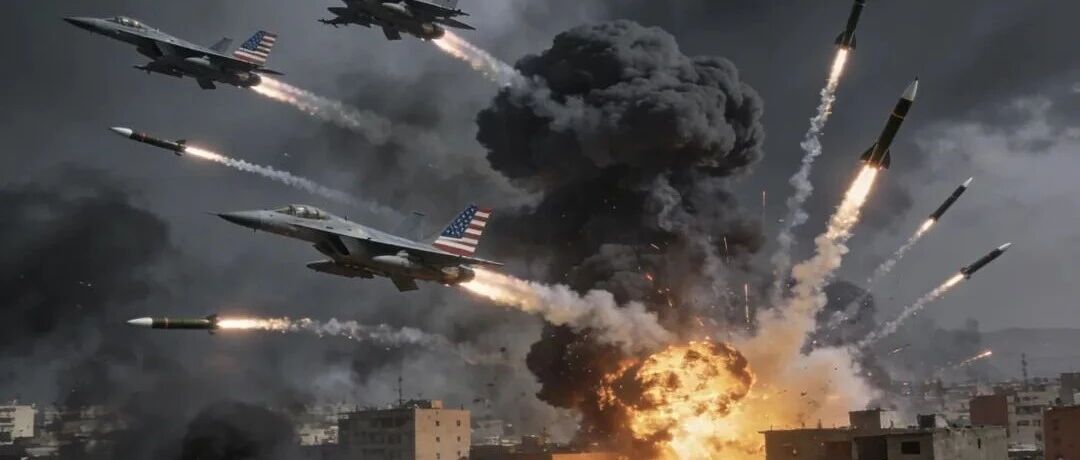
Core Viewpoint - The article discusses the escalation of military conflict in the Middle East, particularly the joint preemptive strikes by Israel and the U.S. against Iran, which have led to heightened global market volatility and increased risk aversion among investors [1][12]. Military Actions and Responses - Israel has launched a preemptive strike against Iran, targeting approximately 30 key locations, including the Iranian presidential office and intelligence headquarters, with a planned four-day intensive offensive [1][12]. - Iranian officials have stated they are preparing for a "devastating" retaliatory response to the attacks [2][13]. - The Israeli Defense Forces have issued nationwide alerts and advised citizens to stay near shelters [3]. Market Reactions - Bitcoin experienced a sharp decline, dropping over $1,000 in about 10 minutes, falling below $64,000 as a direct reaction to the escalating conflict [7]. Diplomatic Context - Ongoing negotiations regarding Iran's nuclear program have stalled, with significant disagreements over uranium enrichment and sanctions [11]. - The U.S. military presence in the region has intensified, with the deployment of two aircraft carriers and additional military assets, indicating a potential for further military action [14][15]. International Reactions - Multiple countries have initiated emergency evacuations of their citizens from the region, reflecting the growing concern over the conflict [15][16]. - The United Nations has called for both sides to focus on diplomatic solutions, highlighting the tension between military actions and diplomatic efforts [16].

伊美第三轮间接谈判“取得重大进展” 油价盘中剧烈波动!棉花开启新一轮涨势?
Qi Huo Ri Bao· 2026-02-27 00:20
Group 1: Middle East Tensions - Intense clashes occurred between Pakistan and Afghanistan along their border, with Pakistan claiming to have killed 36 Afghan militants, while Afghanistan reported 55 Pakistani soldiers killed [3] - The conflict escalated with Pakistan conducting airstrikes in response to Afghan military actions, which included capturing 15 Pakistani military outposts [3] - This border conflict is part of a series of skirmishes that have taken place since October of the previous year, despite previous attempts at a ceasefire mediated by Qatar and Turkey [4] Group 2: Iran-US Negotiations - Iran's Foreign Minister announced that the third round of indirect negotiations with the US has made significant progress, with both sides nearing consensus on certain issues [6] - Technical discussions are scheduled to take place in Vienna, indicating ongoing diplomatic efforts to address nuclear concerns [6] - Iran insists on retaining its right to peaceful nuclear technology and opposes transferring its enriched uranium abroad, while the US may demand the dismantling of key nuclear facilities [7] Group 3: Military Deployments - The deployment of 11 US F-22 stealth fighters to Israel marks a significant military presence in the region, valued at over $1.5 billion [9] - The F-22 is noted for its advanced capabilities, including air-to-air and air-to-ground combat, and is the first aircraft capable of sustained supersonic flight without afterburners [9] Group 4: Cotton Market Trends - The global cotton market is experiencing a recovery, with prices rising after a period of low volatility, driven by improved macroeconomic sentiment and marginally better fundamentals [13] - The USDA has projected a 3.2% decrease in global cotton production for the 2026/2027 season, indicating a tightening supply-demand balance [14] - Domestic cotton demand is expected to increase as textile companies resume normal operations post-holiday, with production rates in Xinjiang reaching 85%-90% [15]
伊朗称伊美谈判非常严肃深入,美媒称美提强硬要求、特朗普与军方有明显分歧
Hua Er Jie Jian Wen· 2026-02-26 19:06
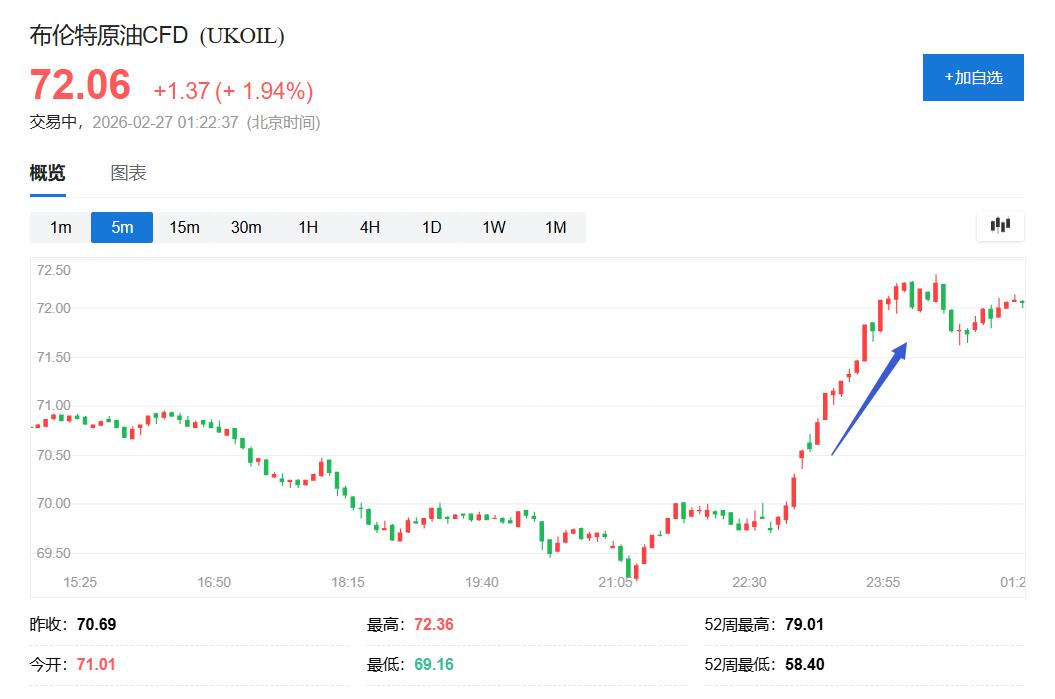
Core Viewpoint - The negotiations between the U.S. and Iran in Geneva have reached a critical stage, with significant differences in positions between the two sides, particularly regarding nuclear facilities and sanctions relief [1][3]. Group 1: Negotiation Dynamics - The third round of negotiations took place in Geneva, with Iran's Foreign Ministry spokesperson stating that discussions were "very in-depth and serious" [1]. - Iran has submitted a comprehensive proposal to the U.S., aiming to test America's commitment to diplomacy, which includes technical and practical measures to demonstrate that Iran does not intend to develop nuclear weapons [6]. - The U.S. is expected to demand the dismantling of key nuclear facilities and the transfer of all enriched uranium to the U.S., insisting that any agreement must be "permanently effective" [1][7]. Group 2: Market Reactions - Oil markets are closely monitoring the negotiations, with international crude oil futures experiencing fluctuations based on the progress of talks. Brent crude fell to $69.16, down nearly 2.4%, while WTI crude dropped to $63.6, down nearly 2.8% [3]. - Following reports of direct negotiations, oil prices rebounded, with Brent crude rising above $72.60 and WTI crude surpassing $66.70 during early trading [3]. Group 3: Internal Pressures and Military Context - U.S. negotiators face pressure from hawkish elements within the government and Congress, which may hinder the potential for a softer agreement [7]. - The U.S. has increased military presence in the Middle East, deploying two aircraft carrier strike groups and over 150 aircraft, marking the largest military deployment in the region since the 2003 Iraq War [9]. - There are indications of a split between military and diplomatic strategies within the U.S. administration regarding potential military action against Iran [2][9].
阿曼外长在日内瓦会见美伊谈判的美方谈判代表
Xin Lang Cai Jing· 2026-02-26 11:08
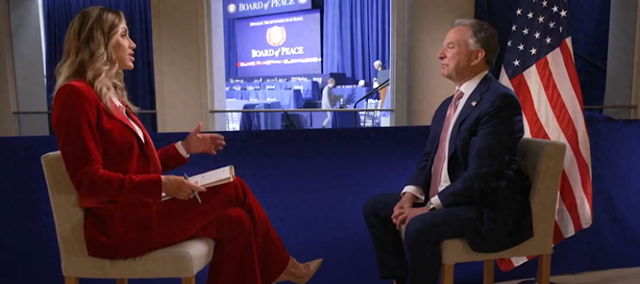
Core Viewpoint - The ongoing nuclear negotiations involving Iran are characterized by constructive discussions and an openness to new ideas from the involved parties [1] Group 1: Negotiation Details - Omani Foreign Minister Badr Albusaidi met with U.S. negotiators Steve Witkoff and Jared Kushner in Geneva to discuss Iran's proposals and the U.S. response as part of the nuclear talks [1] - Albusaidi described the negotiations as "constructive," indicating that the representatives are open to new ideas and proposals [1] Group 2: Meetings and Discussions - Earlier on the same day, Albusaidi held talks with Iranian Foreign Minister Amir-Abdollahian to discuss proposals related to the nuclear program [1] - Albusaidi plans to relay Iran's proposals to the U.S. team and discuss their perspectives and visions regarding these proposals [1] - Additionally, Albusaidi met with Rafael Grossi, the Director General of the International Atomic Energy Agency, to discuss technical aspects of the related proposals [1]
“特朗普想不通,伊朗为什么还不屈服”
Xin Lang Cai Jing· 2026-02-22 15:52
Core Viewpoint - The negotiations between the US and Iran remain stalled despite two rounds of indirect talks, with both sides unable to reconcile their core demands, leading to heightened regional tensions [1][7]. Group 1: US Position and Strategy - US President Trump is reportedly confused as to why Iran has not capitulated under the pressure of extensive military deployment in the region, expressing curiosity about their lack of response [1][4]. - The US has set a clear "red line" for negotiations with Iran, demanding zero enrichment of uranium and the return of all nuclear materials, with Iran's current enrichment level reportedly at 60%, which is dangerously close to weapons-grade material [2][4]. - Trump indicated a decision on whether to continue diplomatic efforts or to initiate military action against Iran would be made within 10 to 15 days, suggesting a critical juncture in US-Iran relations [4]. Group 2: Iran's Response and Internal Dynamics - Iran's Supreme Leader Khamenei has tasked security officials with ensuring the country's survival in the event of military strikes, indicating a shift in leadership dynamics with Ali Larijani taking a more prominent role [5][6]. - Despite ongoing negotiations, Iran's core stance remains unchanged, as they refuse to comply with US demands regarding nuclear enrichment and missile programs, indicating a strategy of delaying tactics [7][8]. - Analysts suggest that the US administration is skeptical about achieving any substantial outcomes from the negotiations, viewing them as a means to apply pressure on Iran while ensuring military readiness in the region [7][8].
美国政府消息人士:未来几周内爆发战争的可能性高达90%
Xin Lang Cai Jing· 2026-02-20 02:09
Core Viewpoint - The U.S. military is preparing for a potential large-scale bombing operation against Iran, with an increase in fighter jets and support aircraft being deployed to the Middle East [1][2]. Group 1: Military Deployment - A significant number of U.S. fighter jets and aerial refueling aircraft have been observed moving eastward, indicating preparations for military action [2]. - Over 50 U.S. fighter jets, including F-35s and F-16s, were deployed to the region within 24 hours as of the evening of February 17 [2]. - The deployment includes heavy bombers such as B-2 stealth bombers and potentially B-52 bombers, which were previously used in attacks on Iranian nuclear facilities [3]. Group 2: Strategic Intent - Analysts suggest that the increase in military presence may be aimed at clearing the way for heavy bombers to strike key targets in Iran [2]. - The U.S. Vice President indicated that Iran has not recognized the "red lines" set by President Trump, leaving the intent of the military buildup uncertain [6]. - Experts believe that if Iran retaliates, the U.S. has additional air and ground-based combat aircraft ready for defensive operations [7]. Group 3: Timing and Predictions - A U.S. government source stated that the likelihood of war breaking out in the coming weeks is as high as 90% [2]. - An Israeli former intelligence chief predicted that military action could occur within days [2][7]. - The military buildup follows the second round of indirect negotiations between the U.S. and Iran held in Geneva on February 17 [5].
最快周六!美对伊动武倒计时?全面战争恐一触即发
Jin Shi Shu Ju· 2026-02-18 23:03
Group 1 - U.S. military is prepared for potential strikes against Iran, with actions likely delayed until after the weekend [1] - Discussions regarding military action are ongoing, with the White House weighing risks of escalation against potential political and military consequences [1] - The Pentagon plans to temporarily relocate some personnel from the Middle East to Europe or the U.S. as a precaution [1] Group 2 - White House Press Secretary stated there are many reasons supporting military action against Iran, but diplomacy remains the preferred option [2] - The Abraham Lincoln Carrier Strike Group is deployed in the region, while the USS Gerald Ford Carrier Strike Group is en route [2] - Iranian leadership has issued warnings regarding U.S. military presence, indicating heightened tensions [2] Group 3 - Negotiations between U.S. and Iran have shown some progress, but significant differences remain [3] - U.S. officials indicate that if a deal is not reached, military action may be considered [3] - The potential for a large-scale military conflict is increasing, with implications for the region and U.S. foreign policy [5] Group 4 - U.S. military presence in the region has expanded significantly, with two aircraft carriers and numerous fighter jets deployed [6] - Over 150 military cargo flights have delivered weapons systems to the Middle East, indicating preparation for potential conflict [6] - The likelihood of military action is perceived to be high if diplomatic negotiations fail [7]
美伊核谈“取得进展”,特朗普副手泼冷水:红线问题仍未解决
Jin Shi Shu Ju· 2026-02-17 22:49
Core Insights - The negotiations between the US and Iran have made progress, but many details remain to be resolved, with Iran expected to submit a detailed proposal in the next two weeks [1] - The talks are focused on Iran's nuclear program and the potential lifting of US economic sanctions, with the US also wanting to discuss Iran's missile development [1][2] - There is a consensus on a set of "guiding principles" to draft a potential agreement, although significant differences in positions still exist [2][3] Group 1: Negotiation Progress - The US official stated that while progress has been made, there are still many details to discuss [1] - Iran's Foreign Minister described the atmosphere of the negotiations as "more constructive" and indicated that both sides agreed to advance the drafting of a potential agreement [2] - The next round of negotiations has not yet been scheduled, and the timeline for a potential agreement remains uncertain [2] Group 2: Military Tensions - The US has increased its military presence in the region, deploying the "Abraham Lincoln" aircraft carrier and sending the "Gerald R. Ford" aircraft carrier to the Middle East [5] - Iran's Supreme Leader responded to US military threats, emphasizing that the real danger lies in the weapons capable of sinking aircraft carriers [5] - Iran has conducted military exercises in the Strait of Hormuz, showcasing its military capabilities in response to US actions [6]
伊朗和美国在日内瓦举行第二轮核谈判
Xin Lang Cai Jing· 2026-02-17 10:35
Group 1 - The core point of the article is that Iran and the United States are engaged in a second round of nuclear negotiations in Switzerland, aiming to prevent further conflict in the Middle East [1][4]. - The talks, mediated by Oman, began at around 10:30 AM local time and followed a previous round in Muscat that lasted approximately seven hours, with both sides reporting "progress" [1][4]. - Iranian officials have expressed a willingness to discuss their nuclear enrichment activities but will link any concessions to potential easing of U.S. sanctions [2][5]. Group 2 - The U.S. is increasing its military presence in the Middle East, deploying a second aircraft carrier amid warnings of possible strikes against Iran if negotiations fail, which may take several weeks [2][5]. - The Iranian Revolutionary Guard conducted exercises near the strategically important Strait of Hormuz, focusing on responding decisively to security threats [2][5]. - The oil market is closely monitoring the negotiations to assess the potential for disruptions in Gulf supply or the possibility of sanctions relief for Iran, with Brent crude oil prices dropping to $68 per barrel amid these developments [2][5]. Group 3 - The U.S. negotiating team is led by Middle East envoy Steve Wittekov and Jared Kushner, with President Trump indicating that Iran is eager to reach an agreement and that he will indirectly participate in the talks [3][6].
美军18架战机飞向中东 伊朗举行军演 谈判前夕互亮“底牌”
Xin Lang Cai Jing· 2026-02-17 03:53
Group 1 - The U.S. military has deployed 18 F-35A "Lightning II" fighter jets to the Middle East, marking one of the largest single deployments in recent months [2] - Satellite imagery confirms the presence of the USS Abraham Lincoln aircraft carrier near the coast of Oman, with the carrier strike group recently arriving in the region [3] - The Iranian Revolutionary Guard Navy conducted military exercises in the Strait of Hormuz, focusing on readiness and response to potential security threats [4] Group 2 - The U.S. has set three main demands for Iran: complete abandonment of uranium enrichment, limitation of ballistic missile range, and cessation of support for regional proxy forces [5] - Israel's Prime Minister Netanyahu stated that any agreement with Iran must include the transfer of existing enriched uranium out of the country and the dismantling of enrichment facilities [6][7] - Iran has emphasized two "red lines": the right to peaceful nuclear energy and the non-negotiability of its missile capabilities, asserting its willingness to negotiate but not under excessive demands [8] Group 3 - International efforts are ongoing to facilitate negotiations, with the IAEA Director General having completed technical discussions with the Iranian Foreign Minister in preparation for upcoming talks [8] - Oman is actively promoting understanding and consensus among the parties involved, emphasizing the importance of dialogue and diplomacy to resolve differences and maintain regional stability [9]