美元信用褪色

Search documents
14连增!央行囤金不停,金价还能飞多高?
Guo Ji Jin Rong Bao· 2026-01-07 15:06
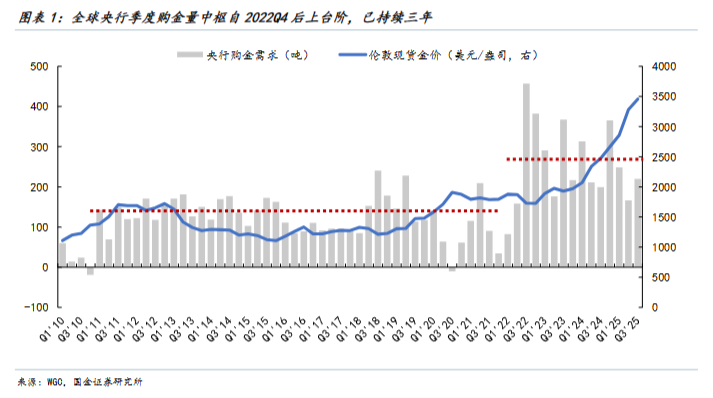
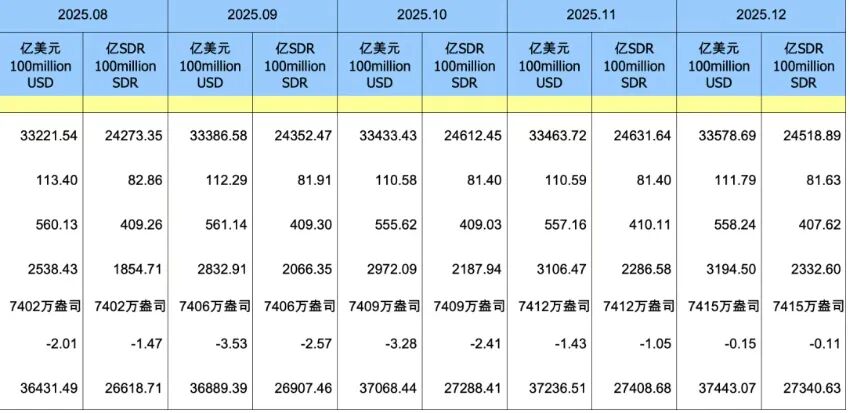
Core Viewpoint - As of December 2025, China's foreign exchange reserves reached $335.79 billion, marking an increase of $1.15 billion from the end of November, reflecting a growth rate of 0.34% [1] Group 1: Foreign Exchange Reserves - The foreign exchange reserves in China increased to $335.79 billion by the end of December 2025, up from $334.64 billion in November [1][2] - The rise in reserves is attributed to the depreciation of the US dollar index and fluctuations in global financial asset prices, alongside stable long-term economic conditions in China [3] Group 2: Gold Reserves - China's gold reserves reached 7.415 million ounces by the end of December 2025, an increase of 30,000 ounces from November, marking the 14th consecutive month of gold accumulation [2][3] - In 2025, China's total gold reserves increased by 860,000 ounces, reflecting a strong trend of central bank gold purchases globally [2][4] Group 3: Market Trends and Predictions - The global gold price saw a significant increase in 2025, with the London gold price rising over 60% throughout the year, driven by a restructuring of the monetary credit system and geopolitical tensions affecting the dollar's reserve status [3][4] - A survey by the World Gold Council indicated that 76% of central banks expect to increase their gold reserves over the next five years, up from 46% in 2022, highlighting a growing trend of gold accumulation as a hedge against inflation and economic uncertainty [4]

以史为鉴,黄金“超涨”了吗?
Hua Er Jie Jian Wen· 2025-12-30 01:45
Core Viewpoint - The gold market is experiencing a significant bull run, with London spot gold achieving its highest annual increase in nearly 46 years in 2025, driven by speculative inflows despite a slowdown in central bank purchases. The underlying support from global stagflation and the monetization of U.S. deficits remains intact, suggesting a continued upward trend for gold into 2026 [1][2][3]. Central Bank Gold Purchases - Central banks have increased their gold reserves over the past three years, with the global gold reserve proportion rising by 7 percentage points to 22%, although still below historical peaks of 29% and 58% during significant geopolitical shifts [4][5]. - 76% of surveyed central banks plan to moderately increase their gold reserves over the next five years, citing reasons such as crisis performance and inflation hedging [5]. - There remains a potential demand for 3,300 tons of gold if central bank holdings return to historical levels, indicating that central bank purchases will continue to support gold prices and limit downside risks [4][5]. Market Dynamics and Investment Strategies - Gold is viewed as a low-correlation, low-drawdown hedge, making it an attractive asset in a market where traditional hedges are failing. The demand for gold in risk parity and mean-variance strategies is evident, with many non-institutional investors yet to enter the gold market, indicating significant room for allocation [11][13]. - The ongoing Fed rate cut cycle and the need for hedging against the AI bubble are expected to further drive market funds into gold [2][15]. - The correlation between U.S. stocks and bonds is at a near 27-year high, highlighting the necessity for alternative assets like gold in diversified portfolios [14]. Historical Context and Future Outlook - Historical analysis shows that the current gold bull market has not reached excessive levels compared to past cycles, with gold prices increasing 5.7 times since the 2008 monetization of deficits and 2.4 times since the 2022 shift in U.S. dollar credibility, both significantly lower than the 24-fold increase seen in the 1970s [22][23]. - The U.S. debt-to-GDP ratio is projected to reach 118.5% by 2035, suggesting a continued bullish outlook for gold unless AI technology significantly improves productivity and fiscal conditions [23]. - The potential spillover effects of the gold bull market could benefit silver and copper, which are essential in the AI supply chain, as well as other strategic metals that may exhibit "gold-like" properties [24][31].