
黄金牛市

Search documents
美银Hartnett:还没看到“抄底信号”,如何理解黄金在内的“抄底交易”?
美股IPO· 2026-03-29 23:59
Core Viewpoint - The Bank of America Bull & Bear Indicator has dropped from 8.4 to 7.4, signaling the end of a sell signal that has persisted for over three months, but Michael Hartnett cautions that it is still too early to consider bottom-fishing [1][4][6]. Group 1: Market Signals - The Bull & Bear Indicator's decline to 7.4 marks the lowest level since July 2025, indicating a significant shift in market sentiment [4][6]. - The sell signal that began on December 17 of the previous year has officially ended, influenced by deteriorating global stock index breadth and outflows from high-yield bonds and emerging market debt [6][8]. - Historical data shows that after such sell signals, the average return for the S&P 500 and MSCI Global Stock Index over the following three months is only 1%, suggesting that the end of the sell signal does not strongly indicate a buying opportunity [8]. Group 2: Investment Strategy - Hartnett emphasizes that true buying opportunities will only arise with clear signs of "bull capitulation" or significant downward revisions in macroeconomic data, which have not yet occurred [5][11]. - The current market environment is characterized by a "painful trade" where short-term bonds outperform AI-related bonds, and energy stocks outperform technology stocks [8]. - The S&P 500 has seen 67% of its components drop over 10% from their peaks, with 28% down over 20%, indicating substantial structural damage beneath the index [8]. Group 3: Future Outlook - Hartnett outlines that a return of the dollar bear market could benefit gold and international equities, particularly if Trump's credibility is damaged due to geopolitical tensions [12][17]. - The potential for a policy shift towards "AI = universal basic income = yield curve control" could also benefit gold and Bitcoin in the long term [13]. - In a bearish scenario, credit spreads may continue to widen, and the market could shift from a prosperous trading environment to a stagflationary one, leading to a focus on long positions in U.S. Treasuries and short positions in cyclical stocks [14][17]. Group 4: Technical Indicators - The transition from a sell signal to a buy signal may first be indicated by the Bank of America Global Breadth Rule, which requires 88% of global stock indices to fall below their 50-day and 200-day moving averages [9][11]. - Currently, the indicator reading is at -39%, and further declines are expected in various markets before a buy signal can be triggered [11]. - The S&P 500 is not yet in an "adjustment zone," which is defined as a 10% to 20% drop from its peak, indicating that the market is still some distance from a technical bottom [11].



黄金狂泻不止 长牛趋势反转了?
经济观察报· 2026-03-23 13:40
Core Viewpoint - The article discusses the recent significant decline in gold prices, marking a departure from traditional safe-haven behavior amid geopolitical tensions, driven by macroeconomic factors and liquidity pressures [2][3][5]. Market Performance - On March 23, international spot gold prices fell below key levels of $4500, $4400, $4300, $4200, and $4100 per ounce, reaching a low of $4098.25, with a single-day drop exceeding 8% [2]. - As of 5 PM Beijing time, gold was reported at approximately $4250 per ounce, erasing all gains since 2026 [3]. Causes of Decline - The core reasons for the recent gold price drop include rising inflation expectations due to geopolitical tensions, delayed interest rate cuts by the Federal Reserve, profit-taking by investors, and liquidity fears triggered by stock market volatility [3][6][10]. - The geopolitical risks in the Middle East have not led to the expected rise in gold prices, indicating a conflict between traditional safe-haven logic and macroeconomic pricing mechanisms [5][10]. Liquidity Pressures - The market is experiencing "liquidity squeeze" pressures, with some investors prioritizing liquidity and asset safety, leading to forced sales of physical gold at discounted prices [7][8]. - The recent volatility in the equity markets has created a chain reaction, where leveraged positions face margin calls, prompting investors to sell gold to meet cash requirements [8][10]. Long-term Outlook - Despite the current volatility, analysts believe that the fundamental factors supporting gold prices have not disappeared, suggesting that the recent decline may be a deep correction rather than the end of a bull market [10][11]. - Factors such as ongoing geopolitical risks, strong demand from non-U.S. central banks, and potential shifts in global economic conditions could support gold prices in the long run [10][11]. Investment Strategy - Analysts recommend that investors should not overly focus on short-term fluctuations in gold prices, viewing the current dip as an opportunity for long-term positioning [11][12]. - It is advised that investors maintain a rational approach, avoid panic selling, and consider their risk tolerance when planning to invest at lower price levels [12].
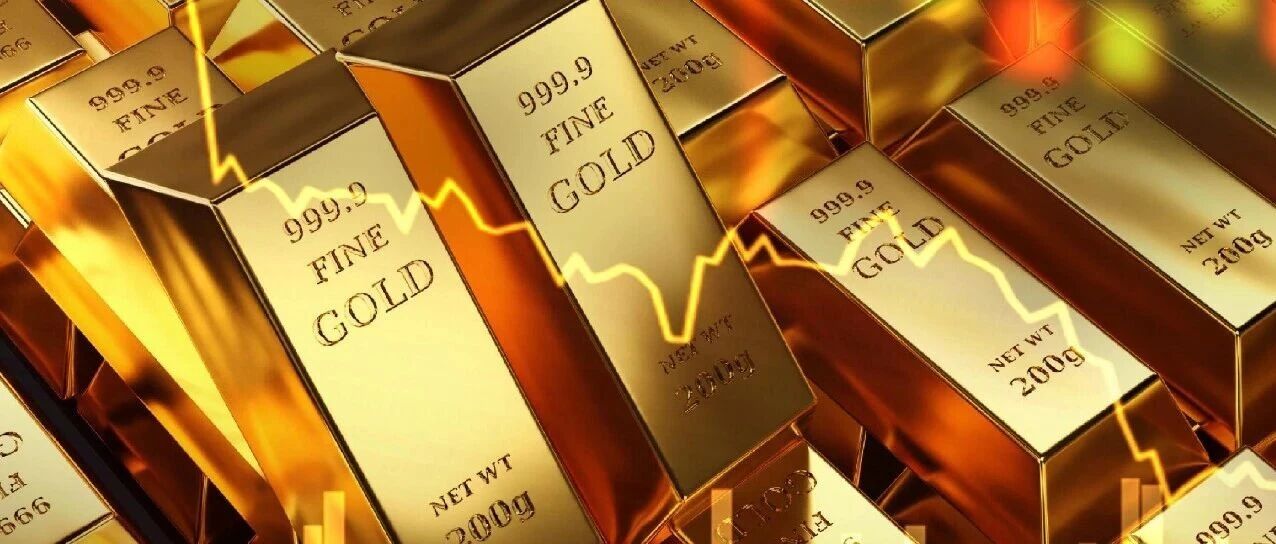
黄金牛市结束了吗?
雪球· 2026-03-23 13:01
Core Viewpoint - The recent drop in gold prices, exceeding 10% in a week, is primarily driven by market sentiment rather than fundamental changes, and it is not comparable to the significant sell-off in 1983 [2][4][17]. Group 1: Comparison with Historical Events - The 1983 gold sell-off was a result of substantial fiscal actions by oil-producing countries due to falling oil revenues, leading to real market panic and selling pressure [4]. - In contrast, the current concerns about Middle Eastern countries selling gold are based on speculative fears regarding their short-term fiscal pressures, with no substantial evidence of large-scale gold sales [4][5]. Group 2: Causes of the Recent Decline - The core reasons for the recent decline in gold and silver prices are a shift in liquidity expectations and technical breakdowns [6]. - A sudden shift in global liquidity expectations, driven by rising oil prices and inflation concerns, has led to increased hawkish sentiment regarding interest rates from central banks, directly impacting gold and silver prices [7]. - The previous significant price increases in gold and silver created a large number of profit-taking opportunities, and the breach of key support levels triggered accelerated selling pressure, exacerbated by algorithmic trading strategies [8][9]. Group 3: Long-term Outlook for Gold - The long-term bullish trend for gold remains intact, supported by ongoing de-dollarization, continuous central bank purchases, and persistent geopolitical tensions [10]. - Current market volatility is viewed as a typical correction within a broader bullish trend, rather than a reversal of the trend [11]. - Investors are advised to remain patient and not rush into the market, focusing instead on key signals such as actual interest rate trends, changes in Federal Reserve policy expectations, and the progression of geopolitical conflicts [12][14].

金价罕见大跌
Wind万得· 2026-03-23 09:08
Core Viewpoint - The international gold market experienced a significant decline, with spot gold prices dropping below $4100 per ounce, marking a new low since November of the previous year, with an intraday drop of approximately 9% [3]. Price Movements - As of March 23, 2023, the following prices and changes were noted: - London Gold: $4251.250, down $240.420 (-5.35%) year-to-date change: -1.55% [5] - London Silver: $64.855, down $3.042 (-4.48%) year-to-date change: -9.39% [5] - COMEX Gold: $4254.3, down $320.6 (-7.01%) year-to-date change: -2.46% [5] - COMEX Silver: $65.050, down $4.614 (-6.62%) year-to-date change: -9.02% [5] - Spot Platinum: $1806.10, down $119.70 (-6.22%) year-to-date change: -12.33% [5] - Spot Palladium: $1373.30, down $35.23 (-2.50%) year-to-date change: -14.46% [5] Reasons for Decline - The recent drop in gold prices has erased all gains made since February 27, 2023, when the conflict in the Middle East began, with a cumulative decline of about 20% [6]. - The primary reasons for this decline include: 1. Geopolitical tensions raising inflation expectations and tightening monetary policy [6]. 2. Profit-taking by investors at high levels [6]. 3. Liquidity panic triggered by stock market volatility leading to passive selling of gold [6]. Market Dynamics - The ongoing conflict in the Middle East has increased global energy prices, leading to higher inflation expectations and reduced attractiveness of holding gold [7]. - Central banks tightening monetary policies support the dollar, which in turn suppresses demand for gold and silver [7]. - The traditional role of gold as a safe-haven asset may be reassessed in light of the evolving geopolitical situation [7]. Future Outlook - Despite the recent downturn, some analysts previously maintained a bullish outlook on gold prices, expecting them to reach new historical highs [7]. - Key signals to watch for the potential end of the current gold bull market include: 1. A substantial shift in the Federal Reserve's monetary policy towards tightening [7]. 2. A significant improvement in the U.S. economic fundamentals indicating a transition to a recovery or re-inflation phase [7].

黄金发出警报:美国正撞上债务墙,美联储无解
Jin Shi Shu Ju· 2026-02-27 06:13
Group 1 - The current international accumulation phase of the gold bull market has officially ended, transitioning into a second phase driven by pressures from the U.S. credit system [1] - The U.S. national debt has exceeded $38.5 trillion, with projections indicating that net interest payments will more than double to $2.1 trillion by 2036 [1] - The true debt burden is significantly higher when accounting for unfunded liabilities such as Medicare and Social Security, making current debt levels mathematically impossible to repay under the current dollar valuation [1] Group 2 - Unlike the 2008 financial crisis, where the Federal Reserve could inflate the housing market, the challenges in rescuing the private equity sector are different due to high-leverage companies facing bankruptcy from insufficient consumer demand [2] - The expectation is not for a massive stock market crash like in 1929 or 2008, but rather for gold to experience significant volatility and rise [2] - Structural changes are occurring in the physical metal market as manufacturers abandon standard inventory models, leading to tighter industrial silver demand [2] Group 3 - Tightening banks are increasing margin requirements for smelters and refiners, which is limiting the flow of gold into retail and institutional markets [2] - Historically, central banks have held gold reserves equivalent to about one-third of their balance sheets, suggesting that applying this historical ratio to the current Federal Reserve balance sheet implies a substantial increase in the implied gold price [2] - Gold must rise to a price that can rebalance the Federal Reserve's balance sheet, with estimates suggesting $8,000 would achieve a one-third allocation and $12,000 would reach approximately half [3]
黄金,即将打破僵局!
Sou Hu Cai Jing· 2026-02-27 02:36
Core Insights - The article emphasizes the importance of having strict trading principles and discipline in trading, suggesting that without these, technical skills are rendered ineffective [1][2][3] Trading Principles - Frequent trading should be avoided; the focus should be on making money rather than just executing trades for the sake of it [1][2] - Position sizes for international commodities like gold and silver should be controlled between 3% to 5%, while domestic futures should maintain a risk rate below 30% [2] - Stop-loss orders are crucial for survival in the market, and holding onto losing positions is discouraged [2] - Traders should only engage with market conditions they understand, as there are always opportunities available [2] - Maintaining personal conviction and not following the crowd is essential to avoid confusion and regret in trading decisions [2] Market Analysis - The gold market is currently experiencing volatility, with potential upward targets of $5300 and $5440-$5460, while downward targets could reach $4900-$4850 [3][4] - Silver has shown a weaker recovery compared to gold, having dropped nearly 50% since late January, while gold has regained most of its losses [4] - The oil market is projected to experience a bull market this year, with short-term support at $62-$63 and long-term targets of $95-$100 [9]
潼关黄金2025年公司拥有人应占溢利预增近3倍 黄金牛市驱动高质量发展新纪元
Ge Long Hui· 2026-02-27 01:33
Core Viewpoint - Tongguan Gold (340.HK) has issued a positive profit forecast, expecting a significant increase in net profit attributable to shareholders for 2025, driven by increased gold production, sales volume, and average selling prices [1][2]. Group 1: Profit Forecast and Growth Drivers - The company anticipates a net profit of approximately HKD 820 million to HKD 840 million for 2025, representing a year-on-year growth of about 289% to 298% [1]. - Excluding non-operating expenses, the adjusted net profit is expected to be around HKD 875 million to HKD 895 million, reflecting a substantial increase of 315% to 324% year-on-year [1]. - The increase in profit is primarily attributed to higher gold production and sales, as well as an increase in average selling prices compared to 2024 [1]. Group 2: Resource Scarcity and Competitive Advantage - The scarcity of quality, scalable mineral resources globally enhances profit elasticity, which is a core advantage of Tongguan Gold compared to state-owned enterprises [2]. - In 2025, global gold prices surged nearly 65%, marking the largest annual increase since 1979, with Tongguan Gold's profit growth outpacing this increase due to its resource quality and operational efficiency [2]. - The company achieved significant breakthroughs in geological exploration, increasing its estimated resource quantity from 55 tons to 81 tons, further enhancing profit elasticity [2]. Group 3: Operational Efficiency and Cost Management - Tongguan Gold's core mining areas exhibit high resource concentration and stable grade structure, contributing to its ability to navigate market cycles [3]. - The company has made proactive efforts in cost control, including the acquisition of a mining engineering company to enhance project execution efficiency and cost management [3]. - As a result, the company expects a reduction in unit mining and processing costs, which will amplify profit elasticity even during price fluctuations [3]. Group 4: Market Trends and Future Outlook - The long-term support for gold prices remains strong due to central banks increasing gold reserves, weakening dollar credit, and geopolitical tensions driving demand for safe-haven assets [4]. - Major investment banks have raised their gold price forecasts for 2026, with Deutsche Bank targeting USD 6,000 per ounce and JPMorgan predicting USD 6,300 per ounce [4]. - Tongguan Gold's high-grade resources are expected to yield significant performance elasticity during this favorable market cycle, benefiting from both volume and price increases [4]. Group 5: Value Realization and Market Perception - The company's recent performance growth is attributed not only to industry trends but also to improved operational efficiency and capital management [6]. - As profit realization continues, market perceptions of the company's valuation model are expected to evolve from resource-based to profitability and cash flow assessments [6]. - The focus will shift towards the company's capacity release pace and cash flow quality, indicating deeper implications of the recent profit forecast [6].
GTC泽汇资本:黄金牛市尚未见顶
Xin Lang Cai Jing· 2026-02-27 00:55
Core Viewpoint - Recent gold prices have risen to $5,200 per ounce, indicating that the current phase of market fluctuation does not signify the exhaustion of the upward trend, according to GTC ZEHUI Capital [1][2]. Group 1: Market Trends - The current gold market is in a "youthful" phase, with significant potential for future growth, as evidenced by historical patterns from the last 50 years of major gold bull markets [1][2]. - The current cycle has lasted 39 months, with gold prices increasing over 200% and silver prices rising by 350%, which aligns with the characteristics of a "mid-cycle" phase [3][4]. - If gold prices replicate the average duration and intensity of past bull markets, they could theoretically reach $6,750 per ounce during key political events [3]. Group 2: Macro Environment - A profound structural shift in the macro environment has occurred, with global fiscal vulnerabilities exceeding previous levels, driven by high debt and persistent deficits, which is redefining gold's systemic safe-haven attributes [3][4]. - The traditional negative correlation between gold and real interest rates is breaking down, as gold evolves into a "systemic hedging tool" beyond conventional monetary frameworks [4]. Group 3: Central Bank and Retail Demand - Central banks' strategic buying has become a "core anchor" for gold prices, with emerging market central banks having approximately 14,500 tons of potential to align with developed countries' reserve averages [4]. - Retail demand is diversifying through tokenization and physical sales, which is continuously raising the operational bottom line for gold prices [4]. Group 4: Future Outlook - The trajectory of the U.S. dollar index will be crucial in determining the next phase of gold price momentum, with a current moderate decline of only 13% [4]. - Although silver has shown aggressive gains, its cycle is nearing its end, while gold is expected to continue outperforming silver [4]. - Despite potential short-term resistance from improved geopolitical conditions or shifts in fiscal policy, the long-term investment value of gold remains in a favorable window, especially as institutional investors have not yet significantly filled their positions [4].

纽约金价26日继续围绕5200美元关口震荡
Xin Hua Cai Jing· 2026-02-27 00:55
Group 1 - The core viewpoint of the article highlights the recent fluctuations in gold prices, with the April 2026 gold futures rising by $17.8 to close at $5201.5 per ounce, marking a 0.34% increase [1] - Gold prices have been oscillating around the $5200 mark, with a low of $5144.8 and a high of $5221.9 observed on the 26th [1] - The recent upward trend in gold prices has slowed down, with Bank of America projecting a target price of $6000 per ounce for gold over the next 12 months, while noting that investors are adjusting to higher prices, leading to short-term challenges [1] Group 2 - Analysts suggest that the current gold bull market is entering a volatile second phase driven by pressures in the U.S. credit system [1] - The U.S. national debt has surpassed $38.5 trillion, with the Congressional Budget Office predicting that net interest payments on this debt will reach $2.1 trillion by 2036 [1] - Considering unfunded liabilities such as Medicare and Social Security, the actual debt burden is significantly higher, leading analysts to believe that gold prices must rise in dollar terms to rationalize asset valuations [1] Group 3 - On the same day, silver futures for May delivery fell by $0.995, closing at $88.865 per ounce, reflecting a decline of 1.11% [1]
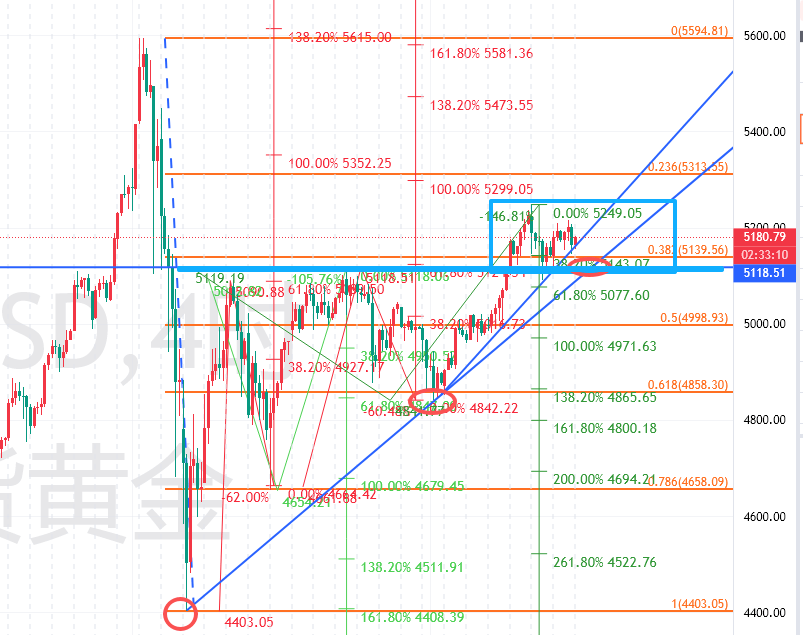
金价整体呈现区间震荡 目前多头占据上风
Jin Tou Wang· 2026-02-26 06:11
Group 1 - Gold prices are currently experiencing a bullish trend, trading around $5197.59 per ounce, following a period of consolidation to build upward momentum for future gains [1] - Nvidia reported record revenue of $68.1 billion for its fiscal Q4 2026, a year-on-year increase of approximately 70%, with its data center business contributing over 90% of revenue [1] - Nvidia's strong earnings, with adjusted EPS growing over 80% and gross margin rising to 75.2%, alleviated market concerns regarding AI profitability, leading to a rebound in tech stocks and a slight weakening of the dollar, which supported gold prices [1] Group 2 - Technically, gold prices have rebounded after touching a key support level, maintaining a bullish outlook while remaining above the 5-month moving average [2] - The recent breakout above the $5100 resistance level is seen as a key trigger for bullish momentum, with support expected around $5150 and $5100 [2] - Immediate resistance is noted at $5220, with a clear breakthrough potentially opening the path to $5260, signaling renewed bullish momentum [3]