
老城保护

Search documents
北京台春晚办到咱家门口了!同款打卡地在东城这儿→
Xin Lang Cai Jing· 2026-02-19 07:37
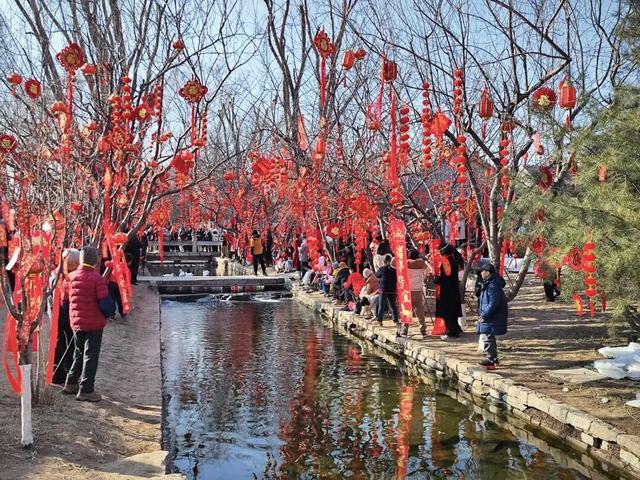
Core Viewpoint - The Beijing Spring Festival Gala showcased two significant programs that highlighted the cultural essence of the Dongcheng District, emphasizing the blend of traditional and modern elements in the local community [1][8]. Group 1: Cultural Significance - The performance by Feng Kun and his apprentice presented a neighborhood-themed crosstalk that illustrated the warmth and camaraderie of the hutong culture in Beijing [1]. - The song "Four Hutongs," performed by Sun Nan and Tan Weiwei, serves as a musical narrative connecting the historical and contemporary aspects of the Dongcheng hutongs, reflecting a deep understanding of local culture [1][3]. - The lyrics of the song evoke vivid imagery of traditional Beijing, awakening collective memories associated with the city's cultural symbols [3][5]. Group 2: Urban Development and Revitalization - The Dongcheng District has focused on urban environment improvement while preserving historical context, leading to a transformation of the Caocan Hutong area into a vibrant community space [8][10]. - Modern amenities have been integrated into the old hutong environment, including public seating, fitness equipment, and improved infrastructure, enhancing the quality of life for residents [10]. - The area has also seen the implementation of eco-friendly initiatives, such as the "coal-to-electricity" project, making it a model for clean energy use in urban settings [10]. Group 3: Cultural Engagement and Community Involvement - The East District has a strong foundation in public cultural services, promoting cultural activities that reach a wide audience and foster community engagement [15][19]. - Initiatives like the "New Year Carnival" and the "Art +1" program have successfully blended traditional and modern cultural elements, attracting significant participation from the public [15][19]. - The district's cultural programs have become a means of connecting neighbors and enhancing community spirit, contributing to the vibrancy of the hutong culture [21].

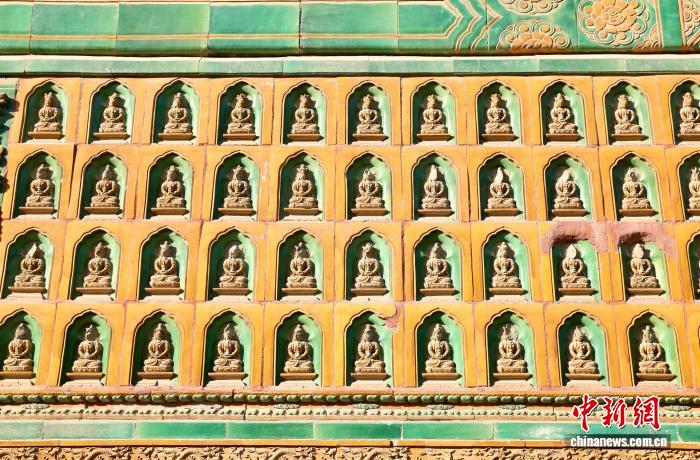
北京北海公园琉璃阁院落腾退移交 “西天梵境”建筑群将恢复完整
Zhong Guo Xin Wen Wang· 2026-01-22 07:32
Core Viewpoint - The relocation and handover ceremony of the Liuli Pavilion courtyard in Beihai Park marks the restoration of the "Xitian Fanjing" architectural complex, which has a history of several hundred years, and aims to open the courtyard to the public [1][5]. Group 1: Ceremony and Significance - The handover ceremony was held on January 22, 2023, and was organized by the Beijing Municipal Bureau of Cultural Heritage, the Beijing Municipal Gardening and Greening Bureau, and the Beijing Park Management Center [1][5]. - The Liuli Pavilion courtyard is a significant part of the "Xitian Fanjing" architectural complex, showcasing exemplary Qing Dynasty royal garden architecture and symbolizing the cultural integration of the Chinese nation [1][5]. Group 2: Historical Context and Future Plans - Since 1955, the Liuli Pavilion courtyard has been used as an office and storage site for Beijing's archaeological institutions for over 70 years, during which it has undergone multiple maintenance and repairs [2]. - The director of the Beijing Archaeological Research Institute expressed a sense of loss but acknowledged the importance of returning the site to public view as a responsible act and a practical step to revitalize cultural heritage [2]. Group 3: Collaborative Efforts and Cultural Heritage Protection - The Beijing Archaeological Research Institute and Beihai Park signed a handover agreement, with the institute having moved to a new location to continue archaeological research and enhance the protection of cultural heritage [5]. - The handover is seen as a significant achievement in the second batch of cultural relics relocation and protection projects in the core area of the capital, reflecting the implementation of Beijing's overall urban planning and the strengthening of old city protection [5][6]. - Since the 18th National Congress, the Beijing gardening and greening department has collaborated with various units to complete the relocation of multiple ancient architectural courtyards, adding over 90,000 square meters of new open space for public enjoyment [6].
故宫周边院落申请式退租及恢复性修建二期项目正式启动
Xin Jing Bao· 2025-10-16 05:29
Core Viewpoint - The project for the application-based rental withdrawal and restoration in the vicinity of the Forbidden City has officially commenced, focusing on the preservation and renovation of historical courtyard areas [1][2] Group 1: Project Overview - The project area includes six main streets and 24 alleys in three communities: Yinzha, Zhide, and Nanchizi, bounded by significant streets and landmarks [1] - The implementation of the project will be determined based on the residents' willingness to withdraw from their courtyards [1] Group 2: Compensation Methods - Two compensation options are available for residents: "monetary compensation" and "housing subsidy + designated resettlement housing" [1] - Monetary compensation will be calculated based on assessments from professional evaluation agencies to ensure fairness and transparency [1] - Residents opting for the housing subsidy will receive special purchasing support and will be allocated designated resettlement housing, primarily in quality housing projects in Chaoyang and Tongzhou districts [1] Group 3: Restoration Approach - The project adheres to the concept of organic renewal, aiming for systematic courtyard withdrawal to lay the groundwork for subsequent restoration [2] - Restoration will follow strict guidelines, utilizing original materials and techniques or new technologies that harmonize with the historical aesthetic [2] - The renovated spaces will incorporate cultural displays, community services, and vibrant industries, enhancing the quality of life and preserving cultural heritage [2]
擦亮北京历史文化金名片,核心区一批重点文物向社会开放
Xin Jing Bao· 2025-07-16 15:28
Core Insights - The exhibition at the Beijing Planning Exhibition Hall showcases the implementation results of the "Capital Function Core Area Control Detailed Planning (Block Level) (2018-2035)" and highlights significant achievements in urban planning and heritage conservation [1][2] - The exhibition is themed "Towards an International First-Class Harmonious and Livable Capital" and is divided into four sections, demonstrating the progress made in governance, cultural heritage protection, and public welfare from 2020 to 2024 [2] Urban Planning and Heritage Conservation - The core area control plan has successfully promoted the overall protection and revitalization of the old city, with key cultural relics such as the Temple of Heaven and the Imperial Archives being restored and opened to the public [1][5] - The project at Huapicun Hutong No. 8 represents Beijing's first prefabricated renovation of a dilapidated building, preserving the historical character while improving living conditions for residents [3][10] - The successful integration of the North and South Courtyards of the Imperial Archives has allowed for the overall opening and utilization of this historical site [4][5] Community and Public Welfare Improvements - The city has made significant strides in improving living conditions through the renovation of old neighborhoods and the construction of new housing for displaced residents [3][10] - Public service enhancements include the establishment of community health service centers and the addition of family elderly care beds, addressing the needs of the aging population [10] Economic and Infrastructure Development - The overall planning has led to the formation of two trillion-level and eight hundred billion-level industrial clusters, enhancing Beijing's role as a national cultural center and international communication hub [11] - The city has achieved a significant increase in urban park spaces, reaching a total of 1,100 parks, contributing to the creation of a "city of a thousand gardens" [12][13]