老药新用

Search documents
Science重磅:老药新用!我国学者证实,这款肾病药物,让卵巢早衰不孕患者重获生育希望
生物世界· 2026-02-08 02:33
Core Viewpoint - The research indicates that the antifibrotic drug Finerenone has the potential to restore fertility in women with Premature Ovarian Insufficiency (POI), a condition affecting approximately 1% to 3% of women under 40 years old, which is currently considered irreversible and lacks effective treatments [2][5]. Group 1: Research Findings - Finerenone, originally used for treating chronic kidney disease and heart failure related to type 2 diabetes, has shown promise in stimulating follicle development in aged mice and restoring follicular development in women with POI [3][6]. - The study revealed that Finerenone reduces collagen deposition in the ovarian stroma, alleviating the inhibitory effects of fibrosis on follicle development, thus creating a more favorable microenvironment for follicle activation and growth [6][9]. - A clinical trial involving 14 women diagnosed with POI demonstrated that all participants observed follicle development after treatment with Finerenone, leading to the production of viable embryos in some cases [6][7]. Group 2: Mechanism of Action - The mechanism of Finerenone involves blocking the overactivation of mineralocorticoid receptors, which leads to inflammation, fibrosis, and oxidative stress, thereby addressing the underlying issues in POI [5][6]. - The research team identified other FDA-approved oral antifibrotic drugs, such as Nintedanib and Ruxolitinib, which may also promote ovarian follicle growth, highlighting the clinical potential of repurposing these drugs for treating infertility related to POI [7][9]. Group 3: Implications for Treatment - The findings suggest a paradigm shift in the treatment strategy for POI, moving from directly stimulating follicles to improving the fibrotic condition of the ovarian stroma, which is identified as a key target for intervention [9]. - The study provides compelling evidence for the repurposing of Finerenone, emphasizing its safety and potential effectiveness in treating infertility associated with POI [5][9].


高致死率尼帕病毒迎克星?国产新冠药VV116跨界显效 两家合作方回应现“温差”
Mei Ri Jing Ji Xin Wen· 2026-01-27 15:05
Core Viewpoint - The oral COVID-19 drug VV116 shows significant antiviral activity against the highly lethal Nipah virus, potentially providing a ready-made treatment option amid the absence of approved vaccines or specific therapies for Nipah virus infections [2][4][7]. Group 1: Research Findings - Recent studies published in the journal "Emerging Microbes & Infections" confirm that VV116 can increase the survival rate of infected golden hamsters to 66.7% and significantly reduce viral loads in key organs [4][6]. - The research indicates that VV116 exhibits notable inhibitory effects against two main strains of the Nipah virus, NiV-M and NiV-B, in vitro and in animal models [6][8]. - The Nipah virus has a mortality rate ranging from 32% to 70%, with recent outbreaks reported in India, raising public health concerns [6][7]. Group 2: Company Responses - Junshi Bioscience stated that they have not conducted similar research and that expanding indications would require clinical data support [2][12]. - In contrast, Wangshan Wangshui expressed their intent to closely monitor the epidemic's developments and initiate clinical trials for treatment or post-exposure prevention as needed [2][12]. Group 3: Market Impact - Following the announcement, Wangshan Wangshui's stock price surged nearly 15% during trading on January 27, closing at 108.9 HKD per share, marking a 10.90% increase and a historical high [3]. - Junshi Bioscience's stock also rose by 7.96% on the same day [3]. Group 4: Broader Implications - VV116, developed through collaboration among several Chinese research institutions, is positioned as a broad-spectrum antiviral drug with potential applications beyond COVID-19, including against other RNA viruses [8][10]. - The drug's mechanism targets the highly conserved RNA-dependent RNA polymerase (RdRp) of RNA viruses, suggesting its effectiveness against future viral variants [8][10]. Group 5: Financial Context - Wangshan Wangshui reported that VV116 generated significant revenue, accounting for 98% of the company's total revenue in 2023, but faces challenges as demand for COVID-19 treatments declines [13]. - The company has experienced financial losses in the post-pandemic era, with net losses of approximately 218 million CNY in 2024 and 112 million CNY in the first four months of 2025 [13].

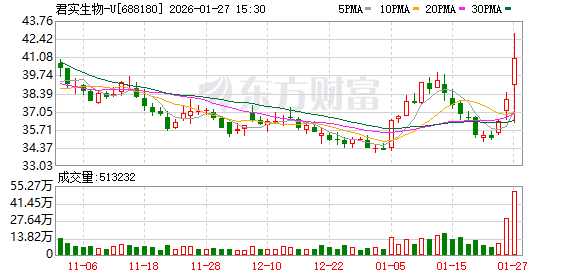
印度尼帕病毒疫情带飞个股,专家称传播性相对有限
Xin Lang Cai Jing· 2026-01-27 12:59
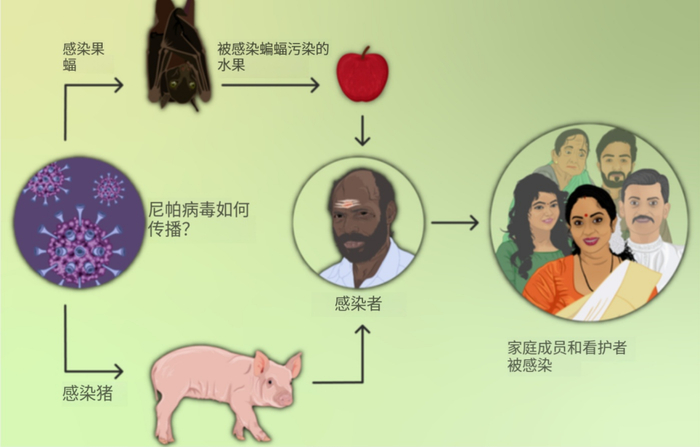
Group 1 - The recent outbreak of Nipah virus disease in West Bengal, India, has raised significant concern, with 5 confirmed cases reported, including healthcare workers, and nearly 100 individuals under home quarantine [1] - The impact of the Nipah virus outbreak on China is relatively minor, with no cases reported in the country, although there is a risk of imported cases that necessitates enhanced preventive measures [1][2] - Nipah virus has been known for over 20 years, with its first outbreak occurring in Malaysia in 1998, and it primarily affects South Asia and Southeast Asia [1][2] Group 2 - The Nipah virus primarily damages the central nervous system (90%) and respiratory system (62%), with a high fatality rate ranging from 40% to 75% [2] - Experts indicate that the Nipah virus has a low basic reproduction number (R₀) compared to influenza or COVID-19, and there have been no reports of large-scale airborne transmission [4] - Current antiviral treatments for Nipah virus are limited, with no approved drugs or vaccines available, although Ribavirin may be effective for treating Nipah virus encephalitis [4][5] Group 3 - Recent research has shown that VV116 has antiviral activity against Nipah virus in vitro and can improve survival rates in mouse models, indicating potential for treatment [4][5] - Several companies have reported possessing Nipah virus testing technology or products, but they have not yet achieved significant revenue from these offerings [6] - The most common testing method for Nipah virus is nucleic acid testing, and public health departments are equipped to handle such testing, which is deemed sufficient for current needs [6]




7亿对赌压顶 真实生物三闯港交所
Bei Jing Shang Bao· 2025-11-11 15:49
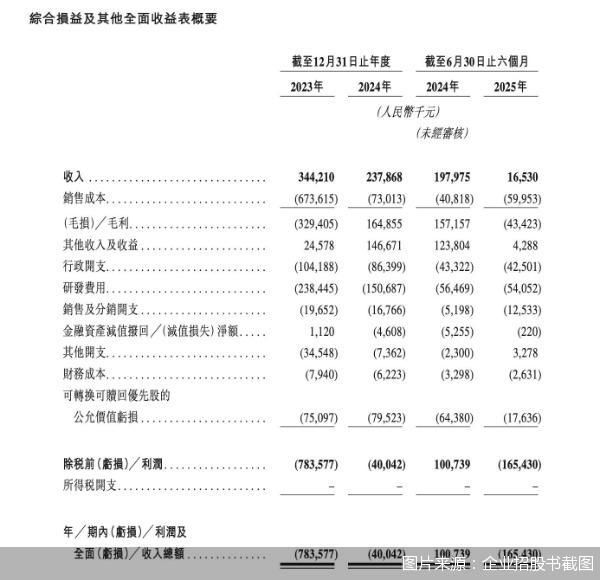
Core Viewpoint - Real Bio Technology Co., Ltd. is facing significant financial challenges as it seeks to go public on the Hong Kong Stock Exchange, with a cumulative loss of nearly 1 billion yuan over two and a half years due to declining sales and the termination of a partnership with Fosun Pharma [1][2][5]. Financial Performance - The company reported a cumulative loss of 989 million yuan over the past two and a half years, with net profits of -784 million yuan in 2023, -40.04 million yuan in 2024, and -165 million yuan in the first half of 2025 [3][4]. - Revenue peaked at over 1 billion yuan in 2022 but plummeted to 238 million yuan in 2024, with a staggering 91.65% year-on-year decline in the first half of 2025, generating only 16.53 million yuan [2][3]. Product and Market Challenges - Real Bio's only commercialized product, Azvudine, achieved significant sales initially but has seen demand shrink, leading to a heavy reliance on a single client, Fosun Pharma, which accounted for 99.2% of its revenue in 2024 [2][4]. - Following the termination of the partnership with Fosun Pharma, the company struggled to establish new distribution agreements, resulting in only 1.37 million yuan in revenue from Azvudine sales in 2024 [2][4]. Research and Development - The company is attempting to diversify its product pipeline by exploring new indications for Azvudine and developing combination therapies, but R&D expenditures have decreased from 238 million yuan in 2023 to 151 million yuan in 2024, indicating financial constraints [4][5]. - Current clinical trials for new indications are in early stages, and the potential for revenue generation from these efforts remains uncertain in the short term [4]. Financial Pressures and Future Outlook - Real Bio faces significant financial pressure, with cash and cash equivalents of only 50.05 million yuan against administrative and R&D expenses nearing 100 million yuan [4][5]. - The company is also burdened by redemption clauses from previous financing rounds, which could exacerbate its financial difficulties if performance does not improve [5]. - Analysts suggest that the company's future hinges on its ability to leverage IPO funds to alleviate debt and demonstrate the potential value of its R&D pipeline [5].
真实生物三闯港交所:阿兹夫定高光褪去,7亿对赌压顶
Bei Jing Shang Bao· 2025-11-11 10:59
Core Viewpoint - Real Bio Technology Co., Ltd. has submitted an IPO application to the Hong Kong Stock Exchange, facing significant financial challenges due to declining revenues and high losses, primarily linked to its dependence on a single product, Azvudine [1][3][6]. Financial Performance - The company reported a cumulative loss of 989 million RMB over two and a half years, with net losses of 784 million RMB in 2023, 40 million RMB in 2024, and 165 million RMB in the first half of 2025 [4][6]. - Revenue peaked at over 1 billion RMB in 2022 but plummeted to 344 million RMB in 2023 and is projected to drop to 238 million RMB in 2024, with a staggering 91.65% decline in the first half of 2025, resulting in only 16.53 million RMB [2][3][4]. Product and Market Dependency - Azvudine is the only commercialized product, which has faced a significant drop in demand following the termination of its partnership with Fosun Pharma, leading to a highly concentrated customer base where 99.6% of revenue came from the top five clients in 2024 [3][4]. - The company is attempting to diversify its product offerings by exploring new indications for Azvudine and developing additional drug candidates, including CL-197 for HIV and other oncology treatments [6][7]. Research and Development Challenges - Despite efforts to expand its R&D pipeline, the company has seen a 36.8% decrease in R&D spending from 2.38 billion RMB in 2023 to 1.51 billion RMB in 2024, which raises concerns about its ability to innovate and generate future revenue [6][7]. - The current R&D projects are primarily in early clinical stages, which may not yield immediate financial returns, complicating the company's transition from a single-product focus to a diversified pharmaceutical entity [6][7]. Financial Obligations and Pressure - Real Bio is under pressure from a total of 713 million RMB in financing agreements with redemption clauses, which could force the company to buy back preferred shares at a 10% annual interest rate if certain conditions are met [1][7]. - As of mid-2025, the company had only 50.05 million RMB in cash, while administrative and R&D expenses approached 100 million RMB, indicating a significant cash flow issue [7].
Nature重磅:老药新用,逆转瘫痪!计算机虚拟筛选,发现脊髓损伤的再生疗法
生物世界· 2025-11-02 04:48
Core Viewpoint - The article discusses the significant breakthrough in spinal cord injury (SCI) treatment through the discovery of Thiorphan, a drug that promotes neuronal regeneration and functional recovery after SCI, offering new hope for patients suffering from paralysis and disability [2][3][6]. Group 1: Research Findings - A study published in Nature identified Thiorphan as a candidate drug that reprograms neurons to enhance recovery after spinal cord injury [3]. - Thiorphan, originally developed as a neutral endopeptidase inhibitor for treating diarrhea, has shown remarkable potential in promoting nerve regeneration and functional recovery in SCI models [11][19]. - In experiments with adult mice, Thiorphan increased total neurite growth by 80% and the longest neurite length by 30%, demonstrating a dose-dependent effect [12]. Group 2: Experimental Validation - In a rat model of severe cervical spinal cord injury, treatment with Thiorphan initiated two weeks post-injury resulted in a twofold increase in forelimb grasp success rate, improving accuracy from 30% to 60% when combined with neural stem cell transplantation [14]. - Anatomical evidence indicated that Thiorphan treatment led to a 60% increase in the regeneration of corticospinal axons, establishing synaptic connections across the injury site [15]. - Thiorphan was also effective in promoting growth in cortical neurons from both adult macaques and a 56-year-old human, with increases of 30.3% in total neurite growth and 23% in the longest neurite length [16]. Group 3: Mechanism of Action - The mechanism of Thiorphan involves upregulating brain-derived neurotrophic factor (BDNF) and phosphorylated AKT, allowing neurons to revert to a developmental state and regain growth capabilities [17]. - Given that Thiorphan has been safely used in humans, the clinical development risk is significantly reduced [19]. Group 4: Future Directions - The research team is exploring more convenient administration methods, including intrathecal injection or systemic delivery, and developing derivatives with better blood-brain barrier permeability [20]. - This study not only identifies a promising candidate for SCI treatment but also establishes a new paradigm for drug development from computer screening to human validation, which could be applied to other neurological and neurodegenerative diseases [20].

AI筛药新突破:老药新用治疗儿童罕见遗传病Rett综合征,将在今年进行临床试验
生物世界· 2025-07-07 09:11
Core Insights - The article discusses a significant breakthrough in the treatment of Rett Syndrome, a rare genetic disorder caused by mutations in the MeCP2 gene, primarily affecting girls at a rate of 1 in 10,000 [6] - Researchers at Harvard's Wyss Institute have identified Vorinostat, an FDA-approved drug for skin T-cell lymphoma, as a promising therapeutic option for Rett Syndrome, demonstrating disease-repair capabilities in preclinical models [2][8] Rett Syndrome Challenges - Rett Syndrome is characterized by complex cognitive and physical impairments due to a single gene mutation, leading to multiple organ dysfunctions, including neurological, digestive, muscular, and immune system issues [6] - The complexity of the disease, involving changes in multiple gene expressions, complicates the development of effective treatments based on single drug targets [6] Research Methodology - The research team utilized an AI-driven system called nemoCAD to revolutionize traditional drug development approaches by: 1. Constructing animal models using African clawed frog tadpoles to simulate human MeCP2 gene mutations, replicating various symptoms of Rett Syndrome [7] 2. Conducting whole-genome analysis to compare gene expression changes between healthy and affected tadpoles [7] 3. Performing drug reverse screening based on gene expression profiles from the NIH LINCS database to identify candidate drugs that could reverse pathological changes [7] Drug Discovery and Results - Vorinostat, a histone deacetylase inhibitor, showed the most promising results, significantly reversing abnormalities in neurological, intestinal, and muscular systems in affected tadpoles [8] - The research indicates that Vorinostat could potentially be the first curative therapy for Rett Syndrome, leveraging a unique AI-based drug discovery approach combined with innovative disease modeling [11] Clinical Trials and Future Plans - Unravel Biosciences, a biotech company incubated by Wyss Institute, plans to initiate clinical trials in Colombia in 2025, involving 15 female patients [12] - The trials will adopt an n-of-1 personalized experimental design, adjusting treatment plans for each patient, and will advance the proprietary formulation RVL-001 of Vorinostat [12]

创新药新秀泰恩康:CKBA发明人最新研究成果登上免疫学国际顶刊Immunity
Zheng Quan Shi Bao Wang· 2025-06-17 07:06
Core Viewpoint - The innovative drug sector in the A-share market has seen significant stock price increases, with several leading companies achieving over 100% growth in 2023, driven by breakthroughs in new drug development [1] Group 1: Company Developments - Shuyou Shen's investigational drug for hemophilia has received breakthrough therapy designation and has submitted a conditional marketing application [1] - Taiankang's innovative drug CKBA ointment has been recognized for its research published in the top immunology journal, Immunity, highlighting its potential in treating vitiligo [1][2] - The research team led by Wang Honglin at Shanghai Jiao Tong University has identified a novel pathogenic mechanism in vitiligo involving sensory neurons and CGRP, which could lead to new treatment strategies [6][7] Group 2: Clinical Trials and Research Findings - The study revealed that blocking the CGRP receptor with Rimegepant significantly inhibits disease progression in vitiligo mouse models and shows promising results in a clinical trial with 57 patients [2][8] - The ongoing Phase II clinical trial for CKBA ointment aims to evaluate its safety and efficacy in non-segmental vitiligo patients, with results expected in July 2023 [11] - The research indicates that CKBA ointment can effectively suppress autoreactive CD8+ T cells, offering a differentiated approach compared to existing treatments [12] Group 3: Market Potential - The global prevalence of vitiligo is estimated at 0.5% to 2%, with approximately 30 million patients in China, indicating a substantial market opportunity for effective treatments [9][12] - The potential market for innovative vitiligo drugs in China is projected to exceed 20 billion yuan, highlighting the demand for targeted therapies [12] - Despite the approval of Ruxolitinib for vitiligo, its market share remains limited, underscoring the need for new therapies to meet patient needs [12]