职场生存法则

Search documents
同事月薪 12k,因公司拒绝涨薪离职,跳槽到对手涨薪 50%,结果突然有一天接到电话:“你赶紧离职,否则要告你违反竞业,赔 60 万!”
程序员的那些事· 2026-03-07 15:06
Group 1 - The core viewpoint of the article highlights the dual standards of companies, where they treat employees as personal property, valuing them only when they are beneficial and disregarding them when they are not [2][3][4] - Companies often use emotional appeals when employees are undervalued, but shift to legal threats when employees prove their market worth and leave for better opportunities [2][4][7] - The article emphasizes that employees often pay the price for the company's mistakes due to ignorance of rules and misplaced trust in the company [5][6][7] Group 2 - The article warns that the workplace is not a charity, and employees should not underestimate the coldness of capital or overestimate their own situation [8] - It provides several suggestions for employees, including treating agreements as contracts, enhancing personal capabilities while understanding legal protections, and viewing the company as a platform rather than a home [10][12]


人在单位:要么忍,要么狠,要么滚
洞见· 2025-12-18 12:36
Core Viewpoint - The article emphasizes the harsh realities of the workplace, highlighting the need for individuals to either endure challenges, be assertive, or ultimately leave their positions. It advocates for a balanced approach of patience and self-discipline to build a stable future [6][40]. Group 1: Endurance in the Workplace - The workplace is often not a nurturing environment but rather a competitive "jungle" where individuals must either endure, be assertive, or leave [7][40]. - A story is shared about a project manager, referred to as "Old Li," who faced harsh criticism from his boss but chose to endure for the sake of his family's stability, illustrating the importance of patience in challenging situations [9][12]. - Many newcomers in the workplace react impulsively to minor grievances, often regretting their decisions to leave when they realize that no job is free from difficulties [15][36]. Group 2: The Importance of Self-Discipline - The article stresses that merely enduring is not enough; individuals must also be "tough" on themselves, which involves continuous self-improvement and skill development [19][41]. - A notable example is given of Dong Mingzhu, who rose from a basic sales position to a leadership role at Gree Electric, demonstrating that determination and hard work can lead to significant achievements [20][25]. - True toughness in the workplace is characterized by the willingness to confront personal weaknesses and continuously strive for improvement, rather than engaging in office politics [26][30]. Group 3: Reality Check for Newcomers - A case study of a recent graduate illustrates the disconnect between expectations and reality in the workplace, where initial tasks may seem menial but are essential for skill development [31][32]. - The individual’s inability to adapt and learn from basic tasks led to negative evaluations and eventual termination, underscoring the need for patience and humility in early career stages [33][36]. - The article concludes that the workplace does not accommodate emotional responses or entitlement; success requires problem-solving abilities and adherence to established norms [38][39].

一个人在职场越来越成熟的表现:心硬、言少、性冷
洞见· 2025-11-25 12:35
Core Insights - The article emphasizes the importance of maintaining boundaries in the workplace, advocating for a balance between work, personal growth, and life outside of work [53]. Group 1: Workplace Dynamics - The essence of the workplace is problem-solving rather than relationship-building, highlighting that individuals who can deliver results are more valuable than those who focus solely on interpersonal relationships [14][15]. - The article discusses the pitfalls of being overly accommodating in the workplace, where individuals may take on excessive responsibilities at the expense of their own well-being [8][9]. - It suggests that the inability to refuse requests can lead to burnout and dissatisfaction, as seen in the experiences shared by individuals who have struggled with this issue [10][12]. Group 2: Personal Growth and Professional Boundaries - The narrative stresses that personal relationships should not interfere with professional responsibilities, advocating for a clear distinction between work and personal life [28][53]. - It highlights the importance of self-discipline in communication, suggesting that managing one's words can prevent many workplace conflicts [30][28]. - The article illustrates that true value in the workplace comes from dedication and hard work rather than socializing, as demonstrated by the story of an employee who focused solely on his tasks and eventually succeeded [40][49]. Group 3: Social Interactions and Their Impact - The article warns against the dangers of sharing personal information in a professional setting, as it can lead to misunderstandings and potential conflicts [24][26]. - It emphasizes that relationships in the workplace are often transactional, and without value, they can become superficial [38]. - The piece concludes that maintaining a degree of emotional detachment can be beneficial for personal and professional growth, allowing individuals to focus on their own development [50][53].

人在职场最牛的心态:无情
洞见· 2025-06-16 10:19
Core Viewpoint - The article emphasizes the importance of maintaining professionalism in the workplace, highlighting that personal emotions should not interfere with business relationships and decisions [8][10][12]. Group 1: Professional Relationships - The relationship between colleagues should be based on mutual interests rather than personal feelings, as illustrated by the experiences of both Buffett and Munger [4][18]. - The narrative of a character in a drama illustrates the dangers of confusing friendship with professional relationships, leading to betrayal and disappointment [15][20]. - Successful individuals often maintain a degree of emotional detachment from colleagues to protect their own interests and focus on their careers [27][28]. Group 2: Emotional Management - Overly emotional individuals in the workplace tend to experience unnecessary stress and anxiety, as they misinterpret situations and take things personally [46][49]. - The article discusses the concept of "emotional moat," suggesting that one should guard against being overly affected by others' negative emotions to maintain personal well-being [55][56]. - Research indicates that successful professionals attribute their achievements to their ability to manage emotions effectively, with a significant percentage (80%) identifying this as a key factor in their success [86][87]. Group 3: Focus on Work - The article advises against excessive empathy and emotional involvement, suggesting that maintaining a focus on work rather than personal relationships leads to better outcomes [40][66]. - It highlights the importance of prioritizing tasks and responsibilities over interpersonal dynamics, encouraging individuals to concentrate on their own growth and contributions [41][88]. - The narrative of a professional who faced consequences for emotional outbursts underscores the need for emotional control in business settings [75][80].

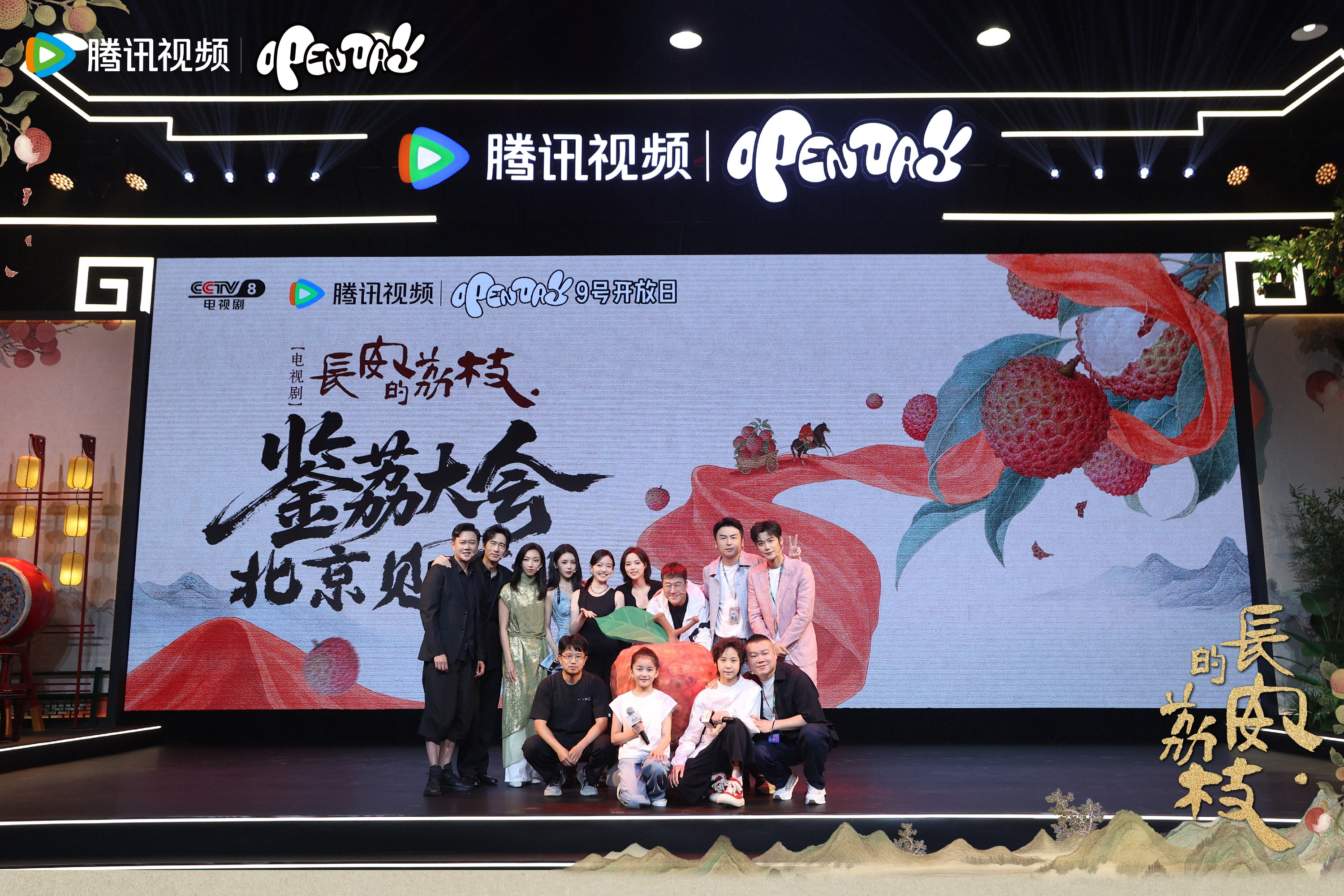
腾讯视频《长安的荔枝》北京见面礼趣味盎然
Qi Lu Wan Bao· 2025-06-10 07:39
Core Viewpoint - The event for the TV series "Lychee in Chang'an" showcased the innovative adaptation of the original story, highlighting the cultural significance of lychee and its impact on the audience's engagement with the series [1][8]. Group 1: Event Highlights - The "Lychee Conference" featured the original author and main cast, engaging in discussions about character development and the adaptation process [1][4]. - Interactive games and activities allowed the audience to connect with the themes of the series, emphasizing the cultural context of lychee in the workplace [1][6]. Group 2: Character and Story Development - The dual protagonist setup of Li Shande and Zheng Ping'an was well-received, with actors showcasing their chemistry and humor during the event [4][5]. - The author, Ma Boyong, expressed his desire for the series to present a more complete world and richer characters compared to the original novel [5]. Group 3: Cultural Impact and Audience Engagement - The series has sparked a "lychee craze" on social media, with viewers sharing their experiences of watching the show and enjoying lychee [8][11]. - The show's popularity has significantly boosted lychee sales, with a reported 560% increase in transaction volume on logistics platforms compared to the previous year [11]. Group 4: Ratings and Reception - Since its premiere, "Lychee in Chang'an" has achieved high ratings, with an average viewership rating of 1.20% and a peak rating of 1.38% [11]. - The series has received positive feedback for its innovative adaptation, visual presentation, and cultural representation, contributing to the growing popularity of lychee as a cultural symbol [11].