股权换订单

Search documents
苏姿丰和她的“去英伟达”战争
3 6 Ke· 2026-03-17 00:38
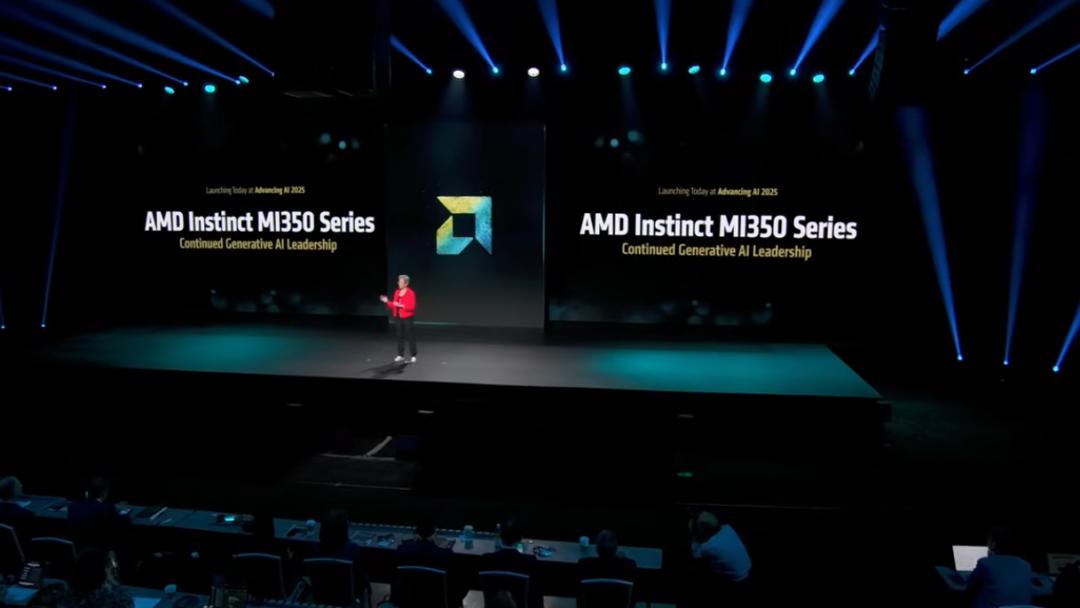
Core Insights - AMD's market capitalization has increased from under $3 billion in 2014 to over $315 billion, marking a growth of more than 100 times [1] - The surge in AMD's valuation began in 2018, coinciding with the publication of a pivotal AI research paper that introduced the Transformer architecture, which significantly boosted the demand for GPUs [1] - The competition in the AI chip market has evolved into a multi-dimensional battle involving performance, cost optimization, and sustainable energy reliance, with key players like TSMC and Samsung playing crucial roles in supply chain capacity [1] Group 1: AMD's Strategic Moves - AMD has shifted its focus towards the cloud computing sector, launching the Instinct series of data center GPUs designed for AI workloads, positioning itself as a challenger in the AI space [2] - Lisa Su, AMD's CEO, acknowledged the accelerating demand for AI and indicated that the company is just beginning a decade-long AI supercycle [2][3] - AMD's MI350 series, announced in mid-2025, boasts a 35 times performance improvement over its predecessor, highlighting the company's advancements in AI inference capabilities [3][5] Group 2: Market Predictions and Collaborations - Su revised her market expectations, predicting that the global AI processor market revenue will exceed $500 billion by 2028, potentially being reached earlier [5][6] - AMD's MI400 series, set to debut in 2026, is expected to significantly outperform NVIDIA's offerings, showcasing AMD's ambition to lead in AI performance [6][8] - AMD has entered into a strategic partnership with OpenAI, signing a 6-gigawatt GPU supply agreement, which includes a unique stock warrant structure to incentivize performance milestones [13][14][19] Group 3: Supply Chain and Production Capacity - AMD has secured approximately 8% of TSMC's advanced CoWoS packaging capacity, which is critical for its production of MI400 chips [25] - The company anticipates producing around 900,000 MI400 chips in 2026, necessitating a stable supply of HBM memory to fulfill its commitments to OpenAI and Meta [25][26] - Lisa Su's upcoming visit to South Korea aims to strengthen relationships with key suppliers like Samsung to ensure adequate supply of high-bandwidth memory [27][30] Group 4: Financial Performance and Future Outlook - AMD reported record revenues, net profits, and free cash flow in 2025, with a 39% year-over-year growth in its data center segment [34] - The company aims for a compound annual growth rate of over 35% in the next three to five years, driven by the rapid expansion of its data center AI business [34][35] - AMD's strategy focuses on deepening ties with major clients, investing in future technologies, and building a robust supply chain ecosystem to facilitate its growth in the data center market [34][35]


AMD与Meta“10%股权换1000亿订单”,高盛:要看到实际部署,才会更有信心
Hua Er Jie Jian Wen· 2026-02-25 01:12
Group 1 - The core viewpoint of the news is that AMD and Meta have entered a strategic partnership where Meta will deploy 6GW of AMD GPUs in exchange for up to 160 million shares (approximately 10% equity) of performance-based warrants from AMD [1][2] - Goldman Sachs highlights that this partnership significantly enhances AMD's position in the accelerator market and indicates progress in competition against giants like NVIDIA, but they maintain a "neutral" rating until actual deployment timelines from Meta and OpenAI are confirmed [1][3] - The financial structure of the deal is similar to a previous transaction with OpenAI, involving performance-based warrants that will vest in stages as deployment milestones are met, with the final vesting occurring when the stock price reaches $600 [2] Group 2 - Goldman Sachs has raised AMD's non-GAAP EPS forecasts for 2027 and 2028 by approximately 16% and 17%, respectively, due to the incremental contributions from the partnership with Meta [3] - The EPS forecast for 2027 has been adjusted from $10.00 to $11.55, and for 2028 from $11.75 to $13.70 [3] - The 12-month target price for AMD has been increased from $210 to $240, based on a 28x price-to-earnings ratio applied to an updated standardized EPS forecast of $8.50 [3]
黄仁勋不信泡沫,OpenAI需要“印钞机”
3 6 Ke· 2025-10-11 03:53
Core Insights - The article discusses the potential AI bubble, highlighting that even leading companies like OpenAI are resorting to financial maneuvers to maintain their valuations, indicating a looming bubble burst [1][9] - A significant collaboration between OpenAI and AMD is noted, where OpenAI will deploy a total of 6GW capacity data centers based on AMD chips, with AMD granting up to 10% equity to OpenAI for a nominal fee [3][4] - The article raises concerns about monopolistic risks and the potential fallout from a bubble burst, drawing parallels to past market crashes in 1999 and 2008 [3][11] Collaboration Dynamics - OpenAI's partnership with AMD is characterized as a "customer order for equity" model, which has led to a substantial increase in AMD's stock price, reflecting market optimism [4][18] - NVIDIA has also engaged in similar financial strategies, investing heavily in OpenAI and other cloud firms, indicating a trend of tech giants forming strategic alliances to secure their positions in the AI landscape [7][18] - The article suggests that these collaborations are part of a broader "internal circulation" strategy within the tech industry, where companies exchange equity for guaranteed orders, thus mitigating the risk of a bubble [4][18] Financial Implications - OpenAI's projected capital expenditures are staggering, with estimates suggesting that investments in data centers could reach trillions of dollars, necessitating innovative financial tools for funding [19][21] - Major tech companies like Meta, Alphabet, Amazon, and Microsoft are expected to collectively spend nearly $300 billion on AI capital expenditures in 2025, with projections exceeding $400 billion in 2026 [21] - The article emphasizes that the current capital expenditure trends are long-term commitments, suggesting that short-term performance is less relevant in the context of these substantial investments [21] Market Sentiment and Future Outlook - There is a prevailing sentiment that while a bubble exists, the current dynamics may differ from past bubbles due to the underlying demand for AI capabilities and the substantial investments being made [9][15] - The potential for AI to revolutionize various sectors is highlighted, with the possibility of breakthroughs in areas like healthcare and labor, which could lead to significant economic transformations [15][21] - The article concludes with a note on the uncertainty surrounding the future of AI, with industry leaders like Sam Altman hinting at aggressive investments driven by the promise of next-generation AI models [21]