
肺栓塞

Search documents
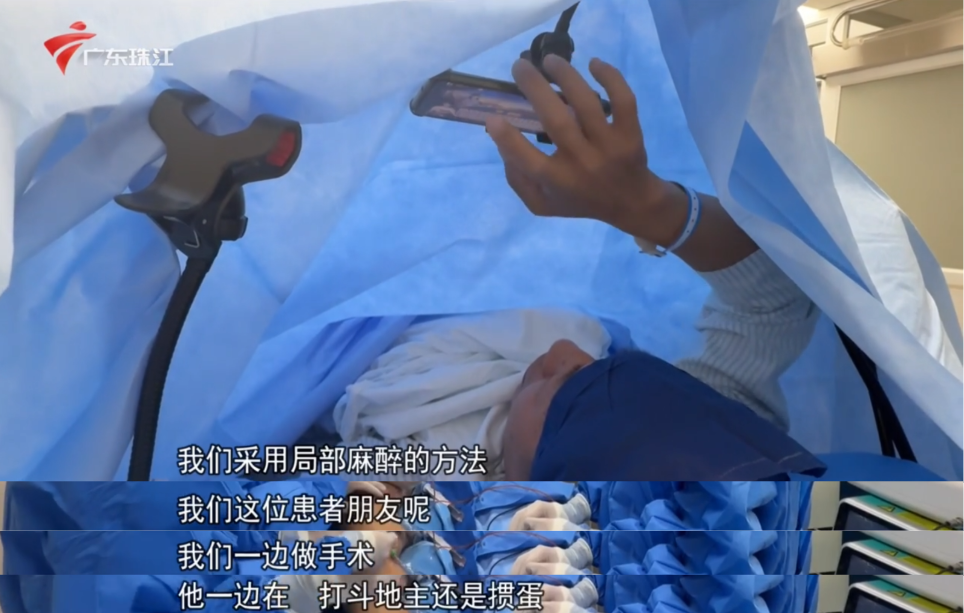
广州一男子做手术太紧张,医生让他躺在床上玩手机,打了两圈“斗地主”后手术做完了
Xin Lang Cai Jing· 2026-02-16 04:36
Core Insights - The article discusses the increasing prevalence and treatment options for lower limb varicose veins, highlighting a case where a patient underwent a minimally invasive procedure while using a mobile phone, indicating advancements in patient comfort during treatment [1][3]. Group 1: Patient Experience and Treatment - A 55-year-old patient in Guangzhou, diagnosed with lower limb varicose veins, experienced significant discomfort, especially during hot weather or prolonged standing [3]. - The medical team allowed the patient to use a mobile phone during the minimally invasive "day surgery" to alleviate anxiety, demonstrating a patient-centered approach [3]. - Post-surgery, the patient was able to walk and was discharged the following day, showcasing the effectiveness of the procedure [3]. Group 2: Understanding Varicose Veins - Early signs of varicose veins may include visible veins that do not cause pain, which can progress to more severe symptoms if left untreated [5]. - The condition is often caused by prolonged standing or sitting, leading to blood pooling in the lower limbs and damaging vein function over time [5]. - If untreated, varicose veins can lead to complications such as skin ulcers, eczema, and deep vein thrombosis, which can increase the risk of life-threatening pulmonary embolism [5][6]. Group 3: Prevention and Intervention - Early intervention is crucial, with recommendations including lifestyle changes, reducing prolonged sitting or standing, regular exercise, and wearing compression stockings under medical guidance [5]. - For advanced cases with severe symptoms, minimally invasive surgery is recommended as a treatment option [6].

久坐久卧,当心“肺部杀手”找上门
Xin Lang Cai Jing· 2026-01-09 17:40
Core Viewpoint - The incidence of acute pulmonary embolism (PE) is rising, necessitating increased awareness and preventive measures among high-risk populations [2][4]. Group 1: Incidence and Risk Factors - The global incidence of pulmonary embolism ranges from 11.7 to 131.9 per 100,000, with China's hospitalization rate increasing from 1.2 per 100,000 in 2007 to 14.2 per 100,000 in 2021, exceeding 200,000 cases [2]. - High-risk groups include the elderly, especially those over 80, who have a significantly higher risk compared to those under 50 [3]. - Other high-risk populations include pregnant women, patients undergoing surgery, those with malignancies, cardiovascular diseases, chronic obstructive pulmonary disease, kidney syndrome, obesity, smokers, and individuals who remain sedentary during long flights [4]. Group 2: Symptoms and Diagnosis - Symptoms of acute pulmonary embolism lack specificity, making it prone to misdiagnosis; common symptoms include activity-related shortness of breath, chest pain, and syncope [5]. - The classic triad of symptoms (chest pain, hemoptysis, and dyspnea) occurs in less than 20% of cases, highlighting the need for vigilance in recognizing atypical presentations [5]. - Diagnosis involves a two-step process: initial screening using ECG and echocardiography, followed by confirmatory imaging such as CT pulmonary angiography [6]. Group 3: Treatment and Management - Treatment strategies are tailored based on the severity of the condition, with high-risk patients requiring aggressive intervention and lower-risk patients primarily receiving anticoagulation therapy [7]. - Anticoagulation is the cornerstone of treatment, while thrombolysis is reserved for high-risk patients experiencing cardiac arrest or obstructive shock [7]. - Patients must adhere to prescribed medication regimens and undergo regular monitoring to prevent complications, including chronic thromboembolic pulmonary hypertension [8]. Group 4: Prevention and Prognosis - Prevention strategies include avoiding prolonged immobility, engaging in regular movement during long travels, and using compression stockings for high-risk individuals [8]. - The overall prognosis for pulmonary embolism patients is improving, but timely treatment and adherence to management plans are crucial to prevent severe outcomes [8].
世界血栓日 | 什么是血栓?血栓是如何形成的?有哪些危害?一起来看!
Yang Shi Wang· 2025-10-13 06:43
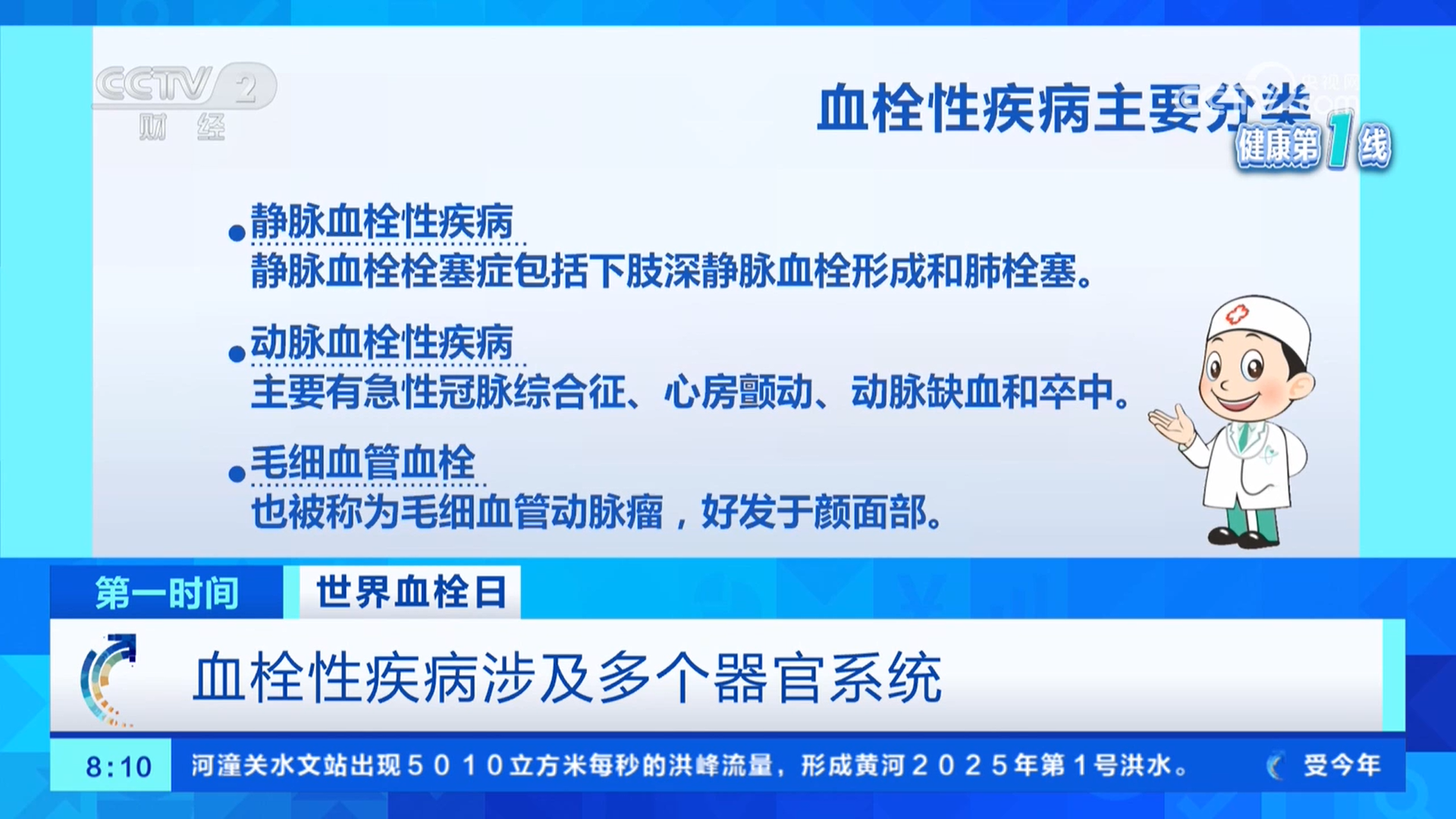
Core Viewpoint - The articles highlight the significance of thrombosis, its formation, types, and the importance of prevention and early detection, especially in high-risk populations [1][3][9]. Group 1: Types of Thrombosis - Thrombosis is categorized into three main types: venous thrombosis, arterial thrombosis, and capillary thrombosis [1]. - Venous thrombosis includes deep vein thrombosis (DVT) and pulmonary embolism (PE), while arterial thrombosis encompasses acute coronary syndrome, atrial fibrillation, arterial ischemia, and stroke [1][6]. - DVT accounts for approximately 80% of venous thrombosis cases, making it the most prevalent form [6]. Group 2: Risk Factors and Formation - The formation of thrombosis is influenced by three key factors: damage to blood vessel walls, slow blood flow, and a hypercoagulable state of blood [3][4]. - High-risk groups include individuals over 60 years old, those with hypertension, diabetes, obesity, and those who experience prolonged immobility [6][10]. - Specific conditions such as prolonged sitting, especially in activities like playing mahjong or long flights, significantly increase the risk of DVT [6][10]. Group 3: Symptoms and Detection - Symptoms of DVT include swelling, pain, tenderness, redness, and skin changes in the affected limb [6][8]. - Two simple methods for self-assessment of DVT risk include measuring leg circumference and checking for tenderness in the calf [8]. Group 4: Prevention and Treatment - Preventive measures include regular movement, hydration, and a diet rich in fruits and vegetables while limiting meat and fats [4][11]. - Treatment options for PE include the placement of an interception device to prevent blood clots from reaching the lungs and minimally invasive techniques to dissolve clots [11].
这些习惯正给你的血管添堵
Bei Jing Qing Nian Bao· 2025-05-26 01:12
Group 1 - Excessive salt and sugar intake can lead to high blood pressure and arterial damage, increasing the risk of heart failure and cardiovascular diseases [1][2] - High-fat, high-cholesterol, and trans fat foods also pose significant risks to vascular health and should be minimized [2] - Sedentary lifestyles, characterized by prolonged sitting, can lead to heart strain, increased blood viscosity, and a higher risk of heart disease, with an increased risk of 47% for those sitting over 8 hours a day [3] Group 2 - Lack of physical activity can cause blood flow stagnation, leading to potential blood clots and increased risk of pulmonary embolism [3] - Chronic stress and sleep deprivation can result in elevated heart rates and blood pressure, contributing to cardiovascular issues, with studies indicating that three consecutive nights of poor sleep can age blood vessels by 10 years [4][5] - The accumulation of cholesterol and triglycerides due to stress and lack of sleep can lead to arterial hardening, increasing the risk of heart disease [4][5]