
肿瘤全程管理

Search documents
确诊往往即晚期!基层肿瘤防控之难如何破
第一财经· 2025-11-29 10:09
Core Viewpoint - The article discusses the challenges and strategies of Shantou University Medical College Affiliated Cancer Hospital in retaining patients for cancer treatment in the context of healthcare disparities in the eastern Guangdong region [4][6]. Group 1: Hospital Overview - Shantou University Medical College Affiliated Cancer Hospital is the only tertiary cancer specialty hospital in eastern Guangdong, with an outpatient volume of 192,000 in 2024, ranking 17th nationally among public cancer hospitals [3]. - The hospital faces challenges similar to many hospitals in third-tier cities, particularly in retaining local patients who often seek treatment in first-tier cities like Guangzhou due to a lack of confidence in local medical capabilities [4][6]. Group 2: Cancer Prevention and Treatment Challenges - The uneven distribution of medical resources in eastern Guangdong leads to a lack of multi-disciplinary collaboration in cancer treatment, with many hospitals lacking specialized departments such as radiation therapy [7]. - There is a significant need for improved cancer prevention and treatment capabilities in rural areas, as highlighted by the National Health Commission's focus on enhancing cancer control in these regions [8]. - Early diagnosis rates for cancer in China are low compared to developed countries, with many patients diagnosed at advanced stages due to insufficient screening and preventive measures [8][9]. Group 3: Strategies for Patient Retention - The hospital aims to retain more cancer patients locally by enhancing awareness of its strengths and addressing its weaknesses through collaboration with leading hospitals [12]. - The establishment of the Eastern Guangdong Cancer Management Alliance aims to connect various medical institutions to improve cancer care and facilitate expert consultations for complex cases [13]. - The hospital has implemented an integrated cancer management model that encompasses prevention, screening, diagnosis, treatment, rehabilitation, and follow-up, breaking down barriers between different healthcare stages [13][14]. Group 4: Integrated Cancer Care Model - The Breast Cancer Integrated Center at the hospital has developed a comprehensive service system that integrates screening, diagnosis, treatment, rehabilitation, and follow-up, allowing for a "one-stop" treatment experience [14]. - This integrated model not only reduces patient costs and time but also enhances collaboration among multi-disciplinary teams, leading to improved treatment outcomes and patient benefits [14].

确诊往往即晚期!基层肿瘤防控之难如何破
Di Yi Cai Jing· 2025-11-29 09:34
Core Viewpoint - The article emphasizes the need to shift cancer treatment focus towards early-stage diagnosis and management, particularly in the context of the Shantou University Medical College Affiliated Cancer Hospital, which aims to enhance local cancer care and retain patients within the region [1][7]. Group 1: Hospital Performance and Challenges - The Shantou University Medical College Affiliated Cancer Hospital is the only comprehensive cancer hospital in Eastern Guangdong, with an outpatient volume of 192,000 visits projected for 2024, ranking 17th nationally among public cancer hospitals [1]. - The hospital faces challenges in retaining patients locally, as many prefer to seek treatment in larger cities like Guangzhou due to a lack of confidence in local medical capabilities [2][3]. Group 2: Cancer Prevention and Early Detection - There is a significant need for improved cancer prevention and treatment capabilities in rural areas, which is a key goal of China's health initiatives [3]. - The current cancer spectrum in China shows a mix of prevalent cancers found in developed and developing regions, with a low early diagnosis rate and insufficient screening measures, particularly in rural areas [4]. Group 3: Patient Management and Treatment Models - The hospital is exploring strategies to retain more cancer patients locally by enhancing awareness of its strengths and addressing its weaknesses through collaboration with leading hospitals [7]. - A new cancer management alliance has been established to integrate various medical institutions, enabling better resource sharing and expert consultations for complex cases [8]. Group 4: Integrated Cancer Care Approach - The hospital has launched a breast cancer integrated management center, promoting a "single disease, multi-disciplinary" approach to provide comprehensive services from screening to follow-up [9]. - This integrated model aims to improve early detection rates, reduce treatment costs, and enhance patient outcomes by facilitating collaboration among various specialists [9].
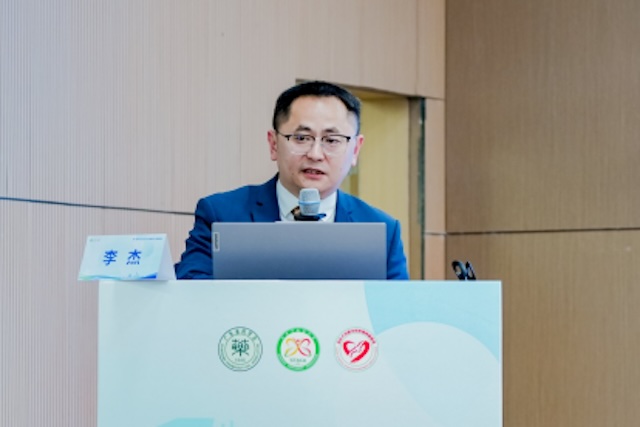
粤东“一站式”乳腺癌诊疗高地,汕头大学肿瘤医院引领规范化建设
2 1 Shi Ji Jing Ji Bao Dao· 2025-11-26 07:32
Core Viewpoint - The first Tumor Comprehensive Management Symposium was held in Shantou, Guangdong, focusing on the comprehensive management of cancer as a key approach to improve cancer prevention and treatment quality in public hospitals [2]. Group 1: Tumor Comprehensive Management - Tumor comprehensive management has become a leading model in cancer prevention and treatment, essential for the high-quality development of public hospitals [2]. - The model encompasses the entire cycle of prevention, screening, diagnosis, treatment, rehabilitation, and follow-up, breaking down barriers between different stages of care [2][3]. - The Shantou University Medical College Affiliated Cancer Hospital's integrated breast cancer prevention and treatment center exemplifies the successful implementation of this management model [2][6]. Group 2: Expert Collaboration and Training - The establishment of a tumor comprehensive management alliance in the eastern Guangdong region allows for rapid expert consultations on challenging cases and enhances the overall medical service level through training and technical exchanges [3]. - The integration of clinical and research efforts is crucial for advancing the comprehensive management model, enabling a collaborative approach to tackle cancer treatment challenges [4][7]. Group 3: Policy and Industry Support - Guangdong Province has introduced policies to support the high-quality development of the biopharmaceutical industry, focusing on innovative cancer drugs and high-end medical devices [3]. - The biopharmaceutical and health industry cluster in Guangdong is projected to generate over 730 billion yuan in revenue in 2024, with significant growth in innovative drug approvals [3]. Group 4: Integrated Treatment Platforms - The integrated breast cancer treatment platform at Shantou University Medical College enhances patient experience by providing a one-stop service, reducing treatment cycles and improving communication among specialists [6][7]. - The platform aims to establish a standardized quality control system for breast cancer treatment, promoting localized and high-quality medical services [8].
首届肿瘤全程管理专题会议在汕头开幕,权威专家共探防治新策略
2 1 Shi Ji Jing Ji Bao Dao· 2025-11-23 07:57
Core Insights - The first Oncology Comprehensive Management Symposium was successfully held in Shantou, Guangdong from November 21 to 23, 2025, gathering over a thousand top experts in the oncology field [1][2] - The establishment of the Eastern Guangdong Oncology Comprehensive Management Alliance marks a significant milestone in promoting the comprehensive management concept in cancer prevention and treatment [2][3] Group 1: Event Overview - The symposium was organized by the Guangdong Pharmaceutical Association and the Shantou Anti-Cancer Association, with support from the National Health Commission [1][2] - The event featured two main venues and six high-level parallel forums, facilitating exchanges of ideas and technologies in the oncology sector [1][2] Group 2: Significance and Goals - The symposium aims to build a bridge for idea exchange and technical communication in cancer prevention and treatment, promoting the implementation of comprehensive management concepts at the grassroots level [2][3] - It supports the high-quality development of public hospitals and contributes to the "Healthy China" initiative [2][3] Group 3: Expert Contributions - Academician Zhong Nanshan emphasized that comprehensive management is key to improving patient survival quality and highlighted China's global leadership in this area [3] - Academician Yu Jinming pointed out the need for systematic collaboration in innovation, showcasing the global value of Chinese experiences [3] Group 4: Comprehensive Management Model - The comprehensive management model integrates prevention, screening, diagnosis, treatment, rehabilitation, and follow-up into a cohesive healthcare service, breaking down barriers between different stages [4][5] - This model is seen as a crucial approach for the high-quality development of public hospitals and aims to enhance the overall quality of cancer care [4][5] Group 5: Challenges and Solutions - Current challenges in grassroots cancer prevention include insufficient public awareness and limited access to advanced treatment methods [4][5] - The establishment of the Eastern Guangdong Oncology Comprehensive Management Alliance aims to address these issues by linking various healthcare institutions and enhancing resource sharing [5][6] Group 6: Research and Innovation - The comprehensive management model is expected to foster research innovation by facilitating data sharing and resource integration among hospitals, research institutions, and enterprises [11][12] - The model allows for a seamless transition from clinical findings to research topics, creating a beneficial cycle of clinical-research-transformation [12][13] Group 7: Practical Implementation - The Shantou University Medical College Affiliated Tumor Hospital has established a Breast Cancer Integrated Center as a practical application of the comprehensive management model, providing a "one-stop" service for breast cancer patients [7][9] - The center integrates various specialties to streamline the patient experience and enhance treatment outcomes [9][10]
聚焦肿瘤全程管理 京东健康与中国抗癌协会签署战略合作协议
Zheng Quan Ri Bao Wang· 2025-11-07 10:16
Core Insights - A strategic cooperation agreement was signed between the China Anti-Cancer Association and JD Health during the China Conference on Integrated Oncology, aiming to enhance cancer prevention and treatment through digital technology and academic resource integration [1][2] Group 1: Collaboration Focus Areas - The partnership will focus on three main areas: cancer prevention and education, physician empowerment, and industry-academia-research collaboration [1][2] - JD Health will integrate the CACA cancer guidelines into its AI medical tools, providing authoritative prevention and treatment concepts to users and patients [1] - A series of public education initiatives will be launched, including live broadcasts on cancer awareness and the release of a "Cancer Prevention Expert List" to encourage expert participation [1] Group 2: Physician Empowerment - JD Health will leverage the academic resources of the China Anti-Cancer Association to organize oncology academic conferences and include CACA guidelines in its oncology academic section [2] - A "Cancer Expert List" will be jointly published to support physician branding, and AI-assisted tools will be developed to enhance service efficiency and patient education [2] Group 3: Industry-Academia-Research Collaboration - JD Health will assist in promoting the research outcomes of association experts in cancer rehabilitation and facilitate technology transfer [2] - Joint research projects will be proposed based on JD's AI capabilities, and both parties will participate in the evaluation of research outcomes to foster innovation in cancer diagnosis and rehabilitation technologies [2] Group 4: Strategic Significance - This collaboration marks the first partnership between JD Health and the China Anti-Cancer Association, combining JD's extensive online cancer patient base and advanced AI algorithms with the association's academic authority and vast network of healthcare professionals [2] - The partnership aims to transition cancer prevention and treatment from "point solutions" to "integrated processes," creating a more efficient and collaborative cancer prevention ecosystem [2]
多方关注肿瘤全程管理:以规范促均质 以关怀提质量
Ren Min Wang· 2025-07-29 09:10
Core Insights - The field of cancer treatment is undergoing significant transformation driven by advancements in medical technology and a patient-centered approach [1] Group 1: Standardization and Quality of Care - There is a critical issue of "insufficient total resources and uneven distribution" in China's cancer medical resources, necessitating the need for high-quality treatment resources to be more accessible [2] - The core direction for promoting standardized and homogenized treatment is to expand and balance the distribution of quality medical resources [2] - Pharmaceutical companies play a vital role in this process by collaborating with experts to create educational content and help more doctors, especially those in grassroots settings, understand and apply clinical guidelines [2] Group 2: Patient-Centric Management - Recent innovations in targeted and immunotherapy have shifted cancer management from a "disease-centered" to a "health-centered" approach, emphasizing the importance of improving patients' quality of life alongside treatment efficacy [3] - A multi-faceted support system is essential for helping patients cope with emotional challenges and treatment side effects, including family support, accurate disease understanding, and shared experiences from patient organizations [3][4] - Companies are actively involved in developing disease management guidelines from the perspectives of patients and caregivers, which aids in shared decision-making and improves treatment adherence [4] Group 3: Collaborative Decision-Making - The core of comprehensive cancer management lies in breaking the traditional "doctor-led, patient-passive" model and establishing a collaborative decision-making ecosystem [5] - Effective communication between doctors and patients is crucial, as many patients misinterpret professional literature due to a lack of accessible educational materials [5] - Pharmaceutical companies are addressing information gaps by transforming scientific papers into understandable content, facilitating better communication and understanding between patients and healthcare providers [5]
成都再添一家肿瘤特色二级综合医院 国际前瞻肿瘤治疗落地成都鹏瑞利国际医疗健康中心
Sou Hu Cai Jing· 2025-05-09 12:35
Core Insights - Peng Ruili Group and Nanjing Ruizhong Biotechnology have signed a cooperation agreement to invest 150 million yuan in building a secondary general hospital focused on oncology in Chengdu [1][2] - The new hospital will cover over 25,000 square meters and have approximately 250 beds, aiming to provide comprehensive services for cancer prevention, diagnosis, treatment, and rehabilitation [1][2] - The project is expected to begin trial operations by the end of this year, integrating advanced cancer treatment technologies and expert resources from across the country [1][2] Investment and Development - The new hospital will focus on comprehensive cancer treatment and will explore innovative anti-cancer therapies in collaboration with Nanjing Ruizhong Biotechnology [2] - It will adopt a multidisciplinary team (MDT) approach to create personalized treatment plans for various malignant tumors, including thyroid cancer, lung cancer, liver cancer, pancreatic cancer, prostate cancer, and glioma [2] - The hospital will implement a full-cycle management model, utilizing high-precision imaging and AI-assisted diagnostic systems for early detection and treatment [2] Strategic Positioning - Chengdu Peng Ruili International Medical Health Center is the first "shared medical + high-speed rail hub" complex developed by Singapore's Peng Ruili Group in China, aiming to establish a "highland for innovative cancer treatment" [3] - The hospital will vertically integrate with other institutions within the center to enhance early cancer screening and treatment capabilities, leveraging advanced technologies such as PET-CT and AI imaging analysis [3] - The strategic location near Chengdu East Station will enable comprehensive coverage of the southwestern region, providing hope for more cancer patients through access to cutting-edge technologies [3]