
胃癌

Search documents
大山里走出来的23岁博士研究生,确诊胃癌晚期
Xin Lang Cai Jing· 2026-02-28 00:40
Core Insights - A 23-year-old student, Zhang Rui, diagnosed with late-stage gastric cancer, shares his journey and the support he has received from the community [1][5][7] Group 1: Patient Background and Condition - Zhang Rui, from a rural area in Yunnan, achieved high academic success by entering Sun Yat-sen University with over 650 points in the college entrance examination [1] - He was diagnosed with late-stage gastric cancer in July 2025 after experiencing symptoms like abdominal swelling and difficulty eating [5] - Zhang has undergone over ten chemotherapy sessions, resulting in significant weight loss of over 30 pounds, but his condition has stabilized after months of treatment [5] Group 2: Family and Community Support - Zhang's family has spent over 300,000 yuan on his treatment, and they express unwavering hope for his recovery [7] - The school community and online supporters have contributed financially to assist with his medical expenses [7] Group 3: Expert Insights on Gastric Cancer - Recent data indicates approximately 359,000 new gastric cancer cases in China, making it the third most common malignant tumor [9] - There is a noted increase in the proportion of young gastric cancer patients, attributed to lifestyle factors such as irregular eating habits and high stress [9] - Experts emphasize the importance of lifestyle interventions and early detection, recommending regular endoscopic examinations for high-risk groups [10]


全球40%的胃癌,发生在中国
36氪· 2026-02-09 00:10
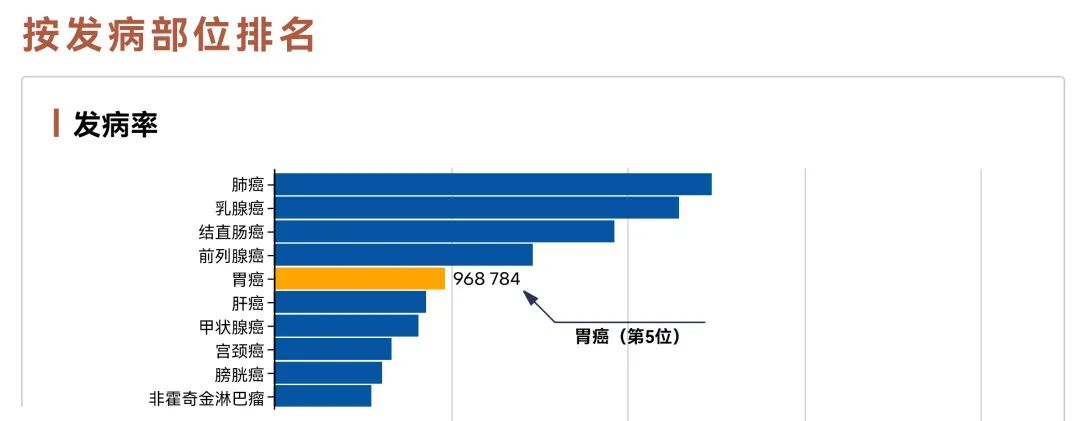
Core Viewpoint - The article highlights the significant burden of gastric cancer in China, attributing nearly 70% of cases to Helicobacter pylori infection, which is prevalent in about 40-50% of the Chinese population [4][24][27]. Group 1: Gastric Cancer Statistics - China accounts for approximately 40% of the world's gastric cancer cases, with about 360,000 new cases and 260,000 deaths reported in 2022 [6][11]. - Gastric cancer ranks fifth globally in terms of incidence and mortality, with 970,000 new cases and 660,000 deaths in 2022 [7][9]. - The northwest region of China shows the highest incidence and mortality rates for gastric cancer, with men being 2.5 times more likely to develop the disease than women [11][13]. Group 2: Role of Helicobacter pylori - Helicobacter pylori is identified as a major contributor to gastric cancer, with studies indicating it is responsible for 78.5% of non-cardia gastric cancer cases and 62.1% of cardia gastric cancer cases in China [24]. - The infection rate of Helicobacter pylori in China is around 40-50%, with some regions exceeding 60% [24][26]. - The bacterium's virulence is heightened in East Asian populations, with a high prevalence of the cagA+ strain, which is more likely to cause gastric cancer [29][30]. Group 3: Treatment and Prevention - Eradication therapy for Helicobacter pylori is crucial, as it can significantly reduce the risk of gastric cancer by 52-53% in certain studies [33]. - Current clinical guidelines recommend eradication therapy for adults with Helicobacter pylori infection unless contraindicated by severe comorbidities [33]. - The success of eradication therapy is challenged by antibiotic resistance, with resistance rates for commonly used antibiotics like clarithromycin and metronidazole reaching as high as 34% and 50-75% respectively in China [36][37]. Group 4: Lifestyle Factors - Lifestyle choices, such as high salt intake, smoking, and obesity, are also linked to increased gastric cancer risk [41][42]. - The average salt intake in China exceeds the World Health Organization's recommendation, contributing to higher gastric cancer rates [41]. - The article emphasizes the importance of lifestyle modifications alongside medical interventions to mitigate gastric cancer risk [42].

全球40%的胃癌,发生在中国
3 6 Ke· 2026-02-06 02:04
Core Insights - China accounts for approximately 40% of the world's stomach cancer cases, despite having only 18% of the global population, with about 36 million new cases and 26 million deaths reported in 2022 [2][7][19]. - The high incidence of stomach cancer in China is significantly attributed to Helicobacter pylori infection, which affects around 40% to 50% of the Chinese population [18][19]. - The geographical distribution of stomach cancer cases in China shows that the northwest region has the highest incidence and mortality rates, with male patients being at a higher risk than females [7][18]. Group 1 - Stomach cancer ranks fifth globally in terms of incidence and mortality, with 970,000 new cases and 660,000 deaths reported in 2022 [2][5]. - Asia is identified as a high-incidence region for stomach cancer, contributing to 71.4% of new cases and 70.1% of deaths worldwide [5]. - In China, stomach cancer incidence is particularly high in the northwest region, with the male-to-female incidence ratio being approximately 2.5:1 [7][18]. Group 2 - Helicobacter pylori is a significant risk factor for stomach cancer, with studies indicating it is responsible for 78.5% of non-cardia stomach cancer cases and 62.1% of cardia stomach cancer cases in China [18]. - The bacterium can survive in the acidic environment of the stomach and is linked to chronic gastritis and peptic ulcers, with 1% to 3% of infected individuals potentially developing stomach cancer [11][18]. - The presence of more virulent strains of H. pylori, particularly those carrying the cagA gene, contributes to the higher cancer risk in the Chinese population [20][21]. Group 3 - Lifestyle factors such as high salt intake, smoking, and obesity are also associated with increased stomach cancer risk, with China having one of the highest salt consumption rates globally [29][31]. - The average daily salt intake in China exceeds 10 grams, significantly higher than the World Health Organization's recommendation of 5 grams [29]. - Smoking increases the risk of stomach cancer by approximately 70%, and obesity is linked to chronic inflammation and other risk factors for stomach cancer [31]. Group 4 - Screening for stomach cancer is crucial, as early detection can significantly improve survival rates, with a 90% five-year survival rate for early-stage cases [34]. - Current guidelines recommend regular screening for high-risk populations, including individuals over 40, those with a family history of stomach cancer, and H. pylori-infected individuals [34]. - Non-invasive tests like the urea breath test and endoscopic examinations are recommended for detecting H. pylori and early-stage stomach cancer [33][34].
萎缩性胃炎会导致癌变吗
Xin Lang Cai Jing· 2026-01-13 20:54
Core Viewpoint - The news highlights the serious health risks associated with atrophic gastritis, a type of chronic gastritis that can lead to severe complications, including potential progression to gastric cancer [1][10]. Group 1: Disease Overview - Atrophic gastritis is characterized by the thinning of the gastric mucosa and a reduction in glandular structures, which impairs digestive function and can lead to malnutrition [2]. - The disease is often asymptomatic, but when symptoms do occur, they may include abdominal discomfort, bloating, and non-specific digestive issues [2]. Group 2: Prevalence and Risk Factors - The prevalence of atrophic gastritis in the population exceeds 20%, with a higher incidence in individuals over 60 years old, who account for approximately 16.47% of cases [3]. - Key risk factors include age, Helicobacter pylori infection (with an infection rate of about 40.66% in the general population), and poor lifestyle habits such as irregular eating patterns and excessive alcohol consumption [3][4]. Group 3: Screening Recommendations - Six groups are recommended for priority screening for atrophic gastritis, including individuals aged 40 and above with persistent gastrointestinal symptoms, those with a family history of gastric cancer, and individuals with long-term unhealthy lifestyle habits [5][6][7][8][9]. Group 4: Diagnosis and Monitoring - Endoscopy is the primary method for assessing gastric mucosal atrophy, but pathological diagnosis through biopsy is essential for confirmation [9]. - Regular endoscopic monitoring is crucial for early detection of potential malignant transformations in atrophic mucosa [10]. Group 5: Prevention Strategies - Effective prevention measures include maintaining a healthy diet, eradicating Helicobacter pylori infections, and managing stress and mental health, as psychological factors can significantly impact gastrointestinal health [11][12].
广东27岁女孩“巧巧”确认去世,此前因患胃萎缩体重从90多斤暴瘦至35斤
Xin Lang Cai Jing· 2025-12-20 01:36
Group 1 - The core point of the article is the tragic death of a 27-year-old girl named "Qiaoqiao" from Guangdong, who suffered from severe gastric atrophy, leading to a drastic weight loss from over 90 pounds to 35 pounds [1][3][5] - "Qiaoqiao" had a difficult life, losing her father to late-stage gastric cancer and subsequently developing severe depression, which contributed to her health decline [3][5] - The local village head confirmed her death on December 17, and her body has been cremated, with the community expressing intentions to support her family in the future [5] Group 2 - Gastric atrophy can lead to serious health issues, including a low annual incidence rate of gastric cancer at about 1% among patients with atrophic gastritis [6][7] - Early detection and regular follow-ups are crucial for managing atrophic gastritis, with recommendations for endoscopic surveillance based on the severity of the condition [8][10][12] - Lifestyle changes, such as dietary adjustments and avoiding harmful habits, are essential for preventing the progression of gastric diseases [14][15]

从感染“幽门螺杆菌”到“胃癌”只有5步!紧急提醒→
Yang Shi Wang· 2025-11-30 02:30
Core Insights - The article highlights the increased prevalence of Helicobacter pylori infections during winter, leading to gastrointestinal discomfort and potential severe health issues if not addressed promptly [1][2]. Group 1: Seasonal Factors - Cold weather reduces the gastric mucosa's defense, making it easier for Helicobacter pylori to cause inflammation and ulcers [1]. - Winter dietary preferences for high-fat, high-salt, and spicy foods can damage the gastric mucosa and enhance the virulence of Helicobacter pylori [2]. - The rise in respiratory infections during winter can lead to systemic inflammation and decreased immunity, weakening defenses against Helicobacter pylori [2]. Group 2: Progression to Gastric Cancer - Helicobacter pylori is classified as a Group 1 carcinogen, with infected individuals having a 4 to 6 times higher risk of developing gastric cancer compared to non-infected individuals [3]. - The progression from Helicobacter pylori infection to gastric cancer involves several stages, and timely intervention can prevent cancer development [3]. Group 3: Stages of Gastric Disease - The first stage is chronic superficial gastritis, where the gastric mucosa shows redness and inflammation, which is reversible [4]. - The second stage is chronic atrophic gastritis, where inflammation leads to a reduction in acid-secreting glands, marking a critical turning point towards precancerous conditions [5]. - The third stage involves intestinal metaplasia, where gastric mucosa develops intestinal-like cells, indicating a higher risk of cancer [6]. - The fourth stage is atypical hyperplasia, where abnormal cell shapes appear, closely approaching early cancer [7]. - The final stage is gastric cancer, which can develop if no intervention occurs [8]. Group 4: Treatment and Prevention - Timely intervention is crucial for Helicobacter pylori infections, especially during the superficial gastritis stage, where complete recovery is possible [9]. - Standard treatment involves triple or quadruple therapy upon positive Helicobacter pylori testing, with adherence to medical advice being essential [10]. - Preventive measures include using separate utensils during meals, ensuring food is thoroughly cooked, and maintaining hygiene to avoid cross-infection [11][12].