
幽门螺杆菌

Search documents
全球40%的胃癌,发生在中国
36氪· 2026-02-09 00:10
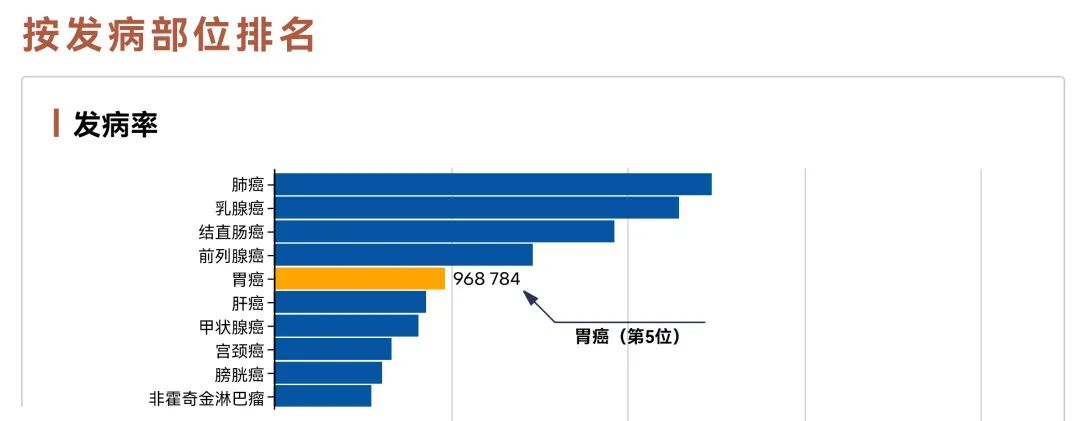
Core Viewpoint - The article highlights the significant burden of gastric cancer in China, attributing nearly 70% of cases to Helicobacter pylori infection, which is prevalent in about 40-50% of the Chinese population [4][24][27]. Group 1: Gastric Cancer Statistics - China accounts for approximately 40% of the world's gastric cancer cases, with about 360,000 new cases and 260,000 deaths reported in 2022 [6][11]. - Gastric cancer ranks fifth globally in terms of incidence and mortality, with 970,000 new cases and 660,000 deaths in 2022 [7][9]. - The northwest region of China shows the highest incidence and mortality rates for gastric cancer, with men being 2.5 times more likely to develop the disease than women [11][13]. Group 2: Role of Helicobacter pylori - Helicobacter pylori is identified as a major contributor to gastric cancer, with studies indicating it is responsible for 78.5% of non-cardia gastric cancer cases and 62.1% of cardia gastric cancer cases in China [24]. - The infection rate of Helicobacter pylori in China is around 40-50%, with some regions exceeding 60% [24][26]. - The bacterium's virulence is heightened in East Asian populations, with a high prevalence of the cagA+ strain, which is more likely to cause gastric cancer [29][30]. Group 3: Treatment and Prevention - Eradication therapy for Helicobacter pylori is crucial, as it can significantly reduce the risk of gastric cancer by 52-53% in certain studies [33]. - Current clinical guidelines recommend eradication therapy for adults with Helicobacter pylori infection unless contraindicated by severe comorbidities [33]. - The success of eradication therapy is challenged by antibiotic resistance, with resistance rates for commonly used antibiotics like clarithromycin and metronidazole reaching as high as 34% and 50-75% respectively in China [36][37]. Group 4: Lifestyle Factors - Lifestyle choices, such as high salt intake, smoking, and obesity, are also linked to increased gastric cancer risk [41][42]. - The average salt intake in China exceeds the World Health Organization's recommendation, contributing to higher gastric cancer rates [41]. - The article emphasizes the importance of lifestyle modifications alongside medical interventions to mitigate gastric cancer risk [42].


春节聚餐,莫让幽门螺杆菌“趁筷而入”
Xin Lang Cai Jing· 2026-02-06 16:48
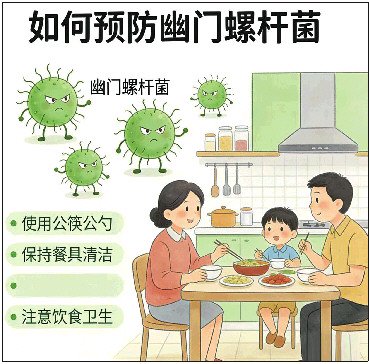
Core Viewpoint - The article highlights the health risks associated with Helicobacter pylori, particularly during the festive season when dining gatherings increase, emphasizing the need for awareness and preventive measures [2][3]. Group 1: Health Risks of Helicobacter Pylori - Helicobacter pylori is a bacterium that can survive in the acidic environment of the human stomach and is a major cause of various gastric diseases [3][4]. - The infection rate of Helicobacter pylori in China is notably high, with approximately one in two individuals potentially carrying the bacterium [3]. - The bacterium spreads primarily through "oral-oral" and "fecal-oral" routes, with dining practices during gatherings posing a significant risk for cross-infection [3][4]. Group 2: Symptoms and Detection - Long-term infection can lead to chronic gastritis, peptic ulcers, and is closely associated with gastric cancer and other serious conditions [4]. - The most common detection method is the carbon-13 urea breath test, which is non-invasive, quick, and suitable for general screening [4][5]. Group 3: Recommended Screening Populations - Five groups are advised to undergo screening for Helicobacter pylori: individuals with gastric symptoms, those with a family history of gastric cancer or confirmed infections, individuals with a history of gastric diseases, those on long-term NSAID therapy, and those voluntarily seeking screening for health management [6][7][8]. Group 4: Prevention Strategies - Effective prevention methods include promoting the use of separate utensils during meals, avoiding direct contact between personal utensils and shared dishes, and maintaining good food hygiene practices [9]. - Recommendations also include washing hands before meals, ensuring food is thoroughly cooked, and regularly disinfecting household utensils to reduce infection risk [9].
全球40%的胃癌,发生在中国
3 6 Ke· 2026-02-06 02:04
Core Insights - China accounts for approximately 40% of the world's stomach cancer cases, despite having only 18% of the global population, with about 36 million new cases and 26 million deaths reported in 2022 [2][7][19]. - The high incidence of stomach cancer in China is significantly attributed to Helicobacter pylori infection, which affects around 40% to 50% of the Chinese population [18][19]. - The geographical distribution of stomach cancer cases in China shows that the northwest region has the highest incidence and mortality rates, with male patients being at a higher risk than females [7][18]. Group 1 - Stomach cancer ranks fifth globally in terms of incidence and mortality, with 970,000 new cases and 660,000 deaths reported in 2022 [2][5]. - Asia is identified as a high-incidence region for stomach cancer, contributing to 71.4% of new cases and 70.1% of deaths worldwide [5]. - In China, stomach cancer incidence is particularly high in the northwest region, with the male-to-female incidence ratio being approximately 2.5:1 [7][18]. Group 2 - Helicobacter pylori is a significant risk factor for stomach cancer, with studies indicating it is responsible for 78.5% of non-cardia stomach cancer cases and 62.1% of cardia stomach cancer cases in China [18]. - The bacterium can survive in the acidic environment of the stomach and is linked to chronic gastritis and peptic ulcers, with 1% to 3% of infected individuals potentially developing stomach cancer [11][18]. - The presence of more virulent strains of H. pylori, particularly those carrying the cagA gene, contributes to the higher cancer risk in the Chinese population [20][21]. Group 3 - Lifestyle factors such as high salt intake, smoking, and obesity are also associated with increased stomach cancer risk, with China having one of the highest salt consumption rates globally [29][31]. - The average daily salt intake in China exceeds 10 grams, significantly higher than the World Health Organization's recommendation of 5 grams [29]. - Smoking increases the risk of stomach cancer by approximately 70%, and obesity is linked to chronic inflammation and other risk factors for stomach cancer [31]. Group 4 - Screening for stomach cancer is crucial, as early detection can significantly improve survival rates, with a 90% five-year survival rate for early-stage cases [34]. - Current guidelines recommend regular screening for high-risk populations, including individuals over 40, those with a family history of stomach cancer, and H. pylori-infected individuals [34]. - Non-invasive tests like the urea breath test and endoscopic examinations are recommended for detecting H. pylori and early-stage stomach cancer [33][34].
4岁女孩竟感染梅毒!医生紧急提醒:奶奶这个习惯害了她
Xin Lang Cai Jing· 2025-12-27 07:22
Core Viewpoint - A 4-year-old girl was diagnosed with congenital syphilis after being infected by her grandmother, who had untreated syphilis and fed her using her mouth, leading to indirect transmission through saliva [1][2]. Group 1: Transmission Methods - Syphilis can be transmitted through various means beyond sexual contact, including mother-to-child transmission during pregnancy or childbirth [3]. - Blood transmission can occur through contaminated blood transfusions or shared medical equipment [4]. - Indirect contact transmission can happen through shared utensils, mouth-to-mouth feeding, or kissing, especially if both parties have oral mucosal injuries [4]. Group 2: Saliva as a Transmission Pathway - Saliva is highlighted as a significant but often overlooked transmission route for various diseases, particularly in family or communal settings [5]. - Common risky behaviors include adults feeding children with their mouths, testing food temperatures, and kissing children on the mouth [6]. Group 3: Other Diseases Transmitted via Saliva - Helicobacter pylori, influenza viruses, herpes viruses, and bacteria causing cavities can also be transmitted through saliva [7][8]. - Close contact behaviors, such as kissing and sharing food, increase the risk of transmission for these pathogens [8]. Group 4: Prevention Recommendations - Personal items like toothbrushes and towels should not be shared, and children should have their own sanitized utensils [9]. - Unhygienic practices, such as mouth feeding and kissing on the mouth, should be avoided [10]. - Regular health check-ups and prompt treatment of infectious diseases are essential for family health [10].
亚太药业股价回调3.5% 成交额突破16亿元
Jin Rong Jie· 2025-08-06 14:47
Group 1 - The stock price of Asia Pacific Pharmaceutical as of August 6, 2025, is 7.17 yuan, down 3.5% from the previous trading day, with a trading volume of 1.681 billion yuan and a turnover rate of 30.37% [1] - The stock experienced significant volatility during the day, reaching a high of 7.75 yuan and a low of 7.03 yuan, resulting in an amplitude of 9.69% [1] - Asia Pacific Pharmaceutical operates in the chemical pharmaceutical sector, focusing on drug research, production, and sales, with key products including anti-infection drugs and gastrointestinal medications [1] Group 2 - In the early morning of August 6, the stock price of Asia Pacific Pharmaceutical quickly retraced, dropping over 2% within five minutes, with a minimum price of 7.48 yuan and a trading volume of 573 million yuan [1] - On August 6, the net outflow of main funds was 44.7413 million yuan, accounting for 0.84% of the circulating market value, while the cumulative net outflow over the past five trading days reached 310 million yuan, representing 5.79% of the circulating market value [1]

量能持续放大3天以上,大盘可高看!
Chang Sha Wan Bao· 2025-06-09 09:23
Market Overview - On June 9, the A-share market saw all three major indices close higher, with the Shanghai Composite Index rising by 0.43% to 3399.77 points, the Shenzhen Component Index increasing by 0.65% to 10250.14 points, and the ChiNext Index up by 1.07% to 2061.29 points. The total trading volume in the Shanghai and Shenzhen markets reached 128.64 billion yuan, an increase of 13.44 billion yuan compared to the previous trading day [1]. Industry Performance - The pharmaceutical sector exhibited the strongest performance on June 9, with chemical pharmaceuticals reaching a nearly four-year high, immunotherapy hitting a two-year high, and weight-loss drugs achieving a one-and-a-half-year high. Other segments such as generic drugs and hepatitis treatments also reached new highs for the year [2]. - In May, at least six domestic innovative pharmaceutical companies announced business development (BD) transactions, primarily involving cross-border cooperation with foreign pharmaceutical companies. Additionally, at the recent ASCO conference, 73 research projects from China were selected for oral presentations, including 11 significant research abstracts [2]. Company Insights - Lingpai Technology, a notable stock on June 9, saw its share price increase by over 10%. The company specializes in the research, production, and sales of new environmentally friendly surface engineering chemicals. In Q1 2025, Lingpai reported an earnings per share of -0.15 yuan and a net profit attributable to shareholders of -26.63 million yuan, with a year-on-year growth rate of 14.54%. The company has completed the research and development of the NCM811 battery chemical system and is actively involved in the new energy vehicle, energy storage, and engineering machinery sectors [4].
保护胃部健康,哪些细节要注意?
Ren Min Ri Bao· 2025-06-09 05:17
Group 1 - The long-term use of chopsticks can lead to health risks due to the accumulation of bacteria and mold in small grooves on their surface, which can compromise stomach health [1] - A study by the Shanghai Consumer Protection Commission found that chopsticks used for over 6 months have 30% more mold than new ones, with wooden and bamboo chopsticks being particularly susceptible to wear and moisture [1] - Different materials have varying replacement cycles; wooden and bamboo chopsticks should be replaced every 3-6 months, while stainless steel and ceramic chopsticks can be checked every 3 months for wear [1] Group 2 - Proper cleaning of utensils is crucial for stomach health, with a recommendation to wash chopsticks separately to reduce bacterial counts by 30%-50% compared to washing them together [2] - Boiling utensils in water at 100 degrees Celsius for 10 minutes can kill 99% of pathogens, but certain toxins require higher temperatures or alkaline treatment to eliminate [2] - The habit of consuming very hot food poses cancer risks, with recommendations to keep food temperatures between 10-40 degrees Celsius [2] Group 3 - Regular screening for Helicobacter pylori is advised as it is a major cause of gastritis and stomach cancer, with recommendations for adults to undergo testing [3] - The use of separate utensils for serving food is encouraged to prevent cross-contamination [3] - Advances in technology have made painless gastroscopy more accessible, with recommendations for adults to undergo this examination every 3-5 years for early detection of stomach diseases [3]