能源不可能三角

Search documents
水电行业十五五展望:而今迈步从头越
GUOTAI HAITONG SECURITIES· 2026-03-23 00:47
Investment Rating - The report indicates a positive outlook for the hydropower industry, highlighting its potential for value reassessment amid market reforms [4]. Core Insights - The report emphasizes the integration of hydropower with wind and solar energy in various river basins, which is expected to enhance economic viability, operational reliability, and green value [2][13]. - The hydropower sector is characterized by lower generation costs, flexible regulation capabilities, and the ability to meet the "energy trilemma" of sustainability, affordability, and reliability [4]. - The report notes that the lifespan of hydropower dam structures can exceed 100 years, providing a significant advantage over traditional energy sources and most industrial assets [3]. Summary by Sections Section 1: Hydropower Development Potential - China's technically exploitable hydropower resources amount to 687 million kilowatts, ranking first globally, with approximately 220 million kilowatts yet to be developed [10]. - The planned "Thirteen Major" hydropower bases have a total installed capacity of 30.54 million kilowatts, with significant contributions from the southwestern region [10]. - The report outlines the challenges faced in developing remaining hydropower projects, including high costs and long construction periods, while highlighting the benefits of integrated water-wind-solar development [13][15]. Section 2: Market Dynamics and Climate Impact - The report discusses the influence of climate phenomena such as El Niño and La Niña on hydropower generation, indicating that extreme weather patterns may enhance the variability of water inflow [39]. - It highlights the increasing importance of hydropower's regulatory capabilities in response to fluctuating water availability and electricity demand due to climate change [76]. - The report anticipates that the market share of hydropower will increase, with a projected rise in market-based electricity pricing, benefiting from its flexibility and low costs [68][69]. Section 3: Financial Performance and Cost Structure - The report details the financial health of hydropower companies, noting improvements in debt structure and operational efficiency through leveraging [3]. - It provides a comparative analysis of electricity pricing across different energy sources, indicating that hydropower remains one of the lowest-cost options [72]. - The report suggests that the profitability of hydropower assets is expected to improve over time, particularly in a low-interest-rate environment, making them attractive for long-term investment [76].


21页|2025推动全球南方能源绿色低碳发展研究报告
Sou Hu Cai Jing· 2026-02-25 03:27
Core Insights - Energy is a crucial foundation for industrialization and modernization in Global South countries, facing the challenge of balancing security, economy, and cleanliness in energy development. The rapid advancement and cost reduction of renewable energy technologies, such as wind and solar, have transformed the energy "impossible triangle" into a "possible triangle," allowing for simultaneous energy security, cost reduction, and green development [1][10][16]. Group 1: Energy Demand and Opportunities - The energy demand in Global South countries is significant, with 685 million people lacking electricity as of 2024, primarily concentrated in these regions. Sub-Saharan Africa accounts for over 80% of this population [18][21]. - Fossil fuels continue to play a vital role in the industrialization and modernization processes of Global South countries, providing essential energy for high-demand industries and serving as key raw materials [35][36]. Group 2: Tailored Energy Development Strategies - Countries should develop differentiated energy strategies based on their resource endowments and development stages, prioritizing energy accessibility for low-income and small island nations to ensure supply security and meet basic needs [46][48]. - Countries with industrialization potential must ensure adequate industrial energy supply and accelerate renewable energy development, using traditional energy as a backup to support economic growth [50]. Group 3: Institutional Framework for Green Development - Establishing a stable green low-carbon energy development system is essential. Countries should enhance their energy policy frameworks, promote market mechanisms, and optimize green investment and financing systems to create a sustainable support system [2][12]. - International cooperation is necessary to support Global South countries in achieving sustainable energy development through trade rules, green product circulation, technology collaboration, and investment [2][12].

专访碧澄董事长:联手英国章鱼能源 开拓海外新兴市场
2 1 Shi Ji Jing Ji Bao Dao· 2026-02-03 08:25
Core Insights - The visit of UK Prime Minister Starmer to China marks the first visit by a UK Prime Minister in eight years and highlights the importance of UK-China relations in addressing climate change and energy cooperation [1] - The strategic partnership between Bicheng Energy and Octopus Energy aims to establish a joint venture, Bichong Energy, focusing on electricity trading in China, representing a significant entry of top global energy technology firms into the Chinese market [1][2] Group 1: Joint Venture and Strategic Goals - The joint venture, Bichong Energy, will be a core part of Bicheng Energy's "comprehensive energy service" strategy, utilizing digital tools and algorithms to optimize electricity costs for commercial users and enhance green electricity consumption [2] - Bicheng Energy has developed over 2 GW of assets and views electricity trading as its second growth curve, while Octopus Energy is a leading renewable energy provider in Europe, indicating a strong complementary partnership [2][3] Group 2: Market Expansion and Investment - The joint venture will initially operate in Guangdong Province, which has the highest electricity consumption in China, and plans to expand to Jiangsu and Anhui provinces, with potential for future growth in emerging markets like the Middle East and Southeast Asia [2][6] - Both companies will invest equally in the joint venture and are open to long-term investment opportunities, reflecting a positive stance towards foreign investment in China's electricity market [5][6] Group 3: Internationalization and Technological Integration - Bicheng Energy's international shareholder background, including Temasek and Saudi Aramco, supports its internationalization efforts and expansion into new markets [7] - The collaboration aims to address the "impossible trilemma" of energy security, low carbon, and low cost by leveraging electricity trading mechanisms to enhance supply security and economic viability in a renewable energy-dominated structure [6][8]
运营资产破10GWh,融和元储发布新品
行家说储能· 2025-12-24 12:43
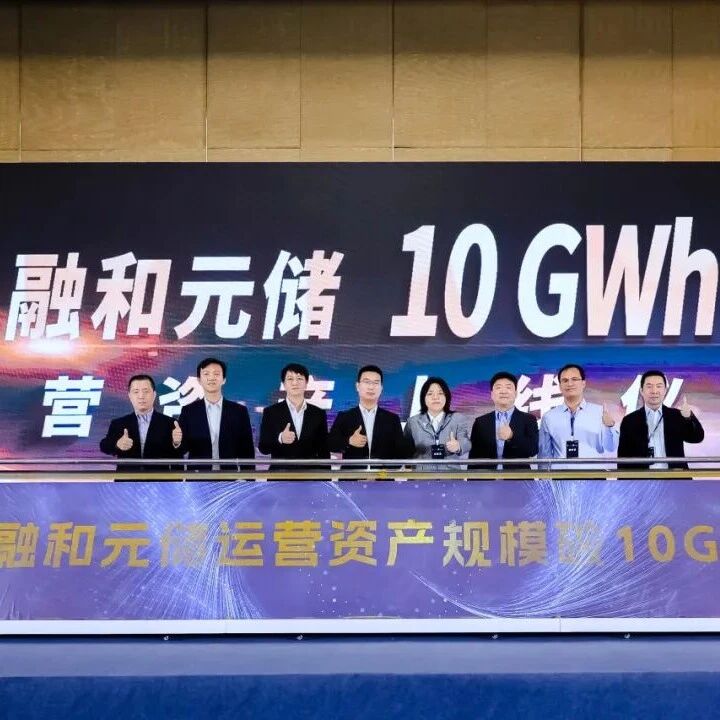
Core Viewpoint - The article emphasizes the transformation of energy storage from a cost item to a value asset, highlighting the importance of operational strategies in unlocking the post-market potential of energy storage [4][5]. Group 1: Company Developments - Ronghe Yuanshu has announced that its operational asset scale has surpassed 10 GWh, leading the industry and covering 474 power stations across 24 provinces in China [5]. - The company launched the "Yuan Storage·Haineijing" operating system, marking a transition from "Yuan Storage Solution 1.0" to "Yuan Storage Ecological Solution 2.0," focusing on data-driven strategies and ecosystem collaboration [6][8]. - The new operating system aims to address industry challenges by integrating AI models and optimizing operational strategies across various energy storage scenarios [6][8]. Group 2: Industry Trends - The article discusses the shift in the energy storage industry towards recognizing the long-term value of energy assets, driven by policy changes and market reforms [4]. - The introduction of the AIDC green electricity direct connection system solution aims to tackle the challenges posed by the increasing demand for computational power and the need for sustainable energy solutions [9][11]. - The company is committed to building a sustainable and high-quality global energy storage ecosystem, collaborating with strategic partners to expand the boundaries of energy storage value [13].
李立浧:能源的“不可能”三角可以实现,只是边长不一定相同
Feng Huang Wang Cai Jing· 2025-12-09 11:25
Core Viewpoint - The concept of the "impossible triangle" in the energy sector, which includes green low-carbon, economic, and security aspects, can actually be balanced according to Li Lihuan, an academician of the Chinese Academy of Engineering and honorary chairman of the expert committee of China Southern Power Grid [1] Group 1 - Li Lihuan emphasizes that the energy sector can achieve a balance among the three aspects of green low-carbon, economic, and security [1]
2025电力市场改革和新能源高质量发展
Sou Hu Cai Jing· 2025-12-07 02:43
Core Insights - The report highlights the challenges and opportunities in China's electricity market reform and the high-quality development of renewable energy amidst the global energy transition [1][6] - Balancing the "energy trilemma" of cleanliness, security, and economy is identified as a core issue in the transformation of the electricity system [1] Group 1: System Cost and Market Mechanism - The critical point for system costs is reached when the share of wind and solar power in the electricity system exceeds 15%, leading to a rapid increase in system costs [2] - The construction of a spot electricity market is essential for promoting the absorption of renewable energy and the development of ultra-high voltage transmission [2] - A pricing mechanism that reflects the temporal and spatial value of electricity is necessary to efficiently guide resource allocation [2] Group 2: National Unified Market and Safety Challenges - A national unified electricity market is required to efficiently absorb renewable energy, given the mismatch between resource-rich western regions and demand centers in the eastern coastal areas [3] - High penetration of renewable energy poses new safety risks, as evidenced by major blackout events in countries with over 30% solar power [3] - Upgrading the grid to incorporate flexible transmission technologies and enhancing cross-regional coordination are critical for maintaining grid safety [3] Group 3: Pressure on End-User Electricity Prices - End-user electricity prices are under pressure to rise due to increasing system costs and the inability to fully recover safety investments through existing pricing mechanisms [4] - The linkage between the electricity and carbon markets is seen as a potential breakthrough for reflecting the value of green electricity [4] - The integration of dynamic carbon pricing with the spot electricity market could clarify the environmental value of clean energy and guide consumption and investment behaviors [4] Group 4: Coal Power's Role in System Reliability - Despite the rapid development of renewable energy, there has been a recent increase in the approval and construction of coal power plants, reflecting the need for system reliability [5] - Coal power remains crucial for meeting peak load demands in the current stage where flexible resources like energy storage are not fully mature [5] - As the scale of flexible resources expands in the future, the role of coal power is expected to shift from being a primary energy source to a regulatory and backup power source [5] Group 5: Future Directions in Electricity Market Reform - China's electricity market reform has entered a new phase focused on the absorption of green electricity, safety as a baseline, and central-local collaboration as a driving force [6] - The construction of a national unified electricity market and the advancement of the spot market will be key to building a new type of electricity system [6] - Continuous exploration in optimizing system costs, enhancing grid safety, and designing pricing mechanisms is necessary to achieve the multi-dimensional goals of "clean, safe, and economical" energy transition [6]
拿下大额订单,95后创始人靠“高空风筝”发电,突破能源不可能三角
Sou Hu Cai Jing· 2025-10-03 03:38
Core Insights - The article discusses the innovative floating wind power generation system developed by Beijing Linyi Yunchuan Energy Technology Co., Ltd., which aims to harness high-altitude wind energy to address the "impossible triangle" of energy economics, cleanliness, and stability [2][5][10]. Company Overview - Beijing Linyi Yunchuan Energy Technology Co., Ltd. was founded by Dun Tianrui and has developed the S1500 floating wind power generation system, the world's first megawatt-level airborne wind power system [2][3][22]. - The company focuses on producing high-altitude wind power equipment and has secured several significant orders shortly after its establishment [24][25]. Product and Technology - The S1500 system utilizes a tethered balloon to capture high-altitude wind energy, which is then transmitted to the ground, providing power to remote areas [3][22]. - The system's design allows it to operate at altitudes where wind energy is more stable and abundant, significantly reducing the cost of electricity compared to traditional diesel generators [22][24]. Market Opportunity - The company targets the energy market's pain points, particularly in remote areas that rely on diesel generators, by offering a cleaner and more cost-effective alternative [22][24]. - The floating wind power system is expected to achieve a cost of approximately 0.03 yuan per kilowatt-hour at 9,000 meters, which is one-tenth the cost of coal power [22][24]. Strategic Vision - Dun Tianrui envisions Linyi Yunchuan as a key player in the energy sector, similar to how Zeiss revolutionized the semiconductor industry with its precision optics [25][26]. - The company aims to scale its production capabilities through a decentralized assembly model, ensuring rapid deployment and efficiency [25][26].

中国在沙漠,悄悄干了件大事
3 6 Ke· 2025-08-04 09:13
Core Points - China is constructing the world's largest solar and wind power base in the Kubuqi Desert, with a planned total installed capacity of 450 million kilowatts, equivalent to the total output of 20 Three Gorges Dams [4][2][12] - The project aims to transform barren desert areas into productive land by integrating agriculture with renewable energy production, showcasing a unique "photovoltaic + agriculture" model [24][26][28] - The initiative is part of China's broader strategy to utilize its vast desert areas for renewable energy generation, addressing both energy needs and environmental restoration [17][20][29] Group 1 - The Kubuqi Desert solar power station has already converted 27,000 acres of desert into an oasis, demonstrating the potential for large-scale solar energy projects in arid regions [8][6] - The solar power station in Qinghai's Talatan covers an area of 609 square kilometers, comparable to the entire land area of Singapore, and has significantly improved local environmental conditions [10][12] - The investment in the Kubuqi Desert project exceeds 80 billion yuan, highlighting the scale and ambition of China's renewable energy initiatives [4][2] Group 2 - China's photovoltaic capacity has been steadily increasing, with a cumulative installed capacity that ranks first globally for nine consecutive years, accounting for over 70% of the world's production of polysilicon, wafers, and cells [31][20] - The "photovoltaic + agriculture" model not only generates clean energy but also contributes to local economic development by integrating crop cultivation and livestock farming into solar power projects [26][28] - The approach of using solar panels to create microclimates for plant growth has proven effective in desert areas, allowing for sustainable land use and environmental restoration [23][24]