自主科技创新

Search documents
大宗商品:图说大宗:地缘博弈风险上升
2025-11-11 01:01
Summary of Key Points from the Conference Call Industry Overview - **Industry Focus**: The report primarily discusses the commodities market, with a specific focus on oil and soybean markets, amidst rising geopolitical risks [5][16]. Core Insights and Arguments Macroeconomic Context - **China's 14th Five-Year Plan**: The recent discussions highlighted advancements in technological innovation, adjustments in the real estate sector, and significant geopolitical changes. The new plan emphasizes the importance of technology, expanding domestic demand, and enhancing openness [3]. - **U.S. Economic Indicators**: The U.S. WEI index shows signs of recovery, suggesting a potential GDP growth rate of over 3% in Q3. However, employment levels remain low due to structural changes in hiring needs [4]. Oil Market Dynamics - **Sanctions on Russian Oil**: The U.S. and EU have intensified sanctions against Russian oil companies, significantly impacting oil supply dynamics. The U.S. has sanctioned 75% of Russian oil supplies, with a notable impact on Asian markets, particularly India [5]. - **Price Movements**: Following the sanctions, Brent crude oil prices surged approximately 7% to around $65 per barrel. The market is still cautious about fully pricing in the risks associated with Russian oil supply disruptions [9]. - **Supply Outlook**: The report anticipates a global oil supply surplus of about 1.7 million barrels per day in Q4 2025, with Brent prices expected to remain in the range of $65-$70 per barrel unless significant supply shocks occur [10]. Soybean Market Insights - **Price Volatility**: The soybean market is experiencing increased price fluctuations due to uncertainties in U.S.-China trade policies. Recent data indicates strong domestic demand for U.S. soybeans, alleviating concerns over export demand [6][16]. - **Trade Negotiations**: The upcoming U.S.-China trade negotiations are expected to influence soybean pricing significantly, with current expectations of tight supply in the first quarter of 2026 [16]. Commodity Price Movements - **Recent Price Changes**: Over the past two weeks, various commodities have shown significant price changes, with domestic thermal coal increasing by 9.3% and iron ore decreasing by 1.5% [7][20]. - **Black Metal Sector**: The black metal sector is facing mixed signals, with steel inventory levels shifting from accumulation to depletion, indicating potential demand recovery [11][12]. Geopolitical Risks - **Geopolitical Tensions**: The report emphasizes the rising geopolitical risks affecting commodity markets, particularly in energy and agricultural sectors, which could lead to increased volatility and price adjustments [5][9]. Other Important Insights - **Market Sentiment**: The overall market sentiment remains cautious, with traders awaiting clearer signals from geopolitical developments and trade negotiations [9][18]. - **Long-term Trends**: The report suggests that while immediate price movements are influenced by geopolitical events, long-term trends will depend on structural changes in supply and demand dynamics across various commodities [12][15]. This summary encapsulates the key points discussed in the conference call, providing a comprehensive overview of the current state and outlook of the commodities market, particularly focusing on oil and soybeans amidst geopolitical uncertainties.
We Are One,一家中国装备巨头的“全球化方法论”
Sou Hu Cai Jing· 2025-10-20 08:33
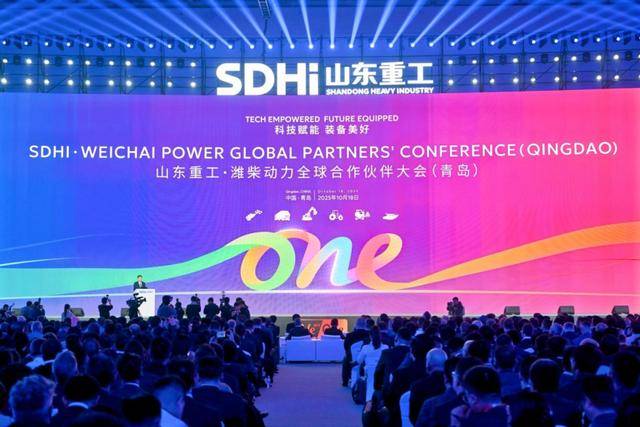
Core Insights - The global equipment manufacturing industry is focusing on Shandong Heavy Industry in Qingdao, China, as it hosts the global partner conference with nearly 2,500 partners from 140 countries, showcasing around 300 products and covering an exhibition area of 30,000 square meters [1] - Shandong Heavy Industry reported impressive financial results for the first nine months of 2025, achieving nearly 440 billion yuan in revenue, a year-on-year increase of over 9%, with overseas business accounting for 60% of total revenue, highlighting the company's deepening globalization strategy [1] Globalization Strategy - Shandong Heavy Industry has moved beyond traditional trade to establish a new model of diversified business collaboration in international markets, with 30% of overseas revenue coming from European and American industries and another 30% from localized manufacturing and sales of domestic products [3] - The company has demonstrated strong performance across its subsidiaries, with China National Heavy Duty Truck's export sales reaching 111,000 units, a 24.5% increase, and Weichai Group's engine exports growing by 30% [5][5] Localization and Innovation - The company emphasizes a "deep cultivation of international markets" strategy, focusing on local teams, management, manufacturing, and R&D to address the complexities of the global environment [5] - Weichai's internationalization index has reached 40.93%, with all overseas acquisitions being profitable, driven by a strategy of synergy, localization, and unified goals [7] Technological Advancements - Shandong Heavy Industry invests heavily in R&D, maintaining a research intensity of 4.2%, with an expected investment of 13.6 billion yuan in 2024, leading to significant advancements in engine technology and vehicle design [9] - The company has introduced AI-powered machinery and customized products for specific markets, enhancing its global competitiveness [9] Collaborative Ecosystem - The "We Are One" philosophy fosters a unique collaborative innovation ecosystem, enabling rapid responses to customer needs through supply chain cooperation and shared resources among subsidiaries [10] - This collaborative model provides Shandong Heavy Industry with a competitive edge over Western companies, allowing for faster technological responses [10] Redefining Globalization - Shandong Heavy Industry's globalization practices are redefining the paradigm of Chinese equipment manufacturing, focusing on systemic outputs of technology, management, brand, and culture, rather than just product movement [12] - The company's approach, centered on deep localization, technological innovation, and cooperative win-win strategies, opens new growth avenues and offers significant insights for the high-quality development of Chinese manufacturing [12]