自我修炼

Search documents
“站得稳”才“靠得住”(思想纵横)
Ren Min Ri Bao· 2025-11-25 22:42
Core Points - The emphasis on the importance of political stability and reliability for party leaders is highlighted, indicating that these qualities are essential for effective leadership and trust-building [1][2][3] - The relationship between "standing firm" and "being reliable" is described as interdependent, where each quality reinforces the other, and both are necessary for effective leadership [2][3] Group 1 - "Standing firm" is characterized by a solid work style, enabling leaders to remain calm and decisive in complex situations, while "being reliable" reflects their capabilities and qualities [1][2] - The qualities required for "standing firm" include strong ideals, high moral standards, solid work abilities, and rich experience, which help leaders face risks without faltering [2][3] - "Being reliable" serves as a test of political character, allowing leaders to take responsibility and address urgent issues effectively [2][3] Group 2 - The development of "standing firm" and "being reliable" is a continuous process that requires self-discipline and self-improvement, rather than being automatic with time or position [3] - The need for ongoing self-reflection and improvement is emphasized, as neglecting this can lead to failures in leadership [3]
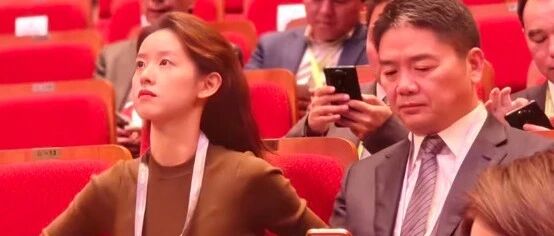
嫁给刘强东10年,章泽天面相大变
商业洞察· 2025-11-04 09:47
Core Viewpoint - The article discusses the evolution of Zhang Zetian's identity and status over ten years of marriage to Liu Qiangdong, emphasizing the importance of leveraging relationships for personal growth and success [7][36][123]. Group 1: Zhang Zetian's Transformation - Zhang Zetian has transformed from a "milk tea sister" to a powerful figure, showcasing a significant change in her demeanor and presence [30][34]. - At 32 years old, she has a net worth of 10.5 billion, with substantial resources and connections, indicating her successful adaptation to her role [37][38][39]. - The article highlights her ability to attract attention and drive traffic to JD.com during major sales events, showcasing her influence [28][29]. Group 2: Leveraging Relationships - The article emphasizes the importance of leveraging relationships for personal and professional growth, suggesting that relying on a partner's resources is not shameful [56][70]. - It discusses how Zhang Zetian's marriage to Liu Qiangdong provided her with opportunities that would have taken years to achieve independently [62][68]. - The narrative suggests that successful partnerships involve mutual support and resource exchange, as seen in the examples of Zhang Zetian and Liu Qiangdong, as well as Guo Jingjing and Huo Qigang [72][77]. Group 3: Self-Improvement and Resilience - The article stresses the necessity of continuous self-improvement, even after achieving a stable life through marriage [79][90]. - It points out that relying solely on external validation or love is insufficient for long-term happiness, advocating for personal development [82][85]. - Zhang Zetian's proactive approach to education and career development is highlighted as a key factor in her success [88][93]. Group 4: Maintaining Focus and Clarity - The article discusses Zhang Zetian's clear understanding of her goals during challenging times, particularly after the 2018 incident involving Liu Qiangdong [95][109]. - It emphasizes the importance of making informed choices and maintaining focus on personal objectives, even amidst public scrutiny [121][125]. - The conclusion outlines three key lessons from Zhang Zetian's marriage: choosing the right partner, committing to self-improvement, and maintaining clarity during challenges [123][126].


好的中层,放小自己,放大格局
3 6 Ke· 2025-10-10 00:09
Group 1 - Middle managers play a crucial role as "translators" between upper management and frontline employees, balancing strategic direction and operational execution [5][6][9] - They face the challenge of managing expectations both upwards and downwards, ensuring alignment between high-level goals and team capabilities [8][20][37] - Effective middle management requires a blend of leadership styles tailored to the maturity and needs of team members, as highlighted by situational leadership theories [13][14][18] Group 2 - Middle managers often engage in "soft work" such as conflict resolution and emotional support, which are essential for organizational harmony but lack formal recognition [20][21][25] - The ability to manage team dynamics and foster a positive environment is critical for achieving business objectives and enhancing team cohesion [23][24][25] - Middle managers must develop a diverse skill set, including emotional intelligence and adaptability, to navigate complex organizational landscapes [37][38][39] Group 3 - Transitioning from a middle management role to a more central position within the organization involves developing a broader business perspective and avoiding the "professional trap" of focusing solely on technical expertise [38][39][40] - Continuous learning and networking are vital for middle managers to enhance their influence and effectiveness within the organization [41][42] - Establishing a structured self-improvement regimen can help middle managers maintain clarity and focus amidst daily challenges [57][59]
成功不能强求:任正非这样的企业家,不是培养,而是“冒出来”的
Sou Hu Cai Jing· 2025-10-01 01:22
Core Insights - Success cannot be forced; it emerges from self-cultivation and personal insight rather than formal training [2][4][5] - Exceptional individuals, like Ren Zhengfei, are often self-made and arise from unique circumstances rather than traditional educational paths [4][5] - The process of becoming a high-level talent involves natural selection rather than mere training, emphasizing the importance of innate ability and luck [5][7] Group 1 - Ren Zhengfei's success illustrates that true entrepreneurs develop through personal experiences and insights rather than through structured education [4][5] - Historical figures such as Van Gogh, Einstein, and Beethoven exemplify the idea that greatness often appears spontaneously without clear mentorship [4] - The concept of "悟性" (insight) cannot be cultivated through training; it is an inherent quality that some individuals possess [5][6] Group 2 - The journey of personal growth often involves overcoming significant challenges, which are seen as blessings rather than curses [7] - Ren Zhengfei emphasizes that the most effective leaders are those who have faced and learned from substantial setbacks [7][8] - The transformation of individuals into high-level talents is primarily driven by their own efforts and realizations, with external influences serving as mere catalysts [7][8]