自营前置仓模式

Search documents
大摩:美团新收购与小象超市形成协同效应
Jin Rong Jie· 2026-02-06 03:22
Group 1 - Meituan plans to invest approximately $717 million to acquire Dingdong Group's "Dingdong Maicai" business in China, which is listed on the NYSE [1] - Morgan Stanley believes that the acquisition will benefit Meituan and create synergies with its existing Xiaoxiang Supermarket, further expanding its presence in East China and solidifying its core market position in the instant fresh delivery sector [1] - Dingdong operates around 1,000 front warehouses in China, primarily located in East China, while Meituan's Xiaoxiang Supermarket operates approximately 1,000 front warehouses across over 20 cities nationwide, dominating in Beijing and Shenzhen and actively entering second-tier cities [1] Group 2 - The report indicates that the market size for self-operated instant delivery models (1P) is still significantly smaller than that of third-party delivery models (3P), with an estimated ratio of about 1 to 2 [1]

叮咚买菜开到盐城,「小城消费」有多大想象力?
36氪未来消费· 2026-01-21 10:08
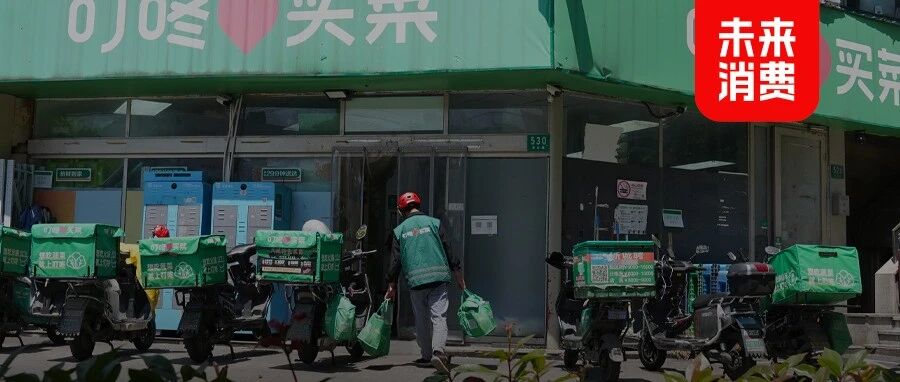
Core Viewpoint - The future of instant retail in China is increasingly reliant on lower-tier cities, with the market expected to exceed 1 trillion yuan by 2026, driven by macroeconomic policies and consumer demand in these areas [3]. Group 1: Market Potential - The growth rate of users and transaction volume in lower-tier cities has surpassed that of higher-tier cities, making these markets crucial for revenue growth in instant retail [3]. - In 2025, retail sales in county and rural areas accounted for 38.7% of total social retail sales, indicating a robust growth in consumption in these regions [5]. - The demand for high-quality products in lower-tier cities is significant, with many consumers seeking better shopping experiences that are currently lacking [10]. Group 2: Company Strategies - Dingdong Maicai has opened a new warehouse in Yancheng, Jiangsu, utilizing a self-operated front warehouse model to enhance local shopping options [3][4]. - The company plans to expand its presence in other cities in northern Jiangsu, indicating a strategic deepening in the region [4]. - Dingdong Maicai has established a comprehensive supply chain network in the Jiangsu area, which supports its expansion into lower-tier markets [12]. Group 3: Competitive Landscape - The instant retail sector has evolved from focusing solely on fresh produce to including daily necessities, especially during the pandemic, marking its transition to a more competitive phase [7]. - Major players like JD, Taobao, and Meituan are also targeting lower-tier cities, indicating a competitive environment for instant retail [10]. - Dingdong Maicai's strategy emphasizes cautious expansion and product differentiation to maintain competitiveness in these markets [19][20]. Group 4: Operational Efficiency - Dingdong Maicai has achieved a significant reduction in inventory turnover days to 2.1 days and maintains a low product loss rate of around 1.5%, showcasing its operational efficiency [23]. - The company has reported continuous profitability for twelve consecutive quarters under Non-GAAP standards and seven quarters under GAAP standards, demonstrating its sustainable growth potential [23]. Group 5: Future Outlook - As consumer spending habits mature, lower-tier cities like Yancheng are expected to become key battlegrounds for retailers [24].