
航空安全与运行

Search documents
国际航协世界安全与运行大会聚焦安全、效率与可持续发展
Xin Hua She· 2025-10-15 08:17
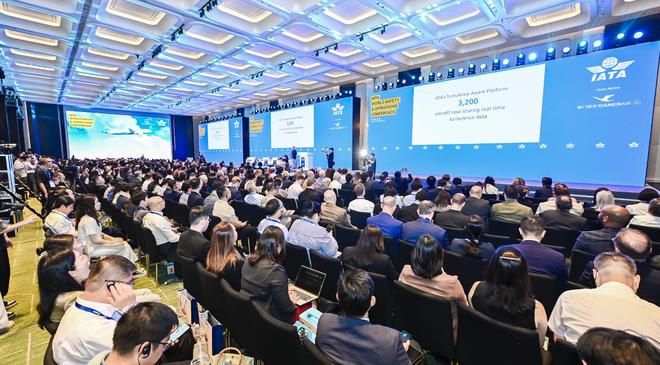
Group 1 - The International Air Transport Association (IATA) 2025 World Safety and Operations Conference was held in Xiamen, China, attracting over 800 participants from nearly 70 countries and regions, marking the first time the event has taken place in China [1][2] - The conference theme is "Aviation for the Future: Successful Strategies," focusing on safety, cabin operations, flight operations, and crisis management, discussing pathways to achieve safety, operational efficiency, and sustainable development in the aviation industry [1][4] - IATA Chairman Willie Walsh highlighted China's role as a leading example in aviation safety and operations, noting that China has contributed over 20% to global aviation growth for several consecutive years, making it a core engine for industry recovery [2] Group 2 - Xiamen Airlines Chairman Zhao Dong emphasized the airline's 38 consecutive years of profitability and significant achievements in safety, calling for collaboration within the civil aviation sector to enhance the resilience of the aviation ecosystem through technological innovation and operational optimization [4] - The conference will also feature a cultural event called "Xiamen Night," and it is scheduled to continue until October 16 [4]

国际航空安全大会召开,中国民航安全水平达世界平均水平七倍
Xin Jing Bao· 2025-10-15 00:17
Core Insights - The International Air Transport Association (IATA) 2025 World Safety and Operations Conference opened in Xiamen, China, marking the first time the event is held in the country, attracting over 800 representatives from nearly 70 countries [1] - The conference focuses on the transformative needs of aviation safety and operations, exploring innovative solutions and discussing trending topics such as global aviation accident rates [1] - China has contributed over 20% to global air transport growth for several consecutive years, positioning itself as a core engine for industry recovery [1] - The rolling ten-year value of major accident rates for Chinese civil aviation transport is 0.023 per million flights, approximately one-seventh of the global average [1]
国际航协世界安全与运行大会首次在中国举办
Yang Shi Xin Wen Ke Hu Duan· 2025-10-14 23:19
Core Insights - The International Air Transport Association (IATA) World Safety and Operations Conference was held in Xiamen, Fujian, marking the first time the event took place in China [1] - The conference gathered representatives from nearly 70 countries, including airlines, regulatory bodies, international organizations, and suppliers, to discuss the future of aviation safety governance and innovative ideas in the field [1] Industry Overview - China has maintained its position as one of the world's most promising aviation markets, with civil aviation transport scale ranking among the top two globally for 20 consecutive years [1] - In 2024, China is projected to achieve a total transport turnover of 1,485.2 billion ton-kilometers, with passenger transport volume reaching 730 million and cargo mail transport volume at 898,200 tons [1] - China's contribution to global aviation transport growth has consistently exceeded 20% for several years [1] Safety Performance - Despite rapid growth, China's civil aviation has maintained a major accident rate of approximately one-seventh of the global average over a rolling ten-year period [1] - The IATA highlighted China's strong leadership role in the formulation and updating of global standards for international air transport [1] Strategic Priorities - The IATA identified three core priorities for aviation safety and operations: defending and improving global standards, shaping a robust safety culture through leadership, and utilizing data to address increasingly severe operational challenges to enhance performance [1]
世界安全与运行大会启幕, 国际航协强调三大关键优先事项
Zheng Quan Shi Bao Wang· 2025-10-14 09:11
Core Insights - The World Safety and Operations Conference (WSOC) emphasizes three core priorities for aviation safety and operations: defending and enhancing global standards, shaping a robust safety culture through leadership, and utilizing data to address increasing operational challenges to improve performance [1][2] Group 1: Aviation Safety Priorities - The International Air Transport Association (IATA) highlights the importance of adhering to existing global standards and developing future standards to continuously improve industry safety performance [1] - Factors such as airspace closures, drone incursions, and global navigation satellite system (GNSS) disruptions are complicating the operational environment for airlines, threatening connectivity and flight safety [1] Group 2: Data Utilization in Aviation - Data is transforming aviation safety by providing insights necessary for risk prediction and performance enhancement through the Global Aviation Data Management (GADM) program [2] - The GADM program integrates Flight Data Exchange (FDX), Incident Data Exchange (IDX), and Maintenance Cost Data Exchange (MCX) to facilitate data-driven decision-making between airlines and regulatory bodies [2] Group 3: Leadership Initiatives - IATA has established two key initiatives to strengthen leadership in aviation safety, including a Safety Leadership Charter advocating eight core principles of safety leadership, currently covering approximately 80% of passenger traffic [2] - IATA Connect, which includes over 5,600 users from more than 600 organizations, provides access to IOSA documents, safety issue centers, and will soon expand to include ISAGO users [2]
国际航协强调航空安全与运行的关键优先事项
Zhong Guo Min Hang Wang· 2025-10-14 06:49
Core Insights - The International Air Transport Association (IATA) emphasizes three core priorities for aviation safety and operations: defending and enhancing global standards, shaping a robust safety culture through leadership, and utilizing data to address increasing operational challenges to improve performance [1][2] Group 1: Global Standards and Safety - Global standards are crucial for aviation safety, requiring adherence to current standards and the development of future standards to continuously improve industry safety performance [1] - The focus is currently on addressing GNSS interference and protecting aviation radio frequency spectrum, with a notable increase in reported GNSS interference incidents [1] - IATA and the European Union Aviation Safety Agency have initiated a global navigation satellite system resilience program based on four priorities: monitoring and reporting, preventive tools, backup infrastructure, and civil-military coordination [1] Group 2: Data Utilization in Aviation Safety - The Global Aviation Data Management (GADM) program integrates flight data exchange (FDX), accident data exchange (IDX), and maintenance cost data exchange (MCX) to enable data-driven decision-making between airlines and regulators [2] - IATA's turbulence awareness platform shares real-time data from 3,200 aircraft, helping pilots and dispatchers mitigate turbulence risks during flights [2] - The SafetyIS database utilizes flight data from 217 airlines for predictive analytics, while the risk-based IOSA audit model has customized audits for each airline's operations, establishing over 8,000 corrective measures to enhance safety [2] Group 3: Leadership in Aviation Safety Culture - Strong safety leadership is essential for fostering a solid aviation safety culture, empowering employees to raise concerns and trust that issues will be addressed promptly [2] - IATA has developed two key initiatives to strengthen leadership: the Safety Leadership Charter, advocating eight core principles of safety leadership, and IATA Connect, which connects over 5,600 users from more than 600 organizations [2] - The Safety Leadership Charter currently covers approximately 80% of global passenger traffic, reinforcing a culture based on leadership, global standards, and data [2]