
航运业低碳转型

Search documents
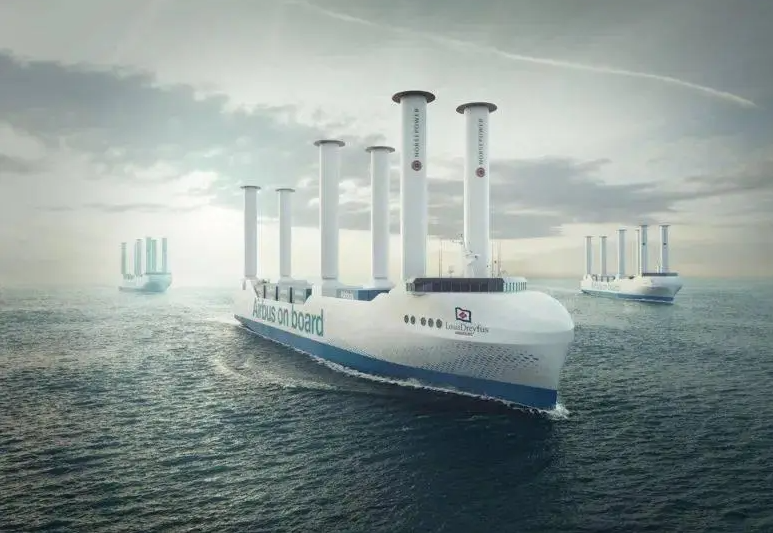
用清洁能源,旋筒作船帆,全球首艘6风帆助力滚装船在汉下水
Chang Jiang Ri Bao· 2026-02-10 12:59
Core Viewpoint - The launch of the world's first 6-sail assisted ro-ro ship by China Shipbuilding Group's Wuchang Shipbuilding marks a significant step towards low-carbon transformation in the global shipping industry, showcasing a viable "Chinese solution" for high-end, intelligent, and green transformation in shipbuilding [1][8]. Group 1: Ship Specifications and Features - The ship measures approximately 169 meters in length, 23.32 meters in width, and 8.5 meters in depth, with a designed draft of 5.7 meters [2]. - It is equipped with two methanol dual-fuel main engines and auxiliary engines, allowing for flexible switching between methanol and traditional fuels. Methanol combustion results in zero sulfur emissions, over 80% reduction in nitrogen oxides emissions compared to traditional fuels, and approximately 25% reduction in carbon emissions [2]. - The ship features six funnel-like rotating sails that provide auxiliary power, significantly reducing fuel consumption and pollutant emissions. In ideal sea conditions, it can lower main engine power consumption by 15% to 20% [2][8]. Group 2: Operational and Market Implications - The ship is designed to transport aircraft components, capable of carrying about 70 forty-foot containers and six single-aisle aircraft components, including wings, fuselage, engine mounts, and tail sections. It includes a complete ro-ro system at the stern for efficient loading and unloading of large-sized components [12]. - Following its launch, the ship will undergo mooring and navigation tests, including comprehensive debugging of the propulsion system, methanol refueling, and sail installation [12]. - This order represents the first overseas new energy ship project for Wuchang Shipbuilding, which previously served international clients with traditional powered vessels from countries such as Italy, Greece, Singapore, France, and Vietnam [8].

打造全球航运绿色燃料“加注+交易”双中心,上海将这样做
Xin Lang Cai Jing· 2026-02-09 14:07
Core Viewpoint - The global shipping industry is advancing towards decarbonization, with green fuels becoming a crucial direction for transformation, as highlighted by the implementation plan for establishing a green fuel bunkering and trading center in Shanghai by 2030 [1][4]. Group 1: Implementation Plan Overview - The implementation plan outlines a "2030 vision" for Shanghai to establish itself as an international green fuel bunkering and trading center, with LNG bunkering capacity exceeding one million cubic meters and methanol and biofuel capacities reaching one million tons [1]. - The plan aims to transition from a "single fuel supply" to a "diverse green service" model, creating a coordinated green fuel supply system involving LNG, green methanol, and biofuels [1]. Group 2: Current Progress - Shanghai has made significant progress in the green fuel bunkering sector, becoming one of the key ports for green fuel globally, with LNG bunkering reaching 712,000 cubic meters and methanol fuel bunkering at 62,500 tons by the end of 2025 [2]. - The 100,000-ton green methanol project led by Sheneng Group has commenced operations, marking Shanghai's first local green methanol project and the largest single-city waste-based green methanol project globally [2]. Group 3: Challenges and Bottlenecks - Despite positive momentum, Shanghai faces several bottlenecks in becoming an international green fuel center, including unclear supporting policies and insufficient domestic biofuel bunkering compared to ports like Singapore and Rotterdam [3]. - The lack of mandatory policy drivers has resulted in low willingness among shipowners to adopt green fuels, and infrastructure shortfalls, such as a shortage of storage facilities for new green fuels, hinder progress [3]. Group 4: Strategic Innovations - The implementation plan proposes seven clear goals to enhance green fuel supply capabilities and cultivate diverse bunkering service models, addressing key challenges in the "dual center" construction [4]. - Notable innovations include establishing a collaborative mechanism between national strategies and Shanghai's positioning, creating multi-scenario bunkering service models, and expanding green methanol production [4]. Group 5: Policy Support and Future Directions - The release of the implementation plan is seen as a critical measure by ten national ministries to address bottlenecks in shipping development, aligning with the core needs of Shanghai's international shipping center [5]. - The plan aims to provide a replicable "Chinese solution" for global shipping, facilitating the transition from high-carbon to low-carbon models and contributing to national carbon reduction goals [5].
香港首个以本地为总部的船东互助保赔协会揭牌
Zhong Guo Xin Wen Wang· 2025-11-18 09:42
Group 1 - The Hong Kong Maritime Week and the 2025 World Shipping Conference opened on November 17 at the Hong Kong Convention and Exhibition Centre, featuring over 1,300 attendees from global shipping, ports, trade, logistics, and financial institutions [1] - The conference focused on themes such as green and intelligent development in shipping and shipbuilding, sustainable development policies in the shipping industry, global port infrastructure development, and the role of Hong Kong in global green transformation [1] - The "Hong Kong Shipping War Risk Insurance Pool" was established to provide localized and reliable risk protection solutions, enhancing Hong Kong's high-end shipping service level [1] Group 2 - The conference released two authoritative group standards for marine fuel, marking China's first initiative in this area, which provides a unified quantitative benchmark for shipping companies' low-carbon transformation [2] - Seven thematic forums will be held on November 18, covering topics such as integrated port and shipping logistics, smart ship manufacturing, and maritime sustainability [2] - The 2025 World Shipping Conference is led by China Merchants Group in collaboration with various organizations, including the Hong Kong SAR Government and international shipping associations [2]
空铁联运有望行李直挂和“一张票”
Jie Fang Ri Bao· 2025-10-20 01:37
Group 1 - The core idea of the news is the exploration of innovative railway ticketing systems and the optimization of air-rail intermodal services, including the design of a unified ticketing system for passengers and the introduction of luggage carriages on high-speed trains [1] - The North Bund International Shipping Forum serves as a platform for industry stakeholders to discuss future developments, featuring participation from experts across various sectors, including rail and aviation [1] - The Hi-Dolphin shipping model is the first vertical large model in the domestic shipping industry, providing essential support for the digital transformation of the shipping sector [2] Group 2 - The "COSCO Shipping Libra" vessel's methanol dual-fuel retrofit project is the world's first large container ship to implement a methanol dual-fuel system, offering a replicable solution for low-carbon transformation in the shipping industry [2] - The Shanghai Port Cross-Border E-Commerce Operation Center has been established, creating a new model for cross-border e-commerce shipping in China, featuring integrated terminal and dock operations for efficient service [2]
中国北方规模最大电动拖轮船队在天津投入使用
Zhong Guo Xin Wen Wang· 2025-08-13 17:25
Core Viewpoint - The largest pure electric tugboat fleet in northern China has been officially put into operation in Tianjin, consisting of four 5,400 horsepower electric tugboats designed to assist various vessels in and out of the port and docking operations [1] Group 1: Fleet Details - The electric tugboats are developed by Tianjin Xinjincheng Shipping Technology Service Co., Ltd., equipped with a battery capacity of 6,709 kWh, and can be fully charged in 3 hours using fast charging technology [1] - Each tugboat can travel approximately 120 nautical miles on a full charge, achieving zero exhaust emissions and low noise operation compared to traditional fuel tugboats [1] Group 2: Environmental Impact - Each electric tugboat can reduce emissions by about 1,100 tons of carbon oxides annually, equivalent to the yearly emissions of over 400 small cars [1] Group 3: Market Outlook - The general manager of Tianjin Xinjincheng Shipping Technology Service Co., Ltd. stated that with the continuous upgrade of global port environmental standards, the market space for new energy tugboats is expanding, with plans to deploy 10 to 20 similar tugboats nationwide [1] Group 4: Regulatory Framework - The Tianjin Port and Shipping Administration plans to monitor the entire operational cycle of the tugboats and aims to extract regulatory service experiences from this practice to provide replicable solutions for more green projects [1]