新能源船舶

Search documents
首艘万吨级近海新能源散货船启航
Zhong Guo Hua Gong Bao· 2026-01-06 04:24
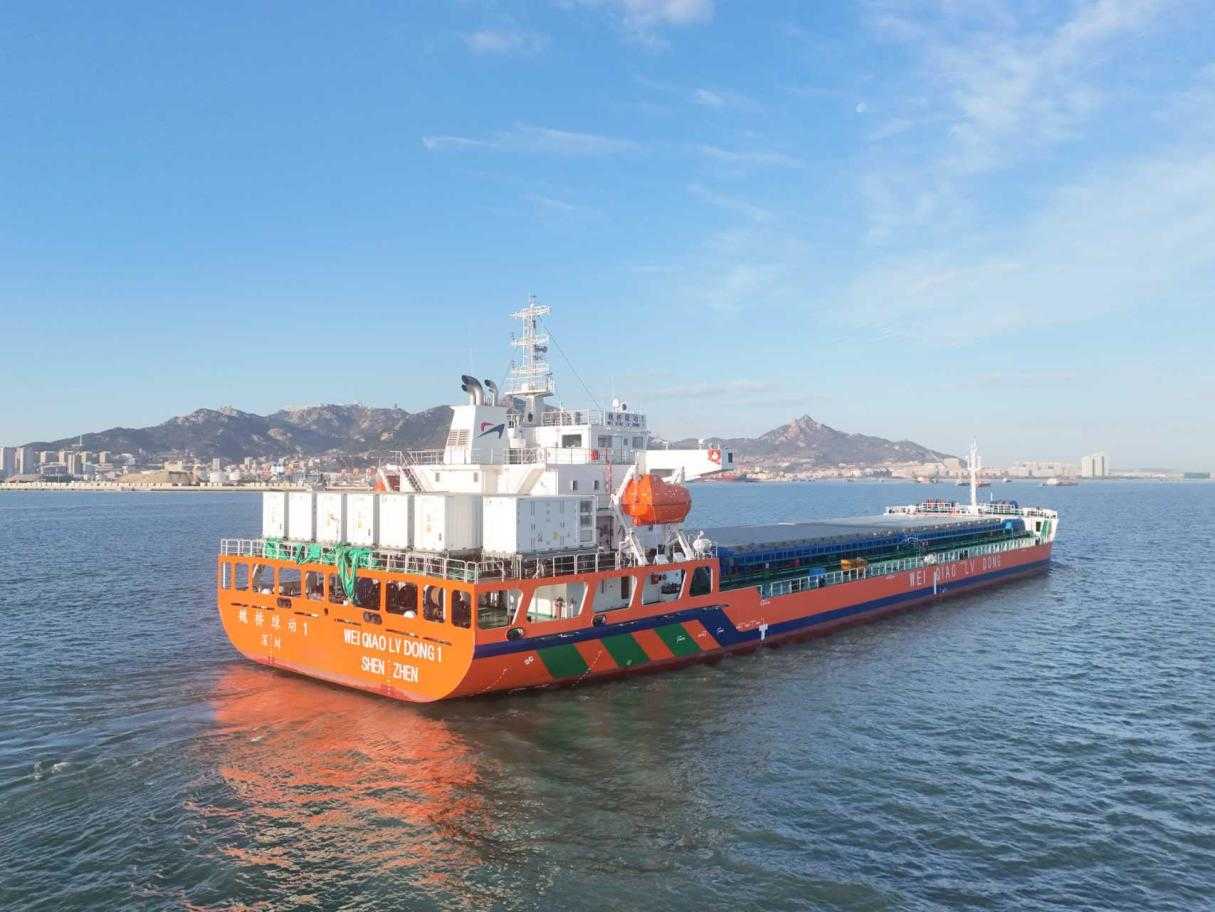
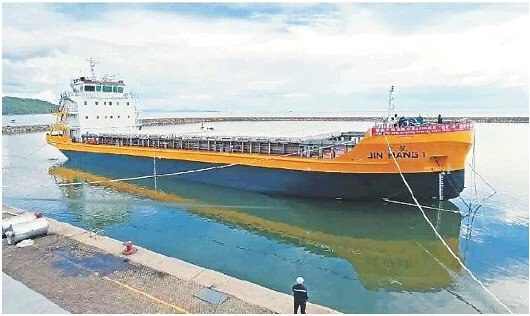
Core Viewpoint - The launch of the "Weiqiao Green Movement 1," the world's first 10,000-ton offshore new energy bulk carrier, marks a significant advancement in sustainable shipping technology, emphasizing the shift towards cleaner energy solutions in the maritime industry [1] Group 1: Vessel Specifications - The "Weiqiao Green Movement 1" has a deadweight capacity of 9,000 tons and a maximum pure electric range of 150 nautical miles [1] - The vessel utilizes a dual propulsion system combining lithium batteries and fuel, featuring eight containerized lithium battery packs on the deck [1] Group 2: Environmental Impact - The ship is designed to achieve net-zero emissions during port operations, entry and exit from ports, and river navigation by using clean energy for all equipment and propulsion systems [1] - It is estimated that the vessel will reduce carbon emissions by approximately 9,000 tons annually when operating on the Yantai to Binzhou route for bauxite transportation [1]
特朗普失算,中国造船业在打压下愈战愈勇
财富FORTUNE· 2026-01-02 13:07
Core Viewpoint - The article discusses the resilience and growth of China's shipbuilding industry despite attempts by the Trump administration to curb its expansion, highlighting China's dominance in global ship orders and technological advancements in shipbuilding [1][9]. Group 1: Industry Performance - As of 2024, Chinese shipyards secured nearly 70% of global new orders, with backlogs extending to 2029, maintaining a significant lead in the market [4]. - By November 2025, Chinese shipbuilders held approximately 60% of new orders and over 65% of the global order backlog, reaffirming their position as the world's leading shipbuilding nation [4]. - The demand for new ships has surged due to geopolitical tensions and changes in global trade routes, particularly affecting the orders for LNG carriers and oil tankers [7]. Group 2: Technological Advancements - The launch of the "BYD Shenzhen," the world's largest car carrier, marks a significant milestone for both BYD and China's shipbuilding industry, showcasing advancements in dual-fuel technology and zero-carbon emissions during operations [5]. - The "Boreas," the first methanol dual-fuel wind turbine installation vessel, represents a new standard in offshore wind energy installation, reducing carbon footprints by over 78% compared to traditional vessels [5]. - The "Wind Ally," designed for versatility in installation tasks, demonstrates innovative hybrid design, significantly reducing operational costs and time [6]. Group 3: Competitive Landscape - Despite efforts to revitalize South Korean and Japanese shipbuilding industries, they remain unable to effectively compete with China's order volumes due to factors like capacity, technology, and cost [9]. - The trend of large orders being concentrated in Chinese shipyards is becoming more common, as seen in the contract for 10 LNG dual-fuel container ships worth approximately $2.1 billion signed by CMA CGM with a Chinese shipbuilder [8].

全球首艘万吨级近海新能源船开航,武汉理工大学研发
Chang Jiang Ri Bao· 2025-12-30 08:34
Core Insights - The launch of the world's first 10,000-ton offshore new energy bulk carrier "Weiqiao Green Movement 1" marks a significant breakthrough in the research and application of offshore new energy vessels in China [1][2]. Group 1: Vessel Specifications - The vessel measures 109.8 meters in length and 26.8 meters in width, with a maximum cargo capacity of 8,907 tons [2]. - It is equipped with eight standard container-style power sources, each capable of holding 2,000 kWh of electricity, allowing for a pure electric range of 150 nautical miles [2]. Group 2: Design and Technology - The design philosophy of the vessel emphasizes energy efficiency, environmental protection, economy, and high efficiency, known as the "4E" design concept [2]. - The vessel employs a dual-engine drive mode of "lithium battery + fuel," enabling automatic switching to electric drive mode in urban control zones and environmental protection areas, achieving zero-carbon operation with an annual carbon reduction of nearly 10,000 tons per vessel [2]. - It features an AUT-0 auxiliary driving system for "unmanned operation, full-time monitoring, and assisted decision-making," and utilizes 5G and satellite communication for coordination with shore-based control centers [2]. Group 3: Industry Impact - The development of "Weiqiao Green Movement 1" fills a gap in the research and industrial application of electric cargo ships in China's offshore sector, specifically for the transportation of bauxite between Yantai and Binzhou [2]. - The vessel has already spurred the construction of 26 similar vessels, indicating a growing trend in the industry towards new energy shipping solutions [2]. - Wuhan University of Technology has been a leader in the field of green new energy vessels since 2002, holding nearly 300 utility model and invention patents in this area, with its design technologies widely applied in commercial use [3].
山东首个规模化电动船队在济宁邹城交付
Qi Lu Wan Bao· 2025-12-30 04:29
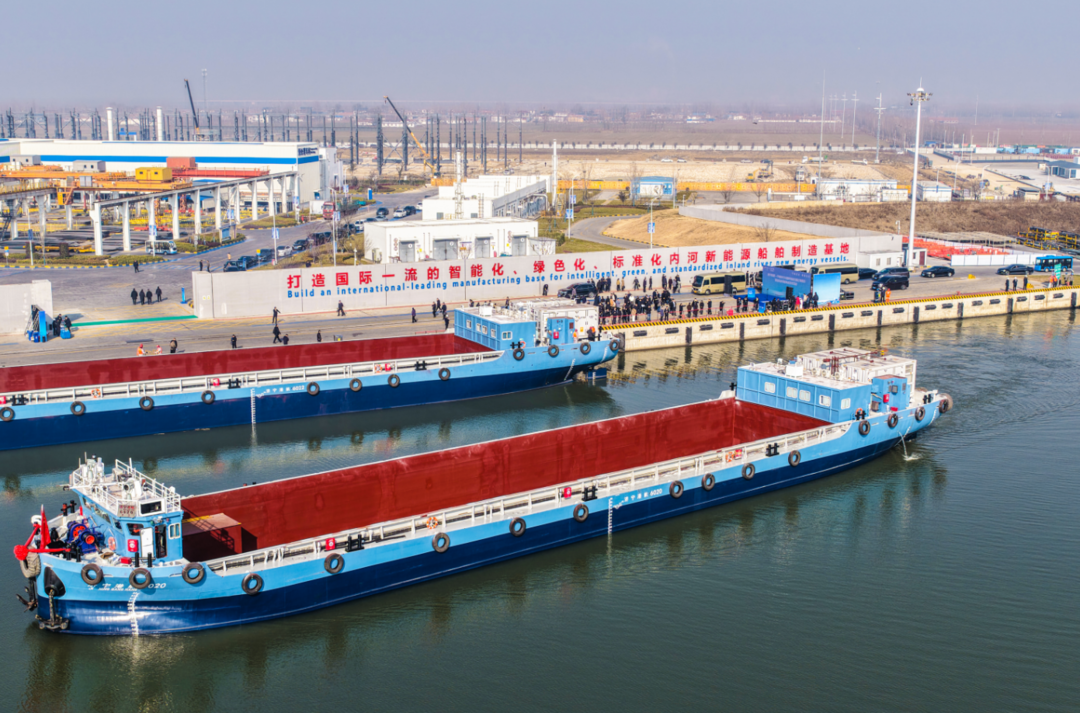
Core Viewpoint - The launch of the first large-scale electric cargo ship fleet in Shandong marks a significant step towards the commercialization and green transformation of inland shipping, utilizing advanced battery technology and innovative operational models [1][5][6]. Group 1: Project Overview - The first batch of 5 pure electric cargo ships has been delivered, with an additional order of 50 ships signed, all to operate in the Grand Canal region, establishing a green shipping route from the Yangtze River Delta to North China [2][5]. - Each ship has a cargo capacity of 2,000 tons and can achieve zero emissions and low noise operation, with an estimated annual carbon dioxide reduction of over 1,300 tons [4][10]. Group 2: Technological Innovations - The fleet employs a "ship-electric separation" business model and containerized battery swapping technology, allowing for quick energy replenishment and addressing range anxiety [4][9]. - The "Jining Port Shipping 6006" vessel, a 2,000-ton electric transport ship, has a full charge range of 230 kilometers and can replace approximately 200 tons of fuel annually, significantly reducing emissions and operational costs [8][10]. Group 3: Economic and Environmental Impact - The project is expected to boost local industry chain output and create numerous high-tech jobs, positioning Jining as a hub for green shipping technology [4][11]. - The development of electric vessels is driving local production of batteries, motors, and control systems, as well as the construction of charging and swapping infrastructure [11]. Group 4: Strategic Importance - The initiative represents a shift from traditional coal-based shipping to a green and intelligent shipping model, contributing to the ecological protection of the Grand Canal [4][6][12]. - The successful implementation of this project serves as a reference model for the green and intelligent transformation of inland shipping across the country [4][5][12].

五年之内冲“万亿” 济宁因它增底气
Qi Lu Wan Bao· 2025-12-22 06:32
Core Insights - Jining is identified as one of the three cities in Shandong aiming to reach a trillion yuan economy, with a focus on leveraging its port's capabilities to drive growth [1][2] - The port of Jining has achieved a cargo throughput of 106 million tons from January to November, marking an 18.5% year-on-year increase, making it the first northern inland port to surpass this milestone [1][4] - The development of Jining as a northern inland shipping center is supported by the provincial planning that emphasizes its core port status and aims to create a modern water transport system [1][3] Economic Growth and Development Plans - Jining's economic target for 2024 is set at 586.7 billion yuan, with a growth rate of 5.8%, indicating significant pressure to achieve the trillion yuan goal within five years [1] - The provincial plan outlines a "one main, four auxiliary, and multiple points" layout for the inland port cluster, positioning Jining as a key player in the regional economy [1] Inland Shipping and Connectivity - The rise of inland shipping is seen as a strategic move to support domestic economic circulation, with Jining's port serving as a crucial hub connecting to major economic regions like the Yangtze River Delta and Shanghai [3] - Jining's port is expected to enhance its role in the logistics chain, with significant cost savings reported for companies utilizing inland shipping [3][4] Industry Development and New Opportunities - Jining is diversifying its industrial base with plans for eight key sectors, including ship transportation, logistics, and trade, building on its traditional coal and steel industries [5] - The establishment of a new energy ship manufacturing base is underway, with significant investments and contracts already secured, indicating strong growth potential in this sector [6][7] Market Recognition and Future Prospects - The new energy shipbuilding sector is gaining market recognition, with contracts signed for innovative projects, including electric container ships and international orders [7][8] - Jining's shipbuilding industry is rapidly expanding, with a reported 91.6% increase in new orders for 2024, highlighting its emergence as a significant player in the national shipbuilding landscape [8]

五年之内冲“万亿” 济宁因它增底气
Qi Lu Wan Bao· 2025-12-21 16:24
Core Insights - Jining is identified as one of the three cities in Shandong aiming to reach a trillion yuan economy, with a focus on leveraging its port's capabilities to drive growth [2][3] - The port of Jining has achieved a cargo throughput of 106 million tons from January to November, marking an 18.5% year-on-year increase, making it the first northern inland river port to surpass this milestone [2][4] Economic Growth and Strategic Planning - Jining's economic target for 2024 is set at 586.7 billion yuan, with a growth rate of 5.8%, indicating significant pressure to achieve the trillion yuan goal within five years [2] - The Shandong provincial government has outlined a port and waterway layout plan for 2025-2035, positioning Jining as a core port in a network aimed at enhancing inland waterway transport [2][4] Inland Waterway Development - The rise of inland waterway transport is seen as a crucial factor in supporting the domestic economic cycle, with Jining's status as a major port enhancing its logistical capabilities [4][5] - Jining has established a "super link" with Shanghai port through the Grand Canal, facilitating significant cargo movement and economic integration [5][6] New Energy Shipbuilding Sector - Jining is developing a new energy shipbuilding base, with a 5.03 billion yuan investment, aiming to produce intelligent inland new energy vessels, marking a significant step in the region's industrial diversification [7][8] - The new energy shipbuilding sector has already secured international contracts, including a project with Zijin Mining for constructing cargo ships for operations in Tanzania [7][8] Market Recognition and Growth Potential - The new energy shipbuilding technology has gained market recognition, with contracts signed for the construction of electric container ships, indicating a growing demand for sustainable shipping solutions [8][9] - The Shandong shipbuilding industry is experiencing a surge in new orders, with a 91.6% year-on-year increase in 2024, highlighting the region's rapid development in the maritime sector [9]
中远海发回购50.00万股股票,共耗资约54.11万港元,本年累计回购1.32亿股
Jin Rong Jie· 2025-12-16 10:54
Group 1 - Company recently repurchased 500,000 shares at an average price of HKD 1.08 per share, totaling approximately HKD 541,100, bringing the total repurchased shares for the year to 132 million, which represents 3.81% of the total share capital [1] - The recent share buyback is seen as a signal from the management that the company's stock is undervalued, and it aims to enhance earnings per share and shareholder value [1] - The buyback plan may be intended to optimize the capital structure and boost market confidence amid significant fluctuations in the shipping market, reflecting the company's strong cash flow [1] Group 2 - Company is a key listed platform under China Ocean Shipping Group Co., Ltd., primarily engaged in ship leasing, container manufacturing, and financial investment [2] - As a leading provider of shipping financial services globally, the company leverages its parent company's resources to build a comprehensive service system covering the entire shipping industry chain [2] - The company is actively promoting a green and low-carbon transition, investing in smart containers and new energy vessels to align with industry sustainability trends [2]
航运脱碳的双轨突围:内河换电,远洋烧醇
Sou Hu Cai Jing· 2025-12-11 14:54
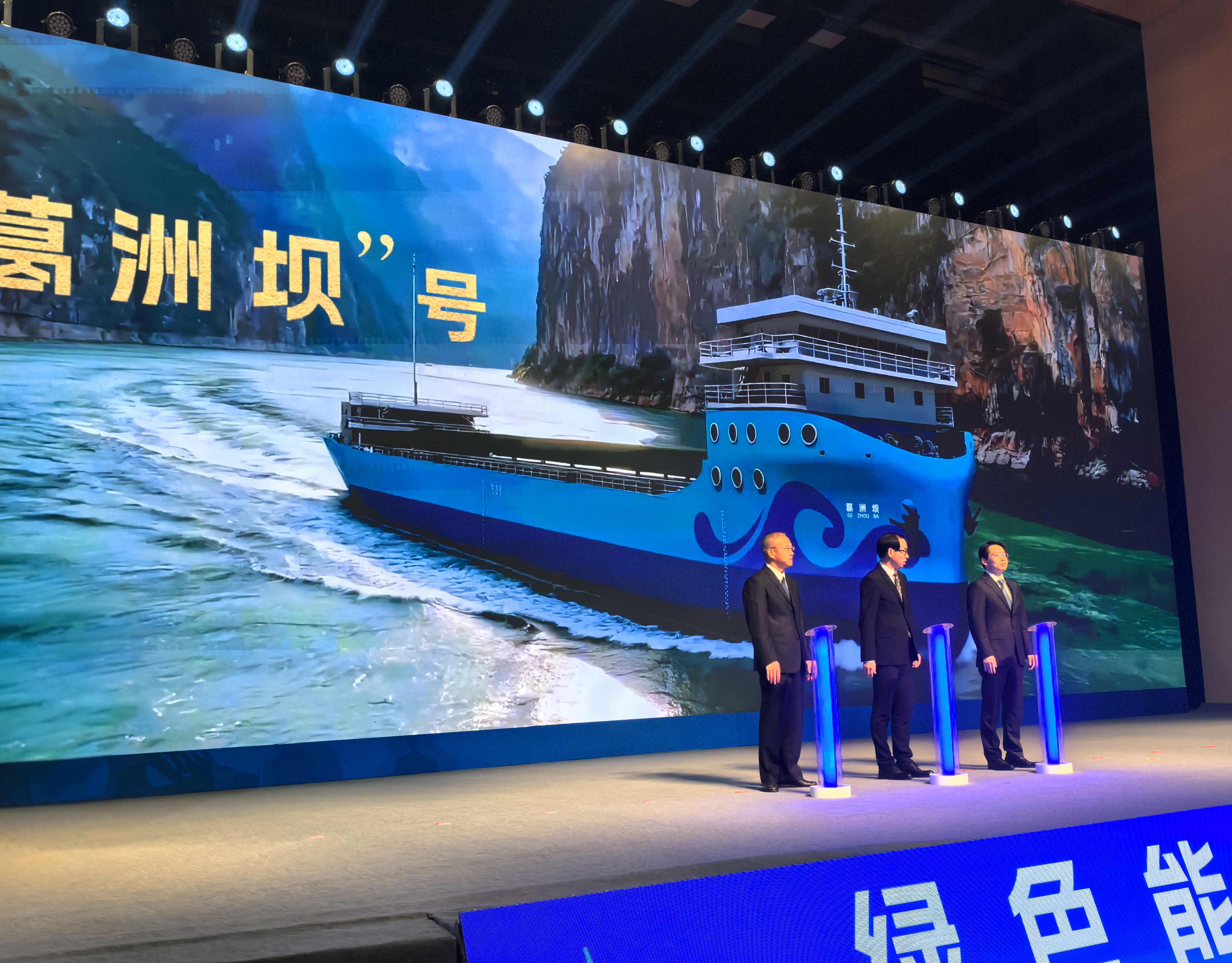
Core Viewpoint - The global shipping industry is undergoing a significant green energy transformation, with China leading the way in the new energy ship market, which is projected to reach a scale of 367.5 billion yuan by 2026 [6][10]. Group 1: Electric Vessels in Inland Waterways - The world's first 10,000-ton pure electric cargo ship, "Gezhouba," was launched in October 2025, featuring a battery capacity equivalent to 400 electric cars, enabling a range of 500 kilometers [2][5]. - As of the end of 2024, there are 485 pure electric vessels in China, primarily inland passenger ships, with over 1,000 new energy inland vessels in total, leading globally in application scale [2][5]. - The Ministry of Transport has issued guidelines to promote high-quality development in inland shipping, emphasizing the application of battery power, LNG, and methanol technologies [2][5]. Group 2: Methanol as a Sustainable Fuel for Ocean Shipping - In deep-sea shipping, methanol is considered an ideal sustainable fuel due to its ease of refueling and lower environmental impact compared to traditional fuels [3][12]. - The global fleet of methanol-fueled vessels is expanding, with 414 ships confirmed to use methanol, including 93 already in operation [12][13]. - The demand for methanol as a marine fuel is expected to increase significantly, with projections indicating a potential annual demand of 1,050,500 tons, driven by a surge in new orders [14]. Group 3: Challenges and Solutions in Electric Shipping - The transition to electric vessels faces three main challenges: energy supply anxiety, cost anxiety, and safety anxiety, with high initial investment and infrastructure costs being significant barriers [8][9]. - The "battery swap" model is being adopted to enhance operational efficiency, allowing for quick battery replacements that significantly reduce dock time [6][7]. - Government subsidies and local policies are being implemented to support the development of electric vessels and related infrastructure, with substantial financial backing for new energy ship construction [10][18]. Group 4: Industry Transformation and Policy Support - The green transition in shipping is prompting a broader industrial revolution, with a focus on integrating technology and sustainable practices in shipbuilding [15][16]. - China's domestic battery manufacturers, such as CATL, are gaining a significant share of the global market, providing power for approximately 900 vessels [16]. - Policies at both national and local levels are being established to encourage the adoption of new energy vessels, including technical standards and operational incentives [18][19].
天海防务(300008) - 300008天海防务投资者关系管理信息20251113
2025-11-13 09:10
Financial Performance - The company's revenue for the first three quarters of 2025 was CNY 314,812.85 million, representing a year-on-year increase of 34.50% [8] - Net profit attributable to shareholders was CNY 23,158.56 million, with a significant year-on-year growth of 202.12% [8] - The gross margin increased by 5.25% due to the growth in the shipbuilding and marine engineering design and construction business [8] Business Development and Strategy - The company is focusing on three main business segments: marine engineering, defense equipment, and new energy [9] - Plans to enhance R&D in unmanned intelligent technology and integrate underwater robots into various projects [4] - The new energy business will concentrate on LNG, methanol, and electric power applications in the shipbuilding sector [5] Financial Management and Debt - The company has a total comprehensive credit limit of CNY 25 billion, primarily for daily operations and project guarantees [3] - As of the end of Q3 2025, the asset-liability ratio was 57.26%, slightly higher than the previous year's 51.18% [6] - Interest coverage ratio improved to 8.87, compared to 5.7 in the previous year [6] Legal and Compliance Issues - Ongoing litigation related to the subsidiary Jin Haiyun, with some cases already adjudicated and others still pending [6] - The company has received a favorable ruling in a significant lawsuit, while other cases remain uncertain [6] Market Position and Future Outlook - The company aims to become a leading provider of high-value special ships and marine equipment globally [9] - It is actively expanding its market presence in Europe while also considering domestic opportunities in the new energy sector [5][7] - Future plans include continuous investment in R&D and innovation to enhance product quality and operational efficiency [9]

长江“黄金水道”迎新能源风口,湖北宜昌竞逐新赛道
Di Yi Cai Jing· 2025-10-23 08:12
Core Viewpoint - The development of new energy vessels, particularly in the context of the Yangtze River, is gaining momentum, with significant advancements in technology and infrastructure being showcased at the 2025 Green Energy Development Conference in Yichang, Hubei Province [1][4]. Group 1: New Energy Vessels - The world's largest 10,000-ton pure electric transport vessel, "Gezhouba," was launched, marking a significant milestone for green shipping in China's inland waterways [1]. - "Gezhouba" has a total length of 129.98 meters, a maximum load capacity of 13,740 tons, and a battery capacity of 24,000 kWh, enabling a range of 500 kilometers [1]. - The vessel is expected to replace approximately 617.5 tons of fuel annually, reducing carbon dioxide emissions by about 2,052 tons [1]. Group 2: Yichang's Shipbuilding Industry - Yichang has 232 kilometers of navigable waterways, with around 60,000 vessels passing through annually, fostering the growth of the local shipbuilding industry [4]. - The city has 25 shipbuilding enterprises and over 100 shipping companies, with plans to build 150 new vessels in 2024, including 50 new energy vessels [4]. - Yichang is a leader in exploring green power technologies, focusing on LNG, batteries, and hydrogen fuel [4]. Group 3: Market Trends and Orders - The demand for new energy vessels is surging, with 87.7% of the 27.4 billion yuan in shipbuilding orders this year being for new energy vessels [5]. - As of September this year, Yichang's shipbuilding companies received 191 new orders, with a 90% share for new energy vessels, reflecting a year-on-year increase of 72% [5]. - Yichang has launched several pioneering new energy vessels, contributing to the "Yichang phenomenon" in the Yangtze River region [5]. Group 4: Future Projections - By 2026, Yichang aims to manufacture over 300 vessels with a total tonnage exceeding 3 million tons, and the total output value of the green intelligent shipbuilding industry is projected to reach 50 billion yuan [6]. - The Yangtze Maritime Bureau reports that 132 new energy vessels have been built and operational in the Yangtze River from Sichuan to Anhui, with plans for 406 more in the current year [6]. - Experts emphasize the need for reduced costs of green fuels to accelerate the transition from fossil fuels in the shipping industry [6].