
节地生态葬

Search documents
比房价还贵的墓地,中国人不买账了
虎嗅APP· 2025-12-21 14:34
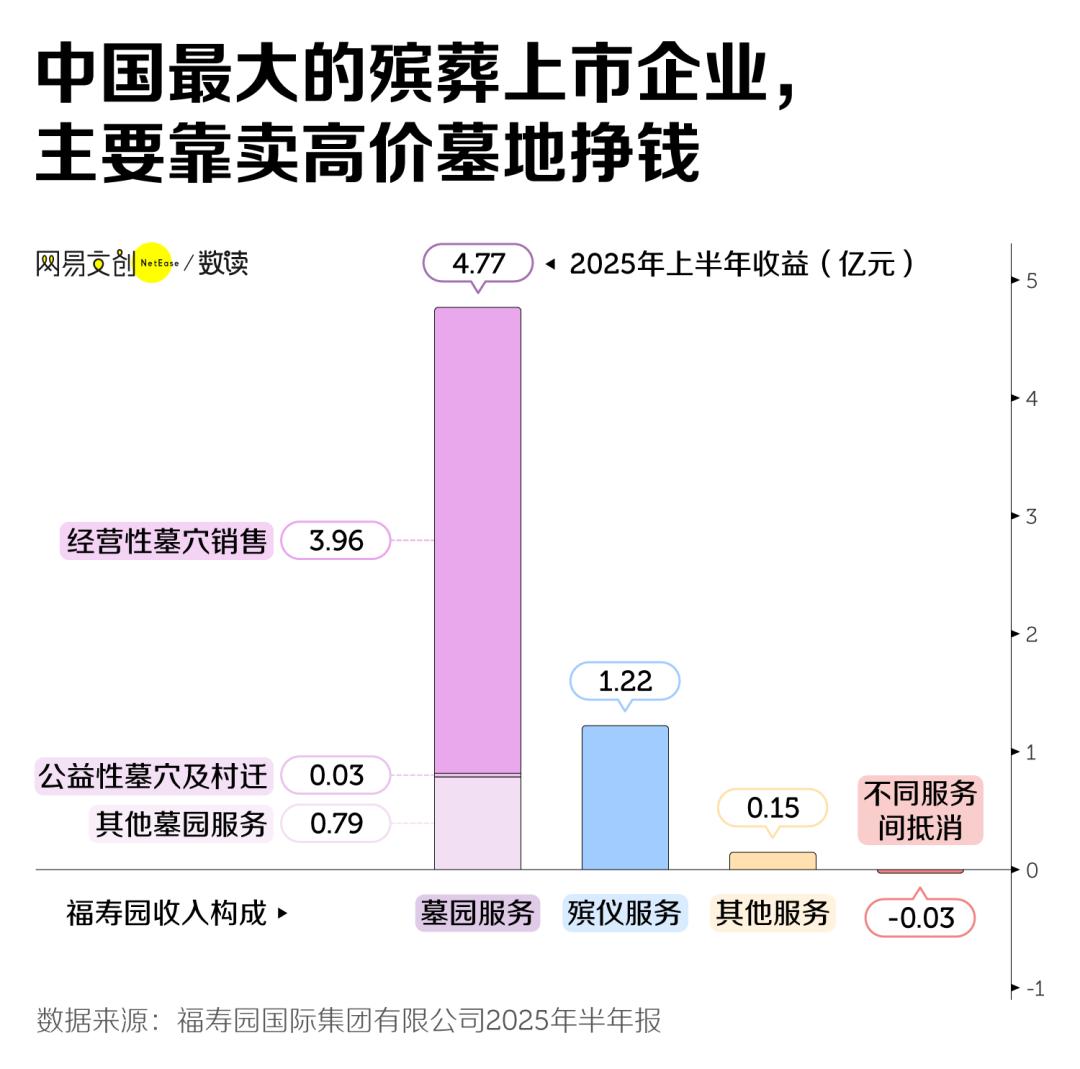
Core Viewpoint - The funeral industry in China, traditionally seen as a lucrative business, is facing unexpected challenges, including declining sales and profitability among leading companies like Fushouyuan, which has reported its first loss since going public [3][10]. Group 1: Industry Overview - The funeral industry is divided into two main segments: "funeral" (services like body transportation and farewell ceremonies) and "burial" (the final resting place for remains), with the latter having a larger market potential due to significant price variations [4][5]. - Fushouyuan, the largest publicly listed funeral company in China, generates over 60% of its revenue from selling operational burial plots, covering 19 provinces [5][4]. Group 2: Financial Performance - Fushouyuan's revenue skyrocketed from 612 million yuan in 2013 to 2.628 billion yuan in 2023, with a peak net profit of nearly 1 billion yuan [9]. - However, in 2024, Fushouyuan's revenue declined, with a 44.5% year-on-year drop in the first half of 2025, resulting in a net loss of 261 million yuan [10]. Group 3: Market Dynamics - High-priced burial plots, once a staple of the industry, are now facing reduced demand as consumers become more cautious with spending, similar to trends seen in the real estate market [15][24]. - The average price of Fushouyuan's burial plots increased from 102,400 yuan in 2017 to 121,200 yuan in 2024, with prices per square meter reaching 242,000 yuan, surpassing many high-end residential properties in Shenzhen [22][4]. Group 4: Changing Consumer Behavior - Consumers are increasingly opting for more economical burial options, such as ecological burials, which are less land-intensive and often subsidized by local governments [33][32]. - In major cities like Beijing and Guangdong, the rate of ecological burials has surpassed 55% and 63%, respectively, indicating a significant shift in consumer preferences [35][16]. Group 5: Regulatory Environment - The Chinese government is implementing stricter regulations on the funeral industry to reduce extravagant spending and promote more affordable options, including limiting prices for various funeral services [28][32]. - New regulations are expected to establish a basic public service system for funeral services, further constraining profit margins for traditional funeral businesses [28][12].


比房价还贵的墓地,中国人不买账了
36氪· 2025-12-21 12:22
Core Viewpoint - The funeral industry in China is transitioning from a "guaranteed profit" era to facing significant challenges, with declining revenues and increasing losses among major companies despite a growing aging population and rising death rates [4][12][30]. Group 1: Industry Overview - Traditionally, the funeral industry was seen as a lucrative business due to the inevitability of death, with high demand for burial services [4]. - The industry is divided into two main segments: "funeral" services (transportation and ceremonies) and "burial" services (grave construction and ash storage), with the latter having a larger market potential [6][7]. - Major companies like Fushouyuan have historically relied on high-end grave sales, with revenue from operational graves accounting for over 60% of total income [8]. Group 2: Financial Performance - Fushouyuan's revenue skyrocketed from 612 million yuan in 2013 to 2.628 billion yuan in 2023, with a peak net profit of nearly 1 billion yuan [10]. - However, in 2024, Fushouyuan's revenue declined, and in the first half of 2025, it reported a 44.5% year-on-year revenue drop and a net loss of 261 million yuan, marking its first loss since going public [12][14]. - Other companies like Wantongyuan and Anxianyuan also reported significant revenue declines and losses, indicating a broader industry downturn [13][15]. Group 3: Market Dynamics - The high prices of graves, which can exceed 1 million yuan per unit, have led to decreased consumer interest, similar to trends seen in the real estate market [16][25]. - The average price of operational graves at Fushouyuan increased from 102,400 yuan in 2017 to 121,200 yuan in 2024, with per square meter prices surpassing those of luxury residential properties [25]. - Consumers are becoming more cautious with spending, leading to a shift away from high-priced graves, as many opt for more economical options like ash storage or ecological burials [26][30]. Group 4: Regulatory Environment - The Chinese government is implementing stricter regulations on the funeral industry to reduce extravagant spending and promote more affordable burial options [30]. - New policies include price caps on various funeral services and a push for ecological burial methods, which are often less expensive and environmentally friendly [31][34]. - For instance, in Shanghai, the maximum charge for grave maintenance is capped at 45 yuan per square meter, and the cost of basic makeup for remains is limited to 150 yuan [32][36]. Group 5: Changing Consumer Attitudes - There is a noticeable shift in consumer attitudes towards funerals, with more individuals opting for eco-friendly burial methods that do not occupy excessive land [38]. - The proportion of ecological burials in cities like Beijing has exceeded 55%, indicating a growing acceptance of alternative burial practices [41]. - As consumers reconsider the value of expensive graves, the industry is likely to continue evolving towards more sustainable and cost-effective solutions [42].

比房价还贵的墓地,中国人不买账了
3 6 Ke· 2025-12-19 06:17
Core Viewpoint - The funeral industry in China, once perceived as a lucrative business, is facing significant challenges, including declining sales and profitability, despite an increasing death rate due to aging population trends [1][2][10]. Group 1: Industry Overview - The funeral industry is divided into two main segments: "funeral" services, which include transportation and ceremonies, and "burial" services, which involve the placement of remains, with the latter having a larger market potential [3][4]. - The largest publicly listed funeral company in China, Fushouyuan, primarily generates revenue from selling mid to high-end burial plots, with over 60% of its income coming from operational burial plots by mid-2025 [2][4]. Group 2: Financial Performance - Fushouyuan's revenue skyrocketed from 612 million yuan in 2013 to 2.628 billion yuan in 2023, with net profits reaching nearly 1 billion yuan in the same year [5]. - However, in 2024, Fushouyuan experienced a revenue decline, with a 44.5% drop in the first half of 2025, resulting in a net loss of 261 million yuan, marking its first loss since going public [7][9]. Group 3: Market Dynamics - The high prices of burial plots, which can exceed 760,000 yuan per square meter, have led to decreased consumer interest, similar to trends seen in the real estate market [10][14]. - The average burial cost in China is approximately 35,140 yuan, making it one of the highest globally, which has historically led consumers to spend significantly on funerals [8][10]. Group 4: Supply and Demand Issues - There is a scarcity of burial resources in China, with only 1,443 operational cemeteries nationwide, leading to a situation where demand exceeds supply [13]. - Fushouyuan's burial plot prices have increased significantly, but the market is now seeing a shift as consumers become more cautious with spending, leading to a decline in high-end plot sales [17][18]. Group 5: Regulatory Environment - Recent government regulations aim to standardize funeral services and reduce excessive spending on funerals, promoting more affordable and eco-friendly burial options [19][22]. - By 2025, new regulations will establish a basic public service system for funeral services, limiting pricing and promoting ecological burial methods, which could further impact traditional funeral businesses [19][23].
“天价墓地”,为何变天了?
Sou Hu Cai Jing· 2025-09-16 03:40
Core Viewpoint - The funeral industry leader Fushouyuan reported its first loss since its Hong Kong listing in 2013, indicating a significant shift in the industry dynamics and consumer behavior [2][4]. Financial Performance - Fushouyuan's revenue for the first half of the year was approximately 611 million yuan, a year-on-year decline of 44.5% [2]. - The company reported a net loss of 261 million yuan, marking a reversal from profit to loss [2]. Market Trends - The average price of burial plots dropped from 120,000 yuan to 63,000 yuan, reflecting a drastic change in market conditions [2]. - Other funeral companies like Wantongyuan and Anxianyuan are also experiencing revenue declines, indicating a broader industry challenge [2]. Policy and Regulatory Environment - Local governments, particularly in Shanghai, are promoting smaller burial plots and advocating for eco-friendly burial methods, which is reshaping the industry [2][3]. - Regulatory changes are shifting the focus from high-profit motives of individual companies to the protection of public interests [2]. Consumer Behavior Changes - There is a noticeable shift in consumer preferences, with many clients opting to store ashes temporarily rather than purchasing expensive burial plots [3]. - The traditional practice of quickly securing burial plots is being replaced by a more cautious approach, influenced by economic conditions and changing cultural attitudes [3]. Industry Future Outlook - The transition from high-profit models to more diversified and affordable services is seen as a maturation of the industry rather than a downturn [4]. - The industry is expected to focus more on its social service and public welfare aspects, moving away from the notion of exorbitant profits [3][4].
新华视点丨殡葬领域新行业标准看点解析
Xin Hua She· 2025-07-16 13:34
Core Viewpoint - The Ministry of Civil Affairs has released ten new or revised industry standards in the funeral sector, aimed at regulating service behaviors, ensuring service quality, and achieving the goal of "peace for the deceased" [1] Group 1: Industry Regulation and Service Transparency - The new standards address issues of non-transparent pricing and service irregularities in funeral service institutions, mandating increased transparency and standardization [2] - Funeral service venues are required to publicly display service processes, pricing standards, and supervisory information, ensuring that pricing is clear and accessible to the public [2][3] - The revised standards include a requirement for detailed cost breakdowns and formal receipts for services rendered, enhancing accountability and consumer trust [2] Group 2: Traceability and Information Security - The newly established "General Requirements for Traceability of Corpses and Ashes" mandates the collection of key traceability information throughout the entire service process, including details about the service provider and associated costs [2][3] - A secure and effective traceability information sharing mechanism is to be established, with clear permissions for information usage to protect privacy [2] Group 3: Cultural and Educational Aspects - The revised standards promote ecological burial methods and civilized memorial practices, aligning with environmental trends and advocating for frugality [4][5] - The updated "Public Cemetery Memorial Service Standards" now includes content on life education, encouraging the exploration of life culture and respectful memorial practices [5] Group 4: Environmental Protection and Sustainable Practices - The standards advocate for eco-friendly burial methods such as sea burials, tree burials, and flower burials, aiming to reduce land resource consumption and promote green practices in the funeral industry [7] - The revised "Sea Burial Service Standards" specify that burial containers must meet environmental and biodegradable requirements, and that non-biodegradable materials should be properly disposed of [7][8] - The updated "Body Cremation Service Standards" emphasize compliance with national environmental standards regarding emissions and noise control during cremation processes [8]