芯片集成

Search documents
Chiplet和3D IC,面临新挑战
半导体行业观察· 2026-02-15 01:37
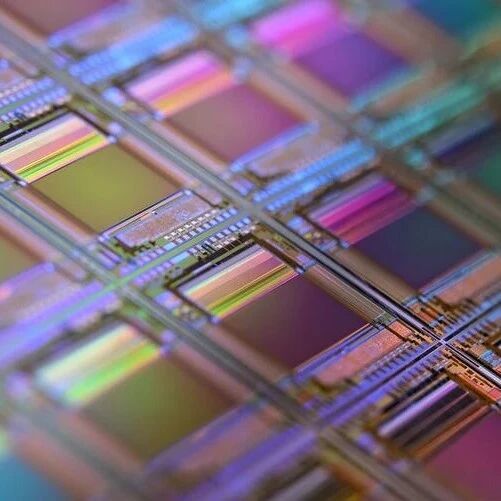
Core Viewpoint - Reliability has become a system-level issue, encompassing various aspects from materials and packaging to back power testing [2] Group 1: Chiplet and 3D-IC Architecture Challenges - The rapid adoption of chiplet-based architectures in data centers is driving significant changes in design, leading to rising costs and increasing reliability issues [3] - Reliability is the biggest challenge for chiplets and 3D integrated circuits (3D-ICs), as each chiplet may fail individually, necessitating a redesign to meet defect rate targets [4] - The introduction of chiplets and 3D-ICs brings new thermal-mechanical stresses that can affect overall system reliability [5] - Traditional departmental barriers are being broken down, forcing design teams to address material selection issues previously handled by foundries [5] Group 2: Thermal-Mechanical Stress and Reliability - Thermal-mechanical stress, caused by differing coefficients of thermal expansion (CTE) of materials, is a critical concern during chip assembly [12] - The complexity of reliability issues has increased with the introduction of new materials and packaging techniques, requiring chip designers to engage more in material management [13][14] - The reliability of chiplets and 3D-ICs is further complicated by diverse packaging processes and interconnect methods [10] Group 3: Process Technology and Circuit Reliability - Circuit reliability begins with process technology, focusing on the uniformity of FinFETs and nanosheet transistors [15] - Local and global variations in manufacturing processes can lead to significant reliability challenges, necessitating careful design considerations [15] - The need for lower defect parts per million (DPPM) is more critical than ever, especially in the design of standard cells and modules [15] Group 4: System-Level Integration and Verification - The integration of multiple chips in a system requires early consideration of packaging factors, differing from traditional SoC project lifecycles [17] - New EDA solutions and tools are needed to verify interconnect reliability, as failures can occur at any connection point [17] - As system complexity increases, the importance of a holistic approach to reliability management becomes evident [17] Group 5: Future Considerations and Industry Collaboration - The potential of chiplets to transform the semiconductor industry is significant, but they also introduce complex challenges that must be addressed from the early development stages [21] - Continuous collaboration and innovation are necessary to tackle cost and interface intellectual property concerns [21] - Robust verification methods must be prioritized to ensure seamless integration and long-term functionality of chiplet-based systems [21]

纳芯微午后涨超5% 隔离采样及逻辑ASC集成芯片已在联合动力新一代电驱平台正式量产
Zhi Tong Cai Jing· 2026-01-21 06:30
Core Viewpoint - Naxin Micro (02676) has seen a stock increase of over 5%, currently trading at 144.9 HKD, following the announcement of a deep collaboration with Union Power (301656) for the mass production of two highly integrated chips for electric vehicle platforms [1] Group 1: Partnership and Product Development - Naxin Micro has announced a partnership with Union Power, a leading provider of components and solutions for smart electric vehicles, focusing on two integrated chips: isolation sampling and logic ASC [1] - The collaboration has resulted in the mass production of these chips for Union Power's next-generation electric drive platform [1] Group 2: Technical Innovations - The isolation sampling chip integrates high-voltage LDO, isolation sampling amplifier, and isolation comparator into a single chip, significantly reducing the number of external components required [1] - This innovation supports high-precision isolation voltage sampling, rapid over/under voltage protection, and miniaturized design for electric drive systems [1] Group 3: Cost and Efficiency Benefits - The custom logic ASC chip includes multiple logic devices and supports frequency detection, simplifying interface design while enhancing system integration and miniaturization [1] - The design also lowers the BOM (Bill of Materials) cost, contributing to the optimization of functional safety architecture for electric drive and main drive systems [1]

大芯片,一夜生变
半导体行业观察· 2025-09-19 01:29
Core Viewpoint - NVIDIA and Intel have entered a partnership where NVIDIA will invest $5 billion in Intel at a price of $23.28 per share, focusing on developing custom data center and PC products to enhance applications in large-scale, enterprise, and consumer markets [2] Group 1: Partnership Benefits - The collaboration allows NVIDIA to expand its GPU dominance into the integrated graphics market, traditionally led by Intel and AMD, with Intel designing PC processors that incorporate NVIDIA GPU chips [4][5] - NVIDIA is paving the way for greater integration of its technology into Intel's Xeon platform for AI infrastructure and data center products, enhancing performance and market reach [4][5] - The integration of NVIDIA's NVLink technology into Intel's CPU designs enables NVIDIA to offer systems that combine its GPUs with Intel's Xeon processors, increasing its share in the PC graphics market [5][9] Group 2: Technical Advancements - NVIDIA's NVLink interconnect technology offers a bandwidth of 1.8 TB/s per GPU, significantly surpassing the PCIe 5.0 x16 slot bandwidth, allowing for a scalable architecture with up to 72 GPUs [8] - The collaboration marks a shift for Intel, which has historically relied on PCIe technology, as it agrees to adopt NVLink, enhancing its data center capabilities [9][10] Group 3: Market Implications - The partnership provides Intel with an opportunity to challenge AMD in the data center market, where AMD has gained significant market share in recent years [20][22] - NVIDIA's entry into the PC market through this partnership allows it to tap into a previously inaccessible segment, potentially reshaping competitive dynamics with AMD [22][23] Group 4: Future Considerations - There are speculations about NVIDIA's potential shift towards Intel for manufacturing, although both companies have not confirmed this, emphasizing that the focus is on product collaboration rather than manufacturing [14] - The partnership could impact NVIDIA's existing relationships with ARM and TSMC, raising questions about future collaborations and market strategies [12][13]