落地自驾

Search documents
拼个假 出个门 开开心心跨个年
Xin Lang Cai Jing· 2025-12-22 06:58
Core Insights - The domestic tourism market is experiencing a consumption peak as the New Year holiday approaches, driven by the "3 days off, 8 days rest" trend, with significant increases in travel bookings and search interest across various platforms [1] Domestic Travel - Short-distance trips dominate the New Year travel trend, with 73.4% of trips lasting 3 days or less, and cities like Shanghai, Beijing, Guangzhou, Chengdu, and Harbin are among the most popular destinations [2] - Theme parks are seeing explosive growth, with Shanghai Disneyland's bookings increasing over 30% year-on-year and ticket reservations surging 5.2 times, driven by events like the New Year fireworks show and character interactions [2] - Ice and snow tourism is experiencing a peak, with Harbin Ice and Snow World seeing a 300% week-on-week increase in popularity, making it a top destination for winter tourism [2] - New Year concerts are becoming a key driver for young travelers, with hotel bookings in cities hosting concerts increasing by 17 times in Nanning and nearly tripling in Guangzhou [3] International Travel - The outbound tourism market is recovering, with a more than 40% year-on-year increase in flight bookings to popular destinations, and prices being 40% lower than during the Spring Festival [4] - Destinations within a four-hour flight radius, such as Hong Kong, Macau, and Southeast Asian countries, remain popular, while South Korea and Vietnam are emerging as top choices, with flight bookings to Seoul increasing 3.3 times [4] - Long-distance travel is also thriving, with destinations like Egypt, Spain, and New Zealand seeing significant increases in flight bookings, particularly among travelers utilizing the "3 days off, 8 days rest" policy [4] - "Self-driving upon arrival" is becoming a new trend in outbound travel, with international car rental bookings increasing over 200% [5] Market Trends - The 2026 New Year tourism market is characterized by a focus on short-distance travel, with long-distance trips as a supplement, and a strong domestic market alongside a recovering outbound market [5] - The combination of experiential consumption, personalized experiences, and high cost-performance options is driving market growth, with diverse cultural and tourism product offerings becoming a core competitive focus for the future [5]
飞猪《2025年租车自驾游报告》:租车用户规模扩大近三成
Xin Lang Cai Jing· 2025-12-10 12:52
Core Insights - The core viewpoint of the article highlights the strong growth in the car rental market, particularly among younger generations, with a significant increase in orders and user engagement in self-driving travel [1][7]. Group 1: Market Growth and User Demographics - In 2025, the rental order volume on the platform is expected to maintain a strong growth trend, with users born in the 1990s making up nearly 50% of the user base, while users born in the 2000s show a year-on-year order growth of nearly 40% [1][7]. - The domestic self-driving travel market is thriving, with self-driving travel accounting for 77.4% of national travel methods, driven by the explosion of the rental market and the popularity of new energy vehicles [1][7]. Group 2: Rental Market Trends - The number of rental users in 2025 is projected to increase by nearly 30% year-on-year, with an average rental period exceeding 6 days [1][7]. - Popular cities for car rental include Chengdu, Sanya, Haikou, Urumqi, Kunming, Guangzhou, Xi'an, Chongqing, Hangzhou, and Dali, indicating a trend towards both long-distance leisure self-driving and short-distance weekend getaways [1][7]. Group 3: Emerging Destinations and Routes - Self-driving travel is expanding from popular destinations to surrounding "second-tier" areas, with cities like Tacheng, Fuzhou, Wuwei, Tai'an, and Honghe showing rental order growth rates of three times or more [2][8]. - New popular self-driving routes include the Zhejiang East Coast Highway, Anhui South Tibet Line, and the Tianshan Ring Road, alongside traditional routes [2][8]. Group 4: Vehicle Preferences and Supply Changes - User preferences for vehicles are evolving, with increasing demand for comfort, performance, and unique travel experiences, while the rapid adoption of new energy vehicles is reshaping the rental market supply [3][9]. - In 2025, the growth rate of new energy vehicle rentals is expected to be more than double that of the overall market, with new energy vehicles accounting for nearly 30% of the total rental volume [3][9]. Group 5: Integration of Travel Services - The "wheel economy" is driving more travel-related consumption, with a trend towards integrated experiences involving flights, hotels, car rentals, and tickets [4][10]. - The number of rental users who simultaneously booked flights, hotels, or tickets is expected to grow by nearly 40% year-on-year [4][10]. Group 6: Service Quality and User Experience - The rental market is experiencing a trend towards service quality upgrades, with consumers favoring more standardized and high-quality service platforms [4][10]. - The launch of the "Comfort Rental" service by the company offers a one-price model with no additional fees, free cancellations, and comprehensive insurance coverage, leading to a rapid increase in rental orders [4][10]. Group 7: Convenience in Rental Operations - The establishment of offline rental stores at airports and train stations in popular cities has improved user convenience, with rental center orders increasing by over 70% year-on-year and average pick-up and drop-off times reduced by more than half [5][11].
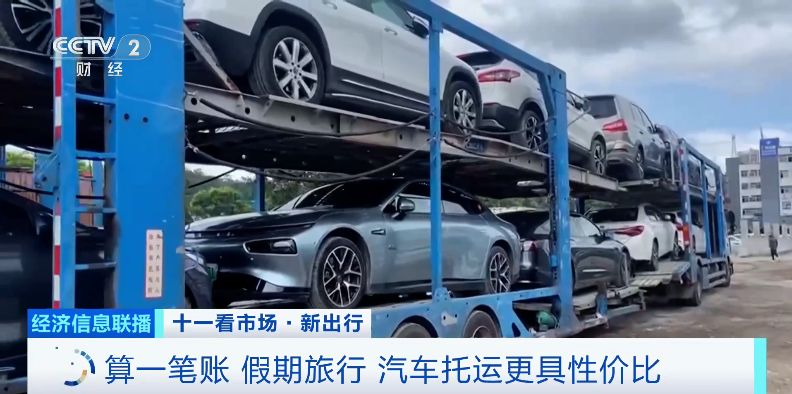
这个假期汽车托运火了!“落地自驾”新模式了解一下
Yang Shi Wang· 2025-10-02 22:44
Group 1 - The core idea of the article is the rising popularity of a new travel method where travelers can ship their cars to their destination and enjoy "arrival self-driving," which saves time and costs, making it an attractive option for holiday travel [1][3][10] - Car shipping is found to be more economical compared to driving the car or renting a vehicle locally, with significant savings reported by users [3][5] - Popular shipping routes are primarily from major cities like Beijing, Shanghai, Guangzhou, and Shenzhen to popular tourist destinations such as Chengdu, Qingdao, Xi'an, Urumqi, Kunming, and Sanya [5][8] Group 2 - The cost of car shipping varies by route, with popular routes like Beijing to Shanghai (1200 km) costing approximately 1440 to 1800 yuan, while less common routes like Xi'an to Jiuquan (1500 km) range from 2400 to 2700 yuan [5][6] - Car shipping companies are providing personalized services to meet diverse customer needs, ensuring seamless transitions between people and vehicles [10][12] - Customer service is emphasized, with dedicated representatives following up with clients to ensure timely delivery of vehicles to specified locations [12]