蜡样芽孢杆菌毒素

Search documents
欧洲明确蜡样芽孢杆菌毒素阈值,婴幼儿奶粉迎来更严监管
Xin Jing Bao· 2026-02-13 07:01
Core Viewpoint - The recent recall of infant formula by several European dairy companies is primarily due to the detection of cereulide toxin from Bacillus cereus, which poses potential health risks to infants. The European Food Safety Authority (EFSA) has established a new acute reference dose for this toxin, which will guide safety standards in the industry [1][5][7]. Group 1: Recall Events - Nestlé initiated a global recall of certain batches of infant formula on January 6, 2026, due to potential contamination with cereulide toxin, which can cause foodborne illness [3][4]. - Lactalis and Danone also followed suit with their own recalls of specific batches of infant formula for the same reason [3][4]. - The recall actions began in December 2025 and have continued into January 2026 as a preventive public health measure [4][7]. Group 2: Regulatory Response - The EFSA has set the acute reference dose for cereulide toxin at 0.014 micrograms per kilogram of body weight, which is equivalent to 0.43 micrograms per kilogram of product [5][8]. - Prior to this, there was no established limit for cereulide toxin in infant formula, leading to a lack of uniform standards across European countries [7]. - The French agricultural department has also lowered the toxin limit to 0.014 micrograms per kilogram of body weight, enhancing safety standards [4][7]. Group 3: Health Implications - Cereulide toxin can cause symptoms such as nausea, vomiting, and abdominal pain within 30 minutes to 6 hours of ingestion, with infants being at higher risk for severe health issues [5][11]. - Reports of infants experiencing diarrhea after consuming recalled products have been noted, but no severe cases have been confirmed as of the latest updates [5][9]. - Experts emphasize that symptoms in infants can arise from various causes, not solely from cereulide toxin, and advise parents to seek medical advice if symptoms are severe [10][11]. Group 4: Industry Impact - The recent developments have prompted many European dairy companies to reassess their internal standards regarding cereulide toxin, leading to increased preventive recalls [7]. - Companies like Danone have stated that their products are safe, but they are cooperating with recall efforts to ensure consumer safety [7][8]. - Nestlé has welcomed the EFSA's new reference dose, indicating that their internal standards are even stricter than the newly established limit [8].

法国通报3名婴儿食用问题奶粉死亡,另有14起病例因疑似食用住院治疗
Xin Lang Cai Jing· 2026-02-12 06:09
Group 1 - The French Ministry of Health reported three infant deaths linked to recalled infant formula, with approximately 50 related reports received, including 14 hospitalizations due to suspected consumption of the affected products [1] - Lactalis, a French dairy company, announced a recall of multiple batches of infant formula in 18 countries due to potential contamination with Bacillus cereus toxin, which can cause diarrhea and vomiting [1] - The UK Food Standards Agency highlighted that Bacillus cereus is highly heat-resistant, making it difficult to eliminate during cooking or preparation of infant formula [1] Group 2 - The Singapore Food Agency recalled Danone's Dumex infant formula on January 17 due to quality issues with a supplier's arachidonic acid oil, which may lead to Bacillus cereus contamination [2] - Nestlé issued a recall for certain batches of infant formula in 31 countries due to similar contamination concerns [2] - Danone announced targeted recalls of a limited number of infant formula batches in specific markets, aligning with updated regulatory requirements [4] Group 3 - The General Administration of Customs in China issued consumer alerts regarding the absence of Lactalis' Picot brand infant formula imports and advised consumers to stop using potentially affected products [4] - The Hong Kong Food Safety Center and the Macau Municipal Bureau reported recalls of Babybio and Neoangelac infant formulas due to potential Bacillus cereus contamination [5][6]

又一海外品牌奶粉被召回,海关总署要求立即停用
第一财经· 2026-01-22 09:23
Core Viewpoint - Recent infant formula recalls by Lactalis have raised industry concerns due to potential contamination with Bacillus cereus toxin, which can cause gastrointestinal issues [2][3] Group 1: Recall Events - Lactalis announced a recall of multiple batches of infant formula in 18 countries, including France, China, and Spain, due to possible contamination [2] - The Chinese customs authority reported no records of the recalled Picot brand infant formula being imported into China, advising consumers to stop using potentially affected products [2] - The recall is classified as a precautionary measure, with no adverse reaction reports received from French authorities regarding the consumption of the affected products [2] Group 2: Health Risks - Bacillus cereus toxin, produced by Bacillus cereus strains, can lead to symptoms such as nausea, vomiting, abdominal cramps, and diarrhea, typically appearing within 30 minutes to 6 hours after consumption [3] - Vulnerable populations, such as infants and immunocompromised individuals, face a higher risk of complications from the toxin [3] - Currently, there are no internationally established acceptable levels for Bacillus cereus toxin [3]
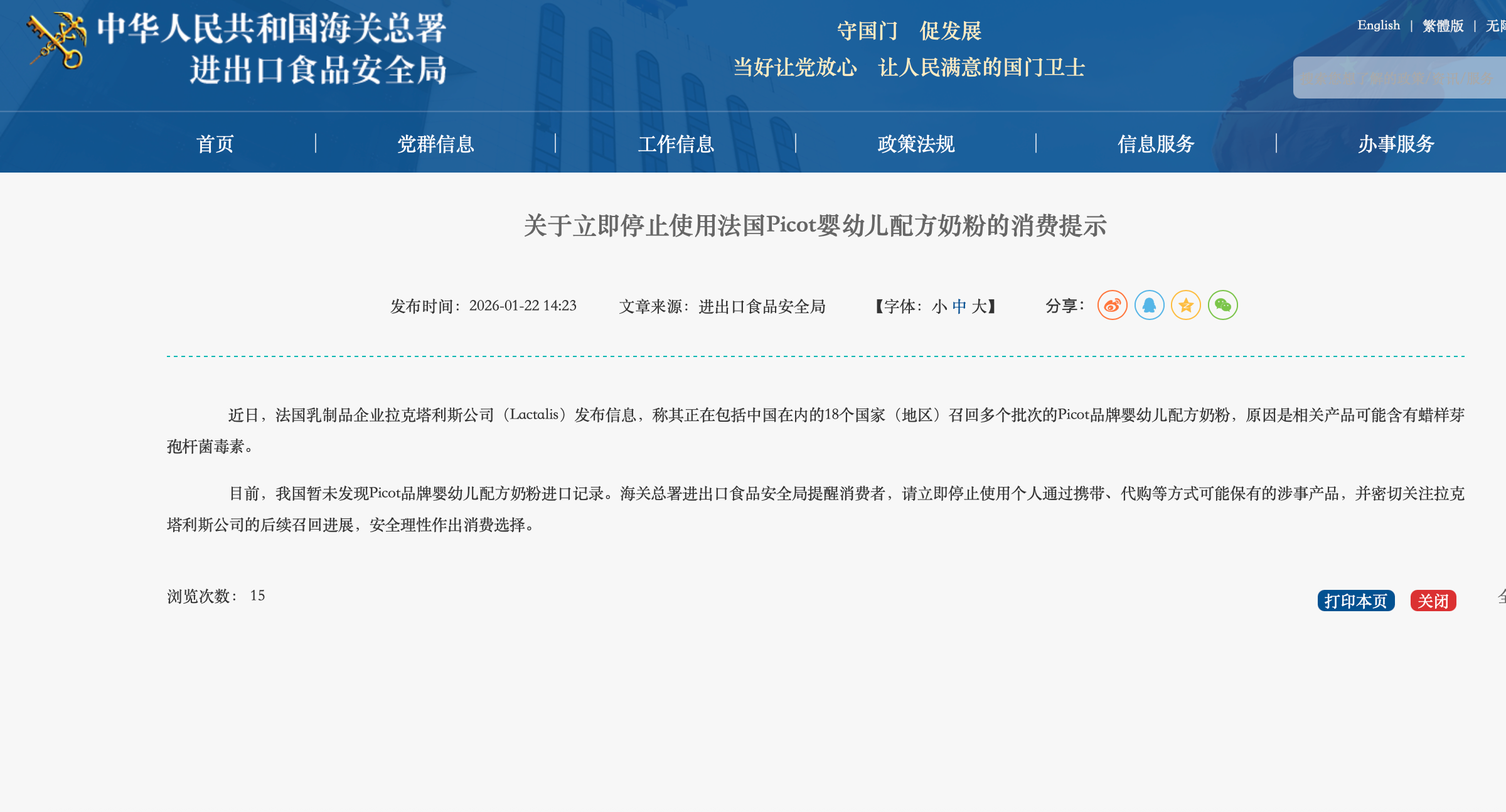
国家海关总署:立即停止使用法国Picot婴幼儿配方奶粉
Di Yi Cai Jing· 2026-01-22 08:48
Group 1 - The global infant formula recall has raised industry concerns, with Lactalis recalling multiple batches of infant formula in 18 countries due to potential contamination with Bacillus cereus toxin, which poses risks of diarrhea and vomiting [1] - The General Administration of Customs in China reported no records of Lactalis' recalled Picot brand infant formula being imported, urging consumers to stop using potentially affected products and to monitor further developments from Lactalis [1] - The recall is classified as a precautionary measure, with no adverse reaction reports received from consuming the affected products in France [1] Group 2 - The Singapore Food Agency indicated that Bacillus cereus toxin can cause symptoms such as nausea, vomiting, abdominal cramps, and diarrhea, typically appearing within 30 minutes to 6 hours after consuming contaminated food and generally resolving within 24 hours [2] - Vulnerable populations, such as infants and immunocompromised individuals, are at higher risk for complications from Bacillus cereus toxin [2] - There are currently no established international standards for acceptable levels of Bacillus cereus toxin [2]
法国乳企在中国等多国市场召回婴幼儿奶粉
新华网财经· 2026-01-22 07:23
Group 1 - Lactalis, a French dairy company, announced a recall of multiple batches of infant formula in 18 countries, including France, China, Spain, and Australia, due to potential contamination with Bacillus cereus toxins, which may cause diarrhea and vomiting [2] - The recall was described as a "precautionary decision" based on warnings from the French Association of Infant Nutrition, following further testing that indicated the presence of the toxin in the products [2] - As of now, French authorities have not received reports of adverse reactions from consumers who have consumed the affected products [2] Group 2 - Recent global recalls of infant formula have raised concerns in the dairy industry, all linked to potential contamination with Bacillus cereus toxins [2] - The Singapore Food Agency announced a recall of Dumex infant formula from Danone, while Nestlé's subsidiaries in Europe also recalled certain batches of infant formula sold in various markets [2] - The UK Food Standards Agency highlighted that Bacillus cereus is highly heat-resistant, making it difficult to eliminate during cooking or when preparing infant formula with boiling water, potentially leading to food poisoning with symptoms such as nausea, vomiting, and abdominal cramps [2]
法国乳企在中国等多国市场召回婴幼儿奶粉
Xin Lang Cai Jing· 2026-01-21 16:27
Core Viewpoint - Lactalis, a French dairy company, announced a recall of multiple batches of infant formula in 18 countries, including France, China, Spain, and Australia, due to potential contamination with Bacillus cereus toxins, which may cause diarrhea and vomiting [1] Group 1: Company Actions - The recall was made as a "precautionary decision" based on warnings from the French Association of Infant Nutrition [1] - Further testing of the products revealed the possible presence of the toxins [1] - As of now, French authorities have not received reports of adverse reactions from consumers who consumed the affected products [1] Group 2: Industry Context - Recent global recalls of infant formula have raised concerns in the dairy industry, all linked to potential contamination with Bacillus cereus toxins [1] - The Singapore Food Agency announced a recall of Danone's Dumex infant formula on the 17th of this month, following similar concerns [1] - Nestlé's subsidiaries in Europe also recalled certain batches of infant formula sold in various markets earlier this month [1] - The UK Food Standards Agency highlighted that Bacillus cereus is highly heat-resistant, making it difficult to eliminate during cooking or preparation of infant formula [1]
多美滋被检出蜡样芽孢杆菌毒素!新加坡召回部分雀巢达能奶粉
Nan Fang Du Shi Bao· 2026-01-19 10:33
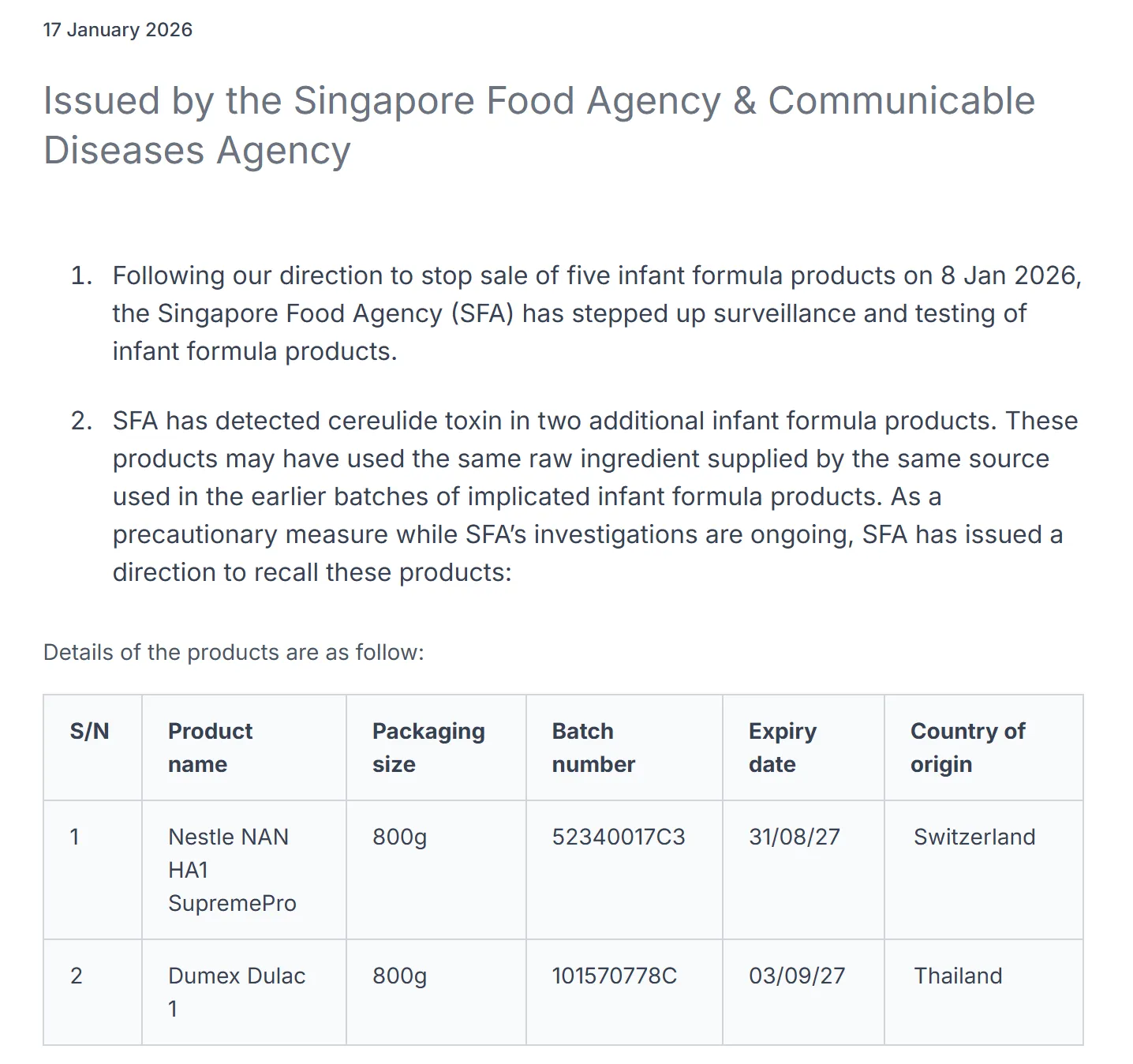
Core Viewpoint - The Singapore Ministry of Health has issued a recall of two batches of infant formula due to the detection of cereulide toxin, with a suspected case of infection reported [2][5]. Group 1: Product Recall Details - The recall involves two products: "Nestle NAN HA1 SupremePro" from Switzerland and "Dumex Dulac 1" from Thailand, both with a net weight of 800 grams [5][6]. - The specific batch numbers are 52340017C3 for Nestle and 101570778C for Dumex, with expiry dates of August 31, 2027, and September 3, 2027, respectively [6]. Group 2: Health Implications - Cereulide toxin can cause symptoms such as nausea, vomiting, abdominal cramps, and diarrhea, typically appearing within 30 minutes to 6 hours after consumption and resolving within 24 hours [5][7]. - A reported case of mild symptoms in an individual who consumed the affected products has been linked to cereulide toxin exposure, but the individual has since recovered [6][7]. Group 3: Supplier and Regulatory Context - The affected products may have used the same raw materials from a supplier linked to previous recalls, raising concerns about the safety of the supply chain [5][7]. - There is currently no established international standard for acceptable levels of cereulide toxin in infant formula and other foods, complicating regulatory oversight [7]. Group 4: Company Responses - Nestle is investigating the situation and has not confirmed any disease cases related to the recalled products [7]. - Danone has stated that its infant formula products do not use the implicated supplier's ARA raw materials, assuring consumers of their safety [7].

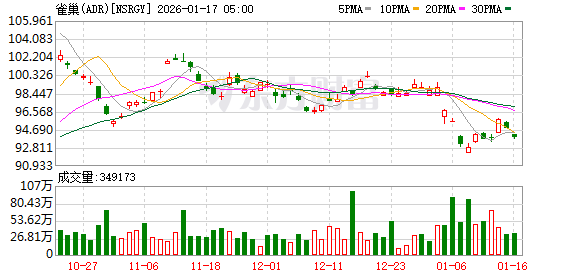
新加坡食品局在瑞士产的雀巢超级能恩1段和泰国产的多美滋Dulac 1段中检测出蜡样芽孢杆菌
Cai Jing Wang· 2026-01-19 06:39
Core Viewpoint - The Singapore Ministry of Health has issued a recall for two infant formula products due to the detection of Bacillus cereus toxin, emphasizing the need for enhanced monitoring and testing of such products in the market [1][5]. Group 1: Product Recall Details - The recalled products include Nestle NAN HA1 SupremePro and Dumex Dulac 1, both in 800g packaging [1][3]. - The batch numbers for the recalled products are 52340017C3 and 101570778C, with expiry dates of August 31, 2027, and September 3, 2027, respectively [1][3]. Group 2: Regulatory Actions - The Singapore Food Agency (SFA) has intensified its supervision and testing of infant formula products following the recall [1]. - A local manufacturer, SMC Nutrition, has been ordered to halt the export of affected products that used the same contaminated ingredients [5]. Group 3: Health Implications - There has been one reported mild case of Bacillus cereus toxin poisoning linked to the consumption of contaminated products, with the patient having recovered [5]. - Symptoms of Bacillus cereus toxin poisoning may include nausea, vomiting, abdominal cramps, and diarrhea, typically manifesting within 30 minutes to 6 hours after consumption [5]. Group 4: Market Impact - The affected batch of imported infant formula accounts for less than 5% of the total infant formula supply in Singapore, indicating that it represents a small portion of the diverse market [5].