近因效应

Search documents
现在最重要的任务
猛兽派选股· 2026-03-25 03:34
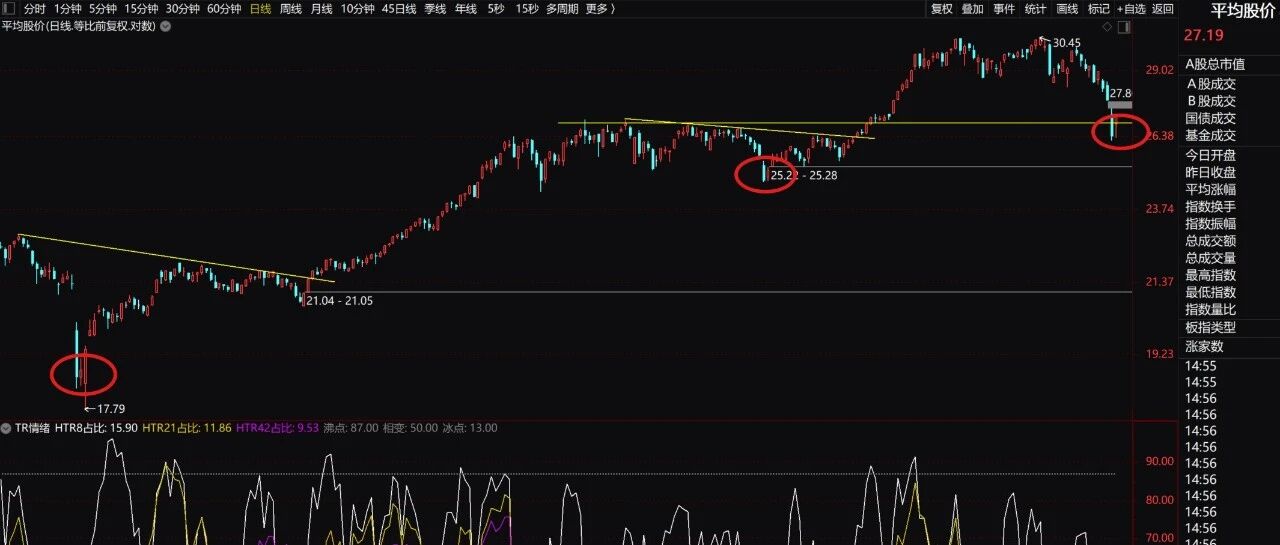
Group 1 - The article emphasizes that the current market performance aligns with previous judgments, indicating a potential limit to average stock price declines, which should not exceed 19% as per the current regulatory team's bottom line [1] - It discusses the psychological aspects of market behavior, particularly the near-miss effect, and how it affects normal individuals in the stock market, suggesting that those who can break through their psychological barriers may have greater influence over market movements [2] - The article highlights the importance of identifying new leading stocks and main themes in the market following significant corrections, indicating a cyclical nature of market leadership [2]


再发图比对一下
猛兽派选股· 2026-03-24 08:22
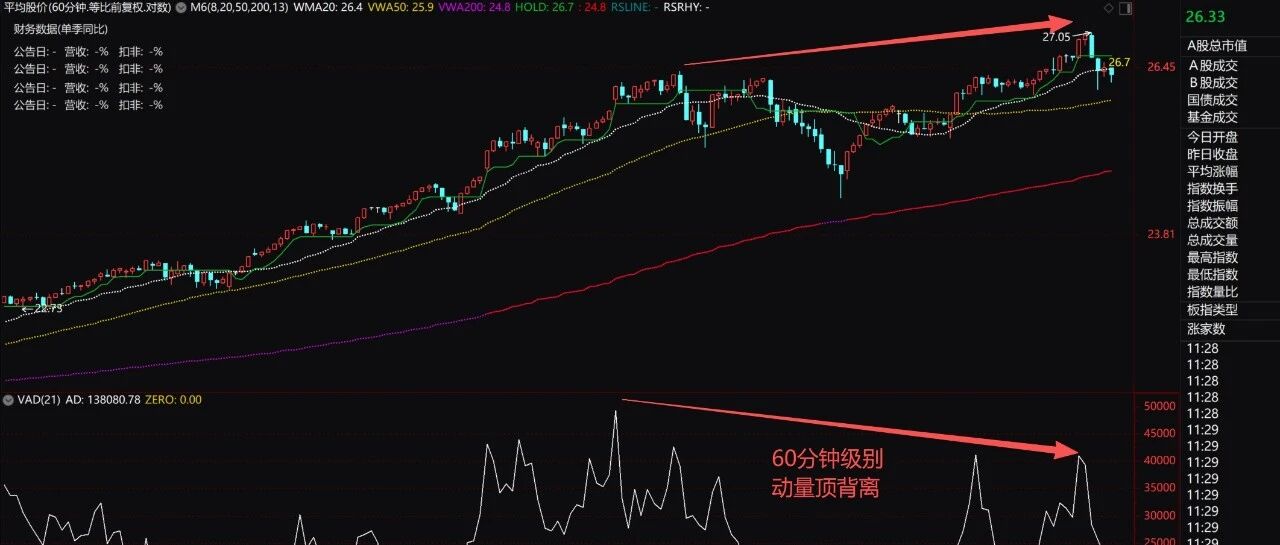
Group 1 - The article discusses the psychological reactions of individuals to market downturns, emphasizing the tendency to avoid "catching falling knives" and the need for a gradual recovery [1] - It highlights the concept of "recency effect," which amplifies the impact of short-term events on decision-making [1] - The author references Howard Marks' second-level thinking, advocating for a structural approach to analyze market cycles and identify reversal points [1] Group 2 - The article suggests that not all downturns are opportunities to invest, stressing the importance of determining whether the main trend is still intact [1] - It mentions the significance of momentum assessment in determining the end or beginning of a main trend, encouraging the study of the "Beast Mode" momentum system [1] - The author notes that history tends to repeat itself, implying that past market behaviors can inform current investment strategies [2]
如何合理止损?
3 6 Ke· 2025-12-23 00:00
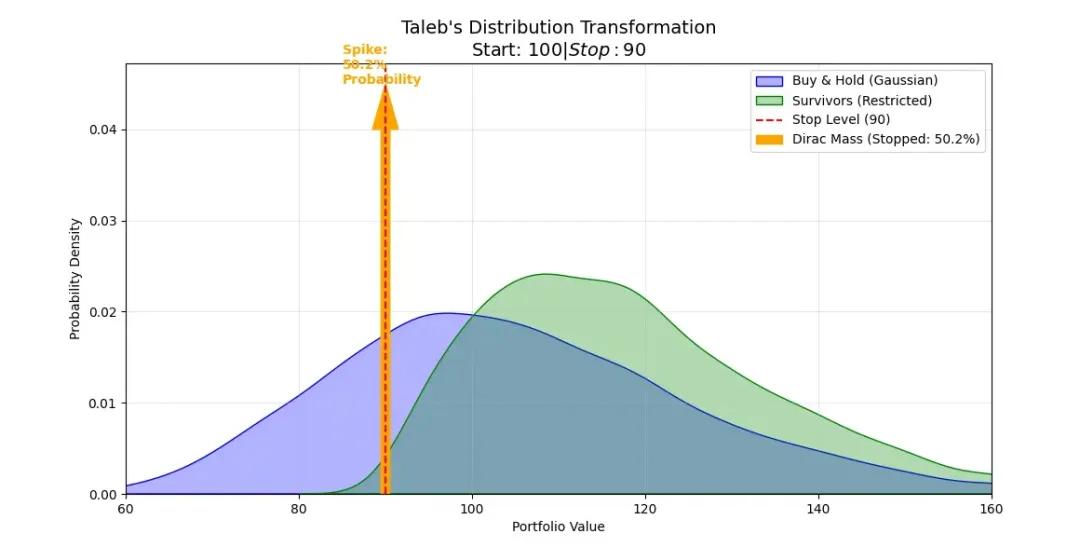
Core Viewpoint - The article discusses the controversial topic of "stop-loss" strategies in investing, highlighting a recent paper by Nassim Nicholas Taleb that quantifies the effects of stop-loss through Monte Carlo simulations, suggesting that stop-loss may lead to more losses rather than preventing them [1][2]. Group 1: Key Findings from the Paper - The paper presents a graph showing that without stop-loss, the return distribution follows a normal distribution, peaking at slight losses, while implementing a 10% stop-loss increases the probability of positive returns but also creates a peak of losses at the stop-loss threshold, termed "Dirac Mass" [5]. - In a market with an annualized volatility of 20-25%, there is a 50% probability of hitting the 10% stop-loss, which is higher than most investors expect. For A-shares, particularly small-cap and tech stocks, the probability can reach 85% [5]. - Stop-loss is likened to insurance against catastrophic losses but alters the probability distribution of returns, leading to several recommendations: fixed stop-loss percentages below 20% are ineffective against random noise, and stop-loss levels should consider market volatility [6][7]. Group 2: Practical Issues with Stop-Loss - The first issue is how to minimize the damage caused by stop-loss, which can be seen as an expensive insurance policy that does not save poorly thought-out investments [11]. - The second issue involves trading in a non-trending, volatile market, where even experienced traders can incur significant losses due to psychological pressures and frequent stop-loss triggers [12]. - The third issue is the impact of high leverage on stop-loss effectiveness, where the probability of permanent losses increases, making stop-loss strategies more critical but also more damaging [13]. Group 3: Perspectives on Stop-Loss for Different Investor Types - Value investors, like Warren Buffett, generally oppose stop-loss strategies, believing that price declines can represent buying opportunities rather than triggers for selling [17]. - Retail investors may benefit from stop-loss strategies due to their ability to quickly adjust positions, but they often struggle with emotional trading and information asymmetry, leading to frequent losses [20][21]. - The psychological barrier of not wanting to realize losses can be addressed through techniques like "mental stop-loss," which encourages investors to reassess their positions without the emotional burden of past decisions [26].
小游戏照见日常
Xin Lang Cai Jing· 2025-12-20 22:07
Core Insights - The article discusses the psychological mechanisms behind the popularity of casual games, highlighting how they engage players through simple rules and immediate feedback [1][2][3] Group 1: Behavioral Economics - The concept of "near-miss effect" is explained, where players overestimate their chances of success after a near success, leading to repeated attempts [1] - "Time preference" or "time discounting" is introduced, indicating that people have a natural inclination towards immediate rewards, which casual games provide through timely and frequent feedback [2] Group 2: Real-Life Applications - The article draws parallels between gaming experiences and real-life scenarios, such as the urgency felt in limited-time offers or the pressure of deadlines, emphasizing the competition against time [3] - It illustrates how games like "2048" reflect decision-making processes in real life, where seemingly minor choices can lead to significant long-term consequences [3]
不同的生态
猛兽派选股· 2025-12-03 06:08
Group 1 - The article discusses the characteristics of the "游资生态" (speculative capital ecosystem), highlighting its features such as high turnover and poor performance, which are typical in small-cap stocks [1] - It emphasizes the distinction between the speculative capital ecosystem and the institutional ecosystem, noting that they are almost completely isolated from each other [1] - The author suggests that the current market is still undergoing adjustments and that it is premature to conclude which new main lines will emerge, as significant rebounds often occur after major market drops [1] Group 2 - The article advises a slow thinking approach when analyzing institutional information, referencing Daniel Kahneman's book "Thinking, Fast and Slow" to illustrate the common psychological traps investors fall into [2] - It points out that the market is currently experiencing a serious adjustment, indicating that it has not yet exited the adjustment framework [2] - The author describes the market's behavior as a "danger signal," with a continuous decrease in volume during convex reversals, suggesting a potential risk for investors [2]

日子真快,转眼快一个月了
猛兽派选股· 2025-09-19 04:41
Group 1 - The current market is in an adjustment phase with a divergence breakthrough, indicating that the recent rebound has ended and a pullback is expected [1] - Historical trends suggest that after a significant upward movement, personal accounts often experience profit withdrawal, leading to a situation where new highs are rarely achieved before further declines occur [1] - Behavioral psychology concepts such as recency effect, loss aversion, availability heuristic, and confirmation bias play a role in market movements [1] Group 2 - Group psychology will ultimately reflect in momentum indicators, with signs of top divergence indicating an increase in retreating and cashing out funds [2] - To effectively track trends, it is essential to learn to identify changes in momentum and understand the overall market psychology [2] - Leading stocks, such as those in the computing power sector, are seen as consolidating and not showing signs of fatigue, suggesting that the market trend is not over [2] Group 3 - New categories that are rising against the trend, such as energy storage and lithium batteries, should be closely monitored [3] Group 4 - The market maintains a multi-mainline structure, reducing the need for excessive concern about overall market movements, allowing individual stock strategies to diverge from broader market trends [5]