行风建设

Search documents
省市场监管局赴安康调研基层市场监管工作
Sou Hu Cai Jing· 2026-02-05 13:53
Core Insights - The provincial market regulatory bureau emphasizes the importance of enhancing local market supervision and promoting the development of regional特色产品 through e-commerce channels [1][2] Group 1: Market Regulation and Oversight - The provincial market regulatory bureau acknowledges the achievements of the Ankang market supervision system in service development, safety assurance, and regulatory reinforcement [2] - There is a strong emphasis on deepening the construction and application of smart regulatory platforms to enhance data sharing and business collaboration, thereby improving regulatory precision and risk prevention capabilities [2] Group 2: Local Economic Development - The bureau encourages the development of特色产业 such as富硒水 and生态饮品, leveraging the ecological advantages of the region known as the "world's golden water source" [2] - Continuous efforts are needed to deepen the processing of特色农产品 like魔芋, enhancing product added value and market competitiveness to support rural revitalization [2]


市场监管总局公布2025年第四批“行风建设助力优化营商环境”优秀实践案例
Xin Lang Cai Jing· 2026-01-19 14:05
Core Viewpoint - The article highlights the implementation of exemplary practices in enhancing the business environment through integrity construction in market regulation, showcasing ten selected cases from various regions in China that demonstrate innovative measures and effective governance [2]. Group 1: Tianjin's Food Safety Measures - Tianjin's market regulation authority introduced 18 innovative measures to enhance food safety governance, focusing on public needs and improving regulatory efficiency, resulting in a 100% traceability rate for campus meals and a 99.8% compliance rate for pesticide residue testing [3]. - The initiative emphasizes the integration of regulatory efforts with public service, providing a model for effective food safety governance that aligns with community needs [3]. Group 2: Hebei's Learning Tools - Hebei's Zhaoquan Market Supervision Office developed a "learning card" system to enhance the capabilities of grassroots regulatory teams, improving learning efficiency and service effectiveness through a structured, color-coded approach [4]. - This initiative reflects a commitment to continuous education in integrity construction, reducing the burden on grassroots regulators while enhancing service quality [5]. Group 3: Liaoning's Risk Prevention - Liaoning's Shenyang Market Supervision Bureau implemented a comprehensive risk prevention checklist covering 38 specific risk points, establishing a closed-loop management system to enhance regulatory effectiveness [6]. - The initiative led to a reduction in complaints and risks while improving service efficiency and public trust in regulatory practices [7]. Group 4: Jilin's Supervision System - Jilin's Siping Market Supervision Bureau created a "full-chain" supervision system to enhance regulatory oversight, transitioning from reactive to proactive measures in administrative enforcement [8]. - This approach integrates various supervisory levels and promotes collaborative governance, improving regulatory efficiency and service quality [9]. Group 5: Shanghai's Service Integration - Shanghai's Jing'an District established a one-stop service platform, "City Affairs Like a Wish," to enhance business support and community engagement, facilitating over 1 billion yuan in financing for small enterprises [10]. - The initiative exemplifies the transformation of regulatory requirements into tangible services that foster economic development and community trust [10]. Group 6: Zhejiang's Quick Processing Model - Zhejiang's market regulation authority introduced a "quick processing" model for minor violations, significantly reducing processing times by over 50% and easing the regulatory burden on businesses [11]. - This model emphasizes efficiency in administrative enforcement while maintaining a balance between regulatory rigor and service warmth [11]. Group 7: Fujian's Reform Initiatives - Fujian's market regulation authority focused on streamlining inspections and reducing redundancy through a systematic reform approach, achieving a 42.61% decrease in inspection frequency and a 39.12% reduction in public complaints [12]. - The reforms aim to enhance the effectiveness and fairness of regulatory practices, benefiting both businesses and regulatory bodies [13]. Group 8: Guangdong's Registration Services - Guangdong's Huangpu District developed a "Fast Track" registration service to address complex registration issues, improving processing times by over 50% for nearly 1,400 businesses [14]. - This initiative highlights the importance of responsive regulatory services in fostering a favorable business environment [14]. Group 9: Chongqing's Integrity Supervision - Chongqing's Liangjiang New Area implemented a "Integrity Code + Follow-up" supervision model to enhance transparency and accountability in administrative licensing processes, achieving a 100% satisfaction rate from businesses [15]. - This model integrates integrity measures into regulatory practices, reinforcing public trust and compliance [16]. Group 10: Yunnan's Night Market Oversight - Yunnan's Chuxiong Prefecture established a night market supervision team to enhance food safety and market vitality through flexible enforcement and community engagement [17]. - This initiative demonstrates the effectiveness of targeted regulatory approaches in addressing specific community needs while promoting economic activity [17].
河北全面优化以企业信用为基础的分级分类监管模式
Xin Lang Cai Jing· 2026-01-10 23:42
Group 1 - The core viewpoint of the article emphasizes the optimization of a credit-based hierarchical and classified regulatory model to minimize disruptions to normal business operations in Hebei Province [1] - By 2025, Hebei plans to conduct 8,378 random inspections across various departments, targeting 193,900 enterprises, with joint inspections accounting for 73.98% of total inspections and 48.83% of inspected entities [1] - The article highlights the implementation of differentiated credit risk inspections, with 7,534 inspections conducted, representing 89.92% of total enterprise inspections [1] Group 2 - The Hebei regulatory authority has enhanced the dual random enforcement regulatory platform, developing features like "scan to enter the enterprise" for real-time display and traceability of inspection information, effectively preventing multiple inspections and repeated enforcement [2] - A credit labeling pilot program is underway, aiming to establish a comprehensive labeling system by 2025, which will analyze enterprises based on their credit ratings and facilitate a data-driven governance model [2] - The regulatory authority is shifting from on-site inspections to non-site regulatory methods, incorporating written checks, online inspections, and big data monitoring to reduce the frequency of enterprise visits while accurately identifying risks [3] Group 3 - The implementation of a service-oriented law enforcement model is being promoted, focusing on prevention, light penalties for minor violations, and strict penalties for serious violations, with the list of exempted penalties expanding from 66 to 142 items [3] - The number of regulatory inspection items related to enterprises will be reduced from 46 to 37 by 2024, marking a 19.6% decrease [3] - As of the end of 2025, 414,000 enterprises are expected to be removed from the abnormal business operations list based on their applications for credit restoration [3]
文登区龙山社区卫生服务中心开展医德医风暨行风建设专题培训
Xin Lang Cai Jing· 2025-12-23 17:03
Core Viewpoint - The article emphasizes the importance of enhancing medical ethics and hospital conduct to improve the professional moral quality and service level of healthcare personnel, thereby creating a clean and positive medical environment [1] Group 1: Training and Guidelines - The Longshan Community Health Service Center organized a specialized training for middle-level cadres focusing on medical ethics and conduct [1] - The training included a systematic interpretation of various guidelines such as the "Code of Conduct for Medical Institution Practitioners," the "Professional Ethics Code for Medical Personnel (2025 Edition)," and the "Implementation Details of the Nine Standards for Integrity in Medical Institution Staff (Trial)" [1] - The training aimed to guide medical personnel to be aware of their responsibilities, maintain integrity, and establish a solid foundation for ethical medical practice [1] Group 2: Implementation and Expectations - All staff members are required to enhance their awareness and internalize the requirements for standardized service and integrity in medical practice [1] - The article stresses the importance of establishing a good professional image characterized by law-abiding behavior and dedication to work, while also encouraging a shift in service philosophy and optimization of service processes [1] - The focus is on transforming learning outcomes into concrete actions that enhance medical service capabilities and strengthen industry conduct, thereby continuously consolidating a positive development environment for the hospital [1]
市场监管总局副局长孟扬在江西调研市场监管系统行风建设“三项行动”推进情况
Zheng Quan Shi Bao Wang· 2025-10-27 02:51
Core Viewpoint - The article emphasizes the importance of enhancing the conduct of market regulation teams and improving the business environment to contribute to the establishment of a unified national market and promote high-quality economic development [1] Group 1: Regulatory Actions - The market regulatory authority is focusing on the implementation of three key actions to improve the conduct of its teams, window units, and market regulation offices [1] - There is a call to learn and implement the spirit of the 20th Central Committee's Fourth Plenary Session, recognizing the new challenges and requirements for conduct improvement [1] Group 2: Strategic Focus - The emphasis is on adopting a problem-oriented approach, concentrating on key areas, and enhancing grassroots efforts [1] - The need for effective supervision and guidance is highlighted, aiming for tangible results and the establishment of long-term mechanisms [1] Group 3: Goals and Contributions - The ultimate goal is to enhance the image of the regulatory teams, improve enforcement efficiency, and optimize the business environment [1] - These efforts are positioned as contributions to the construction of a unified national market and the promotion of high-quality economic development [1]
新疆乌苏市市场监管局开展专项行动强化行风建没
Zhong Guo Shi Pin Wang· 2025-10-14 06:30
Group 1 - The core viewpoint emphasizes the strengthening and enhancement of regulatory service efficiency in Urumqi City, Xinjiang, through a focus on problem-oriented actions and a commitment to integrity and discipline in law enforcement [1][3] - The law enforcement team is prioritizing strict management of cases, personnel, and authority, ensuring that enforcement is both standardized and compassionate, while integrating lessons from typical cases to maintain a high standard of integrity [1][3] Group 2 - The service window is focused on optimizing processes and enhancing service quality, aiming to create a "one-stop" service experience for businesses, thereby attracting more enterprises and promoting sustainable economic development [2] - By integrating various administrative services into a single process, the regulatory body is reducing the time and cost for businesses, providing professional assistance throughout the application process [2] Group 3 - The grassroots market regulation emphasizes daily management, internal supervision, and collaborative oversight to ensure effective service delivery and address potential issues promptly [3] - The regulatory body is committed to integrating the spirit of the central eight regulations into its operations, fostering a culture of integrity and accountability among its staff to support high-quality economic development in Urumqi [3]
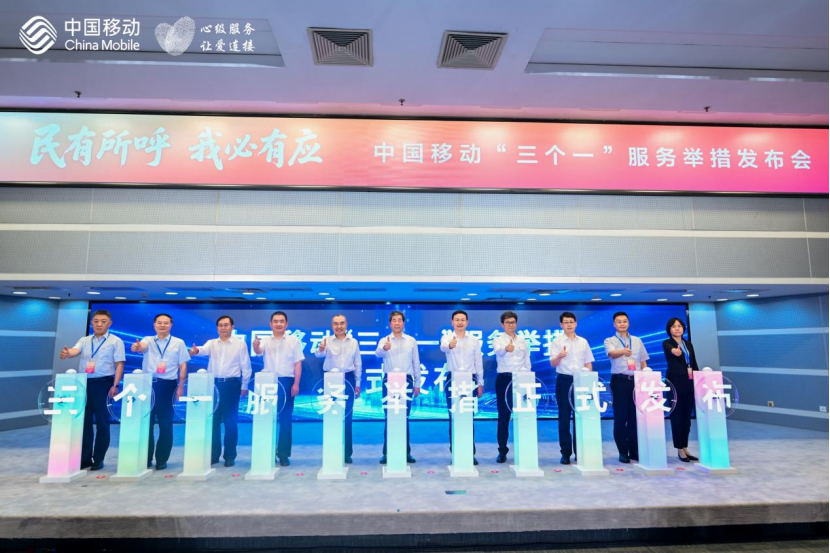
民有所呼 我必有应 ——中国移动发布“三个一”服务举措
Qi Lu Wan Bao· 2025-07-21 08:42
Core Viewpoint - China Mobile has launched a set of customer service commitments, a service supervision platform, and a comprehensive service system to enhance service standards and respond to customer concerns, demonstrating its commitment to high-quality service and consumer rights protection [1][3][6]. Group 1: Service Commitments - The company introduced ten service commitments aimed at ensuring transparency, efficiency, and customer satisfaction, including "transparent consumption" and "efficient response to customer demands" [6][8]. - The commitments are designed to enhance consumer confidence and satisfaction, addressing key consumer rights such as the right to know, choose, and privacy [4][6]. Group 2: Service Supervision Platform - A service supervision platform has been established to allow customers to report unresolved service issues, ensuring that all complaints are addressed promptly and effectively [6][8]. - This platform aims to maintain high service standards and accountability within the company, reinforcing the commitment to consumer rights [6][8]. Group 3: Comprehensive Service System - The company is implementing a "three-full" service system that focuses on full customer engagement, full business coverage, and full process management to enhance the overall customer experience [4][6]. - The initiative is part of a broader strategy to leverage digital and intelligent capabilities to meet evolving customer needs and improve service delivery [4][6]. Group 4: Industry Leadership - China Mobile aims to lead the industry in high-quality service delivery and innovation, setting a benchmark for other companies in the telecommunications sector [5][8]. - The launch of the "three ones" service measures reflects the company's dedication to the principle of "serving the people" and enhancing the overall service quality in the industry [3][8].