
西藏民航发展

Search documents
2025年西藏民航旅客吞吐量首次突破800万人次
Zhong Guo Xin Wen Wang· 2025-12-29 07:19
2025年西藏民航旅客吞吐量首次突破800万人次 中新社拉萨12月29日电 (记者 赵朗)记者29日从中国民用航空西藏自治区管理局获悉,截至当日,2025 年西藏民航旅客吞吐量首次突破800万人次、年保障航班起降首次突破7万架次。预计2025年,西藏民航 保障航班起降将达7.1万架次、旅客吞吐量达805万人次、货邮吞吐量达5.6万吨,分别同比增长6.0%、 5.7%、7.7%。 西藏机场集团航空市场部总经理登增介绍,预计全年拉萨贡嘎国际机场旅客吞吐量达628万人次,同比 增长4.34%;林芝米林机场旅客吞吐量达96.5万人次,同比增长21.11%;昌都邦达机场旅客吞吐量达 46.8万人次,同比增长2.94%;日喀则和平机场年旅客吞吐量突破12.5万人次,同比增长1.73%;山南隆 子机场、日喀则定日机场、阿里普兰机场等支线机场吞吐量增速均超60%,阿里昆莎机场稳步发展。 今年,西藏民航新开阿里昆莎-成都天府、日喀则定日-成都天府、山南隆子-成都天府、拉萨贡嘎-博卡 拉、拉萨贡嘎-重庆-新加坡、拉萨贡嘎-成都-中国香港等航线19条,补齐辽宁、广西、海南等省份航线 空白,截至目前,通航海内外城市达84个,开通航线 ...
60年来西藏民航通航城市81座 航线增至193条
Zhong Guo Xin Wen Wang· 2025-08-28 14:13
Core Points - The civil aviation in Tibet has expanded significantly over the past 60 years, with the number of airports increasing to 8, runways to 10, and flight routes to 193, serving 81 cities [1][2] - The international flight routes have grown from 1 to 4, and the frequency of flights has increased from 2 per month to over 230 per day [1] - By 2024, the passenger throughput in Tibet is expected to reach 7.6 million, which is 3,523 times higher than in 1965, with a possibility of exceeding 8 million this year [1] Summary by Sections Historical Development - The first flight to Tibet occurred on March 2, 1965, marking the opening of the Beijing-Chengdu-Lhasa route, which broke the "airspace blockade" [1] Current Infrastructure - Tibet has established a "1 trunk and 7 branch" airport layout, focusing on the southwest and northwest regions, connecting major cities across China and supporting aid provinces [1] - The international routes connect to Hong Kong, Kathmandu, Pokhara, and Singapore [1] Future Plans - By 2030, Tibet aims to achieve a "1 trunk and 10 branch" airport layout, increasing the number of transport airports to 11 [2] - By 2035, the target is to have around 16 transport airports, with an annual passenger throughput goal of over 9.8 million by the end of 2030 [2]
辉煌60载 魅力新西藏 | 航线网编织天路之翼 高原“孤岛”变“枢纽”
Yang Shi Wang· 2025-08-14 03:52
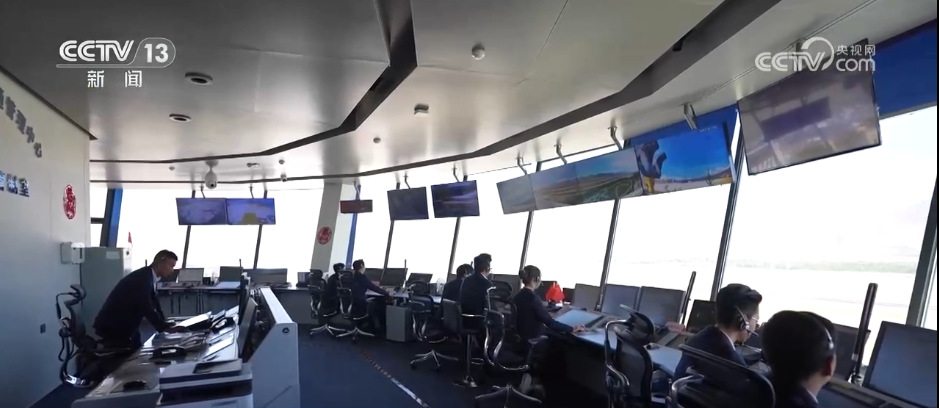
Core Viewpoint - The development of civil aviation in Tibet over the past 60 years has significantly improved connectivity, contributing to the region's social and economic growth, with a comprehensive network of routes now established [1][3]. Group 1: Infrastructure Development - The number of airports in Tibet has increased from 1 to 10, and the number of runways has grown from 1 to 10, with Lhasa Gonggar International Airport now handling an average of 170 flights daily, and the entire region exceeding 200 flights [3]. - As of now, civil aviation in Tibet connects 81 cities and operates 193 routes, with projections indicating that by the end of 2030, passenger throughput could reach 9.8 million and cargo volume could hit 66,000 tons [3]. Group 2: Technological Advancements - A new high-altitude airport control tower is set to be operational by September 2024, enhancing air traffic management capabilities and operational efficiency in the complex terrain of Tibet [4]. - The integration of advanced technologies in communication, navigation, and weather monitoring is expected to significantly improve safety and service quality in the region's aviation sector [4]. Group 3: Economic Impact - The establishment of a dedicated air freight route by SF Express on July 10, 2025, has facilitated the exchange of local Tibetan products and industrial goods from mainland provinces, with parcel throughput increasing from 20,000 to 14 million annually by 2024 [6]. - The development of the aviation sector has transformed previously desolate areas, such as the town of Jiazhulin, into thriving urban centers [8]. Group 4: Future Prospects - The ongoing collaboration between Tibet Airlines and COMAC aims to advance the development of domestically produced C919 high-altitude aircraft, enhancing operational capabilities in the region [8]. - The 60th anniversary of Tibet's establishment is viewed as a pivotal moment for future aviation developments, with aspirations for pilots to operate domestic large aircraft in the Tibetan skies [10].

辉煌60载 魅力新西藏丨西藏民航赋能雪域腾飞
Yang Guang Wang· 2025-08-03 01:19
Group 1 - The core viewpoint is that the development of civil aviation in Tibet, through new flight routes, infrastructure upgrades, and improved service quality, is significantly contributing to the high-quality economic and social development of the region [1][2] - The passenger throughput at airports in Tibet is projected to exceed 7 million by 2024, with nearly 70% of this traffic attributed to tourism [1] - The opening of Linzhi Airport has led to a dramatic increase in local tourism, with visitor numbers and total tourism revenue growing by 34 times and 103.8 times, respectively [1] Group 2 - Lhasa Gonggar International Airport is enhancing both passenger and cargo services, facilitating the rapid distribution of local products to mainland markets [2] - The airport's cargo throughput is expected to reach 26,000 tons by the first half of 2025, reflecting a year-on-year growth of 7.9% [2] - Future plans for Tibet's civil aviation include the construction and expansion of 10 major projects, aiming for an annual passenger throughput of 9.8 million and a cargo throughput of nearly 66,000 tons by the end of the 14th Five-Year Plan [2]
西藏民航通航60周年主题音乐会唱响新时代
Zhong Guo Min Hang Wang· 2025-07-25 01:45
Core Viewpoint - The event held on July 22, 2025, at Lhasa Gonggar International Airport celebrates the 60-year journey of civil aviation in Tibet, highlighting its transformative impact on the region and its connectivity to the rest of China and Southeast Asia [1][3]. Group 1: Development of Civil Aviation in Tibet - Over the past decade, the annual passenger throughput has increased significantly, reaching 7.6 million in 2024, demonstrating a growth of one million every two years [1]. - The establishment of a modern air route network centered around Lhasa has drastically reduced travel time and improved the quality of life for the local population [1][3]. Group 2: Cultural Integration and Community Impact - The concert creatively transformed the airport terminal into a cultural showcase, blending traditional Tibetan instruments with modern symphonic music, reflecting the local community's love for their country and aspirations for a better life [3]. - The event symbolizes the role of civil aviation in breaking isolation, promoting tourism, cultural exchange, and economic development in Tibet [1][3]. Group 3: Future Aspirations - The civil aviation sector in Tibet is positioned as a key player in regional development and national strategy, aiming for high-quality growth through improved facilities, advanced technology, and customer service [3][5]. - The ongoing commitment of civil aviation professionals in Tibet is to continue building on past achievements and contribute to the modernization and revitalization of the region [5][6].

为雪域高原架起空中桥梁
Jing Ji Ri Bao· 2025-07-22 22:05
Core Insights - The development of civil aviation in Tibet has significantly progressed over the past 60 years, becoming a crucial bridge for economic development, social cooperation, and cultural exchange between Tibet and other regions [1][2]. Group 1: Infrastructure and Operations - The Lhasa Gonggar International Airport has a state-of-the-art operations command center that monitors real-time flight operations and ground support [1]. - The new air traffic control tower, set to be operational by September 20, 2024, will enhance air traffic management capabilities with advanced technologies [1]. - The number of transport airports in Tibet has increased from 1 to 8 since 1965, establishing a "1+7" airport layout centered around Lhasa Gonggar International Airport [2]. Group 2: Growth Metrics - As of June this year, Tibet's civil aviation has facilitated 734,000 flight takeoffs and landings, transported 80.7 million passengers, and handled 766,000 tons of cargo and mail, marking continuous growth and record highs [2]. - The total number of flight routes in Tibet has reached 193, connecting 81 cities and covering major urban areas and provinces that support Tibet [3]. Group 3: Future Plans - During the 14th Five-Year Plan period, Tibet's civil aviation aims to strengthen the regional hub status of Lhasa Gonggar International Airport and improve infrastructure at Linzhi Milin Airport [3]. - The goal is to achieve an annual passenger throughput of over 9.8 million and a cargo throughput of nearly 66,000 tons by the end of 2030 [3].