
认知的复利

Search documents
告别“躺赢”!浮动费率时代,中银基金的“可复制”投资
Sou Hu Cai Jing· 2025-11-05 01:21
Group 1 - The core issue in the investment fund industry is the disconnect between fund managers' compensation and fund performance, leading to a loss of trust among investors [1][4] - The introduction of the "floating fee rate" mechanism aims to align the interests of fund managers with those of investors, promoting a "shared risk and reward" philosophy [1][4] - The first batch of floating fee rate funds launched in May has shown promising results, with an average increase of approximately 12.1% by the end of October [1][2] Group 2 - The second batch of 12 floating fee rate funds is set to launch, with the new fund "Bank of China Quality Emerging" being highlighted for its replicable investment philosophy [2][3] - Fund manager Li Sijia emphasizes the importance of a flexible investment strategy that adapts to market changes, rather than relying on a single approach [2][8] Group 3 - The floating fee rate mechanism is designed to bind the fate of fund managers and investors, ensuring that management fees are tied to performance against a benchmark [4][5] - The fee structure of the "Bank of China Quality Emerging" fund includes a tiered fee system that adjusts based on performance, encouraging long-term investment behavior [5][6] Group 4 - The performance benchmark for the "Bank of China Quality Emerging" fund is a composite of various indices, providing a comprehensive measure of market performance [6][7] - Li Sijia's investment philosophy focuses on "replicability" and "cognitive compounding," aiming for sustainable growth through a well-structured investment framework [8][9] Group 5 - Li Sijia's successful management of the "Bank of China Strategic Emerging Industries A" fund, which achieved a net value growth rate of 43.92% over the past year, demonstrates the effectiveness of her investment approach [9][15] - The investment strategy includes a balanced allocation across sectors, with a focus on emerging technologies and industries aligned with national strategic transformations [11][12] Group 6 - Li Sijia identifies the current market phase as a "bull market mid-stage," suggesting that structural changes and new opportunities are emerging [12][13] - The floating fee rate funds are particularly suitable for long-term investors who can benefit from the dual advantages of compounding and fee optimization [13]
明泽投资马科伟:相信“一万小时定律” 追求认知的复利
Zhong Guo Zheng Quan Bao· 2025-11-03 00:46
Core Insights - The investment style of the company is likened to a patient "tea taster," focusing on finding deeply rooted and uniquely fragrant "good tea" [1] - The founder, Ma Kewai, transitioned from being a witness to a participant in the capital market, leveraging his extensive financial experience in government and large industrial groups to understand economic operations and corporate ecosystems [1][4] - The company emphasizes a lifelong methodology based on the "10,000-hour rule," advocating for systematic learning, in-depth research, and continuous review to amplify "cognitive compounding" [1][9] Investment Approach - The company began its investment journey in the environmental protection sector, achieving a comprehensive understanding of the securities research system within three years [5][6] - A systematic investment framework has been established, characterized by "three objects + six elements + one veto + ESG full-process evaluation" [7][8] - The "three objects" include trends, deviations from trends, and structures, which are fundamental to the company's strategy [7] Market Insights - The company identifies that the current macroeconomic landscape is undergoing significant changes, with emerging economies, particularly China, becoming key growth drivers [7][8] - The company believes that the long-term upward trend of the A-share market remains intact despite short-term adjustments [8] Learning and Adaptation - The company has expanded its capability from environmental protection to non-bank financial services, high-end manufacturing, consumption, and healthcare, based on systematic cognitive migration [9] - Continuous learning is emphasized, with a focus on building a "learning organization" and regularly updating research outputs to align with market developments [10] Future Outlook - The company anticipates a "long-term steady progress" trend in the capital market during the "14th Five-Year Plan" period, focusing on new productive forces and structural opportunities [10][11] - Key areas of interest include technological innovation, AI, and sustainable investment practices, reflecting a commitment to ethical standards and societal impact [8][10]

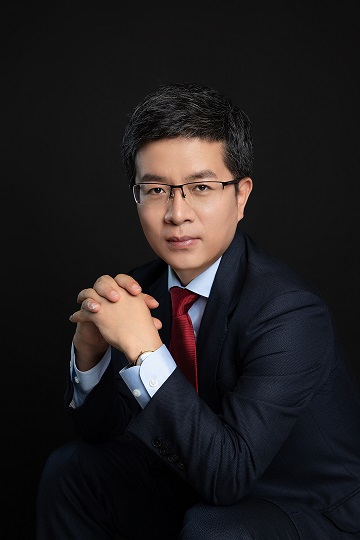
相信“一万小时定律” 追求认知的复利
Zhong Guo Zheng Quan Bao· 2025-11-02 20:16
Core Insights - The article highlights the investment philosophy and strategies of Ma Kewai, founder and chairman of Mingze Investment, emphasizing a systematic approach to investment based on deep industry knowledge and rigorous research [1][4]. Group 1: Investment Philosophy - Ma Kewai's investment style is likened to a "tea connoisseur," focusing on identifying companies with deep roots and unique qualities [1]. - The principle of "extreme truth-seeking and transparency" is central to both Ma's personal and organizational investment strategies [1][4]. - The "10,000-hour rule" serves as a lifelong methodology for Ma, emphasizing systematic learning, deep research, and continuous review to amplify "cognitive compounding" [7][9]. Group 2: Industry Focus and Experience - Ma's background in finance and management within government and large enterprises provides him with a unique perspective on both operational challenges and capital market intricacies [2][3]. - His initial focus on the environmental protection sector allowed Mingze Investment to build a competitive edge through comprehensive market coverage, achieving significant milestones in just 19 months [3][4]. - The transition from environmental investments to sectors like non-bank finance, high-end manufacturing, consumption, and healthcare reflects a strategic expansion based on systematic knowledge transfer [7][9]. Group 3: Systematic Investment Framework - Mingze Investment employs a structured investment strategy characterized by "three objects + six elements + one veto + ESG evaluation" [4][5]. - The "three objects" include trends, deviations from trends, and structural changes, which are fundamental to the investment strategy [5]. - The six elements encompass industry and company dynamics, liquidity and investor sentiment, profit growth and structure, valuation, policy, and economic cycles [6]. Group 4: Future Outlook and Strategic Focus - The company anticipates a "long-term steady progress" trend in China's capital market, with a focus on new productive forces and sustainable investment opportunities [8][9]. - Key areas of interest include technological innovation, AI, and structural opportunities related to safety, consumption, and effective investment [8][9].