货币政策加息

Search documents
日元持续贬值!日本两大在野党联手对抗高市
Guo Ji Jin Rong Bao· 2026-01-15 13:05
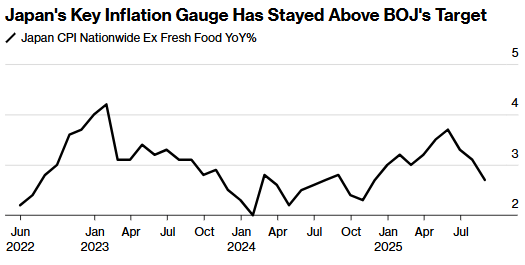
Core Viewpoint - The Japanese Prime Minister, Fumio Kishida, is attempting to consolidate power through an early election, a strategy that may be riskier than anticipated due to political uncertainties and economic pressures [1][4]. Currency and Economic Impact - The Japanese yen fell to 159.45 against the US dollar on January 14, marking the lowest point since July 2024, with subsequent warnings from Finance Minister Shunichi Suzuki aimed at slowing the yen's depreciation [1][6]. - As of January 15, the yen was trading around 158.55, with hedge funds betting on a potential drop to 165 before any government intervention [2][6]. - Despite the Bank of Japan raising interest rates to the highest level since 1995, the yen continues to weaken, with predictions that it could fall to 160 or lower by the end of 2026 due to high US-Japan interest rate differentials and capital outflows [6][7]. Political Landscape - The early election announcement has altered Japan's political landscape, with the largest opposition party, the Constitutional Democratic Party, forming a new alliance with the Komeito party to challenge Kishida's government [5][6]. - Kishida's government, which currently holds a slim majority in the House of Representatives, faces pressure to secure support from opposition parties to pass the 2026 fiscal budget [3][5]. - Public sentiment is shifting, with 58% of respondents expressing concern over the economic impact of deteriorating Japan-China relations, indicating rising dissatisfaction with Kishida's administration [4][5]. Market Reactions and Predictions - Investors are anticipating that if Kishida's party secures a stable majority, expansionary policies will continue, potentially exacerbating the yen's depreciation and complicating the Bank of Japan's goals for price stability [7]. - The Deutsche Bank report suggests that failure to achieve a majority could lead to market sell-offs and a flight to safety, resulting in a stronger yen [7].
植田和男“放鹰”!市场押注日本央行12月加息概率飙至76%
智通财经网· 2025-12-01 03:14
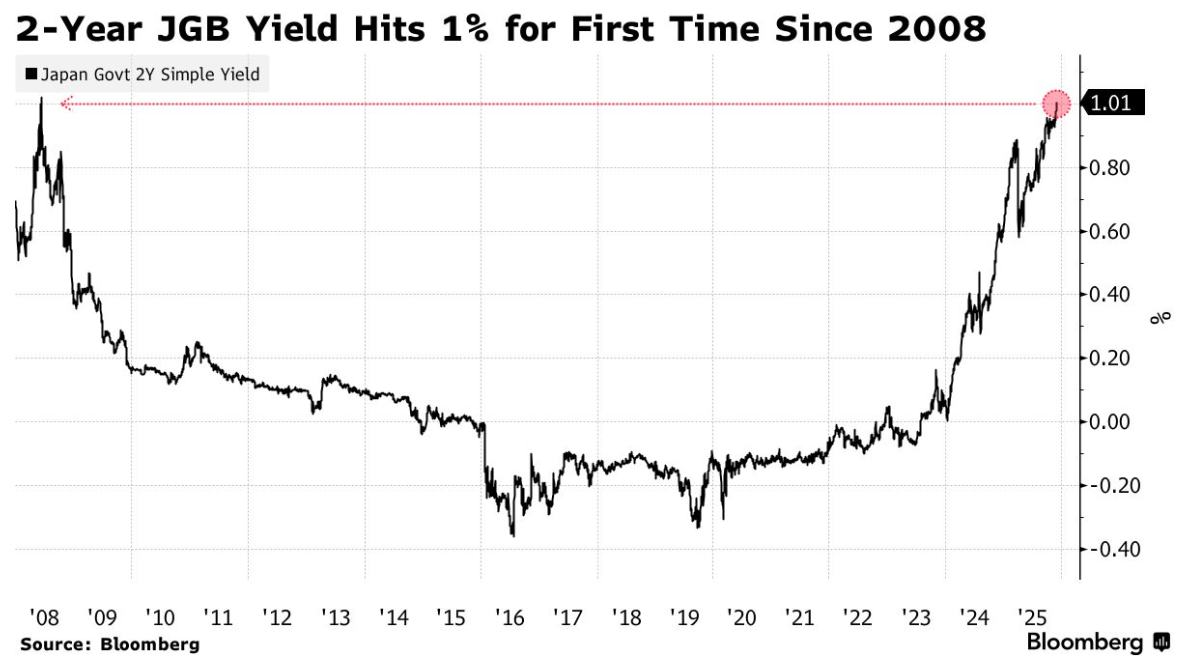
Group 1 - The Japanese two-year government bond yield has risen to its highest level since 2008, indicating an imminent interest rate hike by the Bank of Japan [1] - Bank of Japan Governor Kazuo Ueda has signaled that the central bank may take action on interest rates this month, emphasizing the need to weigh the pros and cons of raising policy rates [1][4] - The market is increasingly pricing in a 76% chance of a rate hike at the next policy meeting on December 19, up from just 30% two weeks ago [4] Group 2 - The Japanese yen has appreciated against the US dollar, reaching a high of 155.49 yen per dollar, driven by expectations of a rate hike [1] - The Ministry of Finance plans to increase short-term debt issuance to fund Prime Minister Fumio Kishida's economic stimulus plan, which may put pressure on short-term bonds [4] - Recent weak demand in the two-year Japanese government bond auction reflects investor caution amid rising interest rate risks [5]

前日本央行官员:最早或于下月再次加息 本周期或再将利率上调1%
智通财经网· 2025-09-25 03:13
Core Viewpoint - The Bank of Japan (BOJ) is expected to raise its benchmark interest rate as early as next month, with increasing market speculation regarding this potential action [1] Group 1: Interest Rate Expectations - A former BOJ committee member indicated that the decision to raise rates in October will largely depend on the strength of upcoming economic data, which may show delayed effects from tariffs [1] - Market expectations for a rate hike on October 30 are growing due to stable inflation levels and resilient economic performance, despite global trade impacts from U.S. policies [1] - Following indications from insiders that BOJ officials believe another rate hike may occur in 2025, the money market has intensified bets on a rate increase by year-end [1] Group 2: Committee Voting Dynamics - The BOJ's recent policy vote surprised analysts, as it marked the first instance during Governor Ueda's tenure where two members opposed maintaining the current rate [1] - The dissenting members based their votes on the severity of inflation, which has remained at or above the BOJ's target for three consecutive years [2] - The recent voting behavior may signal a unified message from the committee regarding a potential policy shift, as the rationale for raising rates could have been applied earlier [2] Group 3: Political Influences - The outcome of the ruling Liberal Democratic Party leadership election on October 4 is a significant uncertainty factor for the BOJ's policy direction [5] - If popular candidate Sanae Takaichi wins, it may lead to a delay in rate hikes, as she is viewed as a supporter of monetary easing, although her stance has softened compared to previous statements [5] - The expectation is that the BOJ's policy rate could increase by 100 basis points over the next two and a half years, potentially reaching around 1.5%, slightly above the market's current peak rate expectation of 1.25% [5]