政治不确定性

Search documents
英镑大跌,英执政工党惨败最新补选!李嘉诚出售英国电网大赚一笔...
Sou Hu Cai Jing· 2026-02-27 11:20
Group 1: Currency and Political Situation - The British pound has been declining due to rising domestic political risks, particularly following the ruling Labour Party's poor performance in recent by-elections [2][3][6] - The Labour Party received only 25.4% of the votes in the recent by-election, a significant drop from 50.8% in the previous election, marking its worst performance in this constituency since 1931 [9][6] - The Conservative Party also performed poorly, achieving only 1.9% of the votes, indicating a decline in the dominance of the two main parties in UK politics [9][6] Group 2: Economic Indicators - The latest exchange rates show the pound at 1.3479 USD, 9.2443 CNY, and 1.1426 EUR, reflecting its recent decline [5][11][12] - Expectations for the Bank of England to ease monetary policy are limiting the pound's rebound potential, with a possible interest rate cut anticipated as early as March [11] Group 3: Investment Activity - Li Ka-shing's group sold its 100% stake in UK Power Networks for approximately HKD 110 billion, achieving an investment return of over 500% after holding the asset for 16 years [15][16] - The sale price of GBP 2.553 billion for the UK Power Networks was significantly higher than the initial acquisition cost, highlighting the value of infrastructure investments in the UK [15][16] Group 4: Immigration and Employment - The UK Home Office reported a slight decrease in illegal immigration, with 100,625 asylum applications in the past year, a 4% decline [18] - However, the number of young people aged 16-24 who are neither employed nor in education reached 957,000, accounting for 12.8% of that age group, indicating ongoing challenges in the labor market [22]


特朗普全球关税被推翻!他放话“加征10%”
华尔街见闻· 2026-02-21 00:25
Core Viewpoint - The U.S. Supreme Court ruled that the International Emergency Economic Powers Act (IEEPA) does not grant the president the authority to impose tariffs without congressional approval, marking a significant legal defeat for President Trump and potentially impacting over $175 billion in tariffs [2][8][10]. Group 1: Supreme Court Ruling - The Supreme Court's decision was made with a 6-3 vote, stating that the IEEPA does not authorize the president to impose tariffs without Congress's explicit consent [8][9]. - The ruling upholds a previous lower court decision that found Trump's tariffs exceeded the authority granted by the IEEPA [10]. Group 2: Economic Implications - Economists estimate that the tariffs imposed under the IEEPA exceed $175 billion, and if refunded, could reduce the average effective tariff rate from 13.6% to 6.5%, a decrease of over 50% [11][12][14]. - The ruling may lead to the U.S. government needing to refund tariffs collected, which could exceed the total expenditures of the Departments of Transportation and Justice for the fiscal year 2025 [12][14]. Group 3: Market Reactions - Following the ruling, the U.S. dollar index fell, U.S. Treasury prices dropped, and major stock indices saw increased gains, indicating a relatively mild market reaction [5][18]. - Analysts suggest that the market's positive response may be short-lived, as the ruling was largely anticipated, and the focus may shift to alternative tariff measures that the Trump administration may pursue [19][20]. Group 4: Political Uncertainty - The ruling introduces new political uncertainties, as Trump has indicated he may utilize other legal frameworks to impose tariffs, such as the Trade Expansion Act of 1962 and the Trade Act of 1974 [16][17]. - Analysts believe that the situation is more politically charged than economically driven, with potential implications for Trump's political standing and future tariff policies [15][17].

特朗普社交媒体争议引发股价波动,特朗普媒体科技集团股价表现弱于大盘
Jing Ji Guan Cha Wang· 2026-02-11 22:03
Group 1 - The core issue revolves around a video posted by former President Trump's social media account that allegedly contains racist content, leading to strong condemnation from both political parties and social organizations [1] - The White House removed the video the following day, but Trump refused to apologize, claiming he only watched the first half and did not see the offensive content [1] - This incident is likely to increase political uncertainty and negatively impact Trump's personal image and the public perception of his media company [1] Group 2 - The stock price of Trump Media Technology Group (DJT.OQ) experienced significant volatility in the week following the incident, with a closing price of $10.90 on February 5, rebounding to $11.46 on February 6, before declining to $11.06 by February 11, resulting in a cumulative increase of 1.47% over the period [2] - During this time, trading activity was high, with a price fluctuation of 5.60% [2] - The stock underperformed compared to major indices, with the Dow Jones and Nasdaq rising by 1.23% and 0.46% respectively during the same period [2]

花旗警告:英镑“最脆弱时刻”在5月,政治动荡与降息预期令其双重承压
Hua Er Jie Jian Wen· 2026-02-11 15:40
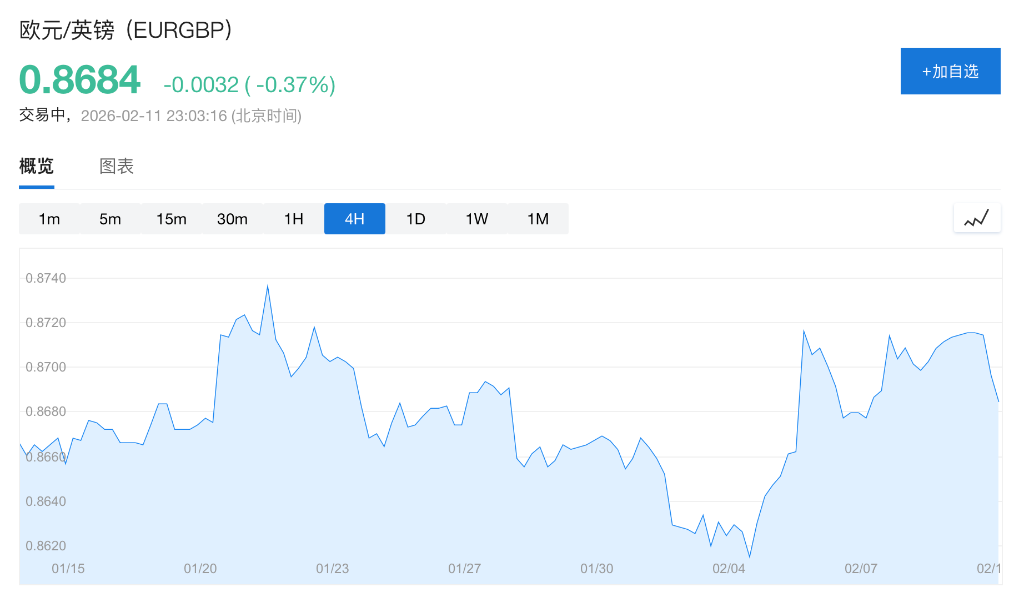
Core Viewpoint - Citigroup strategists warn that the British pound faces significant downward pressure in the coming months due to political uncertainty and expectations of interest rate cuts by the Bank of England [1][2]. Group 1: Political and Monetary Policy Risks - Political uncertainty and monetary policy easing are identified as the two core reasons for shorting the British pound, with a convergence of these themes expected between April and May, leading to a larger market reaction [2]. - Recent political instability was triggered by the resignation of a senior member of Prime Minister Starmer's team, which has heightened political uncertainty [2]. Group 2: Interest Rate Cut Expectations - The options market indicates that selling pressure on the euro against the pound will increase starting in March, as the market prepares for potential interest rate cuts by the Bank of England [5]. - Citigroup's strategist anticipates that the next interest rate cut could occur as early as April, with additional cuts expected in July and November, suggesting a more aggressive easing pace than current market pricing [5]. - Citigroup maintains a bearish outlook on the pound, predicting it will fall to 88 pence against the euro by the end of June and further decline to 90 pence by the end of September [5].

英债交易员头上的“达摩克利斯之剑”——斯塔默还能撑多久?
Hua Er Jie Jian Wen· 2026-02-10 06:42
Core Viewpoint - UK Prime Minister Keir Starmer is facing the most severe political crisis since taking office, triggered by the late American financier Jeffrey Epstein, despite having no direct connection to the scandal [1][2]. Group 1: Political Crisis and Market Impact - The political turmoil has led to a significant rise in UK government bond yields, with betting markets predicting a high likelihood of Starmer's resignation by the end of June [1][2]. - The Labour Party's support has dropped to 19%, with Starmer's approval ratings falling below those of former Prime Minister Liz Truss during her crisis [2][3]. - The internal Labour Party elections typically take about two months, and there is currently no clear frontrunner, which adds to market uncertainty [1][2]. Group 2: Comparison with Previous Political Events - The current market response differs fundamentally from the 2022 Truss crisis, where a budget led to soaring bond yields and a plummeting pound; recent fluctuations have not reached such extremes [3][5]. - Starmer's closed-door meeting with Labour MPs indicated he performed well, suggesting he may not be forced to resign imminently [3]. Group 3: Ongoing Risks and Uncertainties - The potential for a more left-leaning successor could lead to fiscal policies that raise market concerns, prolonging uncertainty for bond traders [5]. - The stability of the UK bond market remains fragile, with the upcoming local elections in May and the ongoing Epstein scandal likely to maintain political uncertainty [5].
爱泼斯坦丑闻冲击唐宁街 核心幕僚下台 苏格兰工党领袖“逼宫”斯塔默辞职
智通财经网· 2026-02-09 15:54
Group 1 - The leader of the Scottish Labour Party, Sarwar, has publicly called for Prime Minister Starmer to resign due to the controversial appointment of Peter Mandelson as the UK Ambassador to the US, marking Sarwar as the highest-ranking Labour figure to withdraw support from Starmer [1] - Sarwar emphasized the need for leadership change in Downing Street, warning that continued failures at the prime ministerial level could negatively impact Labour's chances in the upcoming Scottish Parliament elections in May [1] - Starmer's spokesperson stated that there are no plans for resignation, and he intends to meet with Labour parliamentary group members, despite a growing sense of crisis in Downing Street following the resignation of two senior aides [1] Group 2 - Political uncertainty has quickly affected financial markets, with the 10-year UK government bond yield rising approximately 8 basis points to 4.60%, and the pound falling 0.7% against the euro to 87.4 pence [2] - Concerns among investors are rising regarding potential successors to Starmer or Reeves, who may favor increased fiscal spending [2] - As revelations about Mandelson's connections to Epstein emerge, doubts about Starmer's leadership continue to grow, with Downing Street officials preparing for possible pressures from cabinet members threatening to resign [2]
荷兰国际:英国政治动荡持续 英镑与英债料将承压
Xin Lang Cai Jing· 2026-02-09 12:04
Core Viewpoint - The ongoing political uncertainty in the UK is expected to put pressure on the British pound and UK government bonds [1] Group 1 - The resignation of Morgan McEwen, a close ally and chief of staff to Prime Minister Starmer, due to the involvement of former UK ambassador to the US, Peter Mandelson, in the Epstein case has raised concerns about potential leadership changes in the UK [1] - Market fears regarding possible changes in UK leadership could lead to looser fiscal policies and increased public borrowing, prompting investors to demand a risk premium on UK assets [1]

泰国国会下议院选举,“非正式结果”公布
Huan Qiu Shi Bao· 2026-02-08 22:37
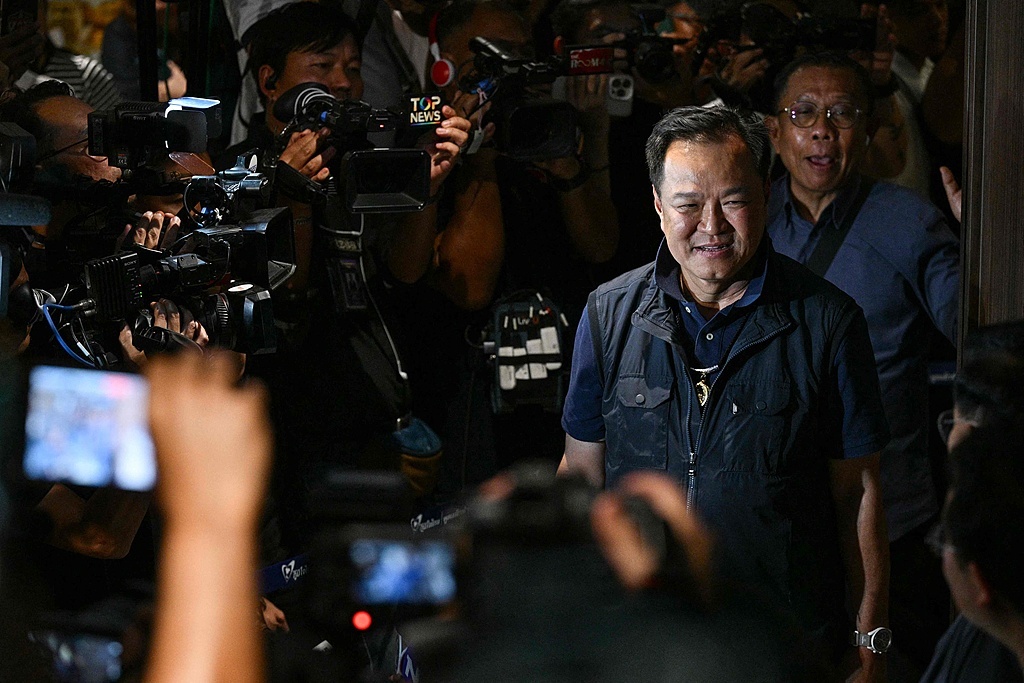
Group 1 - The Thai general election was held on the 8th, with voting taking place from 8 AM to 5 PM, aiming to elect 500 members of the House of Representatives [1] - The election features three main competitors: the People's Party, the Pride Thai Party led by caretaker Prime Minister Anutin, and the Pheu Thai Party associated with the Thaksin political family [1][3] - The People's Party leads in voting intention for constituency representatives with 33.56%, followed by the Pride Thai Party at 22.76% and the Pheu Thai Party at 16.92% [3] Group 2 - Economic issues and border security are significant factors influencing voter decisions, with rising living costs and economic stagnation being major concerns for voters [3] - The election results are unofficial initially, with the Election Commission required to verify the official results within 60 days, expected to be announced by April 9 [4] - As of the election night, approximately 25% of the votes had been counted, indicating that the Pride Thai Party was leading in the unofficial results [5]
TMGM外汇平台:日本财政忧虑压过经济数据,日元承压走弱
Sou Hu Cai Jing· 2026-02-04 07:21
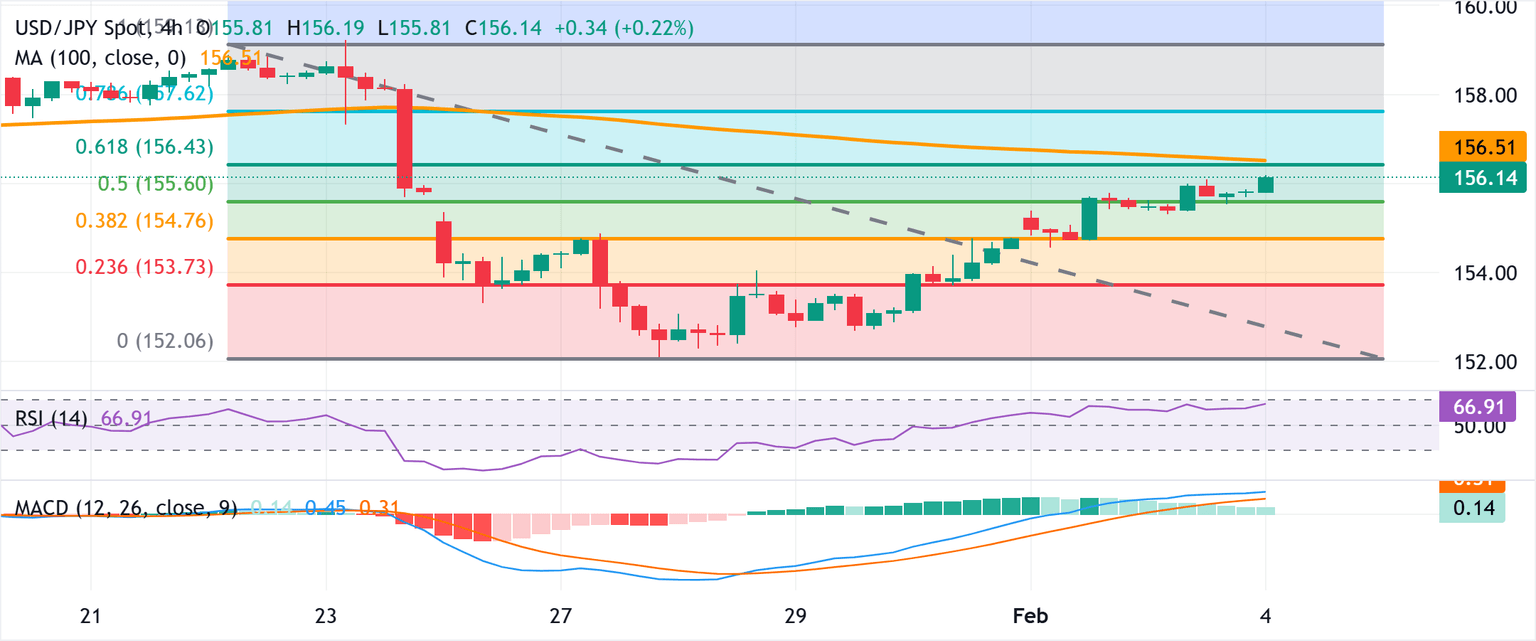
Group 1 - The Japanese yen continues to weaken against the US dollar, reaching a near two-week low, with the USD/JPY exchange rate surpassing the critical level of 156.00, influenced by multiple factors leading to a short-term tug-of-war in the market [1] - The core reason for the yen's persistent decline is centered on fiscal and political issues, with concerns over Japan's fiscal health due to expansionary spending and tax cuts initiated by the Prime Minister, exacerbating public finance pressure [1] - Despite a recovery in Japan's service sector, with the Jibun Bank services PMI rising to 53.7 in early 2026, the positive economic data has not reversed the yen's downward trend, as fiscal concerns dominate market reactions [1] Group 2 - The weak performance of the US dollar is limiting the upside potential of the USD/JPY exchange rate, as market expectations for two rate cuts by the Federal Reserve in 2026 have not attracted significant dollar buying [2] - Current market focus is on the upcoming ADP private sector employment report and ISM services PMI data, along with comments from Federal Reserve officials, which will further influence dollar demand and exchange rate movements [2] Group 3 - From a technical perspective, the short-term upward momentum of the USD/JPY has weakened, with the exchange rate breaking the 156.00 level, but the relative strength index is at 66.9, indicating it has not entered the overbought territory [4] - The MACD histogram shows a continuous contraction, indicating a slowdown in bullish momentum, with a key resistance level at 156.51 that needs to be breached to establish a short-term bullish outlook [4] - If the exchange rate fails to break through this resistance, a pullback may occur, with 157.62 identified as a significant resistance level for future upward movement [4]
IC Markets平台:澳元兑美元汇率近期为何维持高位波动?
Sou Hu Cai Jing· 2026-01-27 02:53
Group 1 - The Australian dollar (AUD) is fluctuating around 0.6920 against the US dollar (USD), having previously reached a 16-month high of 0.6940, supported by cautious market sentiment influenced by domestic economic data, central bank policy expectations, and uncertainties in US politics and monetary policy [1][3] - Recent strong performance in Australia's PMI and employment data has bolstered market expectations for the Reserve Bank of Australia (RBA) to maintain a tightening policy, with the three-year government bond yield rising to 4.27%, the highest since November 2023, reflecting investor interest in AUD assets [3] - The upcoming December CPI data is highly anticipated, as November inflation has decreased to 3.4%, still above the RBA's target range of 2-3%. An upward trend in inflation could reinforce market expectations for sustained high interest rates [3] Group 2 - The USD is currently under pressure due to domestic political factors, including the risk of a government shutdown, which could weaken investor confidence in the USD and provide rebound space for non-USD currencies like the AUD [3][4] - There are uncertainties regarding the Federal Reserve's policy direction, with speculation about a potential change in leadership raising questions about future monetary policy. Although such discussions have not materialized, they may still impact short-term sentiment towards the USD [3] - The AUD is in a high-level consolidation phase, supported by domestic economic fundamentals and interest rate outlook, but faces dual risks: lower-than-expected Australian inflation could weaken AUD rate hike expectations, while easing US political risks or hawkish Fed statements could strengthen the USD [4]