贷款市场报价利率(LPR)改革

Search documents
8月LPR报价不变!业内:下一次下调可能在四季度初
Nan Fang Du Shi Bao· 2025-08-20 11:59
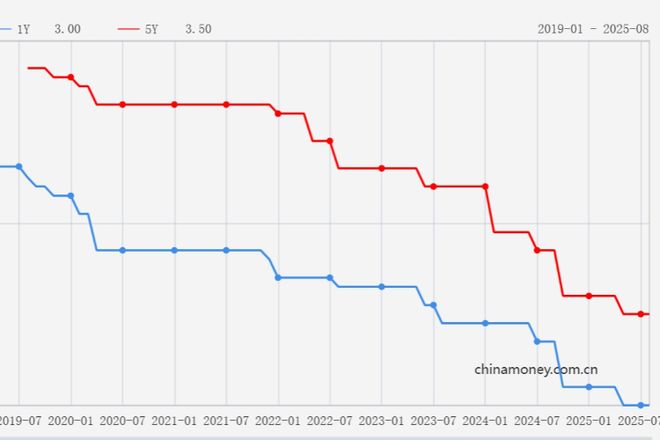
Core Viewpoint - The LPR (Loan Prime Rate) remains unchanged in August 2025, with the 1-year LPR at 3% and the 5-year LPR at 3.5%, reflecting a stable monetary policy environment amid various economic factors [1][2]. Group 1: LPR and Monetary Policy - The LPR was last adjusted in May 2025, with both the 1-year and 5-year rates lowered by 10 basis points [1]. - The average interest rates for new corporate loans and personal housing loans in the first half of the year were approximately 3.3% and 3.1%, respectively, showing a decrease of about 45 and 60 basis points compared to the same period last year [1]. - The People's Bank of China aims to improve the quality of LPR quotes to better reflect market interest rates and to encourage financial institutions to adhere to risk pricing principles [1]. Group 2: Economic Factors Influencing LPR - The decision to maintain the LPR is influenced by several factors, including the recent political bureau meeting that did not suggest lowering policy rates or reserve requirements, and concerns over potential capital outflows due to the Federal Reserve's interest rate cuts [2]. - The Chinese economy exceeded its GDP targets in the first half of the year, leading to a cautious approach in utilizing policy space [2]. - Current issues in the real estate market are more related to residents' income and employment expectations rather than the absolute level of interest rates [2]. Group 3: Future Expectations - The State Council's recent meeting emphasized the need for strong measures to stabilize the real estate market, leading to market expectations of new policies [2]. - Analysts predict that the next LPR adjustment may occur in early Q4 2025, with a potential reduction greater than the previous 10 basis points [2].

媒体视点 | 决胜“十四五”打好收官战 增供给、降成本!金融发力破解民营、小微企业融资难题
证监会发布· 2025-08-16 03:05
Core Viewpoint - Supporting the development of private and small micro enterprises is an inherent requirement of financial services for the real economy, with a focus on enhancing financing accessibility, inclusiveness, and convenience during the "14th Five-Year Plan" period [2][5]. Financing Accessibility - The average annual growth rate of inclusive small micro loans has exceeded 20% over the past five years, with the balance of such loans increasing from 15.1 trillion yuan at the end of 2020 to 35.6 trillion yuan by June 2025 [4][5]. - The proportion of credit loans has reached nearly 30%, and the balance of loans to privately held enterprises has risen to approximately 45 trillion yuan [4]. - Financial institutions have been guided to innovate and better assist enterprises facing collateral shortages and financing difficulties, leading to significant increases in loan disbursements [5]. Cost Reduction - The average interest rate for newly issued inclusive small micro enterprise loans has decreased from 5.08% in December 2020 to 3.48% by June 2025, reflecting a substantial reduction in financing costs [8][9]. - Financial management departments have implemented various measures to lower the comprehensive financing costs for private and small micro enterprises, benefiting a larger number of businesses [8][9]. Diversified Financing - There is a need to expand more diversified financing channels for private and small micro enterprises, as their financing needs and methods vary at different growth stages [10]. - The issuance of technology innovation bonds has gained traction, with 288 entities issuing approximately 600 billion yuan in bonds by June, indicating a growing interest in direct financing [11]. - The proportion of private enterprises among listed companies is significant, with 63% of A-share companies being private, and high representation in the Sci-Tech Innovation Board and other platforms [11].